Episode Transcript
[00:00:00] Speaker A: KPI.org.
[00:00:59] Speaker B: Greetings and thank you for joining Disability and Progress, where we bring you insights into ideas about and discussions on disability topics. I'm Sam Jasmin.
[00:01:08] Speaker A: I'm Charlene Dahl.
[00:01:10] Speaker B: Thank you so much for joining us tonight.
And tonight we have Tricia Wechter, and Tricia is the founder and owner of Blind Girl Designs. Hello, Trisha.
[00:01:26] Speaker A: Sam, how you doing?
[00:01:27] Speaker B: Good. I'm very glad to see you there.
[00:01:31] Speaker A: Thank you.
[00:01:32] Speaker B: Thank you so much for joining us and appreciate you taking the time. I'd like to start out.
[00:01:39] Speaker A: My pleasure.
[00:01:40] Speaker B: By just talking a little bit about before Blind Girl Designs. Can you give us a little bit of background about you and tell us about, like, where you grew up and things like that?
[00:01:54] Speaker A: Sure.
I just want to start by saying I have rp.
And so my blindness is a work in progress.
I was born in Chicago. My dad worked for IBM. And so we moved around the country to Minnesota, Kansas City, and we finally landed in Denver.
And I just had a regular childhood. I didn't know anybody could see at night. I never knew that until I'm much older in life.
I honestly. Yeah, I. I mean, I came out blue as a baby. That's like the most interesting thing about my childhood in terms of my adulthood gets more interesting. I. I mean, it's pretty generic. From a big family. And went to school, got a degree in theater.
My dad was shocked. He assumed I had gotten some kind of a useful degree.
[00:02:51] Speaker B: And.
[00:02:54] Speaker A: He had so many kids, he just never asked. So I just kept going, you know?
So anyway, after college, I actually got married to my husband, who's still my husband, and we moved to St. Louis from Denver, and I got a job in retail because we were poor, I mean, dead poor college students with loans, you know, And I just got a job, you know, being a salesperson in retail.
[00:03:27] Speaker B: Theoretically, you could see enough then.
[00:03:31] Speaker A: Yes, I could. I again, you know, it's interesting.
[00:03:35] Speaker B: My.
[00:03:35] Speaker A: My RP was not diagnosed till 2000, and before that, a lot of stuff that I couldn't see, I just didn't know other people could see it.
[00:03:49] Speaker B: Wow.
[00:03:50] Speaker A: I just didn't have awareness because with rp, you cannot see at night. And it starts eroding your peripheral vision and then it starts punching holes in your central vision. Right?
So, like, like, I always, when I got my driver's license, I would never drive at night. I would always have some, you know, just have somebody else because there's always tons of kids around, right. That can drive. So I would never drive at night. I would never drive in the mountains again, because my, you know, my depth perception has sucked since birth. So look, but I didn't know that that was me.
I didn't know that that was only me. That, you know, everyone else had really great depth perception and could see each other like real people at night. I just really didn't understand that. And so I didn't know that when other people went into the stockroom that it was really. That they could see the stuff.
I didn't know. I just thought stockrooms were just really dark and that you should probably bring a flashlight with you.
You know, I just. It's really interesting when you don't know. Yeah, yeah, you just kind of make accommodations for yourself. Because I wanted to make money and move ahead, so I just started self accommodating. And the other thing is, you know, I have a degree in theater. So, you know, we learned how to make sets and sew and do all this other really tactile. I happen to have a degree in a really tactile field.
So, you know, with working in the theater, you learn tons of stuff about lighting, how to light stuff, and how to do stuff in the dark with no light at all, by the way. So interestingly enough, if you want to get trained for being blind, being in theater is a really great way.
[00:05:40] Speaker B: Can you talk about when you had that first aha moment, when you remember the moment that first you thought, oh my gosh, I really have a problem.
And.
And it's changing. Can you talk a little bit about that?
[00:05:59] Speaker A: So that's not really my story.
My story is when I went to get glasses for the first time. I did a visual field test and I failed it three times. And the nurse was really mean to me. I mean, mean. And I cried all the way back to work and just sat at my desk and cried because I pushed the button when I saw the lights. Okay.
And so then about a half hour later, the eye doctor called and asked me if, if it was possible for me to leave work and come back to his office.
And so I. And he was really apologetic. Really, really apologetic. And then when I went into his office, he said to me, you have quite a bit of visual field loss.
We don't know what it is, but we need to get you to a specialist.
So again, it's that thing where I didn't know what I wasn't seeing.
And so then.
So when they finally diagnosed it in 2000, you know, I already knew that I had an eye disease. I already knew, you know, that I couldn't see at Night or drive at night.
I already knew all that stuff. Okay, so let's talk about slowly going blind. So in the meantime, I had this career in retail. So I started as a salesperson. I'm making a lot of money now as a CMO, I'm flying all over the world. I've been to seven continents, 48 countries.
I'm rocking it in New York.
The last thing I want to do is go blind, right? So instead, I put massive lights in my office. I have a huge office. It's all white, all glass windows, gigantic. I have them put the highest lumens that they can in the tube lights above me. And I have two IKEA lamps on my desk, right?
But in New York, they just think you're kind of edgy, right, because you have all that light and so that you can really clearly see all, you know, the flare of the black and all that stuff. I couldn't even see the black, but. But that's kind of how people perceive it. So it allowed me to go for a really long time in my business as I continued to lose sight, honestly. And so the aha.
It.
I don't think I had a single aha. It was like, at 1. I mean, I got a white cane in 2010. You think that would have been Aha.
Are at Legoland in California, and one morning with my son, my little son and my husband. And I said to my husband, hey, Tom, all the kids have disappeared from the park.
He's like, what? And I said, I cannot see any kids.
And he's like, okay, that sounds like we might have a little peripheral vision problem there.
And so truly, I had just hit that edge where I had lost all that over not. You know, of course, it doesn't happen overnight, but it seems like it does, right?
I. I just couldn't. I just lost all my lower peripheral vision in both eyes. And so we actually contacted a group in San Diego, told them the problem, and they met us the next day and did tactical O and M in the parking lot of their building, fitted me for a white cane, marched me for two hours with the white cane.
And the day after, we went to Disneyland.
And that's how it started. So that's my first white cane in 2010.
And.
And then, you know, it just. With RP, it progresses.
So, like, in two. Let's go backwards a little bit. In 2001, I already had lost my ability to see burgundy brown, black, forest green, dark purple. Now I am a merchant, a head merchant, a senior vice president over a company that develops eight product lines a year in women's apparel. So we are doing nothing but looking at color and fabrics, flying all over the world, going to fashion shows, and I cannot see these colors. But I have designers that work with me who, who have. Have to take a test. That's a color eye test, and they have to pass it.
They couldn't even get a job at my company if they did not pass this test.
But guess what? I was a senior person. I never had to take that test.
So when we did color cards and developed color themes, I have enough.
You have a massive library in my brain. Right.
So when we did it, I would defer and say to the team, what do you guys think about the tones? How do you like how that fits together?
Do you think that flares a certain way? They thought I was like the best boss ever.
And so we'd have these fabulous color cards because we had a whole team of people giving their input on them. But the fact was I couldn't discern them myself.
[00:11:14] Speaker B: Wow.
[00:11:15] Speaker A: So I continued to do this because I was.
I love the arts. I love creativity. I love.
So much love what I was doing between the traveling and the. I mean, the five star hotels.
[00:11:28] Speaker B: Yes.
[00:11:30] Speaker A: The fabric, the couture, the ball gowns, all the museums all over the world.
You know, I loved it. And so I. I wanted to do anything that I could to continue to do it. And somehow, because RPM for me, people have different experiences with rp. But for me, it was slow enough that as I lost things, I could accommodate that thing. I could figure out a way to accom. Like at one point, I took the bus or the train into the city, into New York City. Every day.
When I got home, I couldn't cross the street. When I got off the bus, I could not cross the street.
Not even a busy street. I could not cross the street even with my white cane to get to the other side. There's just too much traffic. And so every night I would just stand there and wait till somebody walked down the sidewalk or somebody else got off the bus with me and just asked them to walk me across the street.
And I just accommodated.
[00:12:30] Speaker B: At what point did you stop driving? I'm just curious.
[00:12:34] Speaker A: Oh, probably.
Well, that's it again. That was a. I stopped driving on highways, you know, like, I don't know, like 15, 20 years ago.
I only started driving. I got a little tiny car, and I only drove where there were stoplights or stop signs, four way stop signs or stop lights in town. So we lived in a little Cute town called Mark Clark, Claire, New Jersey. So I would drive around Montclair, but I would never go on the Garden State Parkway or drive into New York City or anything because there's no freaking way. I couldn't see the car next to me. I couldn't change lanes.
So I finally stopped driving probably about eight years ago, completely stopped driving. But before that, probably four years before that, I was mostly only driving from my house to the corner, you know, three blocks to the grocery store.
[00:13:31] Speaker B: So your husband must have known. Was he at all concerned?
[00:13:34] Speaker A: Oh, yeah.
[00:13:36] Speaker B: Was he concerned? Like, did he not worry? Like, wow, she can't see where she's going, or you might need to.
[00:13:44] Speaker A: No, I don't think so. Because, you know, we. He's been on the. Well, okay. At the same time as all this happened, we have a son. He's in his 20s.
He is a special needs kid and he can't read and write. He has low tone. He's on the spectrum. He has a whole bunch of comorbidities.
And so while I was going blind, my son was growing from an infant and then being diagnosed with all these things. Right, right. So he was dealing. It was overwhelming for him. I mean, overwhelming. I'm going to go ahead and say heartbreaking. It's heartbreaking for him because, you know, when we met in college, we're just, you know, you're just. The world is just your oyster. Right.
And then we have a child and almost simultaneously, I really start going blind.
And we're raising a child who is special needs. Throwing tantrums all the time, can't read them. Right. Is non verbal. You know, this is hard for him.
But. And so, yeah, of course he's concerned. He's. My husband and my son are both really concerned and, you know, really adamant about stuff. Like if I have to go to CVS to go to the pharmacy, my son always goes. Because they won't. They don't want me to cross the street to go to Kroger.
You know, even though it's got a walk sign and the beepers.
[00:15:18] Speaker B: Right.
[00:15:18] Speaker A: They just, they can see. So they know that I'll get killed. So they absolutely won't let that happen. And like my son, when I travel a lot, my son's with me. And so he, you know, he is like incredible through TSA and handling the TSA agents, most of which are fantastic, some of who don't really get it at all.
[00:15:39] Speaker B: Right.
[00:15:39] Speaker A: But he's like amazing with that.
So. So it's kind of a great. It's Kind of not. Not. It's not a great thing, but we have two people that are, you know, ultral.
You know, abled, differentially abled. And in our house.
And so everybody's aware and helps each other.
[00:16:01] Speaker B: Was there any, anyone you felt was particularly like a role model or inspired you during the time?
[00:16:13] Speaker A: In terms of losing my vision, yeah.
[00:16:16] Speaker B: Or. Yeah.
Just, you know, because regardless, you had to know that things were changing. And change is always difficult, at the very least for some. For some people more than others. But, you know, waking up and thinking, I'm having a harder time doing X or Y that you really love, that's got to be difficult. So did you have role models or anybody who inspired you?
[00:16:45] Speaker A: I would say my father was an incredible role model. He was the youngest child of an immigrant, Irish immigrant family that grew up in poverty. And he had an older brother who went to law school.
He. My dad went into the military, got the GI Bill, went to Champagne Urbana, got a business degree. His brother taught him manners, got him suits. He got a great job at a big corporation where he succeeded incredibly in the American dream financially. And we all were raised in a really environment very focused on education.
And my dad was a figure it out guy.
Okay, it's going to go south.
It's okay to fall down and cry, but you got to get up. You just got to get up. And so I would say that, you know, not just adversity of having a child with disabilities that kept having more like, then Robert had a heart attack when he was 19, you know, and then he had a severe concussion, like as severe as an NFL player. And, you know, as all this stuff is happening where we're having to get up and move ahead with my son, it was the same for me, you know, where you sit down and you cry and then you get up and you decide, am I going to lay here and die or am I going to move ahead?
And my dad, despite all adversity, believed, believed that the right thing to do was to continue to move ahead.
He really believed that.
And I believe that. And I have had a lot of adversity, and I have really found that to be true. It's. It's. I'm an emotional person and a creative person, so I really feel it. I really feel it. I am crushed sometimes. But you know what? Sometimes I just need a few days not to talk about it.
[00:18:59] Speaker B: Yeah.
[00:19:00] Speaker A: And I can tell you right now, the next time I have some more vision loss, I will be in the kitchen crying. And Tom and Robert will have their Arms around me. Because you know what, it's not like my vision goes overnight. Right. You know, suddenly there's three peppers on the counter and I can only see two. Now there's holes in my remaining central vision. Right. People say, well, what can you see? And I'm like, well, it depends on the light.
[00:19:28] Speaker B: Right.
[00:19:30] Speaker A: I go totally 100% blind about 20, 25 times a day, you know, so adversity is, I mean, moment happens, adversity.
I mean, I walk into the door in our bedroom regularly. I think we've all done that though. Right? Okay. And I am forceful. You know, I'm heading in there, I'm gonna do something that just walks back into it, you know? Yeah. And so, I mean, even if we've all done it, then that just means we're all dealing with a little additional adversity. Right. And maybe the next guy. And. And so I just really tried to be aware of it, recognize it, don't feel I really have to say, okay, so like seven years ago is really when.
When my vision went below 15 degree visual field and 20 is legally blind. And that's when I lost my job. When we moved from New York to Houston, that's when I was filled with complete self pity. I couldn't believe it. I was flying to London every month, Shanghai every two months. I mean, I was killing it, I was loving it, I was happy. And I just, you know, kind of like when I had to get my first white cane, I just turned that corner and then that was it. Once. Then I was on the my White king full time. And nobody is going to pay any money for a blind merchant. That, you know, it's just the truth.
And I just couldn't wrap my head around it.
[00:21:12] Speaker B: Now, Tricia, it seems like it might have been just kind of a natural step, but talk to me about how you decided to step into blind girl designs.
[00:21:25] Speaker A: Okay. So I'm laying on the floor crying.
This doesn't seem to be moving my head, my life very well forward.
It doesn't seem to be making my family very happy.
And of course I went, I got a therapist. I needed to talk to somebody about this massive change in my life.
And so I went to a therapist. I started working with my friend David, who was a designer I had hired in New York long time before, who moved to Houston where I am now, opened his own factory and asked me if I would work with young designers. And I said sure. And so I worked with him, with young designers, advising them on how to build their lines, how to Cost, product, all that, you know, stuff, right?
That's all on your brain, not in your eyes. And one of them asked us if we could come to their factory to help their sewers sew a curve because they had only been sewing straight lines. So we said, sure.
And before we went, my friend Dave said, you can't bring your white cane.
And I said, what? He said, you can't bring your white cane. They don't know you're blind.
And I'm like, what? He said, well, you know, when we're working with them, we're in a really bright showroom, and you're sitting at the table and everything's already arranged, and your white cane is under the table.
So they don't. You're blind. And I'm like, okay.
So I didn't really give him an answer, and I brought my white cane in the car. But at the last minute, I think now, fortuitously, I left it in the car.
And then I had to hold, you know, David's shoulder as we went to the factory. And as soon as he got in the factory, he parked me at a table. I couldn't move. Anywhere there's lasers, laser cutters in there, saws, all sorts of heavy equipment.
And so I just stood there at a table all by myself while they all moved around the factory. And let me tell you, I was mad. I mean, furious. Like, crazy furious. I couldn't believe, number one, that anybody thought a white cane meant anything but the greatest tool ever invented to let me be a free woman and walk around the world, and that somehow it had something negative to do with my intellectual capacity. So I was really mad. So after that happened, I said to Dave, you know, I think I'm going to go in a different direction.
I mean, he. I just.
Something clicked. I got really angry. I moved out of my sad phase to my. Really pissed off, because I have this entire brain. I am not done. I'm not done with my life. I'm not done with my career. I'm not done with creating. I'm not done. And so I. I thought about it, and, you know, in my brain thought about it. And then on January 1, 2021, not because it was New Year's, my feet hit the floor when I got up in the morning, and I said, I am going to start my own company.
It's going to be called Blind Girl Designs. And I am telling everyone that I am blind and I am going to kill it.
And I did.
[00:24:45] Speaker B: Yes.
[00:24:48] Speaker A: And it was really important to me, because, you know what? I have all this knowledge and enthusiasm and passion and love and compassion and empathy. I have just so much.
And doing it, being my authentic self, doing it for a community of people who are being their authentic selves was where I needed to be and what I needed to do.
[00:25:11] Speaker B: So you, in some ways were. I don't know if lucky were the right term, but you were.
You.
If you had to get something, a disability of this, this caliber you were lucky enough to, had gone into and be able to have experienced what you experienced early in life, because you kind of got it all right. You. You were able to.
[00:25:40] Speaker A: That's really true.
[00:25:41] Speaker B: The whole retail part and the whole.
[00:25:44] Speaker A: Right.
[00:25:44] Speaker B: Running and managing and how to deal with the workers under you type situation. So you.
You came into this with a different perspective where somebody who maybe just lost their vision and thought, I'm gonna, you know, design clothes or whatever, they wouldn't know the first thing. They maybe wouldn't.
[00:26:08] Speaker A: No.
[00:26:08] Speaker B: Yeah.
[00:26:09] Speaker A: So. And when I. Yeah, when I speak to high school students, I. I make sure to let them know, you know, to remind them of that, you know, that. That I did all the legwork first. And I did it as, you know, and. But I. But let me just say. And that I did it when I had sight or.
And as I was losing sight. But let me tell you this.
I also tell them this. I never printed a T shirt or designed a heat transfer until I went blind.
So the fact is, I did not know how to print T shirts. I did not know what grade of sweatshirts to buy. I didn't know what the shrinkage was on cotton. We had to get all that stuff, wash it, dry it, measure it, do all. We had to do. All the stuff that I'm doing now, this is domestic manufacturing. My entire career was international manufacturing.
So the biggest thing I think is I used all the tools that I had, which were. Which I think are a lot. If you do. If you're in my industry, you always have to learn. You have to always move forward. It's a very competitive industry. Right. So naturally, when I realized T shirts, sweatshirts, hoodies, all this stuff, this is. Was really great. In order to use my white canes and Braille, I had to learn all of it. I had to learn, you know, the correct type of puff ink in order to have braille stable enough that a totally blind person could read it on a sweatshirt.
And so that's the other message, though. So maybe you don't have a background and maybe you can't launch a whole website overnight, like Me. Right. But whatever it is that you do, you can go to YouTube and you can listen to the tutorials about T shirts or baseball hats or pottery. Whatever it is that you want to learn, there are ways, many, many ways to learn it. It's defining what you want and giving it a shot and finding out if it really is something that you want to do or the direction that you really want to go.
[00:28:14] Speaker B: Well, I do believe, though, that, you know, you talk about having to learn this, so this is very different than if somebody would have walked into it 90, 95.
Because 20 years ago, you didn't really have you YouTube, like. No. You know what I mean?
[00:28:35] Speaker A: I think that.
I think the timing is unbelievable. And especially, like, with having A.I.
[00:28:42] Speaker B: Yeah.
[00:28:43] Speaker A: With the. Just the.
The unique tools that are so beneficial to the blind community, I think it really changes what we are able to do that has to do with our intellect and not our sight.
[00:28:55] Speaker B: Now, you know, now you really can kind of have it all, so to speak. In. In most ways, you can learn how to do as much as you want to do.
Yeah.
Besides that, you may not be able to, like, have the same visual, like, look at this shirt as a sighted person, but you can get Right comments and you can get ideas. You get people to do that for you. And if you had any vision before, you'll understand some of the language that they do use. I'm wondering, what did you hope the brand Blind Girl designs would bring to people with visual disabilities or any disability?
[00:29:38] Speaker A: Well, for me, when I designed my first T shirt, which was four white canes crossed at the center, and I put little V's on it to make it be a snowflake, and then put little, tiny, little snowflakes around it. My whole.
You know, I was really coming from the shock that my friend Dave connected a white cane to an intellectual disability.
Shocked. And so the white cane, I think the.
Listen, I travel over the world, and I am really proud to be a white cane user and proud to work with my disability and proud. Really happy to explain to anyone who asks me about my blindness or my white cane.
And so for me, it was.
It's just really.
We are, in fact, a community of people, and we do support each other and we do understand each other from an empathetic level. And that's really the whole deal with my brand.
And what. What I really hope to get out there is conversation, like, what happens to. What happens to me all the time is that I wear my stuff every day. And so I wear a T shirt called I Love my cat. It's a really cute shirt, and I don't have a cat, but I love the shirt because I think I was so clever.
[00:31:13] Speaker B: That's good.
[00:31:14] Speaker A: It's really funny. I know it's funny. And so I've had several different people walk up in the grocery store and say to me, oh, my God, I love my cat, too. And there I am with my white cane and my groceries, and the cat is swinging from a white cane. So we're talking about, obviously, a blind person here. And normally people didn't approach me because they're kind of scared of me. Right. My first experience when I went full time on white canes is she, shh, don't stare at her.
[00:31:42] Speaker B: Shh.
[00:31:43] Speaker A: Don't ask her. Don't touch it. I'm like, dude, touch it. Stare at me. And then with the T shirts, touch the prints. If you're totally blind and you want to read the Braille, every single line, you stay there for a half hour. Because that is what we're here for. Because we can't do that anyplace else, right? So that's what I want. I want people.
I love it. I get so many calls and texts and emails from customers telling me about strangers sighted coming up to them and saying, oh, my God, that shirt is so cute. Where did you get it? Let me tell you, as a blind person, you don't usually get those gushy people coming up to you like fashionistas, but that's what's happening. And they're like, oh, my God, Blind Girl designs is, you know, really great. And a lot of times they'll say, do you. Can you see, like, the secret in it? Like that either that there's Braille in it or that the. The actual stems of the flowers are actually white canes.
And people will be like, oh, my God, that is so clever. It's so cute. And then they like it even more. And guess what? We're talking in the grocery store and we're not scared.
[00:32:55] Speaker B: Yes.
[00:32:55] Speaker A: And we're talking a sighted person and a blind person, and it's not scary to talk to the blind. Blind person.
[00:33:02] Speaker B: I do. So, yeah, I do want to just put just a couple thoughts out there and Because a comment you made where, you know, and I don't blame you, that, you know, you said that you were shocked when you're, you know, really a good friend of yours and somebody who was obviously very close, that's what he thought is, don't. Don't bring your cane, because they don't know I felt that when I was listening to it, my first thought was, oh, he was protecting you.
You know, somebody who was.
Because I am looking at this story. I'm looking at this story from somebody who didn't have the privilege of having remembering the visual stuff like you did. And I will tell you that I think when you're coming at it like that, people, first of all, they're scared of the unknown.
[00:33:55] Speaker A: Right? Right.
[00:33:56] Speaker B: Everyone's scared of the unknown. And the other thing that I would think of is that you, in a way, you kind of set yourself up. You have compensated your whole life because you had to. You've always compensated to try to give yourself the best platform, the best path, the best whatever. And it's what anyone would do, but that's what you did. And you have always made it seem like, I can do this. I got this. And so the minute that you were going to go into maybe something a little different, and Dave maybe knew it, his first response was, oh, I need to make sure she's okay. I need to make sure that nobody freaks. I need to make whatever his thoughts were.
But that's how I saw it is as a person listening, as he was being the protector. He was the one who was like, I'm going to make sure that she's going to be okay and that she's not going to be embarrassed, and they're not going to be. They're not going to freak out on her anyway, those are my thoughts. But I'm wondering, because there's a lot that goes into this.
[00:35:08] Speaker A: Can you.
[00:35:09] Speaker B: And we did talk about how things have changed so much, even from the beginning of when you got into retail to now.
What tools or technologies are you using now to help you create the artwork and the things that you do on these shirts?
[00:35:30] Speaker A: Well, first of all, I run my entire company on two iPhones.
I have such limited field of vision under bright light that, you know, a computer is like looking at an IMAX screen, you know, for me. And so I can see a part of one of the phones.
And so. And it just makes it really easy when I have a customer call with an order on one phone, then I have my platform on the other phone, and then I just dictate the order into the platform. And sometimes I just actually hold the phone up to the customer at a convention, and they just put their information in it, and it goes right into it, you know, so that's where saying using technology really helps.
So, you know, I think I. I think that's the biggest things is Using my iPhone, dictating, using all the audio aspects. In terms of designing, I design mo mostly everything in my head 100%. And then after I design it in my head, then I actually take a 9 by 12 or 12 by 12 piece of paper and fold it into quadrants or eighths.
Because, you know, every. All the art has to go into a certain area. The braille has to be a certain size. There's a lot of math that's involved in art when you know the space that you're using. So then from there, I lay the art out and I actually hand draw it and then color it in or color portions of it in with Sharpies. And then when that's completed and spin approved by my team along the way, when we're doing it, I'm discussing the idea of the concept of it with my assistant designer, other people on my team, so that before ever has to get out of my brain, I can curate it, right? And then after that, it goes to my graphic designer, who puts it in a format that can. A vector format. And then we send that directly to our ink guys in New York who upload it into our account.
They work with us really well because it's not, of course, not possible for me. I mean, I could. I originally did, but stupid for her to send the files and then have me upload them. She just sends them directly to them. They just send us a note and say they're uploaded and then we buy the ink from there.
So again, we, you know, we use technology as. As much as we possibly can to our advantage. We accommodate. My assistant is incredible sight. Unbelievable sight. Like a hawk. She can see in the dark. They call her Nighthawk. Her parents do.
[00:38:24] Speaker B: Wow.
[00:38:24] Speaker A: And.
But she's totally deaf.
Oh, wow, that's cool. So, yeah, so the same guy, Dave, is the one who hooked me up with my assistant Cindy. I said to him, hey, Dave, I need an assistant. This was years ago when we started. He goes, oh, I had a really good student in class who I think might have some time.
I think she has something with her hair. And I'm not sure. I'm like, okay.
We set up a meeting at Starbucks. We're outside at Starbucks, thank God. And like, really bright light. And she. I get my drink and she comes up and we wave. She sits down and we start talking. And I said, are you totally deaf?
And she said, yes. I said, cool, I'm blind. It's really nice to meet you.
And we were falling off our chairs. And so then during the conversation, if we Couldn't communicate.
I just did voice to text right on my phone, and then she read it and laugh, and then she would text me back, and then I would listen to it.
Awesome.
[00:39:35] Speaker B: That's cool.
[00:39:37] Speaker A: And then sometimes she and my son sometimes hold their hands up in the air over my head and do sign language so that I can't hear, see what they're saying.
It's like all sorts of crazy shenanigans over here with Cindy and Robert and me. But, yeah, when we have something that is difficult, a concept that's difficult, we just text back and forth to each other using technology.
Because you know what? Nobody would hire her because she's deaf and she's got two design degrees, and she's very talented and a wonderful person.
[00:40:13] Speaker B: Obviously, it works.
[00:40:15] Speaker A: It totally works because she's super talented. And this. She finally got an opportunity to do what she always wanted to do.
[00:40:23] Speaker B: Where do you find the inspiration for new prints or clothing ideas?
[00:40:29] Speaker A: Okay, just this week, I got a call. Okay, Two weeks ago, I got a call from a customer who wanted me to do an octopus vacation print. And I said, look, I can't do custom stuff. I. I have to do 100 pieces of ink. There's no way I can do it. Sorry. Love you. Love you. Love you. But can't do it. Then her friend Marianne called, and she goes, you're not getting the big picture of this.
Let me just walk you through this. You know, the whole idea. She goes, we're business people, you know? And so she walks me through it, and then we start laughing. And as we're talking about it, I actually think this is a good idea. So what the idea is, is to do an. An octopus.
And they want an. They wanted a vacation octopus.
So I was like, you know what? I. I can do this. I did a tactile white, sparkly ink, puffy ink, tactile ink, octopus.
He's holding a margarita in his left hand with an umbrella in it and holding his white cane in his right hand.
And of course, all of his legs have tactile tentacles. And over the top, overarching in the sans serif tactile font, it says it's happy hour somewhere, and it says that in grade one Braille underneath it.
[00:41:48] Speaker B: That's.
[00:41:48] Speaker A: And so is that hilarious. So we did this real. I did this. Really? They literally wanted it for Christmas. They're going into cruise on Christmas Day.
So I called my niece, Molly, who does all of our website stuff, and I said, we need to do an ad.
I do the whole thing, send it to my graphic designer. She knocked it out because it was really simple. It's all an outline with the glitter and the tactile ink and stuff.
And we've been working together for a long time and we send it to our ink guys. I called my ink guys, I said guys, we need to turn this super fast. And then we did an ad, we sent out an email and we sent out the email last night and we got like 15 orders. That's cool on it. And the ink is coming at 1:45 tomorrow and we'll print the orders and ship them third day so that everybody gets them before Christmas. What has. So a lot of the ideas come from customers. A lot of ideas just come from me from things that I think of or I think would be really cool or quotes that I think of.
[00:42:53] Speaker B: What's been the biggest challenge running this small business as, as you do?
[00:42:59] Speaker A: I think for me, you know, the, the back end. We have a team of, of people in India doing a lot of our back end stuff that is hard.
The keeping track of all the financials, the, the, the sales and the sales increases and inventory. That's all stuff that's embedded in me from being in retail. Right.
But, but all the accounting and all that kind of stuff, the taxes, that's stuff that you know, you have to offload to people who know how to do that.
That's the difficult. That's the one thing where I wish I was attached to another organization where I could do the creative stuff and be the facing front face of the company.
[00:43:40] Speaker B: Right.
[00:43:41] Speaker A: And have somebody else do all the back end, the website and the, you know, the emails and all that stuff. That would be the, that would be the upside of having being a part of a bigger organization.
[00:43:52] Speaker B: Right.
[00:43:52] Speaker A: But on, but on the flip side, when you become a part of bigger organization, you le. Lose, you know, a lot of people.
[00:43:59] Speaker B: And yes, you lose a lot of things.
[00:44:01] Speaker A: Yeah, I would rather, I mean I'm, I think doing it this way is much better. And for a long time I thought worried about funding but it turned out my growth has been so great from the inception that we've been able to self fund, you know, the organization so our company and so that we don't even talk about that anymore because really everybody gets to do their own, you know, we have our web person, we have our graphic artists, we have a Cindy, we have, we have a whole bunch of people that work for us. They just do conventions. Everybody kind of has their own groove and it works in a company where everybody likes each other and kind of has that same feeling.
And if you are working with a money guy, that is not how it feels. So we're all good with it. We're really happy with it.
[00:44:58] Speaker B: So what advice would you give to somebody with a disability who wants to be, who wants to start their own business?
[00:45:08] Speaker A: I would say the first thing is to have a really clear idea of what product that you want to do. Do you want to do a service? Do you want to teach blind people how to use their computers? Do you want to make mugs, do you want to do fragrances? A lot of people do senties and stuff.
You know, what, what do you like, what do you like to do, what do you like? And, and whatever you like. Where do you see a niche or a whole or something that you could do a business either directly, only for the blind community or just in general? You just see a hole where there's a niche and then start talking to people about it, start asking around, be open and listen. And if you actually come to the point where there's a product, then you have to do some kind of run through. You either have to run through, you know, if you're teaching a blind person, you have to run through it and teach it, teach them and find out if you like it or not. And you have to do that for free. If you're going to make a product. You have to make a product and see what other people say about it, if they use it, how it can be improved. And then if you get that far, the next thing to do is you have to monetize it. You have to calculate how much it will cost for your time to do it, or how much the cost of goods are. And then you need to be able to create a markup so that you can make profit for that.
And then you have to sell it. And again, I'm talking at a really, really micro scale. You have to do all this thinking and working in advance.
And then if somebody says, oh my gosh, I love that braille, you know, cup.
I'd like 20 of them. Well, guess what, you have a business.
Or if someone says, you know, you're the best teacher I have ever had, I love how you do this and this and this.
Okay, well maybe you can try it again and charge X amount of dollars this time.
So it's all incremental and you have got to do the legwork and you have to poke the holes in it and you have got to be open, open to listening to people that you respect about their ideas. You don't have to do what they say, but you have to have open to listen so that you can constantly improve your thought process so you stay laser focused on what you land on as your business.
And you have to know if you actually get something going, you have to take a breath and recognize what do you love and what do you hate? And the part that you hate, you can just farm out to somebody hourly, you know what I mean? You don't have to hire somebody full time to do your accounting. You can just basically go on task grab or some version of that and somebody else will do it for you so that you're able to continue to do it with enthusiasm and passion.
[00:48:07] Speaker B: Where do you see Blind Girl Decision Designs going? What would you like to see you doing that you're not already doing in, let's say, three to five years?
[00:48:18] Speaker A: So before, right before, right before the tariffs hits, we had designed and were working in China on backpacks, handbags, leather tool bags, all stuff that our customers have asked us for. But then we're. Because we have the summer conventions, right? So we were going to launch these at summer conventions right before, like around March is when the whole tariff thing started happening. And so we didn't place our orders. We had all the specs in and stuff. And so I think the brand extensions, like the backpacks, the handbags, you know, we already do, you know, apparel and tote bags. But there's a lot of other product that would be really beneficial to the blind community. So I would like to continue to expand out into an umbrella under Blind Girl Designs.
Because, you know, in addition to the fact that obviously we're working for the blind community and blind adjacent, like teachers of the blind, friends and family of the blind. And you know, we have free shipping, we have free returns. When we do returns, we send the plastic bag with the sticker attached to the bag inside a tactile other bag so that you can just throw the return in there and drop it at the post office. We do stuff in our company that is specifically for blind people that other companies don't do. And so I feel like if we can extend that out to more products that will make life easier and also make people feel more like part of a community.
That's what we want to do. That's where we want to go.
And like right now, last week, we just added blankets to our line.
Blankets. Really simple. That way you can gift somebody.
And we already sold a ton of blankets. You can take any print we have and put it on a blanket.
So there's quite a lot of products that we can do as we go forward, you know, and as the company evolves and we really get more of a sense of it, People just tell us or it just becomes apparent what the next step should be. And you know what, Sam, I have to tell you one other thing. From the time that we started, we have donated. We donated door prizes, we donate to auctions. And I remember when we started, people were saying, you're not making any money. I mean, you can't possibly be making any money. Why are you giving to all these auctions? And that's because we're part of a community.
And, you know, when we give to auctions and people spend 150 or $200 or $250 on a hoodie and raising money for the blind community, we're not a pharmaceutical company. We will never be able to give that kind of money or be a gold sponsor. But if we as a small company can contribute thousands of dollars via auctions by donating our product, that is really an important thing to us.
Really, really important. Because I personally, my family has really thrived based on being uplifted and supported by all the people on the blind community that we have been in contact with and met. It has been life changing for me personally.
[00:51:45] Speaker B: That's an awesome statement.
Where can people get your designs, your products?
[00:51:52] Speaker A: We have a website which is blindgirldesigns.com and you literally just have to shout at your phone, blindgirldesigns.com and we'll come up and the first page of that, our phone numbers. On every page, if you just tap that, it'll just call right to our phone number. If you want to have any U.S. audio descript or if you say, look, I need to get a blanket for Christmas really fast because we're still shipping for Christmas. For instance, I really, I heard you with Sam and you know, I want to get a T shirt or something.
You can do the order over the phone really easily. We configure your sizes so our phone numbers, 862-44-81011.
And then we also post on TikTok, Insta Facebook.
[00:52:47] Speaker B: Do you want to give your phone number once more?
[00:52:50] Speaker A: 862-448-1011.
[00:52:56] Speaker B: Tricia, it's been great.
[00:52:59] Speaker A: It's been wonderful. Sam, thank you so much for inviting me.
[00:53:02] Speaker B: Thank you for coming on and good luck with the blind girl designs. I. I hear lots of great things and I think I might have to order something.
[00:53:12] Speaker A: I think so too.
[00:53:13] Speaker B: Something I've decided what yet?
[00:53:15] Speaker A: I need a birthday present. You know, in July. Oh, boy.
[00:53:19] Speaker B: Here we go.
All right, I'll be in contact with you, Trisha.
[00:53:25] Speaker A: I'll have to figure out what. Okay, thanks.
Have a good holiday.
[00:53:28] Speaker B: Thank you. Happy holidays. Thank you.
[00:53:30] Speaker A: Happy holidays to you. You guys too.
[00:53:32] Speaker B: I wish you the best. Thank you for listening to Blind Girl Designs in the episode today and hope that you will tune in the next couple weeks. We will be having playbacks on Christmas Day and New Year's Day. I celebrate those things and I want to wish you guys happy holidays. Whatever you're celebrating via Christmas, Hanukkah, whatever it is, please stay safe, take care.
[00:53:58] Speaker A: And.
[00:54:01] Speaker B: Try to stay happy hard sometimes.
We'll be back in January with new episodes.
This has been Disability in Progress. The views expressed on the show are not necessarily those of KPI or its board of directors. My name is Sam. I'm the host of the show. Charlene Dahl is my PR research person. We've been speaking with Tricia Wachter.
Tricia is the founder of Blind Girl Designs. This is KFAI 90.3 FM on KFAI.org you can reach us via email at disabilityandprogressamjasmid.com thanks for listening. Take care.
[00:55:04] Speaker A: KPI.
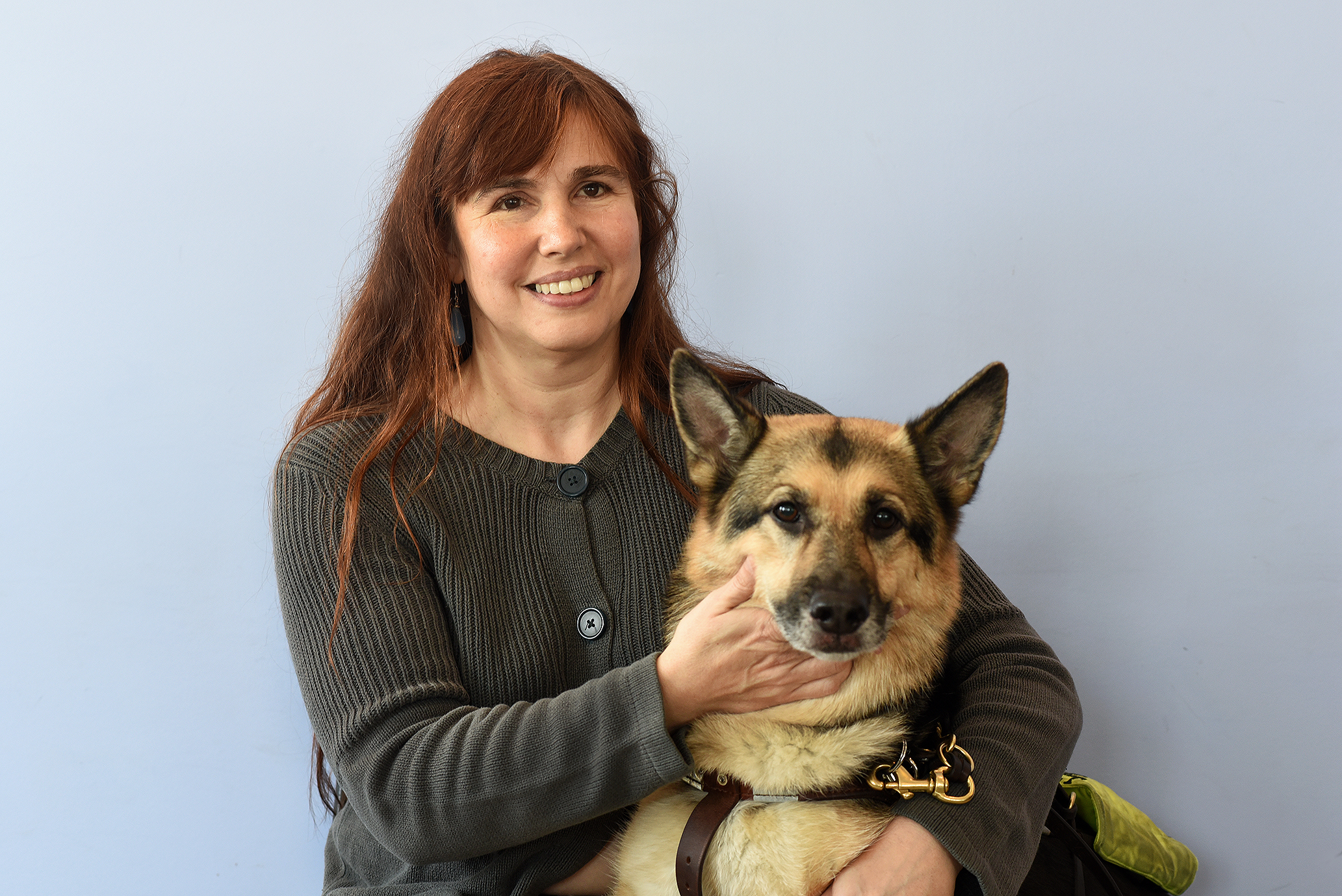
 This week, Sam and Charlend speak with Tricia Waechter of Blind Girl Designs! To get on our email list, weekly show updates, or to provide feedback or guest suggestions, email us at [email protected]!