Episode Transcript
[00:00:00] Speaker A: KPI or.
[00:00:32] Speaker B: Sad. Thank you for joining Disability and Progress, where we bring you insights into ideas about and discussions on disability topics. I'm Sam Jasmyn.
[00:01:08] Speaker A: I'm Charlene Dahl.
[00:01:10] Speaker B: Excellent. You have perfect timing, Charlene. And this is KFEI 90.3 FM, Minneapolis, and KFEI.org just a mini reminder that if you want to hear our podcasts or visit last week, we still have it up on the archives. And last week just, I apologize, I did not get the emailer sent out because I was on vacation and I slacked. But it was Dr. Melissa Geller and she was talking about ovarian cancer. So if you had not gotten to listen to that, it's a great topic. Good show. Well done for her.
Please join the archives or ask your big brother speaker to play it. But now we are in the studio with a founder of a product. We have Sherman Bausch. Hello, Sherman.
[00:02:04] Speaker A: Hello. Thanks for having me.
[00:02:05] Speaker B: I think I even said that. Right?
[00:02:06] Speaker A: You did. That was excellent.
[00:02:09] Speaker B: Sherman's going to be talking about his project, product and project. I imagine it's been quite a project.
Caption. But for now, we're going to start out talking about him and all kinds of things regarding accessibility.
So thanks for joining me.
[00:02:27] Speaker A: Thanks for having me.
[00:02:29] Speaker B: So let's start out. I want to start out by talking about a little bit so people understand you as a person, what it was like for you when you grew up and you have a visual impairment.
Right?
[00:02:42] Speaker A: I do.
[00:02:42] Speaker B: So give us a little history on you.
[00:02:44] Speaker A: Yeah. Thank you. And thanks for having me. I love that the show is here.
I was born with what's called bilateral congenital cataracts. And it's a fancy way of saying that I was born with fully formed cataracts in my eyes. And in the 70s, 1975, to be precise, the solution to that was to take the lenses out of my eyes.
[00:03:06] Speaker B: Nice.
[00:03:07] Speaker A: Right? And it's funny because in the US that stopped happening, I think, in the late 70s, I don't know. And it happened later in other parts of the world. And I run into eye doctors from time to time who will look in my eyes and then they'll sit back and they'll kind of panic for a minute. How to tell me that I don't have lenses in my eyes.
[00:03:27] Speaker B: Like you didn't know.
[00:03:28] Speaker A: Right. Well, and then they flash, they orbit the subject for a little bit and they're like, you know, did you know this happened?
The end result of that, though, is that from a visual perspective, at the Mayo Clinic, my eye doctor down There says I have low vision, special needs is how she's described it. And, and what that means in practice is that I have a fixed focal length. I have no depth perception.
The two images that my brain see don't merge, so I don't put them together into one image.
[00:04:03] Speaker B: Oh, wow.
[00:04:05] Speaker A: End result is I run into things, I trip over things. I hold my phone up very close to my face in order to read it.
So that's the condition. And throughout my childhood, my mother was a saint.
From about four months on, she would put contacts in my eyes to give me the best possible chance of seeing.
And then as I got older, I remember my fifth birthday present to her was the ability to do my contacts by myself, so she didn't have to do it anymore.
But every night for, I don't know, years, my parents would move the furniture around the house at night so that I wouldn't memorize where it was so that I could learn to see.
[00:04:48] Speaker B: Wow. Okay.
[00:04:52] Speaker A: The story is sort of full of that. You know, I sat in the front of the classroom, I held stuff close to my face.
I think if we dove into it, what it did to me was to create this sort of low level anxiety about engaging the world.
[00:05:10] Speaker B: Right.
[00:05:11] Speaker A: And a low level resentment about the things that I could do well. And people would say, oh, that's, you know, nice job for someone who can't see.
[00:05:19] Speaker B: Oh, we've all heard that. Trust me. Really? It feels good. Oh, yeah, yeah.
[00:05:25] Speaker A: Or, you know, so it wasn't merit based. It wasn't like, you're a competent person.
[00:05:28] Speaker B: It was your did a good job because you truly did a good job.
[00:05:32] Speaker A: It's like, yeah, exactly. So, and then layer onto that. You know, I love engaging the world. Art and science and music and concerts and all of those things. And so for me, the world has always been stressful.
And you two are familiar with this, I think?
[00:05:52] Speaker B: Yep, absolutely. And I suspect people with disabilities in general have that, that can have that low level anxiety and, or maybe even high level. And I suspect most people that it isn't always just pinned on a visual disability, but a disability in general, because anytime they get into the moment of where they have to choose how they're going to show themselves or do something that they know they may not be quite totally flawless at, that's when it shows.
[00:06:30] Speaker A: Right? Yeah. And it's.
And I like your framing in that idea. It's not a visual thing and it could be a temporary thing. Right. You could be experiencing a temporary barrier.
And I, over the past couple Years have thought and talked a lot about the idea that disability versus a barrier.
And if that barrier is language, or that barrier is sight, or that barrier is hearing, or that pounding anxiety that makes it hard for you to make decisions.
And then, like you said, how do you show up in that moment?
And then I think, Sam, there are two choices, especially for someone like me. And I want to caveat this to an audience that's used to talking about disability that I am not.
I would call myself a reluctant advocate.
I would say that for many years of my life, 30, 40 years of my life, I fought the idea that I had a disability.
I knew that I did. But I sort of, you know, I tried to pretend I was normal.
I use that word dangerously, but I tried to pretend that the things going on in my life were just me needing to work harder or try harder or be better.
And I had, I think, probably a life changing experience as we were getting this product going. And I was in a museum with my business partner.
And we're walking around and he's following me around, he's observing, he's doing research.
And we get to the end and we sit down and it's at the American Swedish Institute. It's beautiful. And we sit down on these couches and he says, hey, before I tell you what I learned, I want to tell you that this institution failed you.
And I just started crying like I couldn't even handle it. Like the idea that I wasn't wrong or that the barriers that I was experiencing were not mine necessarily, but like a collaborative barrier, me and the institution, and that they had a part to play in resolving those was just fundamental for me.
[00:08:30] Speaker B: I want to step back a little bit because there's a word you use that has always grated on me. And I have learned to say, what is that anyway? And that word is the N word, normal.
[00:08:45] Speaker A: Like I said, I used it dangerously.
[00:08:47] Speaker B: It is normal. So, you know, it is funny because a lot of people use it. It is so overused.
This isn't normal, Right? That's abnormal. You have an abnormal. Whatever. And there are definitely situations where this is appropriate, that that word is appropriate. But I do feel like the whole normal, you just want to normalize this. What does that mean? Well, really, what it means is make it acceptable. Right.
So to normalize means, like, it's just not a big deal. Like it's something you should be expected to see.
[00:09:27] Speaker A: Yes.
[00:09:29] Speaker B: And so for a while, I actually had the same thing. I had family that did not.
That just had a harder time with things, ie, disabilities. And so I would hear all the time, act normal. Come on, that's not normal. Don't do that. That doesn't look normal.
And there's endless amounts of statements that that goes with. But really now, when I'm older, I say, what's normal mean anyway?
[00:10:03] Speaker A: And it's. For me, I agree. And I think as I was growing up, it was a comparative thing, right?
[00:10:11] Speaker B: Absolutely.
[00:10:12] Speaker A: I would say, well, you know, people can sit in the back of and read, so maybe I can sit a couple of rows back, or, you know, my sister can do this, so maybe I can do that. And so for me, it was absolutely comparing my behavior to other people's behavior and ultimately being lacking in it.
[00:10:29] Speaker B: But it's so funny because if you take a group of whatever the disability isn't like, let's say you take a group of people who can see perfectly, are they really normal? Like, do any of them pick their nose? Do any of them scratch? You know, it's like there's endless amounts of things, and you can say, oh, I hope that's not normal.
[00:10:52] Speaker A: I can't do that.
[00:10:53] Speaker B: But you know what I mean?
[00:10:54] Speaker A: I do.
[00:10:55] Speaker B: Same thing with many other disabilities. You could say, yes, they can do that, but what are the things that they do that probably isn't appropriate to do out in public or.
And you could use that term.
So I agree. And somebody else, I'm sure will disagree out there, but bring it. That's all I have to say.
[00:11:18] Speaker A: I think it's excellent.
[00:11:19] Speaker B: But, you know, I'm just careful of.
I think we've gotten to the point now where there's too much, that's okay, but yet we haven't quite normalized a disability.
And I think that that's something we need to think about. But the other thing is, I do want to chat a bit about your reluctance to just look at yourself as having a disability, because I feel like for me, I will say that was brought on because I was forced to try to look so much like my peers or anybody else that I was with who didn't have that disability.
And so when you're really working on trying not to look like you have one, of course you're going to be reluctant. I can do this. I can do this. I can look just like them. Anybody who walks in the room won't tell the difference.
And that's your goal, right? Your goal is to make sure that you don't stick out in, you know, a bad way. If you consider that a bad way or in a way that they might later I realized it's a way they might discriminate or think less of about you.
[00:12:38] Speaker A: You know, the funniest thing that happens to me when people find out that have low vision is they talk louder.
[00:12:44] Speaker B: Yeah, that's it.
[00:12:47] Speaker A: Can you explain to them that my hearing is actually better as a result of this?
[00:12:51] Speaker B: They're confused. They're confused humanoids. Try not to hold that against them.
[00:12:55] Speaker A: It's weird that even the language that we use, it's even hard to describe this problem. I mean, I'm hearing you talk about it to use.
How do you even talk about non normalization or how do you talk about making it okay?
And as I've, as I've been on this journey in particular, I think for me, as I evaluate the spectrum of disability and I say, well, there are people who obviously must present as low or no vision, and then there are people who can get away.
I don't want to out someone, but someone I know who has visions similar to mine, but has lenses in their eyes and is driving a car.
And I think, wow, you're crazy.
Like, why would you do that? And it's. But it's that same thing. It's trying to be. It's trying to fit in, maybe is the truth.
[00:13:46] Speaker B: They're never on the street when they're driving.
[00:13:48] Speaker A: Right.
And people I know are gonna ask me, who is it? I refuse to tell. But one of the things that I've learned in my examination of myself is that when given the opportunity to hide, sometimes that's the choice.
[00:14:06] Speaker B: It is true that it is sad to me that often I might even go as far as saying most of the time, but will often work in our favor until it doesn't, right? Until you make some oops in front of them or they ask you to do something like, oh, God, I don't know how to do that. Well, here. And they start flipping it in front of you and doing it. And you think, I have no idea what you just did.
[00:14:36] Speaker A: Exactly.
[00:14:37] Speaker B: So then you have to have an explanation. But somebody told me one time there's a handful of wise sayings, not very many of them, but that I've collected through my lifetime to try to keep me sane, I think. And one of them, you know, was when I was talking about how I just.
I wish I want to look like everyone else. I want to look. I don't want to be different. I don't want to, you know, And I think that that makes me sound like a little stupid high schooler, you know, you're like, I don't want to be different than anyone else. But somebody told me once, you know, Sam, nobody remembers anyone who is exactly the same as everyone else.
[00:15:16] Speaker A: Oh, that's true.
[00:15:17] Speaker B: And I thought, oh, oh, gosh, you're absolutely right. What have I been doing?
[00:15:24] Speaker A: You've been fighting obscurity, right? Yeah.
[00:15:26] Speaker B: Right. But in that obscurity, I mean, obviously there's some. If you're doing something that makes you look bad in a bad way, or maybe you use it to your advantage at the time, and it's really not a good thing to use, but that can be harmful. But in general, you know, you can be known as the guy who has the product. That. And. And that's good.
[00:15:55] Speaker A: Yeah.
[00:15:56] Speaker B: Sometimes it's not enough to be just have done whatever everyone else has done sometimes. Oh, I know. That's the blind girl with the dog.
[00:16:05] Speaker A: Right.
[00:16:06] Speaker B: She has the, like, oh, my gosh, you remember the stupid dog before you. But it's a.
[00:16:11] Speaker A: But. But to be fair, he's a very nice dog.
[00:16:14] Speaker B: Yeah, that's right.
You are memorable. So there is something about that. And it's walking that happy medium, I guess, that we have to learn to bounce and be okay with emotionally.
[00:16:27] Speaker A: Yes.
[00:16:27] Speaker B: Even though I'm sure if you're anything like me, you go back and forth. Some days I'm like, oh, yeah, I love that. Other days I'm like, oh, go away.
[00:16:34] Speaker A: So I was in downtown St. Paul, and I was somewhere. I was walking and I stopped. I was over by Excel, and I was looking at something on my phone. And later I talked to the woman who cuts my hair, who adored.
And she said, oh, I saw you in St. Paul. I didn't think that was you, but then I saw you hold your phone up to your face, and I went, that's Sherman.
And I went, I'm not emotionally. I'm not sure how I to prepare for this. Right. Because on one hand, I'm like, well, it's sweet that you saw me. And on the other hand, I'm like, oh, I'm that guy. I guess.
But you know what? Like you said, I am that guy. She remembered you, and she remembered. Well, she did. And I am that guy. And.
And I think one of the challenges and one of the things that I'm getting comfortable with is the idea that in order to be helpful to the world and be helpful to the communities that I'm trying to serve, I do have to put myself out and just be the guy who is willing to come on the radio and talk about it. Or when someone says, hey, the little kid says, hey, you hold your phone up really close to your face rather than say, go away, kid, you're bothering me.
You know, maybe, maybe explain it and say, you know, I don't see very well.
[00:17:44] Speaker B: Yeah.
[00:17:45] Speaker A: And, you know, I think change is hard. I think change takes a toll on all of us. Right. Who are forced or obligated to do it.
[00:17:56] Speaker B: Right.
[00:17:57] Speaker A: And, you know, you come here every day and, you know, we were talking in the lobby about trying to get the car and, you know, the Lyft drivers can't find the radio station. And you can't be helpful if you can't see. And you know, this takes a toll on you as radio hosts. But you do it. You show up every day, every week, every week. You do show up every week. And, you know, you serve the community that way.
And I think that's what we pay and maybe find, you know, I find gratitude in these moments now more than I used to. I used to get angry about them and now I just look at them and go, well, I hope it's helpful.
[00:18:31] Speaker B: I hope someone learned today, well, it's still happy. You gotta walk that line, right? And you mentioned another word. I'm going to give another one of my wise sayings that somebody that I did not create, by the way, somebody gives them to me and I collect these sayings. Somebody out there is writing these down as we speak. But they said change is inevitable, growth is optional.
[00:18:57] Speaker A: Yes.
[00:18:58] Speaker B: And that is true. Everyone goes through change. It happens to, whether you like it or not. If it doesn't, you're in trouble because you're dead. So.
But societies change, the world changes, sometimes for good, sometimes for bad.
But some people don't grow well with it. But it will always change. So anyway, so I'm wondering if. Do you have a list, like, if you think back, of the products that have made a difference Now I feel like having a disability is one thing, but we have in some ways we have grown so much.
So much has changed in the world compared to, let's just say 20 years ago.
And I'm only 29, so I'm really young. So.
But all those things that have happened in the last 20 years that have made having a disability not always easy, but at least there's some things that are more doable than they used to be. So what do you use now that makes your life easier? That used to be.
[00:20:19] Speaker A: I'll give you the glib one first. Are you ready?
[00:20:22] Speaker B: Yes.
[00:20:22] Speaker A: Really big televisions, I use my Disability as an excuse to buy really big televisions.
[00:20:30] Speaker B: Excellent.
[00:20:31] Speaker A: And I don't go to the movies anymore. As a result, my basement has a better screen than the movie.
[00:20:38] Speaker B: Oh, wow.
[00:20:39] Speaker A: So, okay, so that was glib, I would say. Probably. For me, the number one thing is the mobile phone, right?
[00:20:49] Speaker B: Yeah, yeah, Yep. Huge.
[00:20:51] Speaker A: It's. And when I talk to people about my phone and they're. You're on your phone all the time or whatever I say, you know, I have to. If I. This is my wheelchair.
[00:21:00] Speaker B: Yeah.
[00:21:00] Speaker A: Right. This is my connection to the world. And. And I have a bone to pick with most of the people who build websites and a lot of the people who build apps because they do it so poorly for someone like me. But at the same time, I have access to something I wouldn't have had access to.
[00:21:15] Speaker B: Right.
[00:21:16] Speaker A: You know, 20 years ago. I mean, aside from. I guess the other thing is contact lens technology has become amazing.
[00:21:22] Speaker B: Yeah.
[00:21:22] Speaker A: Where in. When I was a kid, I remember I would lose a contact and it would cost my family $500.
And now, you know, I have throwaway ones. And so that technology is amazing.
[00:21:34] Speaker B: But that is.
[00:21:35] Speaker A: But yeah, if I had to pick a thing, it would be the rise of the mobile phone and my ability to configure the phone the way I need it.
You know, I'm a dark mode person and if you don't see, then that's irrelevant to you. But I like to have my headphones in so I can hear stuff said to me.
And I'm very picky about my phone and if you touch it, you might get your hand slapped.
So I think that's. Of all the products, I think that's it. Of course, there are other things in the world. I think the world has become more accommodating, on balance than it used to be.
[00:22:14] Speaker B: Yeah.
[00:22:14] Speaker A: You know, we. I think on the phone we talked a little bit about what compliance looks like and I do think that the world has become more compliant or possibly I've started paying more attention to it.
[00:22:27] Speaker B: Ah. Which might be the case.
[00:22:29] Speaker A: It might be the case.
[00:22:30] Speaker B: So can you talk a little bit about barriers in technology? And you talk about either that barriers, you know, that technology can either reinforce them or remove them.
What do you mean by that?
[00:22:50] Speaker A: Technology is interesting because at the end of the day, it's a tool. And so like most tools, it reflects the tool maker as much as the tool user.
And an example I would give of that is that a lot of the design, like, let's just take the Internet.
A lot of the design that goes into the Internet is done by young, very well sighted people on large monitors in well lit offices. And then you take that and you scale it down to something that I need. So you zoom in or you apply accessibility so someone with a screen reader can consume it and the technology falls apart. And so in that case, this technology that should be accessible and straightforward becomes a huge barrier.
But by the same token, you can take something and I don't want to get into conversations about AI, but you can say, today I can ask an AI a question and it will go out to the web and it will get an answer for me and I don't have to look at your webpage that's not accessible anymore.
[00:24:02] Speaker B: That's true. Although I might add the caveat that the answer may not be correct.
[00:24:07] Speaker A: It will probably not be correct.
[00:24:09] Speaker B: Or it might be or same as the Internet. Right?
[00:24:11] Speaker A: Right.
[00:24:12] Speaker B: Well, colors.
AI doesn't do colors very well.
[00:24:16] Speaker A: Yeah, it doesn't.
But so in that case, the technology is not a barrier. And we were talking kind of on the way up about voice assistance, right.
For someone who can't see, is a voice assistant a net positive or a net negative? And it sounds like it was a net positive to a degree. Like you can say, call somebody and instead of having to type their number or you know, find the app if
[00:24:40] Speaker B: indeed the she's working right on the screen. If, if there's problems with the connection, then it won't, you better know how to go to what you need to go to double tap on it.
[00:24:52] Speaker A: Right.
[00:24:53] Speaker B: So there's always that. I tell, I'm a teacher of technology. I tell my students, you can't just know one way, you have to know both. I know it's not fair, but you're not living in a fair world. Nobody, right? We are not on the same playing ground. Regardless of how much you want to think we are, we're on a more fair playing ground than 20 years ago. That part I believe is.
[00:25:17] Speaker A: I would agree with that.
[00:25:18] Speaker B: But we are not on the same playing ground.
[00:25:21] Speaker A: And the reasons for this are, I don't want to say nefarious, but they're kind of nefarious. Here's what I think.
I think that technology gave us a promise to be able to do more, better, faster, easier.
And what we forgot was that it has to work in context, right? It has to be. Technology is used like for us in a hostile environment, right? You're standing by a door trying to get it, and you're in a grocery store trying to understand a price you're stressed out because you have to file your taxes, whatever it is.
And often when we build or design these things, we don't think about how they're going to be used or in what context they're going to be used in.
And so where technology, like you said, when it has a connection, it works.
But did the person who was not only doing the voice technology and the accessibility audit on it ever do a voice accessibility audit with no connection?
The answer is probably no, which is why you run into that barrier in the technology.
[00:26:25] Speaker B: Yes. But to be fair, in that case, that connection is what it depended on to work.
So I go back to that. You have to know two ways to do things, because if one way doesn't work, you can sit back and say, well, my.
We'll just use it. My Siri didn't work, but why didn't you do it the other way? There is another way. You didn't know how to do it. So it's good to learn both ways, because if one doesn't work, you know,
[00:26:58] Speaker A: and this is where. When I'm.
When you have good Sherman, I agree with you.
And when you have bad Sherman or maybe angry Sherman, I would say you could have done a better job designing a product that failed gracefully.
[00:27:14] Speaker B: Well, we all have those.
[00:27:18] Speaker A: I can always do a better job of failing gracefully myself.
[00:27:20] Speaker B: So, yeah, when you did your product, what kind of things did you talk to people about pertaining to barriers? Like, what did you find in other groups or cultures that people had so much trouble with?
[00:27:39] Speaker A: That's a great question.
Honestly, the first thing we did, the last thing we did was build the product.
Actually, not the last thing, because after we built it, then we gave it back to people, but the first thing we did was spend a lot of time observing and interacting with various stakeholder groups. And so we had low vision testers and no vision testers, and we had non native speakers in a number of different languages. So people who were native Arabic, native Spanish, native French, native Hmong speakers, and Thai, I think was the other really interesting one.
The company that we have actually has a lot of hidden disabilities in it, which is kind of interesting to me. Disabilities that you wouldn't necessarily lay out and say, this is a disabled person.
Plus, we have a fair share of anxiety in our group, too, so we spend a lot of time with that. But a lot of it was observational research and then going back through and doing the surveys and the questions and just trying to observe the experience they were having and then diagnosing what that experience Was. And one of the interesting things that came out of it, Dan, my partner, who has. Did all the research, he would say that, you know, people like you. And he was talking about me, but I think other people did this too.
He said you would be in the museum and you would be walking around and there'd be no one there. And you were still. He said you were still there with your disability.
Like, it was obvious that you were in the room with yourself.
[00:29:12] Speaker B: It never goes away, right?
[00:29:13] Speaker A: Well, it doesn't. And it was funny because that answered a question for me, which is, why do I turn off all the lights in my house?
And I do it because then I can just be me. Like, I can be free of observation.
So we did a ton of research, too.
My family's gotten very.
[00:29:32] Speaker B: I'm still trying to get my family to accept it, but something about walking around the dark. They don't like doing wimps.
[00:29:40] Speaker A: Yeah, they tolerate it at my house, or maybe they do when I'm around, but they. So we did a ton of research, and we found that what mattered was this idea that assistance needed to show up in the way that whoever needed needed to work as quickly and as effectively as possible, and then it needed to go away.
And I think what's interesting to me about people who try and bring accessibility to a place is they think that it's an event, or they think that it's, you know, let's have a translator, or let's have guidebooks, large print guidebooks or whatever. And the answer is actually, no.
It's a moment, and then it goes away. Because for a lot of people, not everybody, but for a lot of people, you don't need an assistive device to sit and have a conversation with people. Now, if we were all reading something, you would need something, right.
And someone who is deaf would need someone to sign for them, but they wouldn't need someone to help them read, necessarily. And so we all have these different things that we need.
And what we learned by watching these groups and interacting with these groups, people like me and people very different than me, was that everybody had this need show up for them differently. But the things that they had in common were they needed to sort of gain control of the moment, gather some agency, then they needed to be given the content as quickly and easily as possible, and then they needed to go away so that they could continue on with whatever activity they were doing.
[00:31:21] Speaker B: Interesting.
[00:31:22] Speaker A: Yeah.
[00:31:23] Speaker B: How do you feel that institutions seem to get wrong with accessibility or access?
What do institutions get wrong about that?
[00:31:35] Speaker A: Okay, I Want to be delicate but honest here.
[00:31:38] Speaker B: All right, I'm listening.
[00:31:42] Speaker A: I think it's always been interesting to me that the accessibility link on the webpage is usually on the bottom, and so the people who need accessibility need to scan all the way to the bottom of the page to find it. I've always found that ironic.
I think what institutions get wrong is that accessibility means treating me differently.
And I think they get it wrong when they think that by complying with the law, they are now fully accessible.
I think that, frankly, I've talked to institutions that believe that talking about accessibility counts as being accessible.
I don't know how to answer this question kindly.
I'm finding organizations fall into a couple of categories.
There are people who believe in it and lean in, and I adore those people. And then there are people who talk about it and maybe don't take all the actions that they could.
And those are harder for me on bad Sherman days.
When I consider what I need, it really falls into a couple of things. I need to be able to have a similar experience to everybody else in a way that is dignified, and I need to have it given to me in a way that my anxiety doesn't go through the roof to get it. Does that make sense?
[00:33:32] Speaker B: Yes. Yeah.
[00:33:34] Speaker A: And I think that dignity is probably the thing that is often missed when we think about accessibility solutions.
Right. The large print books.
Someone sent me a picture of an accessibility solution at a museum in Virginia where they essentially gave everybody very large magnifying glasses.
And I don't know how I feel about that, because on the one hand, it seems like, okay, well, now I can use this magnifying glass to see. But on the other hand, I go, wait a second.
Now I'm the guy that's kind of leaning around and, you know, blocking all the space using this magnifying glass to try and read this text that you didn't print big enough for people to read.
[00:34:16] Speaker B: Well, what about the person who can't use that magnifying glass?
[00:34:21] Speaker A: Exactly.
[00:34:22] Speaker B: Yeah.
[00:34:24] Speaker A: And I get it, like, so let's play the other side of the tape for a minute. And there are as many accessibility needs as there are people.
Yep. Right. We all. We all, like. It's hard. Because I think another thing that we maybe get wrong in the accessibility world is we work hard to put people into boxes and label them and say, you know, low vision or blind or deaf or, I don't know, learning disabled, and we stop there. But as you guys know and your listeners know, those are spectrums that we're all on, right? We all have varying degrees of that. And like we said earlier, sometimes people develop conditions that put them into accessibility adjacent for a time. Like maybe you get cataracts, you get cataract surgery, and then you can see again, or you have hearing damage for a period of time, or mobility challenges for a period of time. And so those, you know, people in those moments don't even count as people who are disabled, and yet they need the same exact thing that a disabled person might need.
[00:35:37] Speaker B: Sherman, let's talk caption.
[00:35:39] Speaker A: Let's talk caption.
[00:35:41] Speaker B: What is it exactly, and how did it come to fruition?
[00:35:45] Speaker A: Caption was the result of a highly stressful moment for me, and then, of course, the intersection of all the things that were happening in my life. I was at the Institute of Arts in Minneapolis, and it was a bronze exhibit, and it was beautifully low light and no contrast, and it was really hard to navigate. And so, of course, my stress levels were through the roof. And at some point, I turned to my wife and I said, why is it that they can't just put these labels on my phone so I can read them?
And I stood there for, I don't know, five minutes and thought about it until she dragged me out of the place, and we drove home and we talked about it. Because for me, I've been in technology for 25 or 30 years, and it just had occurred to me that I had this assistive device, right? My telephone. It's configured for me.
I have it exactly like I need it. And if I could just take the content on a wall in a museum and put it on my phone, then I could handle the rest. I could zoom in. I could do what I needed to do.
So that was a breakthrough that took me a couple weeks to process, talking to friends in the industry.
And I called my business partner, Dan, and we had lunch, and I said, dan, I'd like to work on this. We had another thing we were doing, but here's what I want to build. And his first reaction was, I think, probably the door opener, where he said, that would be excellent for people with low vision, but imagine if it could translate text as well.
And then we were sort of off from there, because what we thought was that, what if we had a tool that could take text or, in context, right, a wall label.
We're talking about packaging labels or instructions or manuals, but initially we started in museums. And what if I could take the text on the wall and just put it on my phone? And then if I was a German speaker and my phone was set to German.
It would just put it in German and if I used a screen reader, the screen reader could read it to me.
Ostensibly, that's what caption is. It's a content delivery tool that works in the moment, in context. You tap your phone the same way you would tap with tap and pay.
And it puts whatever that institution or whatever that product wants on your phone.
We worked on it. Like we said, we did a ton of research on it, worked with a bunch of people and then got it to a place where we could try it. We worked with some people at the Vision Loss Resource center to kind of.
They road tested it for us and some of our other testers, non native speaking testers, and got it to a point where we could start to put it in museums.
[00:38:35] Speaker B: So what was the museum's response? And I'm going to ask you if you can kind of play a little bit just so we could kind of be aware of like what that label might sound like. But what's the first museum you hit in there with this?
[00:38:52] Speaker A: So the first museum was actually a little tiny center in Illinois called the Lake Forest, Lake Bluff History Center.
[00:38:59] Speaker B: Aw,
[00:39:01] Speaker A: it's wonderful.
[00:39:02] Speaker B: You been there, Charlene? Well, I live there.
[00:39:06] Speaker A: And Carol, who runs it right now, she's just a phenomenal advocate for, for accessibility and equality.
So she saw it right away and said, you know, I would like this here in town, here in Minneapolis. Our first place that we put it was at the American Swedish Institute.
And Shelby down at the Swedish Institute has been great.
Her comment was we had nothing to offer before we had caption and so they would want to be helpful and they just couldn't be helpful. So the Swedish Institute was one for everybody who's said yes to caption. The response has been positive and ongoing. You know, they get further and further into it.
They get stories from people that come to the museum. You know, we don't track use, but we know how many people scanned it.
And you know, it was at the Minneapolis Institute over the winter.
And as you look at the data, one of the things that came out of that was that we had a 10% screen reader use on caption. And then you talk to the docents and the front service and they would say, well, we didn't know people were there using the screen reader. So it's kind of interesting. It's one of those things that once it's in an institution, it's just there and it's being used and it's being helpful.
And I've always thought that for me as a person, if I.
I took my mom to see it. Let's go with that.
I took my mom to the Wise Men who has it as well, and said, what do you think? And she said, I would take. If I would have taken you to any museum that had this as a kid, because you could have learned. You could have tapped your phone and of course, it wouldn't have worked in the 80s or whenever I was a kid.
[00:40:50] Speaker B: So either you said, for the people who said yes, it's great.
Are the people that say no, and what is the reasoning they give you for saying no, if that's correct.
[00:41:07] Speaker A: So there.
It's funny, we don't get a lot of no's.
We get a lot of people who say not now. Or people who just vanish.
[00:41:17] Speaker B: The vanishing things, to me, is a no.
[00:41:19] Speaker A: It is, but.
[00:41:20] Speaker B: But they're trying to do it gracefully and not doing a very good job at it.
[00:41:26] Speaker A: It's interesting, though, in the museum world, I didn't know a lot about it until we got here. And what I've come to learn is that there's just so much pressure on museums.
I mean, obviously for political reasons and financial reasons and, you know, the ability to tell the truth in these times.
I think that, you know, the staff funding cuts, all of that stuff. And so the museums, and even the museums that have said yes to caption, you know, we learn from them and they're forced to make choices every day about what to do.
[00:42:03] Speaker B: So I'm going to hold you there a minute, sir.
Are you saying that museums have said, well, this feels like it's a equal, you know, a thing for people with disabilities, and they might. This.
They feel like maybe they could get in trouble for this?
[00:42:25] Speaker A: No.
[00:42:25] Speaker B: Okay.
[00:42:26] Speaker A: No, no, no, no. They just. They have other things that they need to do and they have less money.
[00:42:33] Speaker B: It goes back to money.
[00:42:35] Speaker A: So, yeah, so it's talking to. And I don't want to say the institution, but it's talking to an institution in Boston.
And I won't slip into a Boston accent.
[00:42:46] Speaker B: Okay.
[00:42:47] Speaker A: Talking to an institution in Boston, and they have to put some ramps in and they have to come up to code. And what she told me was, we would love to do this, but we have to do this other thing first. Because if people can't get into the
[00:42:58] Speaker B: building, they can't do your thing.
[00:43:01] Speaker A: They can't do this thing. And that is a completely acceptable and viable answer. Right.
So. And then, of course, museums just, they take longer to make decisions and they bring A lot more people along, which I think, on balance is good. Right. You want to get everybody involved and you want to make sure the board understands what you're doing.
So, you know, once we get past those moments, putting caption into a museum is actually very quick. And the responses have been enthusiastic and positive. And we just got a yes down in Davenport, Iowa, with the Putnam Science center, which we're super excited about.
[00:43:46] Speaker B: So you're going all over the place.
[00:43:48] Speaker A: I would love to go all over the place.
[00:43:50] Speaker B: So a couple questions here. So when you point your phone at the description or the sign on the wall.
[00:43:59] Speaker A: Yep.
[00:44:00] Speaker B: And it reads the sign just like you would see on the wall.
[00:44:08] Speaker A: So you use tap, like you would do tap and pay.
And it uses that technology, NFC technology, to trigger content delivery to your phone.
And the institution gets to decide then what that content is. And so the guidance we've given them is, first, tell me what's on the wall in exactly the same fashion that someone who could stand there and read it would see it.
But now you have this opportunity that you didn't have before. And so the wiseman, for instance, does this really great thing with their caption content, where first they give you what's on the wall and then they describe the art and they will say, well, it's a six by eight foot painting in a gilded wooden frame of these figures. And so they do this thing where they actually would tell you what you would be seeing if you could see
[00:45:04] Speaker B: it, but it would be the same thing that somebody would be if they could see it. Would be able to see. Yes. So they're not telling you any inner secrets that somebody else wouldn't know. That'd be cool, though.
[00:45:16] Speaker A: Yes.
[00:45:19] Speaker B: But you are getting exactly what the other person would be getting.
[00:45:25] Speaker A: You are. And we're adding sound and video files. And so one of the things that we heard from some communities is people maybe can speak Hmong but can't read Hmong.
And so you can also now have a sound file. So even if you can't read it, you could tap the tag and hit play, and it would be read for you in whatever your native language is. And then we're talking to some people about using video for sign language. And one thing I did not know, I learned this maybe a month ago, was that for children who are born deaf, English writing is not their first language.
[00:46:04] Speaker B: That's true.
[00:46:05] Speaker A: American or British Sign language, whatever. Sign language is their first language. And so even for young kids or older adults who speak sign language as their native language, then English is second. So having even a video sign language thing would then be an assistive technology that they could use. So, yeah, the whole point is to first say what everybody else gets, so create that equal experience, but then help by providing that additional descriptive language.
[00:46:36] Speaker B: So is it free of cost?
[00:46:39] Speaker A: The museum will pay for it. It is not free to them. It is free to you in the museum.
[00:46:44] Speaker B: And what platforms does it work on?
[00:46:47] Speaker A: We built it differently for iOS and for Android, and we built it for iOS and Android users. So Android users use the phone differently. And I think weirdly, as I'm an iOS person, but actually over half of my company is an Android user. And so Android has a back button that iOS doesn't have. And so we built it differently for those. It's a native application on iOS, you don't have to download it. You tap a thing and it shows up on your phone. It's kind of cool.
And then once you have it, you go to tap the next tag and there it is.
[00:47:23] Speaker B: Cool.
[00:47:24] Speaker A: Yeah, it's fun.
[00:47:26] Speaker B: And what.
So you're obviously putting this in different states.
What is your goal with this? I think I know, but.
[00:47:37] Speaker A: So I think that my goal would be to have it wherever I can get it.
But we're exploring not only museums, but we're exploring products.
We're starting to look into the pharmaceutical industry.
And imagine having a pill bottle where you would tap on the top of the pill bottle and it would read to you what was supposed to be.
[00:48:01] Speaker B: They're supposed to have things that do this kind of thing, but it doesn't always work.
[00:48:08] Speaker A: It doesn't work. It doesn't always work. And so our goal is to sit at that moment where someone who experiences a barrier to content, whatever it is, can consume that content in a dignified way.
So that's the goal. And we're continuing to pursue being in museums and cultural centers, and we're looking at products and trying to grow into the world a little bit.
[00:48:36] Speaker B: Sherman, how do I get caption or anybody? How do they get caption?
[00:48:40] Speaker A: They go to caption.com with two Ps. C-A P P T I o-n.com. coms are hard to get these days. So we have to.
So caption.com and they can call, they can email, and I would love to talk to them. And even just questions about it or where to get it.
You know, here in town, there's several places, I've said a few. The Swedish Institute, American Swedish Institute, the Wiseman, the White Bear center for the Arts. Up in White Bear is another one that's enthusiastic with us, the Mung Museum.
[00:49:16] Speaker B: So when you, when you have caption, is there a list?
Like there should be a list you can go to? That kind of gives you a list of places where it works.
[00:49:27] Speaker A: We have it@ Caption.com. all right, yes, you can go there and.
[00:49:32] Speaker B: Yeah, and I'm going to take a step back and ask the obviouss.
It's all great to have this.
And when you go into a museum, how do you know where the signs are?
[00:49:48] Speaker A: You and I had a really great conversation about this.
[00:49:52] Speaker B: You're still working on it, right?
[00:49:53] Speaker A: Well, we're still working on it.
Candidly, I would love to help everybody and I can't.
And so what I'm trying. What the team is really focused on is continually getting better for everybody.
One of the. We're going through an audit right now. It's called the VPAT I think is the term.
And we'll get feedback from blind users using JAWS and some other tools. And then we'll incorporate that.
Collaborating with the museums to say, this is great, but how does someone find this tag if they can't see very well?
These are hard questions to answer.
And different facilities are open to it and other facilities are like, well, if you can't see, you can't see.
So I don't have a great answer. One thing that we're working on is a companion mode where if I tapped a tag, you would get the content as well, which is kind of interesting. It doesn't solve your problem, it doesn't solve your autonomy problem.
[00:51:00] Speaker B: All right, so I have a confession for all those people who have my emailer. I have an emailer that I send out every week and I misspelled captions, so, oh, no, make sure it is C, A, P, P, P, T, I,
[00:51:14] Speaker A: O, N.
Your autocorrect is going to do that.
[00:51:18] Speaker B: Excellent.
Okay then.
But that is something that people will need to know. And what has been the feedback that you've received from users?
[00:51:37] Speaker A: Universally positive.
Now people who spend enough time with me become critical, which I appreciate.
You know, they'll say, I wish it could do this, I wish it could do that.
But there's some first time user stories that made it worthwhile for me. I think one, an opening day at American Swedish Institute was watching people tap the tags and then go down and read the content while they were eating or, you know, tap the tags and then sit on a bench because they were having trouble moving around.
Our first client in Lake Forest, Carol, said, oh, no one's going to come in here who needs it in a different language. And she and I are having lunch on opening day and a Spanish family came in and a Spanish speaking family came in and started tapping all the tags and talking in Spanish. And so I, of course, you know, told her, well, I was right and you were wrong.
But I think one of the things that someone said to me, you have your sentences and your life lessons and phrases. And someone said to me a long time ago for a completely different reason, they said, if you do something worthwhile, it's gonna change somebody's life.
And you don't get to know who.
[00:52:57] Speaker B: Ah.
[00:52:57] Speaker A: And you don't get to know when but feel okay about having done good for them for their sake.
[00:53:07] Speaker B: Excellent.
[00:53:08] Speaker A: And I believe that caption has probably helped maybe some kids who were like me or some people who were frustrated or whatever.
And I take a lot of comfort in the idea that there's people today at these institutions who have a better experience because it's there.
And I'm grateful to everybody who was a part of that.
[00:53:30] Speaker B: Chairman. It's been fun.
[00:53:32] Speaker A: Thank you so much.
[00:53:34] Speaker B: Give the URL one more time.
[00:53:36] Speaker A: Caption.com thank you so much for joining me. Thank you so much.
[00:53:45] Speaker B: You're tuned to Disability in Progress, where we bring you insights into ideas about and discussions on disability. Disability topics. The views expressed on this show are not necessarily those of KFAI or its board of directors.
I'm Sam Jasmin. I'm the producer and host of this show. Charlene Dahl is my PR research person. We've been speaking with Sherman Bausch about his product, caption with double P's.
If you want to hear something on the show, feel free to email me at disabilityandprogressamjasmin.com Also, if you'd like to be on the show, you can email me at the same address.
Disabilityandprogressamjasmin.com Remember, we have podcasts and please feel free to listen to them. Thank you, Erin, for our podcasting. Thanks for listening.
Take care, everybody.
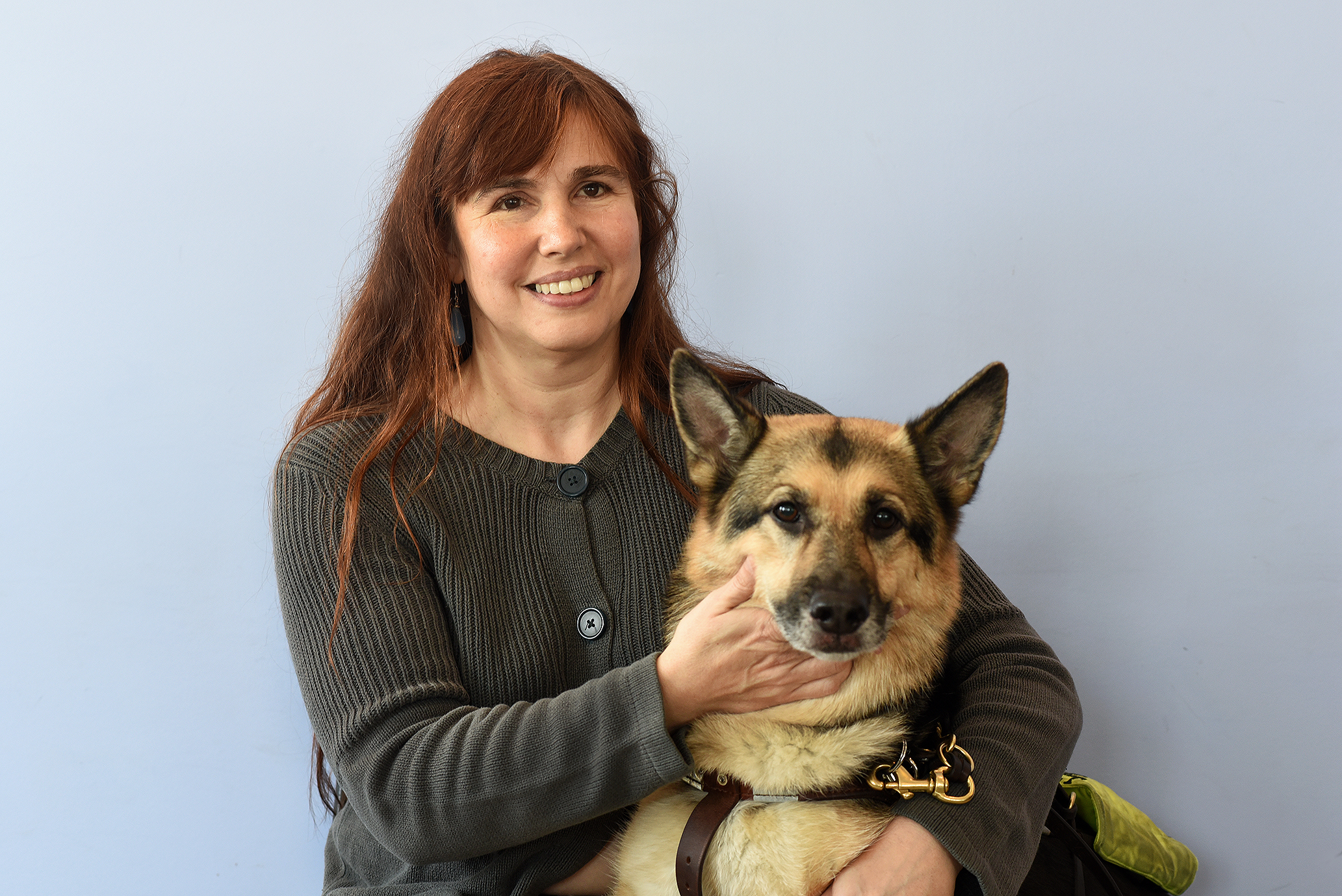
 This week, Sam and Charlene talk with .Sherman Bausch. He is the founder of the product Capption, which lets people wh can't otherwise enjoy museums by a device that reads the information displayed by pieces of art! It will make art much more accessible! To get on our email list,receive weekly show updates, or offer feedback/guest suggestions, email [email protected]!