[00:00:00] Speaker A: KPI
[00:00:03] Speaker B: or.
[00:00:59] Speaker C: Greetings and thank you for joining Disability and Progress, where we bring you insights in to ideas about and discussions on disability topics. I'm Sam Jasmyn. I'm Charlene Dahl. Thank you so much for joining us. And I want a couple reminders that we always have email. You can be on our email
[email protected] we love to hear your feedback and suggestions. Also, you can listen to us via Big Brother speaker or our awesome app that we have on the App Store for KFAI or of course, on our archives for a couple weeks after this.
We have on tonight Scott Agun, Scott, and Randall Crosby. Scott is the president of the Randolph Shepherd Vendors of America, or rsva. And Randall is a vendor for the BEP program. I hope I got all those correct.
[00:02:00] Speaker A: You did.
[00:02:01] Speaker C: All right.
[00:02:02] Speaker B: Whoo.
[00:02:02] Speaker C: That's a mouthful. All right, gentlemen, thank you so much for joining me. I appreciate that.
Can we start out first of all by.
Well, I think for listeners who are not familiar with it, let's talk a little bit about the bep, or business Enterprise program. Right.
What it is and, and how it works or its purpose. At least we'll get into the nitty gritties in a little bit.
[00:02:37] Speaker A: Oh, yeah. Randall, you want to go ahead and.
Thank you.
[00:02:40] Speaker B: Hi.
Hi. Sure. Thanks, Scott. Hi, Sam. Yes, I am Randall Crosby. I'm a vendor with the Randall Shepherd Vending Program. I'm also a board member on the Randolph Shepherd Vendors American. It's always a pleasure to work with Scott Agan as our president on that committee.
The Randall Shepherd Vending Program.
In a nutshell, I would like to share this with people.
It provides business opportunities to people who are blind in the United States.
And you just have to check a few boxes. And then a person would apply for that position and training through their local blind services rehabilitation agency, sometimes known as Commission for the Blind. But, but the, the program itself, we entail food service. We currently have 1364 of us. I think that's today's accurate number.
[00:03:34] Speaker C: Well, we'll get into the real nitty gritties.
So how do you guys have a story on how the BEP came about?
[00:03:46] Speaker B: Yes, go for it. Well, 90 years ago. Yeah, the, the federal law. In 1936, two congressmen, last name Randolph and Shepherd, they proposed a bill to the president at the time that this law would be federal law to provide these business opportunities. People are blind on federal properties.
And that's how it came about way back in 1936, which is amazing. And it's been successful ever since. This year's our 90 year anniversary.
[00:04:17] Speaker C: Well, congratulations. Does BEP exist in every state of the United States?
[00:04:26] Speaker B: Go ahead, Scott.
[00:04:27] Speaker A: That would be, I believe, 49 out of 50 states. I believe there's one state that does not have any operators, but yes, a large chunk of the country. And I just wanted to correct Randall on one thing. He said the BEP program is for the blind. It's also for the visually impaired, which I happen to be. So. Yep.
[00:04:47] Speaker C: Excellent. Excellent.
[00:04:48] Speaker B: Yes.
[00:04:49] Speaker C: So 49 out of the 50 states have a BEP program or business enterprise program. I want to make sure I keep reminding people or saying what it is in case people don't catch the acronym.
So you talked about the. The program is for the visually impaired and blind. And how, how do you can. How do you qualify to be in the program? And do you have to have a certain percentage of visual impairment?
[00:05:27] Speaker B: No, it's for everyone who, who is visually impaired. If you're legally blind, the first step is to contact your. Your local Rehabilitation Services administration office.
You have to apply through them. That's at the state level.
And there are several offices in most states in larger cities around you can find one.
And once you. You have to go through their program, they'll assess you and evaluate you to be sure you are a fit candidate for the training process.
[00:06:01] Speaker C: Okay.
[00:06:01] Speaker B: Most states offer a few several weeks of training into the food service.
[00:06:05] Speaker C: And we'll get into the training part.
Can you tell me. I know I. I feel like I gotta have a handle on. You guys are wild.
[00:06:14] Speaker B: We can talk. I warn you, Sam,
[00:06:18] Speaker A: we could fill the hour.
[00:06:21] Speaker B: We're ready.
[00:06:23] Speaker C: So in regards to the Randolph Shepard act, like it's a federal law. Right. So how do you feel that that is so important? Talk a little bit about that law.
[00:06:35] Speaker A: Oh, sure. Randall, you mind if I step in on this one?
[00:06:39] Speaker B: Go right ahead.
[00:06:40] Speaker A: Okay. So there, as Randall said, the federal act was signed by the president in 1936.
But also you'll come across many Randolph Shepard acts throughout the country. Each state usually has their own.
So in Minnesota, for an example, that allows us to be in state facilities, for instance, prisons, colleges and universities, state.
State office buildings and those kinds of things, as well as federal facilities.
[00:07:14] Speaker C: So does that mean that different states have different rules in regarding the Randolph Shepard Act?
[00:07:21] Speaker A: They do, Yep. Every state's a little bit different in how their law is written and how they perform according to that law. So, yes, there'll be some slight differences between states.
[00:07:34] Speaker C: But you're on the board that it's Kind of like the overall board, aren't you?
[00:07:41] Speaker A: The Randolph Shepherd Vendors of America. We are a group that we're all independent business people throughout the United States and usually in. In the Randolph shepherd program.
But it's it word.
We're a group that just believes in self training and trying to better ourselves to allow us to better our businesses in our country.
[00:08:07] Speaker C: And what types of businesses or locations can a BEP vendor operate?
[00:08:14] Speaker A: Randall, you want to take that one?
[00:08:16] Speaker B: Yeah, yeah, I'm happy to share that. I personally I. My story is I got in the program in 1990, believe it or not. Sam and for a young man, I know it's hard to believe, but you are 36 years I've been in this program, so.
[00:08:31] Speaker C: Excellent.
[00:08:32] Speaker B: Quite some time. Scott as well has been in even a couple years longer than me. I know. So we're veterans at this. And I started in a small snack bar in a vocational technical school. I'm in Florida.
[00:08:46] Speaker C: Oh wow.
[00:08:46] Speaker B: And I have moved. I've been in six different businesses in five different cities and even in two states. I spent a couple years in Colorado later in my career and then came back to Florida. So I've done a lot of different facilities, but currently for about eight years I've been in a rest area and a good number of us are in the rest areas. And that's one of those acts that was passed later that allowed us to move into rest areas. So all interstate highways and I love telling people this, when a person drives into a rest area in pretty much all of the United States on those interstate highways and a lot of times it's to use those facilities, you know, take a restroom break.
[00:09:27] Speaker C: Right.
[00:09:28] Speaker B: And people see there are snack machines, drink machines, coffee machines. Well, that's us.
We own the rights to those snack machines. For example, in Florida we have 55 rest areas, 55 small business owners who are blind run those facilities. And that's what I've been in currently now is a rest area.
[00:09:47] Speaker C: Ah, do you like it better than having being in like a college or a lunch counter, I presume. Are there still lunch counters?
[00:09:56] Speaker B: I've enjoyed them all. There are, there are still cafeterias working in our program and I've done all of those cafeterias. We have vending routes. We have people who have a truck, a large van with a driver. And this is full ownership. This blind person, their, their job, their daily routine is hire and maintain employees, their drivers in the truck. And they, they have up to 50, well anywhere from 32, 80 vending machines in about 20 different areas throughout the city they're driving to and filling those machines. That's what we do.
[00:10:33] Speaker C: Wow.
[00:10:33] Speaker B: So we have vending machine routes, we have cafeterias, we have snack bars.
The rest areas. Now, micro markets are kind of the newer concept. What's after the pandemic. And Scott has a micro market, and he can tell you about that, too.
[00:10:49] Speaker C: Okay, go for it, Scott. Because now I want to know.
[00:10:52] Speaker A: Well, so the micro market is definitely the new thing.
And with those, it's basically like a manless convenience store. So it'll have all the products hanging on pegs, or there might be a single door cooler or something like that with some sandwiches in, maybe another one with some frozen product.
So all this stuff you can purchase whenever you'd like. You just pick the product you'd like. You go up to the kiosk, scan the product, pay for it on the kiosk, and out the door you go. It's super convenient for employees in the buildings who frequent these, and they've been a great thing for our program.
And my joke about a micro market is the fact that if I wanted to, I could sell a set of tires. If I could come up with a SKU number for it, I could sell tires at my micro market. So. So wait a minute.
[00:11:46] Speaker C: So somebody picks a product and they go up and scan. How do you know they don't just walk out with it? If you're not there, there's.
[00:11:55] Speaker A: There's cameras all over the micro market, and so you could do some investigating. And certainly there's always going to be that chance that somebody could pilfer from you. But it doesn't really happen that often knowing there's that many cameras. I know for myself, the building that I have my micro market in, or had my micro market in, is state and federal used facility.
And I don't know why they.
The money they make, why they'd want to steal a $2.50 candy bar from me. It wouldn't make sen.
[00:12:35] Speaker B: But.
[00:12:35] Speaker A: Yeah. So they're pretty secure.
[00:12:37] Speaker C: They're pretty secure, but okay.
[00:12:39] Speaker A: Yeah. Yep.
[00:12:41] Speaker C: So here's what you guys have been waiting for. I think I was wondering if you could talk about the.
So somebody walks in and they think, I really want to do this. I want to be a vendor.
Can talk about what they do. Like, what's the process from beginning to end, from when they. From the beginning to when they get their first business.
[00:13:05] Speaker A: Okay, Randall, you want to take that one or you want me to.
[00:13:07] Speaker B: I'll go with it. I'll start with it and then. Okay, take some more of it.
Great question. And we do tell people here in Florida really look at this as a one year long process from start to finish. And, and I tell people this is not a get rich quick scheme at all. This is a, a choice you're making for a career that involves hard work and dedication.
Step one, you'll sit down with your counselor at your local rehabilitation office as a client and you'll have to be assessed as a person who is blind.
You may need to have some initial training in independent living skills, use of white cane or, or guide dog mobility if that's what you need technology at least to have some skills. Basically using a computer, using the Excel spreadsheet, if you need screen readers like Jaws or other ones out there.
[00:14:04] Speaker C: Right.
[00:14:04] Speaker B: Or what type of assistive technology you may need.
We need those candidates to be fully independent because you're going into business and you're wearing a lot of hats.
So you have to be prepared.
And then as you go through that process with your client services counselor, they get you to where you're ready to be in the program.
After you've checked those boxes that I just mentioned and you're prepared, then you'll go in person to the training center.
In most states, I don't think they've gone to the online training yet. I know some are kind of lean that way. Here in Florida you're going to 16 weeks of on site training at the campus here. It's the Daytona beach training facility for the blind. In Florida every state has their own facility and you're there Monday through Friday, you live in that facility.
You know, you have the meals there, you're with other students, they're doing other things there that are blind.
But you're, and they have a, we have a working snack bar operation, a micro market type vending machines and we go through modules for 16 weeks.
[00:15:22] Speaker C: Does every.
[00:15:23] Speaker B: You'll learn how to do accounting, business, math, our policies manuals that each state has the policies of our business, the bylaws, vending machine, basic repair.
We do call on technicians to do that as well.
You'll learn how to manage your coffee machine and other vending machines. So it entails a lot. And once you finish that, you're going to take the state licensed food service test known as the serve Safe test. And you'll have to pass that, which you'll be prepared to do and then you'll become a state licensed food service worker prepared to go into business.
Then you go to ojt, at least in Florida, between four to eight weeks of OJT with another business owner and you'll shadow that person, learn all aspects of their business.
Then after that you've graduated and you're ready to apply for facilities and you will eventually have the keys to a business. And that's where the real learning begins.
[00:16:30] Speaker C: So a couple questions.
[00:16:32] Speaker B: Oh, go ahead, Sam.
[00:16:34] Speaker C: So on the ojt, on the on the job training, do you get paid when you're helping somebody with their business?
[00:16:43] Speaker B: I.
Yes, I think there is payment in that.
You got me on that one. I'm a little stumped with that one. I haven't addressed that issue for a bit. I do believe there is a payment in process for that. And each individual case also, they do provide, like I said, all that training you're getting is, is free. And you know, you're on the site for the initial training that you do.
I'm pretty sure the OJT does entail payment to that person as well. Yeah.
[00:17:14] Speaker C: So then I also had a question. A lot of people are on a disability, you know, Social Security or Social Security for disability.
How does that work? Do they, obviously, if they're not making money, they get to keep, you know, having that.
When they get their business, can they still keep it? How does that work?
[00:17:39] Speaker B: That's going to be between them and Social Security and how they manage that.
They'll have to learn how that works because what I can tell you is we, most of us know once you start earning a certain monthly income or weekly income, you cannot earn that ssdi.
So to my knowledge, no, once you become successful business owner, no, you cannot continue with ssdi.
That's my experience and my knowledge of it.
But it's a case by case, individual basis. Really.
That's my answer.
[00:18:11] Speaker C: Scott, did you have anything you wanted to add?
[00:18:16] Speaker A: Let's see, Let me think about this for just a second here.
Yeah.
So I know I'm going to use our example in Minnesota. So years and years and years ago, sadly, I can speak years and years ago because I'm getting older and I've been in this program for, I hate to say it, for 40 years.
So my training days are long behind me. But one of the things that we try to do in Minnesota is when we have those businesses available, we try to make sure that there's a decent, livable wage that you're going to earn as you take those businesses over.
Because last thing we want to do is have somebody in a small business who can't make enough to pay for the product they're in and live on any kind of income, you know, that they would get. So that's the way we structure things in Minnesota.
[00:19:10] Speaker C: So it sounds like the states structure them differently. So what happens here?
But you're. So I'm guessing it's the same basic training across the board, but the rules just might be a little different. Is this correct?
[00:19:26] Speaker A: Right, right. Yeah. Here in Minnesota we would. We don't have a training facility like they do in Florida. Florida is a very large program.
They have a wonderful trainer and a wonderful facility.
Here in Minnesota, kind of the same rules. To get into the program, you'd have to go through some evaluation.
They need to know about the acuity of what you, what you're able to do, etc. Etc.
And then you'd go on the job, job shadow for a few weeks with the potential operator who's been running their business for a while.
And so you kind of find out, do I like this? Does this make sense for me to pursue this?
And then they do an online course.
And it goes by your pace on the online course. Okay, but after so many chapters of that, you would complete that and then you'd work for an operator for a few weeks to make sure that, you know, you learn how to repair machines, etc. Etc. And then you would be licensed to be in our program.
[00:20:29] Speaker C: So what. How do you. It sounds like, how do you do the. Getting the experience with the micro machines and, or the micro bars and things like that.
I didn't name that. Right, sorry.
[00:20:44] Speaker A: Yeah, micro markets.
So basically I can't speak to Florida, but in Minnesota we only have one and I was the one who had it for many years. I've now passed it on to another operator because I have so many things going on.
But for him, I worked with him, kind of brought him up to speed. There's also training from the company that provides the service.
So they kind of help him get organized and figure out how the system works. And we have something in Minnesota called a coordinator who would work hand in hand with that person to get them trained, help them get set up and be able to step into that operation almost flawlessly. Almost flawlessly. Because there's always going to be something. But. But yes, that's, that's how our program would work in Minnesota.
[00:21:30] Speaker C: So I know sometimes somebody might have a business somewhere and a business somewhere else, or they might have a college here and a prison there. Whatever it is, how do they decide how much of a business they're going to give somebody? So how many business Places, how do they decide that?
[00:21:54] Speaker B: Yeah, can I answer on that one, Scott?
[00:21:56] Speaker A: Yeah, go ahead, Randall.
[00:21:57] Speaker B: I'll start and then Scott can go. Yeah, Sam. I think Scott's left because there's really not a simple answer. The, the differences are, and it is interesting, Scott and I can certainly share in the differences, as you're already seeing, between Minnesota and Florida. And when you have 50 states, each one is uniquely different.
Lots of similarities, probably 80% similar, but 20% difference. So here in Florida, it's very different from Minnesota, where that. That's a great question.
After that person is licensed now you start applying for locations here in Florida. The way it works, only three times a year, it's always the same date. It's in January, May and October, the 15th of each of those months, I'm sorry, January, May and September. On the 15th, we have a website. Everyone has access to all of the vendors that are eligible and the locations that are available are announced and you will have data on there. It will show you how much sales that place makes in a year, how many employees you need to run it. Is it a route? How many machines are on that route?
What are the requirements? Is it a snack bar or cafeteria or a micro market?
You apply for that. Here in Florida, there are three keys to the structure.
A person gains experience points.
Now, the only way you gain experiences points is over time by having experience.
So for a new person, they start out at a disadvantage with that, they don't have the experience points.
But then there's the test, and the newer person coming right out of the school and out of training should do well on the test. That's where they could have an advantage over someone that's been around for a while, maybe not so strong. On the test.
There are 40 points awarded total from the test. If you make a perfect score, there are 25 points from those experience points and 35 points from. The third part of it is the interview.
You have to show up in a nice, nicely dressed, in front of a panel of five and you're interviewed for 30 to 40 minutes. It's serious. This is serious business in our state as well as others.
It's not an easy task for anyone. It's it. It's something you're going to have to work at. And we've had success with this.
And so that's how you obtain these facilities and the larger facilities that do well, there's more competition for, obviously.
So new people start out at some of the other places that aren't, you know, as large as demanding. And so it kind of works out fairly that way, and people gain experience and time and knowledge, and they learn how to operate those micro markets and everything else with experience.
So that answered the question.
[00:24:45] Speaker C: Yeah. Scott, is it different in Minnesota?
[00:24:51] Speaker A: Yes.
So in Minnesota, we operate on the seniority list.
So, for instance, our oldest vendor, who has been in the program for, we'll say, 50, 55 years, he would be the number one vendor. As these businesses come open, the state would announce that there's an opening in our program, and we could then bid on that business.
New thing we've put in is now that we're also being asked to put in a business plan as we apply for this, which is wonderful. I mean, yeah, we need to prove that we kind of know what we're doing.
So that's how we work in Minnesota. We're one of a few states that still do that. But, yeah, so that. That is how it works in Minnesota.
[00:25:36] Speaker C: I could see pros and cons for both ways.
And obviously, when Randall, when yours come open and Scott, when. When there's a place that's opening, that vendor needs to be. That vendor's doing it because they want to move or they want to retire, whatever that is.
[00:26:04] Speaker A: Yep, yep.
[00:26:05] Speaker B: Yes, Sam. And. And that's important to Florida. We ask our candidates, and we do a pre assessment with them, an interview on Zoom now, of course, in front of some of our people, and we, it's not to grill them, it's to let them learn about us, and we learn about them.
And one of those first questions is, are you open to moving around the state of Florida to advance? Very important not to get locked into just one city in the state if you want to advance, because a place you may be living in Orlando, Florida, and a place may come up in Tampa or Miami, and you need to move to that location, and people are open to doing that. And, and that's how you advance.
[00:26:45] Speaker C: So for you two, what. What would you say would be some of the biggest misconceptions that people have about blind entrepreneurs and their ability to run successful businesses?
[00:27:01] Speaker A: Randall, you want to take that one first?
[00:27:04] Speaker B: Yeah. I really love this program, Sam. And 36 years ago is when I walked into the training center, and honestly, my mindset's been since that day, what's the catch? What's the downside of this program? Because they're telling me they're giving me a viable business that's guaranteed a certain amount of customers and dollars coming through, sales coming through daily. They're handing me the keys to this I honestly say, you know, what's the catch? What's the downside? That's just me.
Yeah. The catch is you have to work and you have to show up and be responsible. And I don't mean to, to make it sound trite. I'm serious about this, that I think it's one of the greatest things for people with a disability, specifically blindness and low vision, that there is. And I've just seen what it's done for people who are willing to just commit to it and, you know, just get into the system and, and be open to. To learning.
I always tell new people, just come in with an open mind.
And what I tell them, if you're not strong in accounting, in taxes and business math, that's okay. You know what you do? You hire an accountant, which is what I have.
If, you know, you don't like to cook, you're not strong on the kitchen or a line. Well, guess what? You don't have to be. You're going to hire the people to do that work now. You're going to have to learn what they're doing and know what they're doing because you're the boss. Yeah, but it's just great opportunity, in my opinion.
[00:28:37] Speaker C: So.
[00:28:38] Speaker A: No, I. I couldn't agree more, Randall. I really couldn't. I.
I'm always thrilled when I get to talk about how many people in this program have come into this program and been successful and blindness is.
It's not a barrier.
Anybody who's got the gumption and. Gumptions kind of a funny word. But if you've got that desire to be successful and dig in and do the work, because this is not a freebie. It's not a gimme.
It's work. You got to work at it every day and you can be very successful.
[00:29:12] Speaker C: So you two have. It sounds like different businesses. Can you each talk a little bit about what a day looks like in your business?
[00:29:22] Speaker B: Yeah, Sam, I'll hit it first and then Scott can go. All right, Scott.
[00:29:26] Speaker A: Yep.
[00:29:26] Speaker B: Yeah, I currently am in a rest area.
I've been fortunate to work alongside my wife Patty. She cited.
We've been partners really from day one, 36 years now.
And we both. Originally I had site early on and we both worked at Marriott hotels. My wife worked in the kitchen. I worked in the person department. So that training was great for us as a team to come into this program. It really was. But. But anyone can do this that's willing to try whatever your situation is. I've seen so many people just who Are blind independently, without a sighted partner, come in and find their success.
A day for me going out to our rest area in the morning, we we first go into our stock room. We each of these facilities has a store room right there on site. It's air conditioned because we're storing chocolate, candy bars and danishes that have to be at a certain temperature, especially here in Florida, or they melt.
So we start out in our store room, look everything over and we'll get our carts and then we head out to the vending machine area and we'll start opening the machines. And one by one we have a system in place that we do a physical inventory of each of the machines, see what products we need and troubleshooting along the way. There's always going to be one machine that's maybe there's coin jams or a dollar bill jam or it's just completely out of service, any number of things. So always troubleshooting small repairs along the way.
We're doing that. Then we'll have our inventory of our first four machines out of the eight. Then we'll go in and get all the stock onto the cart that we need for that and physically load those machines, each one, one by one.
Meanwhile, helping customers between time, assisting them with the machines, any of their needs.
The coffee machines require a lot of maintenance and work and care.
They're just more demanding. They have a lot of going on but they're the most popular. The coffee machines are very popular on the rest areas.
Fresh cup of brewed coffee and they make a good cup of coffee. And then one thing I'll say quickly here and then Scott have a chance is the technology has evolved. Amazing. We're talking those micro markets with cameras, the technology, we've all grown with it.
All of our vending machines now in the rest areas in Florida. It blows my mind to say this. We're 80% credit cards now, 80% cashless sales, which is amazing. It was only 10 years ago. It was probably the opposite. It was probably 80% cash sales and 20% credit cards.
We've evolved and we. I have all that information on my device, whether it's my smartphone or my computer. I can look in the morning. And we do this too. And Scott can talk about this too.
We now look on our devices and we can look at our inventory that way as well as the physical inventory. I can look and get a 24 hour report of what I sold out of each machine. It's remarkable.
We have the back office of our credit card readers and that's a viable part of this with powerful information right there. So we've grown into a lot of technology. For the young people out there that like technology, this program offers that as well.
[00:32:44] Speaker C: Scott?
[00:32:45] Speaker A: Yes, our program does have a lot of technology these days.
In my case, 40 years ago, the vending machines look very different. You had a lot of wires and things to plug in and out, and now it's all electronic. We just don't have some of the troubles we used to. But a day, for me, every day is incredibly different. I have three prisons, I have a community technical college, and I also have a small route.
So one day I may be going into a prison and either filling machines, which I don't do a lot of that anymore because I've gotten so big, and unfortunately, I haven't learned the word no yet. When they call me up and say, scott, we need help cleaning up this business, can you take this over and get it running a little better?
And I just love doing what I do. But I'll go in and help one of my employees work on machines.
If there's any cash to be collected, I'll do that.
Any repairs? I'll say, well, are you having problems with equipment? And I'll make sure I got the parts. Any ordering? I'll either help them with ordering or I'll do the ordering.
And so every day is wildly different, Wildly different because like, one day of the week, I'm on my route, so I'm in the truck with my driver, and it's so wildly different than being in a prison the next day. It's just. You can't ever compare. But I get up in the morning, and I still love going to work and seeing what's new coming that day.
[00:34:16] Speaker C: So surely there are some challenges. If you had to pick some challenges that can sometimes happen. What are they?
[00:34:28] Speaker B: Oh, plenty. I'll jump in first. Scott it seems to be the order we're going. And then you can go, if you don't mind. If that works. Yeah.
So many challenges. Oh, yeah.
Sam, the problem you have with me and Scott, we're eternal optimists, you know, and we can make everything sound great because we just can't help ourselves, because every day is. It's a new adventure. And we love the. And we love challenges.
I'll tell it this way and this I've told many people over the years what I love about the Randolph shepherd vending program.
It provides an opportunity for us as people who are blind or low vision, visually impaired, to find success, to succeed. But what I like most about it even more than that. It provides us an opportunity to fail.
And I don't mean fail out totally. We don't want that. But every day I find a way to fail, mess up, and I have to own it. And what better thing for a blind person than give that opportunity to do something and mess it up and make a mistake and learn from it. Oh, so many things went wrong. I.
When I first started in my snack bar, I have rp, so I had the low vision at that time. A good amount of vision to use.
And people. You know, I was in that place where people thought I was really sighted. They didn't understand. I actually had a visual impairment sometimes myself too. I wasn't sure I did even, because I could see pretty well. Seemed like I thought so. But that was my first few weeks on the job. I literally took a sandwich from a lady she handed over from our cooler, asked me to put it in the microwave, which I did. And I go to ring her up, you know, back in those days, I don't know, 295 for a sandwich.
And she says, oh, and you've got my. My money. I go, no, ma', am, I don't have your money, so I'll give you a $20 bill. And back then, a 20 was a lot of money, folks.
I'm like, no. And she's like, yeah, I gave it to you. So here we are. Already I'm in this jam with it and looking all high and low around with my usable vision. She's even come around looking for her $20 bill. She's getting upset. Ding. There goes the microwave. I pull out the sandwich. What do I find? The $20 bill in the microwave.
You know, failures and an embarrassment. But, yeah, so I learned, yeah, be sure to know where the money is. But, oh, I can sit here and give you an hour's worth of stories of. Of failures. And I still, 35 years later, I. I can make mistakes on a regular basis, and things happen. And sometimes it's being low vision or blind that causes it. Sometimes it's just not being low vision and blind. It's just human nature. But humility, humbling interactions with people.
You know, how to deal with that irate customer. Oh, I've been in front of. So can Scott tell you? In front of plenty of people upset with me over a number of things. Just screaming, yelling. And we learn how to defuse the situation.
So many things can go wrong, and they do. The big challenges are just showing up every day. And when you have A bad day. And I tell the young people or new people coming in, you're going to have a lot of bad days.
You know, you're going to have a lot of bad days. You're going to want to walk out of here and just quit.
Just stay the course and success will come.
[00:37:38] Speaker C: Scott?
[00:37:40] Speaker A: Yeah. Oh, absolutely. And, Randall, I learned something. Another story about you. I didn't know.
[00:37:45] Speaker B: We're always learning about each other.
[00:37:46] Speaker A: So my story, one quick one from the other day, and this happened to me in one of my prison locations, is this gentleman came up and he was telling me that the machine was charging way too much for product. It was charging $655 for something in there, and he thought that was too expensive, which was a bit of a complex story, what he was telling me, which he was right. But he was trying to punch in some numbers in the machine that were not dedicated to anything. So, anyway, I looked at him and I said, $655. That doesn't seem bad to me. I kind of like that idea.
So sometimes we have to defuse with sense of humor, right? And he did get it. And I had a guard come up to me after that, and she goes, I had to fight not laughing. You are so funny with that guy. It was great.
So, yes, you learn.
You learn ways to deal with things that come up during the day that may not go quite like they're supposed to.
Just have to be.
Have a little wit, little sense of humor, makes a big difference sometimes. And just try to really work on pleasing that customer.
A lot of those. A lot of those issues will go away. They'll. They'll find respect for you if you show respect for them. So.
But, yeah, there's. There's challenges. There's always challenges for me for keeping stock in all of my different locations.
If folks are going to show up for work, if you know somebody's going to be gone, how am I going to cover that? Just all those management things, I mean, it's a wild array. I can come home to my wife and go, Gosh, today only 13 things happen. How about that? You know, so you just never know. But that's the beauty of it. It's like, what will you do with this challenge? And bottom line, I always say, even if it's a dispute amongst people, I'll say it's not about blaming somebody else. It's about, let's get to the bottom of this problem. Let's get the problem fixed and we move on.
[00:39:49] Speaker B: Right?
[00:39:50] Speaker A: That's the bottom line.
[00:39:53] Speaker C: We're gonna take another short station break and we'll be right back.
[00:39:58] Speaker B: We asked some popular autumn symbols how we should thank everyone who donated during during the fall Member Drive. Mr. Oaktree, thanks. You've justified our belief in you. There you have it. Thanks for going to kfei.org and supporting non commercial community powered beauty Fall radio.
[00:40:28] Speaker C: And you're tuned to KFAI 90.3 FM, Minneapolis and KFAI.org this is disability and Progress. Sam, Jasmine and Charlene Dahl are here and we are talking with Scott Agun and Randall Crosby in regards to the vendor, the business enterprise program or and the Randolph Shepard Act.
So guys, I have heard back and forth that there was issues with the Randolph Shepard act in regards to I think it was in regards to, you know, are they going to keep allowing people to have these federal places?
And can you tell me a little bit about that and how or if they resolved it?
[00:41:25] Speaker A: Randall, go ahead for what you know
[00:41:27] Speaker B: and I'll step in with yes, Sam, you are correct. There's been a lot of news out there and some accurate information and some not so accurate out there for people to hear about. And I know a lot of people hear about it and they come to me and Scott about it asking questions.
There's the issue of the military dining contract, specifically the Department of Defense. I think it's called Department of War. Now the, the secretary had asked that the Randolph shepherd vending program really be removed from there.
And there's we feel it was kind of incorrect and unjustly served toward us.
And number one, we're a federal program.
It literally takes an act of Congress to, to remove us.
So that has to go through Congress, which that did not.
And to my understanding now months later, after some legal litigation that I won't comment on because I'm not the legal person or expert on that, but to my knowledge they've passed a mandate or, or taken that exemption away that was put in place so that we are back reinstated where we belong to have those rights that we always have had. That's my kind of simple explanation of it that my short answer is we're in a better place than we were and there are still opportunities. Some of these contracts have been renewed just recently. And we also just now have word of a big announcement that there are 21 military contracts that have been just awarded and that's covering eight different states,
[00:43:19] Speaker A: 22, 22 vendors will be affected by this.
[00:43:22] Speaker B: I forget which branch that was. You know, we deal with all branches, whether it's Air Force, Navy army, so forth. But yeah, so that's kind of the answer to that part of it. And I've had. And then my general answer is to everyone out there, Randolph shepherd venting itself.
We're doing very well with 1364 vendors nationwide.
The pandemic was hard on us. Like everyone else, we dropped a lot of businesses and vendors from that, unfortunately. But we've done very well and we're stable.
And we only dropped five vendors compared to the last year our recent report came out. So we really maintained we're stable and doing well, and we have opportunity.
I'd say we're going to continue doing as well. That's my answer. I'll leave it to Scott with the rest.
[00:44:12] Speaker A: Yeah, no, absolutely.
Like I had said, eight states just signed a contract for new military bases, primarily army and Marine, if I remember right.
[00:44:25] Speaker B: Thank you.
[00:44:25] Speaker A: And yeah. And you know, there was a lot of things said that probably weren't. Well, I know they weren't true. We've got a number of operators on these military facilities who have won awards for doing fabulous jobs of service. Right. I mean, those guys take this very seriously. It's just like the rest of us. They approach their business as a business. They're there every day working and making sure that things run smoothly and accurately.
And they've done a fantastic job. And so I, I personally, I'm thrilled to hear that we got all this resolved and the courts agreed that we belong on these military bases. And it's been a. It's been a great income source for many states.
We don't have much in Minnesota, but cheers to everyone who does have some military bases in their state because it's, it's a great business and if they're willing to work at it, they're going to make some money at it.
[00:45:25] Speaker B: And if I could add Scott to keep it in perspective for Sam and everyone out there listening, out of the 1365 vendors we have nationally, our sales come a lot from regular cafeteria businesses out there.
And a large part of that sales is also from those rest areas we talked about.
And to keep it in perspective, military dying absolutely is important for our program. Absolutely.
But the number of vendors in there, I'm not going to throw numbers out because I don't want to misspeak, but it's a smaller percentage, I'll tell you that, of the overall program. Yes, absolutely. We want the military dining. It's very important to us, and I'm glad it's come out to our back to where it should be for all of Us but yeah, it's a small portion of actual business owners and vendors in our program, the military, compared to the overall picture. Do you agree with that, Scott? Is that. See that?
[00:46:19] Speaker A: Yeah. Yes, absolutely. I just looking at my notes from recent session, I sat in on. So of those 1300 and some operators in our program, 647 of them are on rest areas. So almost half of our operators are in rest areas.
That's a, that's a huge number. And the other. Yeah, again, I could give you all kinds of numbers, but I won't. But here's a number that will make you think a little bit.
I believe we had like $950 million in sales. We're close to a billion dollars in sales. And I heard today that we probably in 2026 will, as a, as a program throughout the U.S. we will have over a billion dollars in sales. So that's a pretty amazing number. And kudos to all those operators that make that happen. That's just amazing.
[00:47:12] Speaker C: So what happens, I mean, I'm presuming when you have one of these businesses, you need a place to store product.
Do your places have places to store product and what do you do if they don't?
[00:47:27] Speaker B: Yeah, a lot of them come included with it, whether it's a federal or state, they provide a room as a storeroom as such, especially if you have a working cafeteria or snack bar operation. Usually it comes with that storage in place for you. You.
Great question.
But again, a very much a case by case scenario. A lot of these.
[00:47:49] Speaker A: Yep.
[00:47:50] Speaker B: Routes, the vending routes, that can be a challenge for that operator. We call ourselves operators or vendors. The business owner, they have to go out and pursue and find a, a local storage area, you know, that's going to work for them and pay that expense. Now we do have in the program startup fees that are paid. The first six months of expenses can be paid through the state agency. And each state is different on that too. Sam, Some of those differences.
But yeah, the storage is an added expense. It's just based on the situation. It's, it's one by one case.
[00:48:26] Speaker A: It is. And I, I can add to this too.
The last business I was in was up in Moorhead, Minnesota and there I did have storage, but it was way too small for what I was doing. And the other key to all this is getting to know who you should know.
I'll put it to you like this.
Sometimes getting to know the custodial staff is almost better than getting to know the president of the college or the top officer in any of the state buildings, because those folks will find you something. I needed a bigger storage space, and I talked to person in my building, and he says, I know exactly where you can go, and I'll make it happen and I'll get this cleared. So, yes, it is great to have storage. Not every business does. I know one of our prisons does not. And he has to rent a storage facility and then truck his stuff into the prison every day. But he does so well. It's just one of those things you just have to deal with. But, yeah, it can. It can vary from business to business.
[00:49:35] Speaker C: So since I have you both and you're from different states, I would like to ask what each of you thinks your state's greatest strength in the vending program is now and what you think it needs to work on.
[00:49:53] Speaker B: Go first on that one. Yeah. Florida, we are known as in all discussions around the country, you know, and Scott will end of this. Florida is in the conversation of being absolutely in the top three nationally as far as having a solid vending program.
I think we have great benefits in Florida that we have. You know, the weather, the sunshine. We're the sunshine State. That's helpful.
We do have Disney World and theme parks, tourist attractions. And I'm not joking when I say that because we have the interstate highways with these 55 rest areas, and that creates a lot of revenue for us.
So that's a strength for us. But also with just. Our vendors have always been outstanding. We do have 115 of us in Florida. That's a pretty large program.
And also our state agency has done an excellent job over the years.
I think we've got a strong committee. So those are positives.
There's always work to be done. There's improvement needed. And I'll say nationally, Randolph Shepherd Vending, we've actually had this brought to us kind of almost as a challenge or an opportunity, really more than a challenge by the agency that oversees us to really innovate and move into other areas.
Let's think outside the box. I think it's time for. We believe it's time for something new to come down the pike.
You know, we're not limited to what we're doing. We've been doing this successfully for 90 years. But, you know, they're challenging us and offering us to get into other. It could be rental equipment.
We talked about this, Scott and I, in our program that there's opportunity and things you wouldn't think of.
I mean, I think there's a. A blind vendor that tried like beach rental, these water ski, jet ski things to rent those.
Think of that outside the box. The sky's the limit in this program, and it's just up to us to be creative and think about it. So I think that's the challenge for Florida and other states, too.
What's next?
Where do we go from here?
[00:52:01] Speaker A: Yeah, I would say the same for Minnesota. I.
I would say a strength in Minnesota is the fact that we are in our prison systems, in the prison themselves, on the cell blocks, that as of today, I think we're the only state that does that.
I know that.
[00:52:20] Speaker C: Interesting.
[00:52:20] Speaker A: Our bordering state, Wisconsin, is really talking about doing that as well. But we are doing it. And I've been very fortunate to work with other operators who are in prisons too, and they all do an excellent job. And, boy, it makes it a lot easier to negotiate anything that we need to negotiate with the prison system.
[00:52:41] Speaker C: Do you feel safe when doing that?
[00:52:46] Speaker A: I feel more safe in the prison than I would downtown Minneapolis. Yep, absolutely.
Guards everywhere. And in my case or in my employees case, we're the ones who the inmates are excited to see come in. We bring them the snacks they want, we bring them the drinks they want, the cold food and. And ice cream that they want. So we're. We're definitely somebody they get excited to see. So, no, it's. It's been. It's been super safe, and the guards are always watching out for us. And. And it's. It's been a great experience. It really has.
Probably. In Minnesota, our struggle is there's only 20 of US operators roughly left anymore, really. And when I got into this program, we had 86 operators, and. And we've shrunk quite a bit. And like Randall says, certainly we're always looking for innovation, tools, things that we could do outside the box.
[00:53:44] Speaker C: Why do you feel you.
[00:53:44] Speaker A: Because
[00:53:47] Speaker C: I'm sorry, why have you shrunk?
[00:53:52] Speaker A: Attrition just over the years. At one point, we decided that we would have businesses that would earn enough money for you to substantially make a living, opposed to having all these businesses where somebody was just there and just making a little bit of money and really weren't able to support themselves by their business.
And so that did cause us to shrink some. Certainly Covid was pretty cruel to us in Minnesota as well. We had a lot of buildings shut down and move out and go somewhere else or not open up again or limited opening. That hurt a lot of operators as well. So.
And our age, you know, there's a lot of us older operators, unfortunately, that the newer generation of folks look at our business and they. They think, well, I can, you know, work doing something on a computer, which is awesome, don't get me wrong. But we have technology, too, in our program, and I don't ever want young people to forget that. There's telemetry and our bookkeeping and all that stuff is all just as important as keeping the machines full. So, yeah, I just keep hoping that we can advance in another way. And, you know, there's a governing body that kind of oversees the entire United States. And for a while, they kind of had the clamps on us looking at innovative things, but they've really opened that door now and said, you know, there are other opportunities and you guys should be able to pursue those because we are entrepreneurs, after all. And that's. That's what entrepreneurs do, is look for those opportunities to grow and expand.
So. Yep.
[00:55:27] Speaker C: Scott, Randall, thank you. It's been really fun and very informational.
[00:55:35] Speaker B: Thank you.
[00:55:36] Speaker A: Yeah. Well, thank you for having us. It's been good.
[00:55:38] Speaker C: Yes. Good luck with the businesses. And if you become really rich, don't forget your friends and your radio announcer who interviewed you made you famous.
[00:55:49] Speaker A: Well, maybe calling on Randall for that. I haven't figured out how to get rich yet.
[00:55:54] Speaker B: Thank you.
I'm working on it.
[00:55:56] Speaker C: Thank you, guys. Thanks as always. Charlene, thank you for coming in with me. And I want to remind people what's coming up next week. We are going to be talking to the Secretary of State, and we're going to be talking about voting. Charlene, have you voted yet? Nope, but I'm getting ready to. I did. I did. And I love voting early. It's so fun. I think it's just. It's like I don't have to really be stressed about setting the side that day. I just did it, and it's awesome. All right, for all you who haven't voted out there, get out and vote and see you guys next week.
Bye, Charlene. All right, This has been Disability in progress. The views expressed on the show are not necessarily those of KFAI or its board of directors. My name is Sam, and I'm the host of this show. Charlene Dahl is my research PR person. Erin is my trusty podcaster. Tonight, we've been speaking with Scott Agun and Randall Crosby, and Scott is the president of the Randolph Shepherd Vendors of America, or rsva, and he's from Minnesota. And Random Handle is from a vendor from Florida. This is KFAI 90.3 FM, Minneapolis, and KFAI.org if you want to be on my email list, you can email me at disabilityandprogressemjasmid.com thanks for joining us. Take care, everybody.
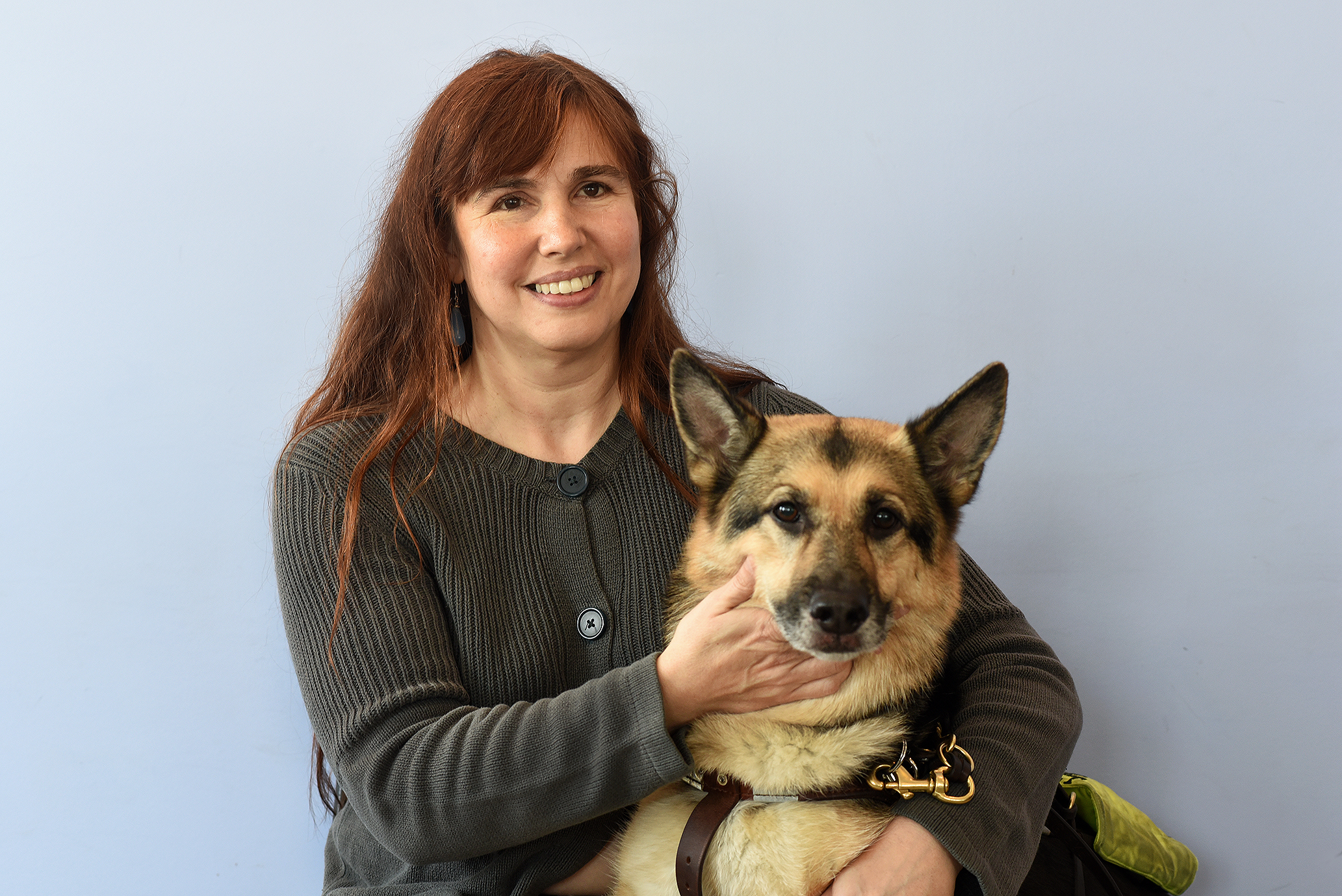
 This week, Sam and Charlene welcome Scott Eggen, president of Randolph-Sheppard Vendors of America (RSVA), and Randall Crosby, a member of the RSVA Board of Directors.
Scott and Randall discuss the Randolph-Sheppard Act and the Business Enterprise Program (BEP), which provide business ownership opportunities for people who are legally blind.
What is the Randolph-Sheppard Act? Who qualifies for the BEP, and how does the program work? Our guests explain how the program helps individuals become business owners, the types of businesses they can operate, and the opportunities and challenges involved..
To get on our email list,receive weekly show updates, or offer feedback/guest suggestions, email [email protected]!
This week, Sam and Charlene welcome Scott Eggen, president of Randolph-Sheppard Vendors of America (RSVA), and Randall Crosby, a member of the RSVA Board of Directors.
Scott and Randall discuss the Randolph-Sheppard Act and the Business Enterprise Program (BEP), which provide business ownership opportunities for people who are legally blind.
What is the Randolph-Sheppard Act? Who qualifies for the BEP, and how does the program work? Our guests explain how the program helps individuals become business owners, the types of businesses they can operate, and the opportunities and challenges involved..
To get on our email list,receive weekly show updates, or offer feedback/guest suggestions, email [email protected]!