Episode Transcript
[00:00:00] Speaker A: KPI.dotorg.
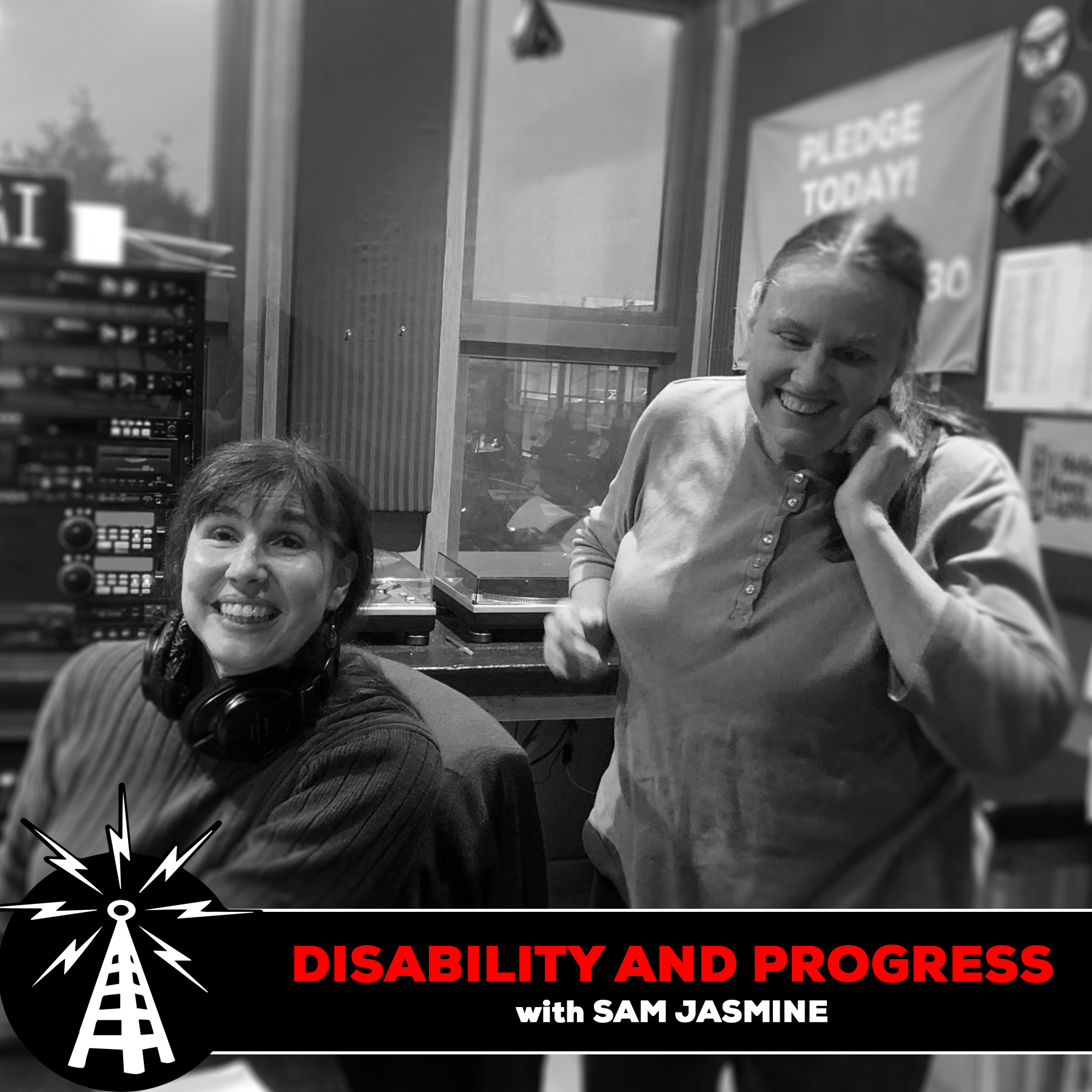
Greetings and thank you for joining Disability and Progress. We bring you insights into ideas about and discussions on disability topics. I'm Sam Jasmin.
[00:01:09] Speaker B: I'm Charlene Dahl.
[00:01:11] Speaker A: And Charlene, I just want to take a moment and thank all those who participated in the pledge drive for Disability and Progress the last couple weeks. We really appreciate them. Thank you so much for your pledge.
And I want to just let out a couple reminders that you can hear us on the archives for two weeks after the initial broadcast. You can also download the app on the KFAI on the App Store for KFAI listening.
You can ask your big brother speaker to play the latest of Disability and Progress. And of course, our trusty podcaster Aaron is always on guard for the newest podcasts. So thank you again.
And now I want to let you know that this week we have Edward Gennaro in our studio. Hi Edward.
[00:02:05] Speaker B: Hey.
[00:02:06] Speaker A: Thank you so much for coming in.
Thanks.
[00:02:09] Speaker B: You're welcome. Thanks for having me, I guess.
[00:02:13] Speaker A: Let's see. So let's start out by why don't you tell the people who like what you're running for?
Cause you are running for position coming up in this election, right?
[00:02:27] Speaker B: Yep. Independence City Council. Independence is a small city on the west edge of Hennepin County.
It's about not far from Delano.
[00:02:38] Speaker A: Gotcha. Yeah, it is pretty small.
And you were diagnosed with autism at a very young age. Can you talk a little bit about how or what has been, you know, what that's meant to your life up to now?
[00:02:55] Speaker B: Well, I was diagnosed at age of five.
It's brought both benefits and challenges. You know, in terms of benefits, I'd say it's helped me to notice things and take interest in things that other people would not bother with.
In terms of challenges, it's made social interaction hard.
I feel like in some areas I've been held back, but probably all areas.
[00:03:23] Speaker A: Now you're running for city council in Independence, Minnesota. So what motivated you to seek this public office?
[00:03:33] Speaker B: There are short term and long term causes. In terms of the long term causes, in 1990, my father Jim ran for state senate.
[00:03:41] Speaker A: Oh, I see.
[00:03:42] Speaker B: He didn't win his primary. He was up against Roger Mo, who was a pretty prominent figure in state politics.
But he inspired me to serve in my own right.
He continues to inspire me even though he died in 2015. Parkinson's complications.
In terms of short term motivations, I currently work in IT and have for the past few years.
And I have a technical skill set both from that and my education in geography with GIS experience to face the AI revolution.
[00:04:15] Speaker A: So could you talk a little bit about what opportunities exist for you as an autistic person to create change for other autistic people on a city council?
[00:04:29] Speaker B: Well, by running, I might encourage others to run.
And it's the fact that I'm running at all gives me an edge over other people in a way neurotypical or neurodivergent.
[00:04:46] Speaker A: So what did your family say when you first told them you were running for office?
[00:04:53] Speaker B: Well, they seemed a bit caught off guard at first, but they truly appreciated my initiative and they totally understood and they eventually embraced it.
[00:05:06] Speaker A: So do you have a political role model, living or dead?
[00:05:11] Speaker B: Oh, yeah. Current U.S. senator and gubernatorial candidate Amy Klobuchar.
[00:05:15] Speaker A: Ah, yes.
Yes.
[00:05:17] Speaker B: Yeah. Because she works across the aisle, she gets things done.
And she seems generally likable, mostly.
[00:05:25] Speaker A: Mm.
Mostly.
So you mentioned your father, but besides your father, that he ran for state senator, he inspired you to enter politics. But what do you think he'd say if he saw you running?
[00:05:48] Speaker B: Well, he would take a look at my campaign literature, such as these business cards I have right here.
[00:05:56] Speaker A: Mm.
[00:05:57] Speaker B: And he would. He would say like, far like sun or something to that effect.
[00:06:05] Speaker A: So was there a specific moment that you decided this was finally the year for you to run, or how did that work?
[00:06:14] Speaker B: It all started a year ago.
It was toward the 10th anniversary of my dad's passing.
September 21, 2025 in this case.
And I wanted to give back to the community where I've lived seven and a half years now, soon to be eight years.
So I wanted to follow his example as sort of.
Sort of if, you know, designary death day gift.
[00:06:41] Speaker A: Mm.
Yeah.
So you're a first time candidate, obviously.
What's been the hardest part of running a campaign that you didn't expect?
[00:06:58] Speaker B: I gotta say, the communication part, it's very much a direct contrast to really line of work where you hardly raise above a murmur.
By contrast, communication. But it doesn't have to be verbal communication where you had to excel. You had to let your staff know via email, text messages, and of course, text constituents in a way that they can understand.
[00:07:29] Speaker A: So how do you feel voters have responded to your campaign so far?
[00:07:37] Speaker B: Most of the people who respond to my texts, for example, have responded pretty well.
They seem to be engaged in my positions on the issues affecting independence.
There are a few who did not react so favorably.
One guy said, because I have a Gmail address, I must support flock cameras who nothing is further from the truth.
[00:08:05] Speaker A: So what is the. If you could say, what is the biggest mistake you feel like your campaign has made so far and what did you learn from it?
[00:08:17] Speaker B: Well, I'd say as the candidate, I once or twice failed to cc my staff on certain emails. Like concerning a spot for the independent city council Lake Manitowan Communications Commission channel on YouTube where we were each to film a three or five minute spot, describe our candices for city council.
I learned how to keep my staff in the loop.
[00:08:52] Speaker A: Yeah, yeah, that's really important, isn't it?
Can you talk about how a typical week on the campaign trail looks like for you?
[00:09:03] Speaker B: Well, every day for the last four months now, I've been texting 12 to 14 a day, depending upon how many I need to get done. I did 14 the last two days, but the other day has been mostly 12.
And I also check in with my staff, especially my campaign manager, Jeff, whom we mentioned earlier.
Maybe not on the air, but in our face to face.
[00:09:33] Speaker A: Right, and that's probably kept you pretty busy, huh?
[00:09:41] Speaker B: Yeah, it's been a time consumer, but one I take willingly.
[00:09:46] Speaker A: So who, if you could choose, who's been your biggest source of support for you during this campaign?
[00:09:55] Speaker B: I had to say my mother.
Her prayer and her prayers and thoughts and her involvement in the campaign as treasurer have been God's ends.
[00:10:09] Speaker A: Yeah, that can be a big deal.
It takes money to do this.
I'm wondering if you. What's the most surprising thing that you've learned about Independence residents while campaigning?
[00:10:28] Speaker B: They're not monolithic. You got red people, blue people, purple people, if you know what I mean.
And you think of independence as a pre Republican town, but I would have.
[00:10:41] Speaker A: Yeah.
[00:10:42] Speaker B: But in fact it's become more and more purple in recent years as I found out both easy and hard ways.
[00:10:51] Speaker A: So in other words, it could go one way or the other.
[00:10:56] Speaker B: Mm, it's reddish purple, I'd say.
[00:11:01] Speaker A: So how did. I mean, you're pretty openly autistic. You talk about it. What's been the impact, the way that you communicate with voters on the campaign trail?
[00:11:14] Speaker B: Let's just put it this way, it explains my tendency to use texting, emails and of course the website.
You know, non verbal communication.
[00:11:25] Speaker A: Right.
[00:11:26] Speaker B: Because it's a bit more comfortable for me to. Than door to door knocking. Not to mention it doesn't waste as much gas. It depends. A pretty dispersed community.
[00:11:35] Speaker A: There you go.
[00:11:36] Speaker B: You know, I do drive.
[00:11:37] Speaker A: Ah, gotcha.
[00:11:38] Speaker B: I drove here.
[00:11:39] Speaker A: Yeah, yeah.
Edward, I'm wondering, you know the.
I think, I would think that the campaign trail can Cause or be like sensory overload and pretty much unpredictable. So what does your daily routine like? What does that look like to help keep you focused?
[00:12:03] Speaker B: The first thing I do every morning is remind myself my campaign duties, whether that means texting or checking in with my campaign staff. Not least of all Jeff, my campaign manager.
And I make sure to block out time for downtime when not campaigning or doing my daytime job in it.
[00:12:29] Speaker A: So how would you describe your leadership style to someone who's never met you?
[00:12:39] Speaker B: I say it's by example. The thing is, I don't talk that much to voters, at least not verbally.
But I showed by my deeds what I'm made of.
[00:12:55] Speaker A: Well, in addition to the first autistic city council member elected in Minnesota, you'll be the youngest person serving on the city council if you win in. In December or in decades, actually.
So what do you say to voters who think you don't have enough political experience?
[00:13:23] Speaker B: Let me tell you, my dad did not have political experience back in 1990 when he ran for state senate.
He had been a teacher, a farmer and a bookseller on his first half century of life.
And he decided to run anyway against one of the most influential state senators in state history.
Again, he didn't win, but I think it was worth it.
[00:13:48] Speaker A: Well, and you learn a lot by doing that, right?
[00:13:51] Speaker B: Precisely.
[00:13:52] Speaker A: Huge experience. Huge.
So what do you say to the voters who might have, you know, outdated assumptions about autistic leadership?
[00:14:05] Speaker B: Just as. Just as political leaders, local, state, even federal, come from various backgrounds and just as independence is not a monolithic community anymore, autistic people, people with autism, are not a monolith either. That's why it's a spectrum.
Any within parts of the spectrum, you have variety.
[00:14:31] Speaker A: And what do you feel is the biggest advantage to your autistic spec, you know, perspective. What do you think that gives you when analyzing complex state policy?
[00:14:45] Speaker B: I'd say it's gotta be the ability to notice details that others might miss or ignore.
Like, for example, when I was crafting an editorial for a local community paper about the need for a affordable housing in the city, right.
I was able to note the acre size pretty instinctively.
That is a minimum for the city.
And I will lean into some implications I will get to.
[00:15:14] Speaker A: Okay, so if you had to give other neurodivergent individuals, some considering a run for public office, if you had to give them advice, what would you do? What would you say?
[00:15:29] Speaker B: Again, the fact that you're running at all gives you an advantage over other people, regardless of neurological abilities. And Neurodypical. Neurodivergent. The thing is, many people stop out running, but they don't run.
By running, you, you.
You have that advantage.
[00:15:57] Speaker A: So you know who you're running against. What do you feel makes you more qualified to serve than your opponents?
[00:16:05] Speaker B: Got me. My technical background. The city council consists of current veterans of finance, housing, and government, but no IT that you can see in their. In their backgrounds.
We need an IT guy to face
[00:16:24] Speaker A: the AI challenges, especially with the latest stuff going on. Right?
[00:16:29] Speaker B: Yep.
[00:16:32] Speaker A: What a fiasco.
So do you think you're. I mean, what do you. Who do you think your biggest challenger in the race is?
[00:16:43] Speaker B: There's one guy who I thought would not run again after sharing out his predecessor's unfinished term.
The predecessor is now the current mayor of Independence, but he decided to run for a full four year term anyway.
An incumbency contains its advantages.
[00:17:05] Speaker A: Mm.
So what is one point your opponent makes about the city future that you actually agree with?
[00:17:15] Speaker B: There's another candidate who's only lived in Independence for a couple years, but I agree with her views on data centers, against data centers, that they have no place in our city.
[00:17:26] Speaker A: Ah, yes, there is a lot of people worried about that.
What's the biggest misconceptions voters have about you or your platform and independence?
[00:17:43] Speaker B: Probably the lack of experience, but I've had plenty of life experiences in technology.
Geographical inquiry. That was my degree, both bachelor's and master's.
And I bring more variety. I bring some variety to the council of elected.
[00:18:06] Speaker A: You certainly would.
So, for all you who maybe missed, Edward is running for a city council position in Independence, Minnesota. Independence is a small bedroom community of the Twin Cities.
How do you keep that rural character while the metro keeps growing outward?
[00:18:33] Speaker B: Well, we only develop in areas where the infrastructure can or soon will be able to support it, whether that means housing or green space or.
Or even a few small businesses in due course.
[00:18:53] Speaker A: So what's one thing about independence's history or identity that you think should be protected as the town grows?
[00:19:05] Speaker B: I have to say, the green areas that we have in our city, part of Lakerbecker Park Reserve is right on the border of the city or thereabouts.
And there's also Baker park in the eastern part.
It's a really nice place. Haven't been there that much, but it's not lovely anyway.
Although I did go for a couple Boy Scout campouts as a young boy.
[00:19:30] Speaker A: Yeah, I think, you know, a lot of cities are growing so much that I don't. You know, I think it's it's going to become difficult to have those nice, sprawling parks. So I hope we're always kind of attentive to that.
[00:19:52] Speaker B: It matters.
[00:19:53] Speaker A: Yes, it does.
Can you talk a little bit about what your position is on how fast new housing developments should be approved in Independence?
[00:20:05] Speaker B: Well, that depends upon the nature of the improvements and where we place them.
Again, where the infrastructure supports it or will be able to support it in short order.
If we do those areas, focus on those, then I'd be supportive of it.
We also got to consider the quantity of units on a given lot.
We encourage homeowners to set aside space in their dwellings for duplex or triplex things.
It doesn't have to be row houses, townhomes, but it has to be made more affordable.
[00:20:46] Speaker A: I do feel like what I see now is a lot of apartment buildings that go up.
So, like, a house gets taken down or maybe a couple, and it gets filled with a big apartment building.
[00:21:00] Speaker B: Unfortunately, I don't see how we can support that yet.
But if the demand is there and the infrastructure is there, or soon will be there, that is something worth consideration.
And those are ifs.
[00:21:20] Speaker A: Yeah.
Is there, like, a local issue in Independence that you think isn't big enough, doesn't get enough attention from current officials?
[00:21:31] Speaker B: I have to say the housing shortages.
Currently, Independence has houses that are worth as much as 2 million bucks on the market.
[00:21:39] Speaker A: Oh, wow.
[00:21:40] Speaker B: The average house is like 750 grand.
And, yeah, we gotta make those. Gotta bring those costs down. Because by bringing down the cost of housing, you encourage new residents within limits, of course, while keeping taxes a lid on them. Probably taxes.
[00:21:59] Speaker A: Edward, I'm wondering, you've made it a strict no new taxes pledge.
What happens if the city faces a budget shortfall during your term?
[00:22:14] Speaker B: I have to say that we need to find better ways of funding our city services, whether it means streamlining operations or collaborating on things with other cities that are nearby, like Greenfield and Maple Plain, Minne, Trista, Rockford and Delano to some degree. You know, Delano's in Wright county, and most of Rockford is, too.
But we pay enough in taxes as it is,
[00:22:50] Speaker A: so I don't know if I do. What county is Independence in?
[00:22:55] Speaker B: Hennepin. Hennepin, on the west edge thereof.
[00:22:57] Speaker A: All right, all right.
I'm familiar with it. I just know it's a bit away from me, so. But I always think of it as a lot of open fields. Like, you know, how do you plan to balance your no new taxes chant stance with the cost of, you know, funding and Public safety and infrastructure.
[00:23:26] Speaker B: Again, I'm all for streamlining the way we deliver services, including the responsible implementation of technological solutions.
With my IT knowledge, I might be able to help that in some capacity.
And that would also help with attract new residents and may eventually new businesses while keeping taxes low.
[00:23:54] Speaker A: So I'm wondering like what role? I think there's a lot of question with this nowadays with things going back and forth. Who has the role? What role do you think city government should play in addressing affordability versus what should be left to the state or federal level?
[00:24:15] Speaker B: It's all about who can do it best. If the federal level can do something best concerning affordability, then let the feds intervene. If the state government can do it best, have the state government intervene.
Have something that's best done at a city or county or school district or special district level or township level in some areas of the state, let them take care of it.
[00:24:44] Speaker A: So where do you stand on current state tax policies and government spending levels?
[00:24:53] Speaker B: There's no excuse for the waste, fraud and abuse that has enveloped our state of late. I admire Governor Walz for his social stances, like for example, making making sure that ICE would not do anything illegal earlier this year. Right. There's no excuse for the waste, fraud, abuse problem. I'm glad I didn't run for a third term.
[00:25:18] Speaker A: Yeah, I think it will get sticky there.
It does surprise me that I was a little bit sad and embarrassed that we had so much of that.
First of all, for me as a person, I thought no, we can't have had that much right. You always think surely people are watching out for that. But it seems true and it seems now that they're really focusing on it, that they're finding more and more of it.
So as an IT professional, how do you think your technical background will translate to day to day work for the city council member? As a city council member?
[00:26:11] Speaker B: Well, it's about helping with the city's services.
There are always ways we can improve technology responsibly, mind you, and helping with special districts. They obviously my GIS knowledge can help with West Sam Public Safety and Westbourne Fire District, both of which are first response districts covering the city.
[00:26:43] Speaker A: So what's one piece of outdated city technology or process that you'd want to modernize first if you were elected?
[00:26:58] Speaker B: I have to say right now they're already implementing a GIS system in Independence. I would encourage in city council its continued use for infrastructure safety reasons, to consult with developers on appropriate uses of the land.
And as you know from what I said I have a GIS background as part of my IT training and stuff.
So I continue to encourage and grow that.
[00:27:36] Speaker A: Can you talk about what a GIS background is? For me, I don't.
[00:27:42] Speaker B: GIS can mean geographic information Science systems or software.
Fortunately it's just used to make thematic maps and stuff like that with the data gathered over time and base maps I've used a lot and it makes things. It's time consuming but it's worth it.
[00:28:11] Speaker A: So I think we briefly touched on it, but the idea that the city councils have really been at the forefront of the expansion of data centers in our state.
I recently just went to a city council with the idea that they had been talking about a data center in where I live and was not many people were there. I was pleasantly surprised to find out that there were a lot of people on the same level as me and they were not wanting that. And it seems like your thoughts on this are. No.
[00:28:50] Speaker B: Yeah.
The data centers do not belong anywhere in the seven county area where they've not been built.
If they want to build a data center, they'd have the bill in the May. Of the ring counties that surround the seven county area, including three, there are three of them in Wisconsin, the rest are in Minnesota.
[00:29:09] Speaker A: So what kind of area do you feel supports a data center?
[00:29:14] Speaker B: An area with hardly any people living there.
Because we don't want to put noise pollution and water and power right next to residential areas and they don't provide the jobs they create. They promise.
[00:29:33] Speaker A: I think it's short term jobs. Right.
[00:29:35] Speaker B: At best.
[00:29:39] Speaker A: So you seem to have spoken out first against data centers in populated areas, which is nice. I like hearing that.
So what would you say to companies that wanted to build one just outside city limits?
[00:29:57] Speaker B: It depends upon whether you're building a populated area outside the St. Louis because some areas outside there are townships like Franklin Township, which is just right to the west of Independence, and outside Delano does have some residential developments.
So I would not encourage building right next to any of those or anywhere near. It has to be unpopulated if you're going to build at all.
[00:30:24] Speaker A: I am just curious, you know, having your background in it, what was your response to the water tampering that we had recently in Minnesota?
[00:30:41] Speaker B: Hmm.
[00:30:44] Speaker A: I know that caught you off guard, but you're aware of that there was some water tampering you heard about was a little bit surprising to me.
It makes me feel like we maybe don't have the structure that we need.
[00:31:04] Speaker B: But basically that's why I need more technological Types on city councils to be able to answer to such challenges, whether those are AI or Flock cameras or data privacy or yes, water tampering.
[00:31:25] Speaker A: So AI is changing local economies fast by data centers.
What other AI related issues do you think city council need to start paying attention to?
[00:31:41] Speaker B: Arguably flaw cameras. They use AI in flock and other such cameras.
Flock isn't the only maker of them, but they tend to be used in stalking people.
There are reports that police officers used flock cams and Axel on cams and all that to stalk their exes.
[00:32:07] Speaker A: So this seems really sad because I can see where the Flock cameras could be very useful.
It feels like this is something that's been abused like anything, which is again disappointing for your position and your local police.
What's your view of the technology being used that way for safety purposes?
[00:32:37] Speaker B: Well, they need to be reminded that's a tool, not a toy.
And if you use it as a toy, that can lead to deleterious consequences for PL's privacy.
And it can be, if they're using as a tool, probably not AI tools, but unless absolutely necessary, then perhaps they would.
Whereas they should be encouraging that use. But if it's easy as a toy, that's not good.
[00:33:17] Speaker A: So it seems like you draw the line between using technology to improve city services and technology being used to, you know, to be mishandled like survey residents and things like that.
[00:33:36] Speaker B: Yeah, it's basically.
It's basically the use versus the abuse of technology.
[00:33:43] Speaker A: So you're a member of the Forward Party.
What drew you away from the two major parties?
[00:33:53] Speaker B: I get the impression that both Republicans and Democrats have their sort of skeletons in the closet.
Republicans more than Democrats. But it's on both sides. The Forward Party is free of as much baggage and I was especially attracted to supporter ranked choice voting, which I've been passionate about for years.
[00:34:15] Speaker A: Can you talk a little bit about that?
[00:34:19] Speaker B: About what? Ranked choice voting?
[00:34:20] Speaker A: Yes.
[00:34:22] Speaker B: I feel that it is a way to encourage more moderation politics. That does tend to be the tendency where whether it's the instant runoff vote for single winner elections or single transferable vote for multi winner elections. I even submitted an editorial that I don't think got published, but it was worth submitting anyway on the matter.
Look it up on. Look it up on some Wikipedia or something.
You want to know the exact mechanics. But yeah.
[00:34:54] Speaker A: So the idea that it seems that some voters are skeptical of third party candidates winning local races.
So what do you say to someone who worries, you know, who worries about that type of thing, that that's a wasted Vote?
[00:35:19] Speaker B: Well, it's a nonpartisan race, first and foremost. All city races in Minnesota that I know of are technically nonpartisan.
So it shouldn't matter whether you're a Republican, a Democrat, independent or partisan.
You should be able to evaluate the candidates regardless of where they lie in the party's spectrum.
[00:35:44] Speaker A: So money is important, I know, to modern elections.
What are your thoughts about the current state of money in politics?
[00:35:57] Speaker B: I think there's too much of it. Ever since Citizens United in 2010, which I was not aware of its impact at first, but I learned about it quickly. Enough money has infested politics. Federal, state and even local elections.
Can be. Can be, are, have too much corporate money, too much PAC money, you know.
[00:36:24] Speaker A: Yes. From big companies.
So what specifically would you want to see changed about how money flows into local elections?
[00:36:35] Speaker B: I think it starts at the federal level where they need to get some Citizens United overturning legislation, if you know what I mean.
[00:36:42] Speaker A: Uh huh.
[00:36:42] Speaker B: Uh, the thing is there's too much money in politics, as everybody knows.
[00:36:50] Speaker A: So are you accepting contributions from corporations, PACs, and you know, special interest groups?
[00:37:00] Speaker B: Not a penny.
Not a penny.
The thing is, I'm mostly accepting smaller donations, 100 or less.
And I'm also funding some of my own campaign.
I poured 100 bucks into my campaign a little over a month ago and plan to do similarly shortly.
[00:37:20] Speaker A: So are there groups or types of donors that you would refuse or to accept contributions from during this campaign?
[00:37:31] Speaker B: Unless they're really devoted to supporting my positions in some way, shape or form, then I'm not going to accept any.
Unless it's a small. Or if it's a small donation, I'll accept that. But I'm not one to accept corporate money at least, even if it's a smaller corporation.
I want the people, not the corporations, to fund every campaign out there.
[00:38:03] Speaker A: So it feels like city councils. There has been some defiance against the new state flag.
Do you think these local governments should be punished or are they within their right to fly the old flag?
[00:38:25] Speaker B: The real question is why should the state flag fly outside? Not state property at all. It should be federal flag, which is the stars and stripes to red, white and blue and if applicable, a city flag. Independence does have a city flag. It's a navy background with a picture of the Liberty Bell on it. Those are the only two flags city property should be, should be flying whether it's a city council, public works building or city park.
There is Veterans Memorial park near the big roundabout in Dee Sedge town.
Yeah, in the cemetery.
It was A federal property, they only allowed the sergeant stripes. Only state property like the state wildlife version might allow the state flight, but that's it.
[00:39:18] Speaker A: So I'm curious when state law conflicts with, you know, local city residents, what they want, where do you draw the line on local control?
[00:39:34] Speaker B: Let's see.
It depends upon again, who can do it best.
The thing is the city can do it also. I'll check with the residents to see their side of the story first and then I'll check with.
They'll look into my own, get my side of the story and see if there's any way it can be brought in harmony with state law. What they think, what I think.
I'm pretty good at reading law books.
[00:40:07] Speaker A: Ah, excellent.
Somebody needs to be and interpreting them. Right.
So if you could change one thing about how city council meetings currently run, what would it be?
[00:40:25] Speaker B: There are internal and external ways. Internal way you could, you could see more open mic time at city council meetings. But externally speaking, you also need to encourage people to come up to the city council meetings and give it open micro. Alternatively, I could see more use of email as questionnaires, email questions given by residents and emailed the city administration.
[00:40:57] Speaker A: Right. Because sometimes I see like, what would you do if a person showed up, a resident showed up that was angry about, you know, a decision that the city council made? What would, what would you do then?
[00:41:14] Speaker B: Well, again, I listen to their side of the story first, then I give my side of the story.
And if there's any areas where you can agree on, we'll focus on those areas.
[00:41:27] Speaker A: So would you like to share any stories of, you know, difficult interactions with constituents or anything like that?
[00:41:40] Speaker B: There was this one time, besides the time that I was accused of using of liking flock cameras because I had a Gmail account for my campaign, which I regard as a necessary evil.
[00:41:53] Speaker A: We all know, we feel ya.
[00:41:55] Speaker B: Anyway, there's one time when I made a mistake of.
Of texting somebody at 10:14 at night and they berated me saying the ship has sailed, so to speak. There was also another time when I was called out for supposedly supporting variances which I do support within reason.
Those are like conditional use permits, accessory dwelling units, accessory buildings, like separate garages.
They want no variances whatsoever.
I held all three diplomatically as I best could.
[00:42:40] Speaker A: So once you're on the city council, how do you plan on staying connected with residents when you're not, you know, after the actual election?
[00:42:53] Speaker B: The way I stay connected is going to be through visibility and that involves going to community events and independence in Neighboring cities for the last few weeks. Each of the last five weeks of the campaign. I'm going to be doing a different community event on Saturdays.
This Saturday is going to be the Delano sesquicennial.
A lot of times people go to Delano for stuff. Next week it's gonna be.
It's gonna. Yeah, you get the idea that I'm gonna be continuing going to community events, right. To make myself known and respected.
[00:43:35] Speaker A: So how would you handle disagreements with a fellow council member once a vote like doesn't go your way?
[00:43:46] Speaker B: As usual, I go out of my way to understand the council member who opposes me as a.
As a way to.
In order to say their side story.
[00:44:03] Speaker A: So what does it mean to you then to plan. If you plan to work across the aisle with, you know, politicians, maybe whose views you strongly oppose,
[00:44:18] Speaker B: it's gonna be more of the same, you know, with Paul seeing their side of the story before giving mine and trying to find any consensus.
[00:44:30] Speaker A: Mm.
So why should a voter.
Why should a voter who disagrees with half your platform still give you their vote?
[00:44:46] Speaker B: For all I know, the other half of the platform might be more agreeable, you know, and more important too.
[00:44:53] Speaker A: Uh huh.
[00:44:54] Speaker B: Half the issues in the city might be of rather minor importance. You count them individually instead of weighting them properly.
[00:45:04] Speaker A: What are your thoughts on the current mayor?
[00:45:07] Speaker B: Oh, he's approachable at least. I don't agree with him on everything.
And there are areas for compromise, as brought up earlier in this interview.
But he's approachable and helped me with a few things concerning my campaign. He's not up for election until 2028 again.
[00:45:27] Speaker A: So what policy issues are you most thinking about as you run in this race?
[00:45:37] Speaker B: Well, I mostly think about housing. As a millennial and well educated at that, I cannot emphasize enough how much housing is way expensive in the metro.
And I'm also.
I want to see more housing reform, whether reducing lot sizes or allowing duplexes and triplexes on existing lots.
[00:46:05] Speaker A: So if elected, what would you consider a successful first year on the council
[00:46:12] Speaker B: for encouraging my constituents and me not to raise taxes.
Also, we also gain a ban data centers and flock cameras.
If not. Yeah.
[00:46:28] Speaker A: So what would you do on day one if you lose the race?
[00:46:34] Speaker B: The first thing I'm going to do is once I find out that I have no chance at victory, I'm going to call up my the winners and congratulate them with good sized congratulations.
[00:46:52] Speaker A: Good sportsmanship.
[00:46:54] Speaker B: Yeah, good sportsman. In other words, of course, if I do get elected, then I'll congratulate the other winner Anyway.
[00:47:02] Speaker A: Excellent. Thank you.
Let's say you are elected and sworn in. What's the first policy you propose as a new City Council?
[00:47:14] Speaker B: The removal of any state flag from the city buildings and other city properties.
The thing is, it's a divisive issue as mentioned earlier, and it does not represent and while some have reasonable doubts about the flag old New future, we should be making City hall place for solutions rather than activism and making all residents of the city welcome in town.
[00:47:45] Speaker A: So give us a quick reminder of anybody who has just tuned in or who is listening why those listeners should vote for you.
[00:47:58] Speaker B: The AI transformation is coming for better and for worse.
We need to be prepared with someone who knows information technology like the back of their hand.
Vote for me and I will provide that knowledge to City Council and city affairs.
[00:48:18] Speaker A: Edward, thank you so much.
It's been a lot of fun to have you on and I wish you the best of luck on your election and I love the sportsmanship you have in regards to, you know, that you could win or lose and that you would congratulate the other person. Regardless, I think we need more of that, especially with our electors, especially nowadays. Yes, Charlene, anything from you.
Good luck to you.
[00:48:52] Speaker B: Thank you.
[00:48:53] Speaker A: Go keep go get him.
[00:48:55] Speaker B: Thank you for having me.
[00:48:57] Speaker A: Oh well, thank you, Charlene. I always appreciate you coming in the studio with me and thank Edward and hope he wishes the I wish the best for him and want to remind you that next week we will be talking about the Randolph Shepard act and this will be pretty well anywhere that it exists in the US So I encourage people to listen.
You've been listening to Disability in Progress, for the views expressed on the show are not necessarily KFAI or its Board of Directors. My name is Sam. I'm the host of this show. Charlene Dahl is my research PR person. Aaron is my podcaster.
You can listen to this show on Big Brother speaker on our app and also you can be on my email list by emailing disabilityandprogressamjasmin.com We've been speaking with Edward Genereaux, who is running for City council in Independence, Minnesota.
This is KFEI 90.3 FM Minneapolis and kfei.org Take care everyone.
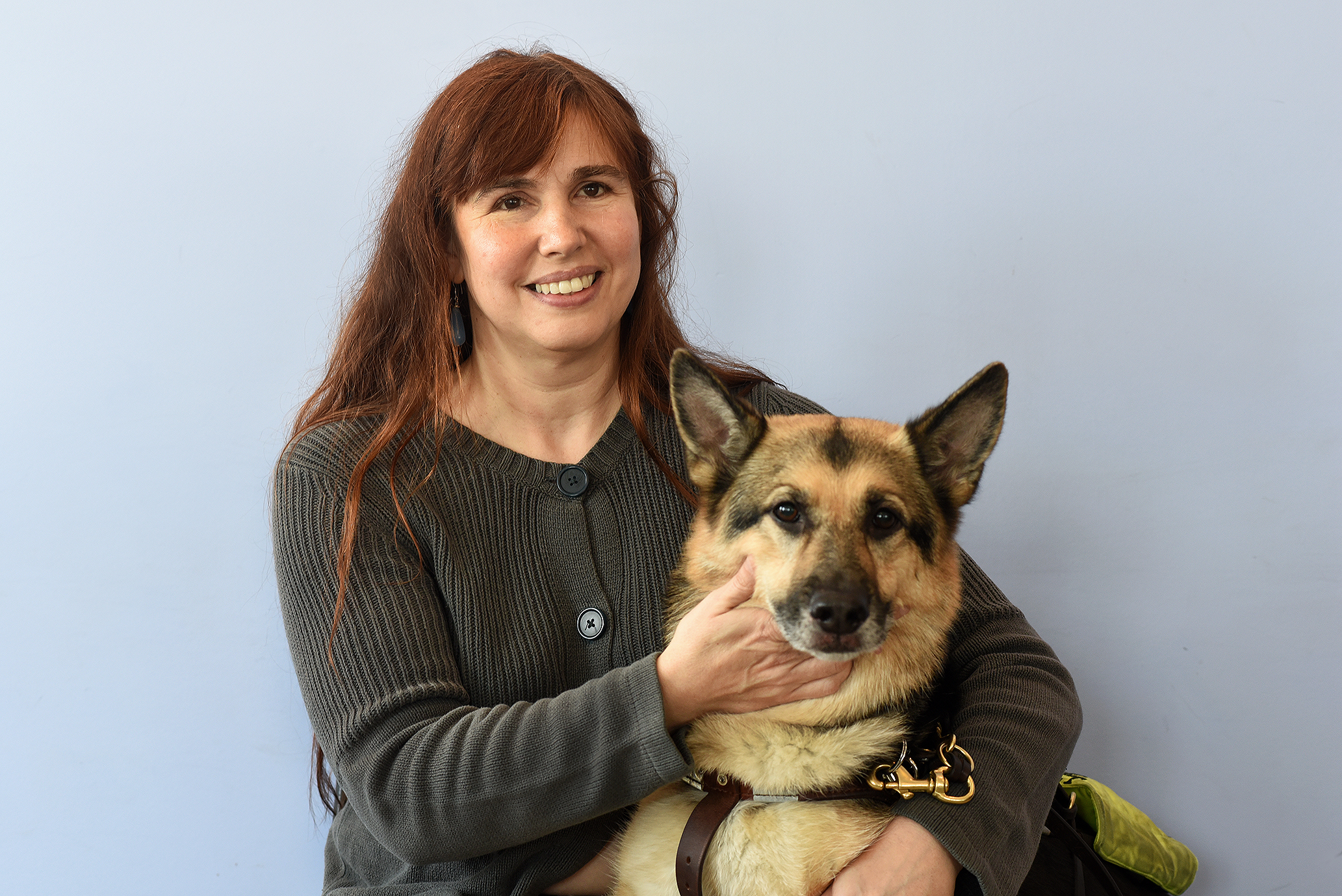
 Edward is an IT specialist, is autistic, and brings his own life experience and perspective to his involvement in the community. Public service also runs in the family—his father spent 36 years working in government.
Sam and Charlene talk with Edward about his background, what inspired him to run for City Council, his experience as an autistic candidate, and what he hopes to contribute to the community of Independence.
To get on our email list,receive weekly show updates, or offer feedback/guest suggestions, email [email protected]!
Edward is an IT specialist, is autistic, and brings his own life experience and perspective to his involvement in the community. Public service also runs in the family—his father spent 36 years working in government.
Sam and Charlene talk with Edward about his background, what inspired him to run for City Council, his experience as an autistic candidate, and what he hopes to contribute to the community of Independence.
To get on our email list,receive weekly show updates, or offer feedback/guest suggestions, email [email protected]!