[00:00:00] Speaker A: KPI.org.
Sad.
[00:00:59] Speaker B: Thanks for joining me.
This is Disability and Progress, where we bring you insights into ideas about and discussions on disability topics. I'm Sam Jasmin. I'm Charlene Dahl. Thank you so much. And for all those who pledged last week and the week before, thank you for supporting our show. This show runs by listener support, and that's a good majority of what it runs by.
Also want to remind you that if you want to send us an email, you can email us by by sending an email to disability and progressamjasmon.com that's disability and progressamjasmin.com Tonight we speak with Paula Pompa Craven. I apologize, Paula.
And Paula is from Easter Seals. And we'll be talking about April, of course, is autism acceptance month. And we'll be talking about autism and also the everyone belongs campaign that is going on with Easter Seals. Paula, thank you so much for joining us.
[00:02:11] Speaker A: Thank you.
[00:02:12] Speaker B: All right, Well, I want to start out by could you, can you tell us just a little bit about your background and what led you to work in the field of autism and disability services?
[00:02:25] Speaker A: Oh, wow. I am a licensed psychologist and I have been in the field for over 30 years and I have been working with individuals with developmental disabilities and really specializing in autism for, I would say, over the past 15 or 20 years.
It was just something that I started out with as an undergrad, took an interest in and really developed that interest and found Easterseals pretty early in my career and was able to stay with Easterseals and move through with different positions and opportunities and really have helped to develop a lot of my personal skills as well as the programs at Easterseals Southern California.
[00:03:18] Speaker B: And I feel like Easter with Seals is the name gets tossed around a lot. But I'm not sure people always know, like, who they are, like what they do. Can you give us a little bit of insight on them?
[00:03:32] Speaker A: Sure, of course.
So easterseals is a disability services organization. And you're right, a lot of people know our name but don't necessarily know what we do.
Our mission is to change the way the world defines and views disabilities by making positive, profound differences in the lives of people with disabilities, veterans, seniors and their families every day.
We do this through several program offerings that we have.
We provide services to children, early intervention as well as child development services, Head Start, early Head Start preschool programs. We also provide autism services that include in home and center based, applied behavior analysis, speech, occupational therapies, social skills groups, as well as enhanced care management or clinical services.
We also Provide in home supports through our residential and supported living programs.
Our adult day services offer skill building through volunteerism, and our employment services offer opportunities for individuals to be supported to both gain employment and to be successful in employment through support.
Well, so a lot. We do a lot of things.
Yes, a lot of things. And we try to meet the needs of the communities that we serve.
[00:05:01] Speaker B: I'm wondering, what.
What is for you?
What personally motivates you to do the work that you do?
[00:05:16] Speaker A: I think I am motivated every day by the people, the people that we work with at Easterseals. So all of our associates that, you know, work tirelessly, day in and day out to provide services to individuals and their families, and then motivated by the successes that we see as well as the challenges.
Little things from a person saying their first words, calling mom and dad by their name for the first time, saying I love you for the first time to someone, you know, making a friend or getting a first job.
So many, you know, over the past 30 years, so many success stories. Every single one of them, I think, kind of fuels my bucket and motivates me every day.
[00:06:06] Speaker B: What do you feel makes Easter Seals approach to autism services unique?
[00:06:15] Speaker A: I think it's our individualized approach to services.
So, you know, we really want to assess each individual as they come to us.
Everyone has a different situation.
They're all coming to us from, you know, with different backgrounds. What specifically are they wanting to do? You know, what. What skills do they want to build? And really taking that unique, unified approach to services, I think that has been the backbone of our work for so many years and continues to be, you know, what we base our services on is really that individualized approach to treatment.
[00:06:58] Speaker B: Yeah.
So for people who are confused about exactly what autism is, could you give a definition?
[00:07:11] Speaker A: Of course, yes. So autism is a neurodevelopmental condition that may affect how a person communicates, how they interact socially, how they may process sensory information, and really help people engage with the world.
And we call it autism spectrum because it presents differently in each individual, and it has, you know, we want to look at the individual strengths, their needs, and how they learn and communicate.
It's a lifelong condition, and people may need various service and support levels throughout their life.
And we really want to help people, you know, thrive and participate meaningfully and build on their strengths. And that's really the basis of our belonging campaign.
[00:08:04] Speaker B: So if through the years, I've always heard different terminology with this. I hear autism, Asperger's, or neurodivergent, do they all Mean the same thing?
[00:08:19] Speaker A: Well, the terms change throughout the, throughout our time.
So the Asperger's has folded under autism as far as how we, how we detect or what we might call something through our way of describing and use a psychologist.
Neurodivergent or neurodiverse is a more common umbrella that a lot of us may f under. And that's people who have maybe a neurological condition such as ADHD or learning disability or some other kind of neurodevelopmental condition that would fall under that broader category.
[00:09:08] Speaker B: So when I look statistics up, I swear it said like 1 in every 19 kids in California have been diagnosed with autism, as opposed to like one out of every 31.
Are those statistics really correct?
[00:09:30] Speaker A: Well, those were the latest statistics by the CDC in 2023, I believe it was. So not too long ago.
Yeah, the prevalence rates have increased pretty significant.
There's been about 156% increase over the past 10 years within California. But this doesn't necessarily reflect the actual increase in prevalence as much as it does an increase in awareness.
Conversations like this, shows like this are really getting information out into the communities.
The medical community is more aware. We do a better job at screening and providing services. And I think all of that kind of culminates in a better detective, better awareness, better services.
[00:10:23] Speaker B: Right. Because I was wondering, like, would it be that the bar is set differently? Are they just diagnosing it better? You know, what was. Are they widening the, what fits into the autism spectrum?
And it sounds like you're saying kind of all of those.
[00:10:45] Speaker A: Yeah, I would definitely say all of this, all of the above. You know, an increased awareness of autism, both within the medical community, but also outside of the community. As more and more people are learning about autism, have individuals and family members that they know are sharing information. I think all of that helps us to, to diagnose and detect autism earlier.
[00:11:12] Speaker B: And so how would autism be detected? Like, what happens with that when somebody suspects there's just something going on like that.
[00:11:24] Speaker A: So we typically ask if you have a suspicion that there may be a delay or something is going on or someone has said something or you've noticed. We ask that parents talk to their pediatrician.
There's the Department of Developmental Services in California, and I think each state has a very similar department that we ask that people. There's a lot of resources there.
Our own organization, EasterSillsAutism.com has a lot of resources that help connect people to what to do next, what steps to take. And a lot of it is really going in to talk to someone to get an assessment and to really figure out what the next steps are, including what services and supports will be best for your child or for yourself.
[00:12:17] Speaker B: Paula, I'm wondering if. Can you talk a little bit about the most common misconceptions about autism that you encounter generally?
[00:12:28] Speaker A: Yeah, that's a great question. And I think it really ties nicely with rpsa, which is everyone with autism belongs.
And the reason that one of the reasons that we put a lot of time and effort into this campaign and it's really that, you know, people with autism maybe have or don't want to have connections or don't want to make friends or to be a part of a community. And what we found was when we asked individuals what was important to them, belonging really showed up as a key word or key component factor in what people were looking for. And this really helps us to celebrate belonging, this campaign, this psa, inclusion and acceptance, by reminding the world that autism is not a one size fits all thing and that everyone is unique and we all come to the world with our own gifts.
And so belonging is the key message, I would say.
[00:13:36] Speaker B: Yeah.
So I know that your Easter Seals has a lot of kind of early intervention that they try to do in their programs. And so how important do you feel that is?
What role does that play when early intervention happens in the programs with autism?
[00:14:01] Speaker A: Early intervention is key. Our brain develops so much in the first five years of life when we have early detection and early intervention and early provision of service. All of this that helps with learning opportunities and really helps us to expand.
Whether it's our communication or our social skills or our ability to make friends and have opportunities for growth, all of that is definitely proven to be key, especially in the first five years of life.
Research shows that when children receive delayed intervention, they might have greater long term challenges in those areas such as language and social skills and cognitive growth.
We really try, you know, as early as possible to work with doctors and work with families to get in there and diagnose and provide services as quickly as possible.
[00:15:04] Speaker B: I want to.
Oh, heck, who am I kidding? I want to. I want to stamp on a couple of myths.
You know, there's a lot of stuff out there now and I feel like everything has just kind of been turned on its head in regards to the vaccinations and things like that. And there's always, and I don't know, I think I kind of understand how it got started, but it's just always kind of lingered. Nobody's for Some reason it's never just fallen off like I feel like it should have about the whole vaccines can cause autism, but that is not true.
[00:15:47] Speaker A: Correct.
Correct. And you know, it seems to bubble up every once in a while and there's definitely an ebb and flow to that mistruth. And for, you know, decades we've seen research with millions of children around the world that have found no link between vaccines and autism.
And the original study that suggested this was actually debunked and proven fraudulent and was retracted. And so, you know, there's information
[email protected] that talks a lot about facts and myths and really helps parents to navigate when they may have questions around vaccines and the safety of them.
[00:16:31] Speaker B: And why do you feel people just won't let that go?
Is it that they're just, they can't handle the unknown? Do they just. Are they just grasping for any answer? What, what do you feel like holds that, you know, that constant misconception there?
[00:16:52] Speaker A: I don't, I mean, I can't answer for parents. I think that people are looking for a reason and you know, maybe this is one one of them. At Easter Seals we really do focus on the services and our approach to services and really supporting people where they are and celebrating again the gifts of autistic individuals.
[00:17:17] Speaker B: Another myth that I have seen recently come out was the whole acetaminophen with pregnant women. And I'm quite sure that that one was never ever proven correct.
Right.
[00:17:35] Speaker A: We have not seen anything that's proven that as, as well, you know, they're, they're continuing to research, but health experts, you know, continue to recommend what is safe for you. And so, you know, we always con, we always encourage moms to talk to their doctors and to get the best medical advice.
[00:18:01] Speaker B: So what do they know about causes or anything?
Tell me what is, what their thoughts are currently in the research, I think
[00:18:12] Speaker A: we know that it is a neurological or neuro genetic condition, that there is a genetic component to it. We don't know what causes autism.
And so it continues to be research. But again, I think the main point that I want to bring out is at Easterseal Southern California, we really want to focus on what we can do for those families who do have autistic children and are looking for services and supports and how we can support them through campaigns like our Belonging campaign.
[00:18:55] Speaker B: Yeah, so let's talk about the Everyone Belongs campaign that's happening currently at Easterseals. Talk a little bit about that. And when did it get started?
[00:19:06] Speaker A: Yes. So We've been starting, we started to develop the Everyone with Autism Belongs campaign last year and it's been really exciting.
The PSA aired for the first time recently during the Paralympics.
As of yesterday, we really started to show it
[email protected] so it's a great way to view the campaign.
It was created collaboratively with people with autism, including members of our own autistic advisory board, with our associates with service recipients and parents of children with autism.
Really, the overarching theme that we found, we asked a series of questions, we did a lot of focus groups and interviews. That overarching theme that came through was belonging.
The campaign features four Southern California residents, all who are authentically cast, all with individuals with autism, with various support needs, who portray what it's like to belong in the school setting, in the community setting, at work and at home.
[00:20:29] Speaker B: So I feel like that whole belonging, I mean, that that's across the board, right? This is not just for people with autism.
I feel like this could be even expanded to people with disabilities.
But even everyone who, if you are, quote, normal, whatever that is, everyone wants to belong to an extent or in a certain way that makes them feel comfortable.
Talk a little bit about what you feel belong is that word.
Why is it so important?
[00:21:06] Speaker A: Yeah, 100% agree with you.
A sense of belonging is really fundamental to our emotional well being.
Belonging is one of, if you know American psychologist Maslow's five areas of need. It's right smack dab in the middle, right? It's about making social connections, having family support and friendship. These are all key to belonging.
So, so many of our participants, all of us of all ages, have reported that this is an area of focus for them.
[00:21:43] Speaker B: I'm wondering.
It really feels like I have two children that I. And they're pretty much, they're. They're far enough apart that they're raised kind of in different, really different year spans. And so I'm just wondering, it feels now that there's not in every family, certainly, but the trend of playing outside has narrowed a good portion where it's a lot of screens, screens, screens and more screens and more screens, and it's kind of a lot of time on screens.
How do you feel this. Do you see any social difference between how in your time of 30 years, that's a pretty good span of how this may or may not affect people with autism.
[00:22:40] Speaker A: Well, it's interesting. That's a great question.
I feel as if just from my personal perspective of seeing how technology has evolved over time we have seen people make friendships through the use of technology. We have social skills groups that are all through telehealth.
We have, you know, people who definitely want to be in person. But I think technology gives us an opportunity for those who maybe don't have access to get to a group.
I know especially during COVID it allowed us to continue these social skills groups and opportunities through technology and with everything, it's about moderation and it's about monitoring and ensuring that our kids are safe that use technology. So I think that's the other piece of all of it. But there are opportunities socially in a contained environment to build social skills. We're doing a lot of virtual reality curriculum and programming that help people to learn how to make a friend, take turns, safety skills, all of those things that really have that technology arm attached to them.
[00:24:00] Speaker B: Well, and I certainly don't want to diss the part of the technology.
Certainly it was a savior for many, many, many people during the COVID time and even now it has extended and changed the playing field of, you know, work and social, as you say. But I do feel like, as a psych, and I'm wondering if you see as a psychologist that it is a different playing field. Like, it's true that people can reach out and become friends or have social groups in groups with people that they probably could have never had before, but it's not the same as, you know, playing with that person outside with a jungle gym or touching them or playing the tag game or you, you.
You see where I'm going?
[00:24:55] Speaker A: Yeah, definitely. I. I do. Again, I'm not an expert so much. There is a lot written about this. I know there's. They study it. I do think that with some of the anxiety, and I can relate it back to people with autism and other disabilities who have. May have more of that social anxiety. Sometimes it does provide a little bit of that branch, you know, to. To use technology.
But you're right there. There's, you know, something about being a part of a team. Right. Being in a sport and, and being a part of a team and going outside and playing and learning that way as well. There's a lot of research around the. What that kind of leads to and the leadership and the goals that surround that team involvement. But again, I think that's also when we look at belonging, that ties back to, you know, the need to belong and all of the benefits that come with it as well.
[00:25:52] Speaker B: Right.
Paula, I'm wondering that, you know, sometimes when you hear about people with disabilities that you'll hear, oh, you know, that. That they seem to be. Have a talent for X or Y or whatever it is.
Do you feel like people with autism have certain strengths in general or talents that they often seem to demonstrate, or is it kind of.
You never know.
[00:26:27] Speaker A: I think we all have strengths and talents, and I think it's up to us to really find those within the people that we work with and support and really help to fuel those strengths.
I think that there are individuals with autism who do really a really great job with, you know, whatever it might be.
And they've developed because they spend a lot of time maybe thinking about cars or trains or the weather, whatever. And so they learn a lot about a specific.
A subject that that really makes them an expert in. And so how do we harness that.
That talent and that skill to really take it to, you know, whether it's someone who wants to look for a job in that area or really celebrate specialty that they may have. I think that's one thing that we could really do to, again, support belonging, support skill development, support the gifts that each of us bring to the table.
[00:27:32] Speaker B: I want to talk about some challenges and in a couple different areas, but let's start with education.
I think that the education system is going through a little bit of a scary transition that I don't know how it's being felt currently, but I know funding is possibly an issue.
What are some of the challenges that people with autism find in the education system?
[00:28:09] Speaker A: Yeah, great question, and I agree with you. I think there are challenges. I think that we're still not sure what the ramification of some of the. The cuts could be.
You know, we want to work hard to preserve, you know, idea and the rights of individuals to have, you know, the education that they deserve. People with disabilities have the education that they deserve in public classrooms to get the supports that they need in those classrooms to be as successful as possible. So I think it's up to all of us to advocate for individuals, for ourselves, for our families, for the individuals that we support to ensure that they continue to receive the services that they deserve, just like any other student would.
I think that's a basic right that we should all have.
[00:29:01] Speaker B: And what about employment?
Can you talk a little bit about how.
What some of the challenges can be found in employment?
[00:29:13] Speaker A: Yeah, I think there's definitely a disparity when it comes to employing individuals with disabilities.
And when I say that, I'm not saying it on the part of the individual with a disability. I'm saying it on how often people get offered jobs or what types of jobs individuals are offered. I think that one thing that we work hard to do is to train and to educate employers about what it is like to hire someone with autism or another developmental disability. Ways to support individuals. And some employers are really stepping up and really thinking about other ways to provide interviews. Right. To determine what a person's skill may be, because there are people out there who just don't interview well, but they would do a really great job if you just gave them. Them a chance. What we found is that once a person is in the position, they usually stay longer, Their retention is better, their commitment is better to. To work.
And it really kind of lifts up all of the individuals around them as well. And so I. I think, you know, that those are some of the. The tenants that we promote when we're out and working with companies and organizations within our community.
[00:30:43] Speaker B: And so then, to me, this leads into community inclusion, which I think can be almost harder because there are no rules to follow there. You know, sometimes education has its laws and its rules, and yes, people are messing with them, but in general, they have them. Employment can have.
Sometimes it's harder to make them stick, but they too, have kind of guidelines and rules. But I feel like inclusion in communities is so tricky.
Can you talk a little bit about how you see that?
[00:31:19] Speaker A: Yeah, it's really at the center of what we're talking about with this psa. Right. With belonging.
People want to be included.
We as the community members want to look for, or should be looking for ways to every day that we can create belonging and help make spaces for inclusion. You know, whether that's listening with empathy or inviting people into the conversation. There's small accommodations within this classroom or the home environment, the workplace, the community that we can make.
Things like, you know, sensory considerations like light and temperature and sound, quiet spaces in the workplace to decompress.
The majority of these accommodations are useful to all of us. So it's not necessarily, and I think you talked about this earlier, it's not just inclusion for people with disabilities, but it really, really helps the general community when we make these little accommodations that are helpful to all of us.
[00:32:34] Speaker B: Yeah, yeah, I do. I do believe that.
So if you were to give somebody advice on how they can be more inclusive if they're like at a block party or something, what can they do if they know there's somebody who might be on the spectrum?
[00:32:54] Speaker A: Yeah, I think that, you know, reaching out, approaching someone, especially if you have not met them, to introduce yourself, asking questions, offering information, but Also kind of reading signals, right? There are oftentimes individuals with autism may have that, a level of anxiety socially and trying to read that, those signs. They want to have a conversation, but they may not look you directly in the eye. They may pace back and forth while they're talking to you. It's like just allowing, you know, someone to have that level of, of difference in their approach, but knowing that at the end of the day, again, we, we all want to make friends, we want to belong. We just want to do it maybe at our own pace.
Again, if you go to easter soulsautism.com there is, there are some tips in there about how to interact, how to socialize, how to make space for more belonging and inclusion in several environments.
[00:34:06] Speaker B: So what would the tips say about how employers can create a more inclusive workplace?
[00:34:14] Speaker A: Some of the things that I talked about, the temperature control of the workspace, allowing someone, and you'll see in our psa, maybe an opportunity to put on headphones, phones if it gets a little too loud, if they need some time to concentrate. Giving someone a break, you know, if they ask for it, maybe having closed captions during your teams meetings. All things that we benefit from. Everybody benefits from as well. So there's, there's other tips in there I think that will be beneficial.
[00:34:50] Speaker B: So what, what does Easter Seals plan to do with this campaign?
[00:34:56] Speaker A: Yes, so, so as I said, we launched it during the Paralympics. It debuted nationally at that time.
Because we're, you know, just kicking off Autism acceptance month.
We'll continue to broadcast it. You can see it at our website.
There'll be streaming outlets and options available.
We'll be sending, sending it out through our socials. You'll see it on Facebook and LinkedIn and, you know, all the different social opportunities. There's search engines that you can look at. We also have billboards and other advertising venues that we're advertising it at.
Radio, like this print media. So we're really trying to hit it at all levels and across, you know, different formats.
[00:35:49] Speaker B: So that's all great.
Sometimes.
What if somebody wants to get involved? What.
How can they do that?
[00:36:00] Speaker A: Yeah, definitely reach
[email protected] there's a lot of great information there. You can find practical tips, conversation starters. There's also some factual information to the points we talked about earlier.
And then there's, there's a way that you can kind of leave, tell your own story and give us information about, you know, what belonging means to you. And then there's ways to get involved
[00:36:32] Speaker B: at Easter Seals I can imagine that a parent that has a newly diagnosed autistic child might be freaking about now or just unsure, nervous, you know, will my child fit in? Will they be a part of society? Will they be able to, you know, what. What advice would you give them?
[00:37:00] Speaker A: Yeah, I think, you know, there's. There's a community available. There are resources such as Easter seals available. Reach out.
We have a lot of information available around what to do when you have a new diagnosis, where, how to navigate. We'll actually. We have a customer success team that helps people walk through a diagnosis and really navigate with the families along the way with resources and information, because, you know, you're not alone. I think that's the main. The main key message that we want to get out there.
[00:37:45] Speaker B: Is there any statistics, like, if somebody has one child with autism, is the next one likely to have it? Or is it just.
[00:37:56] Speaker A: I don't know the specific statistics, but it is. There is a genetic component, so there is a higher likelihood than general that autism does run in families.
[00:38:10] Speaker B: Gotcha.
So what would you just say to somebody who has autism? Because if people with autism. I found. I used to work with some autistic kids when I was in high school, and they were at a much lower level, but they had, like, brilliant music abilities.
And then there are some people who.
They have some autism, but they function at quite a high level, you know, with. With holding a job, with having a family.
So what would you say to somebody who has autism? Like, what would be the advice you would give them?
[00:38:56] Speaker A: Well, again, I think, you know, I talked a little bit about how, you know, each person is unique. They have their unique strengths, their own. Their unique sets of needs.
Some people are going to need support for their entire lives. Others need a little support to kind of get them to a place where they can get a job or form a relationship or whatever their individual goal may be. And so how, you know, we're here to meet individuals where they are and to support them based on their needs. And we value individuals with disabilities with autism as contributing members of our community, and we cherish the gifts that you bring to the table, and we want to celebrate them.
[00:39:45] Speaker B: Paula, are there any final things you'd like to leave us with?
[00:39:51] Speaker A: No, just. Thank you. I really appreciate you taking the time to talk with me today and to learn more about Easterseals, Southern California, as well as autism.
And we're really excited again about our PSA. And we will visit EasterSillsAutism.com to learn more about it, to watch all of the great videos and to comment, Dr.
[00:40:15] Speaker B: Paula Pompa Crevens, thank you.
[00:40:19] Speaker A: Thank you.
[00:40:22] Speaker B: Take care. I always learn from these things and seems like there's always something I need to to learn about the different topics we cover.
So coming up, we will have discussion on ovarian cancer, on what else, rectal color cancer and what you should be doing about it.
It's kind of grim. But hey, we're also going to be talking to a couple authors coming up, so keep tuning in. And also really thank you for all those people who pledged in the last couple weeks. We really do appreciate it. It does help us grow and stay where we hope we belong at kfai.
See you, Charlene.
Say bye.
All right.
This has been Disability and Progress. The views expressed on the show are not necessarily those of KFAI or its board of directors. My name is Sam Jasmin. I'm the host of this show. Charlene Dahl is my PR research person.
Erin is my podcaster. Thank you, Erin.
Miguel is my study assistant when I need it. Thank you, Miguel. Tonight we were speaking with Dr. Paula Pompa Craven, talking about the Autism Acceptance month and the campaign that Everyone Belongs campaign that Easter Seals is featuring.
This is KFAI 90.3 FM,
[email protected] thank you so much for tuning in.
Fresh Fruit will be up soon.
Take care, KPI.
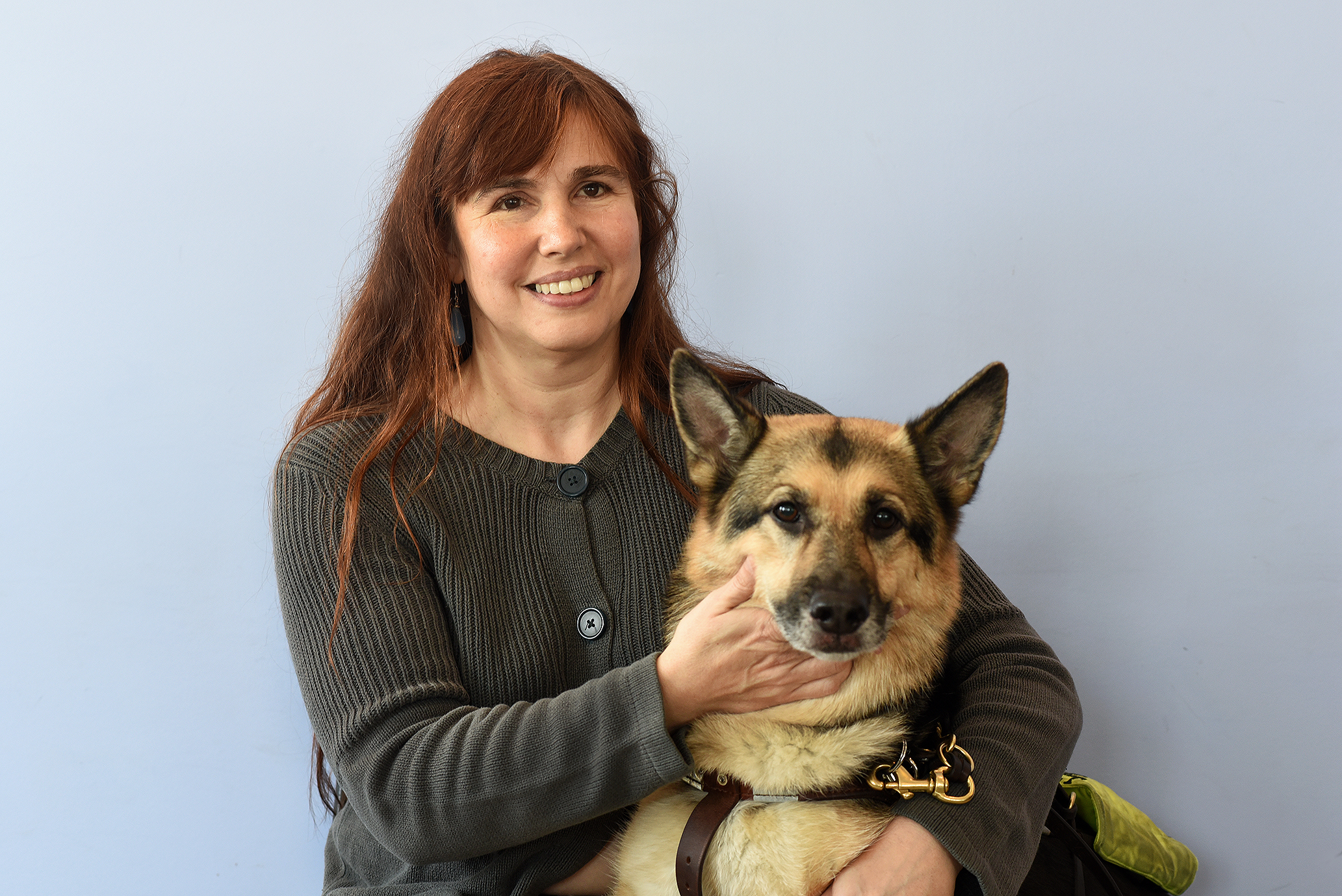
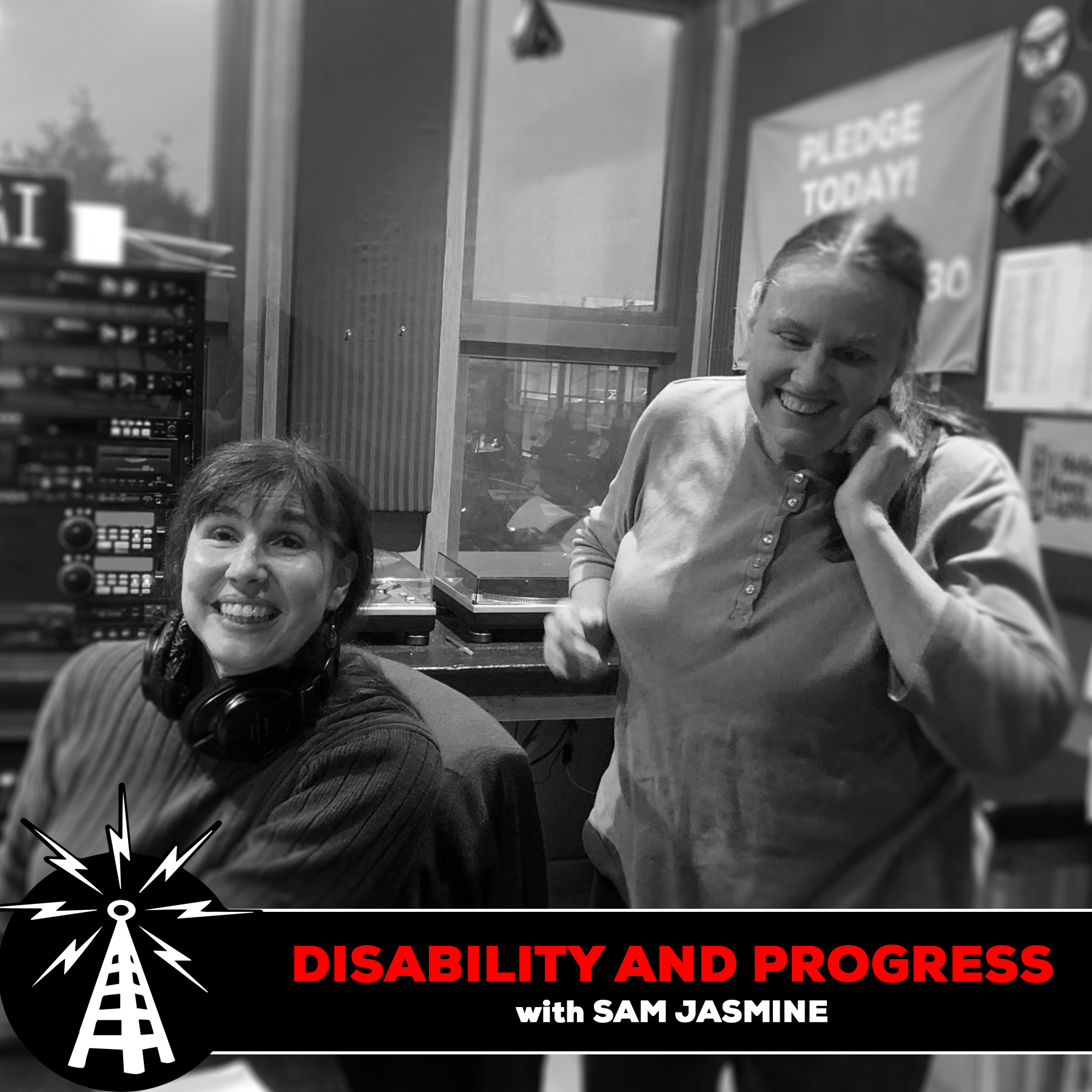
 This week, Sam and Charlene are joined by Dr. Paula Pompa-Craven. April is Autism Acceptance Month, and with one in 19 kids being diagnosed on the autism spectrum in California—versus a nationwide average of 1 in 31—it is one of the highest rates of prevalence in the U.S. E S S C is launching the Every1 With Autism Belongs campaign which celebrates inclusion and individuality by reminding the world that it's not one-size-fits-all for people with autism and that Every1 is unique.
To get on our email list, receive weekly show updates, or offer feedback/guest suggestions, email [email protected]!
This week, Sam and Charlene are joined by Dr. Paula Pompa-Craven. April is Autism Acceptance Month, and with one in 19 kids being diagnosed on the autism spectrum in California—versus a nationwide average of 1 in 31—it is one of the highest rates of prevalence in the U.S. E S S C is launching the Every1 With Autism Belongs campaign which celebrates inclusion and individuality by reminding the world that it's not one-size-fits-all for people with autism and that Every1 is unique.
To get on our email list, receive weekly show updates, or offer feedback/guest suggestions, email [email protected]!