Episode Transcript
[00:00:00] Speaker A: KPI.org.
[00:00:59] Speaker B: And Greetings. Thank you for joining Disability and Progress, where we bring you insights into welcome to ideas about and discussions on disability topics. I'm Sam Jasmyn.
[00:01:08] Speaker A: I'm Charlene Dahl.
[00:01:10] Speaker B: Thanks so much for joining us tonight. We're speaking with Anne Frisch. I'm sorry, Kelly Frisch and Ann McGuire.
Kelly is the Canada Research Chair in Disability Health and Social justice and Associate professor in the Department of Sociology Anthropology at Carleton University.
Ann McGuire is Associate professor in Critical Disability Studies and Director for the Program for Critical Studies in Equity and Solidarity at the University of Toronto.
Greetings.
[00:02:04] Speaker C: Hello. Thank you for having us.
[00:02:06] Speaker B: Thank you for joining us.
And tonight we're discussing Broken Worlds, disabled kin, strategies for collective survival. So thank you so much for coming and being on the show all the way from Canada.
All right, so I want to start by, I guess first of all, Kelly, my apologies if I messed up your last name. Frisch.
[00:02:41] Speaker C: Fritsch.
[00:02:42] Speaker B: Fritsch. Oh, I am so sorry. Thank you so much for that correction.
[00:02:47] Speaker C: No problem.
[00:02:47] Speaker B: So I want to start out by thanking you both for coming on. And let's start by giving us a little bit of history about you guys and how you got involved in disability studies to begin with.
[00:03:03] Speaker A: Hi, I'm Anne and I am a professor of disability studies. I'm the director of the program, as you mentioned, for Critical Studies in Equity and Solidarity at the University of Toronto.
And I came into disability studies by way of a life of experience with disability as a member of a family where all of my family members were disabled, identified as disabled, and I didn't identify as disabled growing up. And of course, as I get older and things change, I am moving into different kinds of identities, including chronic illness and mental health.
That kind of what brought me those kinds of those experiences growing up brought me into disability, this idea of disability as a social and political question.
And I teach now courses in critical disability studies at the University of Toronto. I teach introductory level courses, so lots of undergraduates and more senior level courses on accessibility, disabled childhoods. And my research really looks at the meanings that we make of disability in culture, in institutions, in public discourse.
And I'm really particularly interested in how formations of disability community and culture shape the lives of disabled people.
[00:04:34] Speaker C: Hi, everyone, I'm Kelly Fritsch and I'm also a disability studies professor and a disabled person who grew up involved in a number of different disability communities on the west coast of Canada. And I now live in Ottawa.
And my work focuses on understand the ableist social relations that structurally exclude oppress disable and debilitate people, to really try to illuminate the persistent and intersecting barriers that can impede our flourishing as a community, as well as document and analyze the historical and contemporary ways that disabled people come together to resist ableist social structures through disability justice and also through other intersecting social movements.
So a lot of my work explores what can become possible if we anticipate and desire disabled people as part of our communities, and how activists, artists, scholars, policymakers, all sorts of troublemakers can work together collaboratively to dismantle ableism and foster radical forms of accessibility.
And in Broken World's Disabled Kin, Ann and I try to push this agenda even further by also engaging with non human forms of disability and debilitation and put forward the need for making disabled kin, which I guess we'll talk about a little bit more in a bit.
And as we mentioned in the book, Ann and I met during our graduate studies in Toronto and we started spending more and more time together after we both had kids around the same time, which eventually led us down the path to reading and writing together.
[00:06:17] Speaker B: Excellent.
Well, thank you very much. That was. Those were wonderful little bio things.
I do have a question, but in your studies, when you're doing the studies, I presume that the studies kind of COVID globally, right? Of how the effects of things, not just like the US Or Canada.
[00:06:50] Speaker A: Yeah, for sure. I think that that has been a process for us. So for a long time, our focus in disability studies that, you know, in the courses that I would teach and my colleagues would be teaching here at the University of Toronto would be really focused on North American contexts, you know, disabled people's experiences in North America. And like, because of the, like, the amount of research coming out of and history of disability coming out of the United States, oftentimes like, the discussion was talking about the United States in particular with respect to like, evolving histories of disability rights and disability justice. And so that's something that has required a lot of like, rethinking and revisiting. And we've really expanded our syllabus to include much more Canadian content and really kind of focusing more recently in the past few years of really upending our syllabus and adding and engaging with global perspectives on disability. And so that's been a big kind of sh in my department over the last few years and it's been a really fruitful one. It connects so well with so many of our students who are themselves coming from different parts of the world as well.
[00:08:04] Speaker B: So before we get into broken worlds, I'm Hoping we can just step back a minute because you guys are quite.
Have authored very in depth about disability culture, et cetera.
And so I want to talk about. You even did a kids book,
[00:08:24] Speaker C: right?
We did, yeah.
[00:08:27] Speaker B: We moved together. Can you talk about that?
I'm a mom too. I love kids books and I think kids books really can set the groundwork for explaining disabilities to young kids and also acceptance.
And I just want to share a small story about something when kids often would ask me about my disabilities and parents would instantly, you know, anything from shh to horror, like, oh my God, you're bothering this person. And I have now grown to turn around to the parents and say please don't stop that questioning. Because in my opinion, you know, when people get, especially young kids or teenagers get made fun of, that comes out of. I feel like a fear place. Right. What people fear they don't understand.
And that's what they, you know, then, then things spiral. But when they understand and there's not as big of a fear, it feels like there's more acceptance and more just inclusion. And I'm wondering what your guys outlook is on that.
[00:09:50] Speaker A: Absolutely.
We are like we wrote, we moved together not just to explain disability, but to provide a forum for kids and all kinds of people who engage with this picture book. Not just kids, but talking to community and providing a forum in community spaces outside of the university to talk, to ask questions about disability, to kind of struggle and wrestle with some complexities of disabled life that we show in and through the book, but just to kind of backtrack. You know, Kelly mentioned earlier that we have been collaborating a long time and we've written and published academic articles together and of course this new book that we're going to be talking about today, but in 2021, as you're mentioning, We Move Together was published by AK Press. And this is a collaboration with Eduardo Trejos, who is a graphic designer and an artist and an illustrator of the.
And we wrote this book because as Kelly mentioned, we had young children at the time and we were really struggling to find books where we could have these conversations or that could ground these conversations with our kids, with our kids friends, books that we wanted, books that showed disability not just as an individual thing, but as a community, as a culture and that invited kids and all kinds of different people to learn about disability justice.
[00:11:17] Speaker C: Yeah, I mean, so we were really wanted to show disability culture because it helps us understand disabled people's movements through an ableist world and how those movements generate new forms of knowledge, forms of Care, creativity, different ways of relating to one another, ways that can really reshape our shared spaces and help guide us towards more accessible and just futures.
And in fact, the name of the book We Move Together is a nod to late disability justice artist and activist Patty Byrne and poet Aurora Levens Morales, whose quote we include in the beginning of We Move Together. And that quote says, all bodies are unique and essential. All bodies are whole. All bodies have strengths and needs that must be met. And we are powerful, not despite the complexities of our bodies, but because of them. We move together with nobody left behind.
And what Byrne and Morales are articulating there is that our power does not come from sameness, but our power comes from our differences.
And when we move together, with our varied bodies, our varied needs, and our varied ways of being, we can really create the conditions for meaningful collective change. And that starts by opening the door to children, to their curiosities, and having honest conversations with them about the diversity of our communities.
Cool.
[00:12:44] Speaker A: And there is this kind of project that has emerged out of this book. We started at kind of writing this book and kind of being able to travel around, talk with different people, elementary school students, university audiences, teachers, librarians.
And the kinds of conversations that have come out of this project have really, I think, shaped how we imagine ourselves to be as researchers at the university and the kinds of work we want to be doing. And just for listeners, there is a website for the book, wemovetogether Ca.
And it houses not just kind of, you know, there's information about the book and the process of writing the book, but there's a 60 page curriculum for kids in kindergarten to grade 12 on teaching disability justice. And there are a bunch of different kind of resources, ASL translations of the book, audio described versions of the book, and so on. So if people are interested, they can check that out.
[00:13:48] Speaker B: And so what age would you say the We Move Together book is for?
[00:13:54] Speaker C: Well, all ages, actually. I mean, this is the thing Ann and I have been teaching. We move together in our university classrooms as well as to kindergarteners and below. So it really is for. For everybody.
[00:14:10] Speaker B: Cool.
Well, you didn't. There's another one that talks about disability justice.
Did I read that right? About the criminalization in Canada and Keywords for radicals.
Did I get that one right?
[00:14:33] Speaker C: Yeah, yeah.
[00:14:34] Speaker B: Can you talk a little bit about that one?
[00:14:37] Speaker C: Yeah, for sure.
So, like, We Move Together Keywords for Radicals was also published by AK Press. And AK Press is a radical independent publisher that supports work seeking transformative social change.
And so Keywords for Radicals was an edited collection that came out in 2016.
And it was a collaborative writing project taking up common English language words used in a wide variety of social movements to engage with language itself as a site of struggle that's shaped by history and contradiction. And so that project brought together over 60 activists and social movement organizers to try to understand how tensions around language can help clarify the political possibilities for change.
So, for example, you can think about the word occupation. And so how is occupation used in social movements such as Occupy Wall street, sometimes in tension with how it is used by indigenous anti colonial movements or by those living under and fighting under occupation, such as in Gaza?
And while the word broken wasn't included in Keywords for Radicals, my work in that book project did inform how Ann and I came to engage with the concept in our most recent book, Broken Worlds.
And we'll talk about that in a few minutes.
But after Keywords, I worked on another edited collection called Disability Confronting Criminalization in Canada, and that was published by UBC Press in 2022.
And that book really takes up disability as central to our historical and contemporary understanding of justice, engaging with the relationship between eugenics and crime control, the pathologization of difference as deviants within criminal legal systems, how disabled people are disproportionately police, surveilled, incarcerated and killed, as well as exploring abolition and alternatives to policing and confinement. And Ann and I picked up some of the threads from that book around the failures of our contemporary social institutions to keep us safe and meet our needs by drawing attention to the importance of disabled cultures of access and justice to inform different ways forward.
[00:17:06] Speaker B: So it is interesting because I have a feeling what I'm going to say is could be a little troubling here, but I do feel like you hear about different race, how they're treated unjustly and can be in the prison system, but you do not hear as much about the disability, how people with disabilities can be treated like that. At least I don't hear as much of that that that is true. Or is it, you know, just.
[00:17:41] Speaker C: Well, I think that like one of the interesting things about that is a lot of the racialized people who are targeted by police are also disabled.
And sometimes it's not their disability that is at the forefront of stories or analysis about those interactions, but those populations are more heavily policed, surveilled, incarcerated, and unfortunately also murder.
[00:18:09] Speaker B: Yes. Well, I sometimes feel like we don't include that they have a disability, and I'm not sure why I feel like that's equally as valuable in recognizing that.
And then, Ann, just so I can touch on this briefly, you also did War on Autism. And actually, I think if I recall, April is going to be is Autism Month, if I have that right. And I wondered if you could. You actually got an award for that one, is that correct?
[00:18:49] Speaker A: Yeah, that's right.
It was honored with the inaugural Tobin Siebers Prize for Disability Studies in the Humanities, which was an incredible honor from a community of scholars to which I was writing for. And so, yeah, it was a really incredible award to win for that book. Just very kind of briefly to talk about what it is about. It's published by University of Michigan in 2016. And it was really focused on the first decade of the 2000s, which was a period of time that saw a very popular particular version of North American autism culture, which was kind of just like where mainstream advocacy organizations like Autism Speaks, for example, were really defining and talking about autism not only as this disease in need of a cure, which was in and of itself so problematic, but also as this threatening enemy that needed to be eliminated.
And so this is kind of the time period that's New York University's ransom note campaign where autism, autism was framed as this kidnapper of children that were otherwise non autistic that just needed to be liberated. And that was kind of one campaign of like hundreds of similar campaigns that happened around that time. So the book is really tracking that historical moment. And for such a long time it felt like this period of time was gone like that. In around the mid 2010s, we started to see kind of more of a distance mainstream discourse around autism acceptance and neurodiversity.
But of course, this current administration in the United States is focused on autism as this threat to be eliminated. It has kind of taken on new relevance, I think today. And unfortunately, these things don't ever seem to ever fully go away. We loop through history.
[00:20:52] Speaker B: Yeah, well, I wanted to touch on those things. I feel like we could have done a handful of shows with you guys because you guys such in depth writings and things. So thank you for that. I'm wondering what made you guys decide to write this book.
[00:21:11] Speaker A: I can start us off here. I think the early thinking from the book really started back in 2019.
So quite a while ago we were invited to speak on a panel at a conference hosted by Dr. Katie Albrecht at the St. Francis Xavier University in Nova Scotia.
And at that point, we were only just like three years into Trump's first term and the world already felt deeply fractured. In fact, we started to notice that this idea of a broken world seemed to reverberate across the already very fractured political spectrum. It was like the only thing that everyone seemed to agree on on all sides was that things were broken.
[00:21:53] Speaker B: Right.
[00:21:55] Speaker A: Yeah. And so around this time, we started to get interested in the social and political states of brokenness, but also in how disabled people and cultures and communities were thinking about, in kind of unique ways, about relationships between brokenness, repair and maintenance.
Because, you know, after all, like, disabled people have very kind of unique, I think, insights into concepts of brokenness.
Disabled, sick, mad and neurodivergent people are so often framed as broken. Broken. Right. As not.
[00:22:33] Speaker B: You're not broken. Oh, yeah. So many different topics. Right.
[00:22:39] Speaker A: Or like a deviation from some normal or kind of original.
[00:22:43] Speaker B: Right.
[00:22:45] Speaker A: But the disability justice movement really pushes us to think as disability as a form of wholeness in its own right. And so many disabled folks reject the idea that disabled bodies and minds are broken, not because we deny kind of complexity or struggle or even like harm, but because labeling disabled bodies as broken kind of erases the richness of disability culture and knowledge and experience.
And so it's really at that tension, this tension between kind of neoliberal or capitalist understandings of brokenness and the need for kind of this restorative fix and disabled ways of holding brokenness, vulnerability, harm and healing. That's the kind of. That tension is at the heart of where our book came out of I wonder.
[00:23:41] Speaker B: Oh, go ahead, Kelly.
[00:23:43] Speaker C: Yeah, so I was just going to say that the impetus for the book really flowed from our experience of the many different ways the worlds that we were inhabiting were feeling broken. And that was both personally and intimately in terms of, like, breakdowns in accessible infrastructure, at our workplaces, at our kids, schools that were falling apart, our experiences of inaccessible transportation. You know, there was a whole like six months where the stairlift in my house was broken.
And then there was also like this sort of global breakdowns that were shared by many.
And so, you know, we saw climate breakdowns, wars and genocides, misinformation campaigns, all this kind of stuff.
And while we started writing this book before the pandemic, our experiences in 2020 and onward only really further intensified the gradients of brokenness. And it really laid bare to us the ways that what we were experiencing as broken systems are really systems that are broken by design.
So systems rely on the breaking down of those most multiply marginalized, including disabled people, in order to maintain the status quo. And so we saw this everywhere, the underfunding of public schools, public transit, public health care in Canada.
And so these are things that are intentional.
As these critical resources are diverted instead to private interests like policing, military, and so on.
The same people that are most dependent on broken social services become the targets of policing, surveillance, and militarization.
So the book really traces both, like, the minor breakdowns of our sort of everyday experiences, the overwhelming feeling of everything always feeling broken and just like that, frustration, and then tries to link that to the broader macro systems and structures to show that these feelings exist because these systems are actually working as they were designed. And we want to help illuminate and expose who benefits from brokenness and who is really rendered vulnerable and even disposable and expendable.
[00:26:10] Speaker B: And I want to state something. If the listeners, you know, because this is a book that I feel is so powerful that really, if. And this is for anybody who might be listening, who. It doesn't matter what political side you're on.
You know, the politics of the upper hands can twist or break things on either side. But I do feel like their behavior and the top political president, whatever you want to call yourself, behavior, how you address things and address behavior of people and address the.
What is acceptable and not acceptable behavior can make a huge difference for people with disabilities because it trickles down, Right? You see that, right? That trickles down to how they get treated from anyone to maybe they're on an airline and maybe they're getting treated in a particular way or a restaurant or. I mean, so many different areas that.
That can trickle down to.
[00:27:25] Speaker C: Yeah, absolutely. I mean, one of the interventions in our book is to show that the best way to address our experiences of this brokenness is not to fix the systems that are designed to break us, but it's actually to break from these systems and try to build something new. And so we do that precisely by turning to stories of disability art, stories of community and culture, to show that disabled people are already engaged in this work of rebuilding, building something new in both big and small ways, outside of the worlds that are trying to harm and eliminate us.
And so, despite the title that emphasizes broken worlds, our book is. We feel really deeply hopeful in that it looks to disabled kinships and cultures and communities to help guide us towards this sense of collective survival in these really dangerous and difficult times.
[00:28:32] Speaker B: I wonder if you can address something that. I've never really gathered statistics on this, but I do know this from friends that I saw in the pandemic that had personal, you know, events happen to them in regards to if they if they got Covid and if they unfortunately maybe ended up in the hospital or whatever there. It was difficult enough, I feel like, for the general person who, their family member or whatever may have ended up in the hospital.
But if you had a disability and ended up in the hospital, your whole advocacy could have been disrupted and taken.
And I wonder if you could address that and what we maybe learned from it and what we could do better. Because I think it's not a matter of if another pandemic will happen, as you know, but when.
[00:29:42] Speaker A: Yeah, I mean there was a period of time where people were not allowed to have anyone accompany them to the hospital.
Right. So this is what you're saying, the advocacy.
[00:29:55] Speaker B: Exactly.
[00:29:57] Speaker A: And people went to kind of extremes like writing letters on their body and pinning it to their T shirts or on their arm, kind of dehumanize themselves in the eyes of medical professionals who are making these life or death decisions, triage decisions, in terms of who was able to gain access to life saving measures and equipment.
And so this is an example, I think, of a system that is broken by design in that the triaging of disabled people as lower than non disabled people.
And this, you know, included at least in Ontario, you know, for a time, intellectually disabled people, people who had no physical disabilities, but had other forms of disabilities. And so really kind of laying bare the social valuation of disability and disabled lives. So it didn't, it didn't become like this was a policy that turned on an under a eugenic understanding of disabled lives mattering less and being less worthwhile, less worthy of survival.
And so, you know, in targeting the system like the system was working as it was, it was functioning as it was laid out. Right. It wasn't a broken system.
Doctors were following policy that was written with deeply embedded ableist and eugenic understandings of the valuation of human life life.
And so this is where our book is calling for the like the imagination and building of new structures that are premise on disabled bodies and disabled life not just as valuable, but integral to our collective life.
[00:31:55] Speaker B: So what can you talk a little bit about some, you know, how creative ways that people who are disabled can support each other.
And what are some examples of how these creative survival strategies can work?
[00:32:21] Speaker C: Yeah, so in the book we define collective survival as a means of taking care of one another, of not abandoning one another, especially those most harmed by broken by design systems, so that all of us can not only survive, but also flourish.
But collective survival is also about recognizing that individual survival is only one form of survival. And it Certainly isn't enough. We need shared support, solidarity, community care in order to build a world where disabled and marginalized people can live now and in the future beyond our own survival with dignity, creativity, joy and possibility.
And so this includes everyday practices like care collectives, mutual aid, which I think Minneapolis knows a lot about, showing up to protect one another from harm, creatively improvising access when systems fail, ensuring assistive devices and life sustaining infrastructure is maintained and repaired, learning from disabled ancestors and lineages, and really forging solidarity across humans more than humans and materials, real world. And so these kinds of practices, whether it's holding space for someone in crisis, distributing masks at protests, sharing power during outages, or sustaining different kinds of community knowledge, these are all examples of how collective survival and disabled kinship become primary strategies for surviving and contesting hostile futures.
[00:34:01] Speaker A: And
[00:34:03] Speaker B: I'm wondering, you know, I think about how the general person, somebody who may not have a disability, can be pulled into this community to be understanding and help, and help, help things thrive. Because I feel like a lot of people might think that, well, I don't have a disability, I don't have to worry about that. But what they may not realize is what's the statistic?
There's a huge statistic, at some point in your life, there's a huge chance that you will acquire or develop a disability.
And if you don't, somebody near you or close to your family member will.
It would be interesting to hear thoughts of what you could do to involve people before that happens so they can have more empathy, have more understanding, have, you know, et cetera.
[00:35:11] Speaker A: Yeah, I mean, this really resonates with me. And I had a friend, a conversation with a friend at one point who was learning about what I was doing. And she was like, well, I just don't know anybody who's disabled.
[00:35:26] Speaker B: Oh boy, how many times have heard that?
[00:35:30] Speaker A: And she's like. And I was like, but your grandmother uses a wheelchair.
And it was very fascinating kind of to think about the ways in which her grandmother didn't appear to her as a disabled person. But she's old, she's 80 years old or 90 years old, and she uses that assistive device because of age, not because of disability.
And so part of the work that we do in the book is to think about spectrum, the idea that disability is not a singular or static way of being in the world, and that our experiences of being bodies in the world are often experiences of bodily limitations, of bodily change as we, as we age, for example, and coming into and out of disability in different ways.
And so I think the spectrum, this idea that disability lies on a spectrum and that we all have some relation or experience with disability over the course of our life, even if we identify as non disabled, is something that invites a sense of shared understanding and potentially solidarity. At the same time, we want to be careful of collapsing those experiences where, you know, I broke my arm once, I'm not. And so now I know what it's like to be disabled. That's not a doubt.
Or these kinds of exercises that you see on campuses or in schools where students spend. Able or non disabled students spend the day in a wheelchair.
[00:37:22] Speaker B: Right. Or put on a blindfold.
[00:37:25] Speaker A: Or put on a blindfold.
You know, and as Allison Kafer says, all that teaches us is, you know, that blindness is groping around in the dark or something. I'm not exactly quoting her here, but, you know, or a lack of sight. And blindness, of course, is so much more than a lack of sight. And. And so the spectrum invites us into reciprocity, invites us into kind of a shared relation of disability, potentially builds networks of solidarity where I say, okay, because I've experienced mild depression, I can empathize and understand what it might be like and I can build a solidarity, solidarity with people who are navigating more complex forms of mental illness.
And that's a really site, I think, of community building and of social movement building where we can fight for better, not just for us individuals, but for us as a broad spectrum collective.
[00:38:27] Speaker C: Yeah. And I think sometimes people think that activism is this otherworldly activity that happens outside of all of our lives. But it can really be as simple as making soup for your neighbor or helping someone bring in the trash, or chatting with all of your neighbors about what's happening on your street. Right.
So it doesn't have to be this thing that's so far outside of our lives. It really is just in the kind of everyday care practices that can just sort of grow and expand naturally as you participate in your community.
[00:39:05] Speaker B: I'm wondering if you can talk a little bit about how systems like health care, housing and employment, how they can shape worlds of people with disabilities and how they navigate them.
Because there's a lot there.
Yeah.
[00:39:25] Speaker C: Systems like healthcare, housing and employment really do shape the worlds that disabled people have to live in and move through by determining who gets access to life sustaining care, support and other social and economic resources that are necessary for health, for well being and survival. And they do it in really stratified, conditional ways.
So these systems are often conditional and unevenly distributed which makes survival contingent on disabled people's compliance with the system.
And in the book, we talk about how this shows up for people who use drugs who are routinely met with stigma, surveillance or outright denial of care. And in response, groups like we take a case study in Vancouver, B.C. of the Vancouver Area Network of Drug Users and the Drug User Liberation Front and how they have forged alternative care infrastructures such as unsanctioned supervised consumption sites and peer led overdose response. And this is just like one of many examples that we explore in the book of how institutional systems can create these really harsh and often crushingly unlivable conditions that disabled people have to navigate, but also how disabled communities keep building alternative worlds grounded in forms of care in order to meet people where they are, even if that is sort of in the midst of some really intense drug use.
[00:41:06] Speaker B: Yeah, that's really powerful. I'm wondering, you know, also that as you kind of said, you know, it seems like sometimes they're peer led, like things are supported by people with disabilities.
How do or have you found that people with disabilities and communities pass, like, strategies and knowledge and, and resilience from one generation to the next?
[00:41:39] Speaker A: Yeah, I love this part of our book. In particular, the kind of call to thinking about disability lineage, disability inheritance. This concept of disabled ancestors and all of these kind of lines of thought have been developed by disability justice activists like Alice Wong, Stacy Park Milburn, Leah Lakshmi Piepzna, Semara Sinha, and these activists and many others are reminding us that we're part of these long and interconnected histories that are shaped by disabled people who came before us.
And in the book, we talk about disability inheritances and how they are sometimes biological, they can be genetic, they can be epigenetic, but also we inherit cultural and political understandings of disability as well.
Disabled communities that we are a part of and other disabled communities worldwide pass down critical knowledge from one generation to the other. Skills, sometimes objects, assistive devices, wisdom for how to live and move through the world, how to navigate ableist structures in ways that can help us do that better.
Stacy Park Milburn has this beautiful essay that we talk about in the book about what she calls Crip Hand me Downs.
And Milburn shares this story of a pair of kind of bootleg socks that she was gifted by disabled poet Laura Hershey, who passed away and left those socks to Stacey.
And those socks were given to Laura from disabled lawyer and activist Harriet McBride Johnson. And so they had been passed down three generations and all three people were wheelchair users.
And Stacey writes about how wearing the socks were not only, you know, they kept her feet warm, they were fashionable, she said, but they also made her feel powerful. They made her feel connected, did to her people, to a people that had been fiercely fighting for decades for better. And they strengthened her in her own fight to fight for better.
And just to mention, too, that Stacey passed away in, I think it was 2021.
And her body of written work and activist work is yet another legacy that we continue to share and to benefit from. So, ultimately, I think we see disability lineages as giving us the sense of kinship, a strength, solidarity, but they also call us into responsibility for the work that we're doing now and what that might mean for the next generation of disabled scholars and activists to inherit. So it's a real kind of giving attention to what we have received and then also kind of thinking about what we'd like to gift others, I guess, in and through our work.
[00:44:58] Speaker B: I want to stay on that topic just once, briefly, because I feel like in the last year or two, there's been some pretty big names of people who are disability advocates or strong builders of things, things pertaining to disability.
When you think of what they lived through and what they were part of when things were developed, some. Some things are still like, oh, we're still dealing with this, you know, today, same song, second verse type thing, you know, But. But there are significant things, if you go back from the 60s to today that are huge, really huge, that were developed and now are just an everyday thing.
And I'm wondering if you see the passing of the, you know, some of the disability grades and then the people that are coming up that are much younger, like, do you think they.
How do you. How do you think they'll do? I'm wondering just how, like, if you see them being as strong or. Or do they feel they need to be as strong in advocating. I'm just curious of your thoughts of how you see things growing with the next generation of people with disabilities.
[00:46:25] Speaker A: Well, we have the very big privilege of spending a lot of time with the next generation of disability. I know, as university teachers.
[00:46:36] Speaker B: So you see it. So I'm like, do you feel like this.
That is going to be just as strong of a group? Do you. You know, what, what.
What do you think that they'll have to deal with that is different? Or how can they do things that can make what we need to see today change?
[00:47:02] Speaker A: I mean, it's a hard question to answer because I think. Think we're at once dealing in this particular historical moment with really serious Significant dangers that have, like, that pre exist in some ways some of the disability rights movement, when we're talking about like the kind of rearing up of like eugenic understandings of the disabled bodies as lives less worth living and, and this kind of repeating of history and a failure to kind of move on from these systems that have broken and eliminated so many disabled people over hundreds of years.
At the same time, we're seeing emerging really different and new problems that I don't even think we have a full grasp on yet. With the emergency of AI, for example, and kind of, we often hear that the world in which our children are growing up into, you know, is a world that, you know, in many ways is unfamiliar to the world that we have inherited.
And in many ways it's holding on to histories that refuse to go away.
And so I, I think that the, the students that I teach, just as an example, are asking hard questions in class.
They are asking questions that sometimes I haven't even thought about.
They're drawing attention to limitations in the disability rights movement, for example, and kind of legislative and policy based kinds of ways of securing freedom and saying that, well, that's not enough. That's not helping us that we're falling through the cracks.
And so I think younger disabled activists are identifying really important ways in which the history that we're benefiting from and the shoulders that we stand on are absolutely integral and important. And yet there is still more work to be done. And I think that critical work of notice what is yet to be done is our students or my students have the eyes or the kind of ability to perceive it differently than I do even.
[00:49:43] Speaker B: Yeah. And I certainly hope, I mean, they're going to need to be strong because I think you're right. There's things that are coming up that we never envisioned.
We have such a short time left and I apologize. There's so much to cover.
So can you tell us where can people find your books? And also what do you want people to get from your books? And how do we address the systems that are not built, you know, with people with disabilities in mind?
So sorry, that was a kind of a three part go for it.
[00:50:27] Speaker C: Well, I mean, I think the punchline of broken worlds, disabled kin is not so different from the punchline to we move together, which is that the end of the day, it's actually up to all of us working collectively together to find ways to move forward and challenge these systems. You know, just thinking about your, your last question there, there's so many. There's infinite ways to answer. Answer that question. But one of the things that I see in my students is that they are very angry that the things that were promised to them are not actually playing out in the reality. And the kinds of things that were promised in, you know, in the US through the Americans with Disabilities act or in Canada legislation, you know, don't actually secure an accessible future for them. And the way in which we are left to make accessible possibility is between all of us in our relations, which is at once a profound possibility of, like, new ways of doing things and new ways of developing community. But on the other hand, as we really explore in this book, it's a profound sense of abandonment of disabled people. And that is something to be extremely angry about and to work very hard to change.
And so, yeah, I think there's just this need that no one else is going to save us. We need to save each other.
[00:52:02] Speaker B: Right.
[00:52:02] Speaker C: And so, you know, one way you can do that is by picking up our books and sharing the kinds of things that we're writing about with your own communities.
And. And our books are available from the University of Minnesota Press directly, but also through. Through any local bookseller and.
[00:52:25] Speaker B: Push for Change.
[00:52:27] Speaker C: And Push for change.
[00:52:29] Speaker A: Yeah.
[00:52:32] Speaker B: Well, excuse me, I'm wondering, do you want to leave us with anything? I. First of all, it's been great. Thank you guys so much. These are. This is a pretty deep book. And so I. I did not do justice to it. So I do recommend people pick it up and read it. And there's a lot to it. It and a lot of areas that you guys go.
Is there anything you'd like to leave us with?
[00:53:01] Speaker A: I think that one of the kind of central insights of kind of disability survival strategies or disability mutual aid, for example, is that anyone has a seat at this table that the kind of movement that we're looking for, and we hope that our book is pushing for, is a movement that doesn't require particular skill set, particular kinds of competencies in order to participate. And Kelly mentioned earlier that sometimes taking care and pushing for change means making soup and bringing it to a friend who's struggling in some way. Sometimes it's checking in on your neighbor, sometimes it's organizing these massive movements, such as the Power to Live campaign in California, where disabled people came together and supported each other during the rolling blackouts, which was causing people with medical.
Vital medical devices to lose power.
And so I think, think that the movement can be big. And it needs to be big, and it also needs to be enacted in these small intimate ways.
And it's only in having both the macro and the micro kinds of forms of resistance and change and support and care and solidarity that true social change and movement building can take hold.
[00:54:39] Speaker B: And it is truly something that everyone can be involved in. No, not an exclusive club at all.
And Kelly, thank you.
[00:54:51] Speaker C: Thank you.
[00:54:53] Speaker A: Thank you very much. Thank you very much for having us.
[00:54:57] Speaker B: It's been very enlightening. Good luck with the books, and I'll look forward to hearing more from you guys.
[00:55:04] Speaker A: Take care. Bye. Bye everyone. KPI.
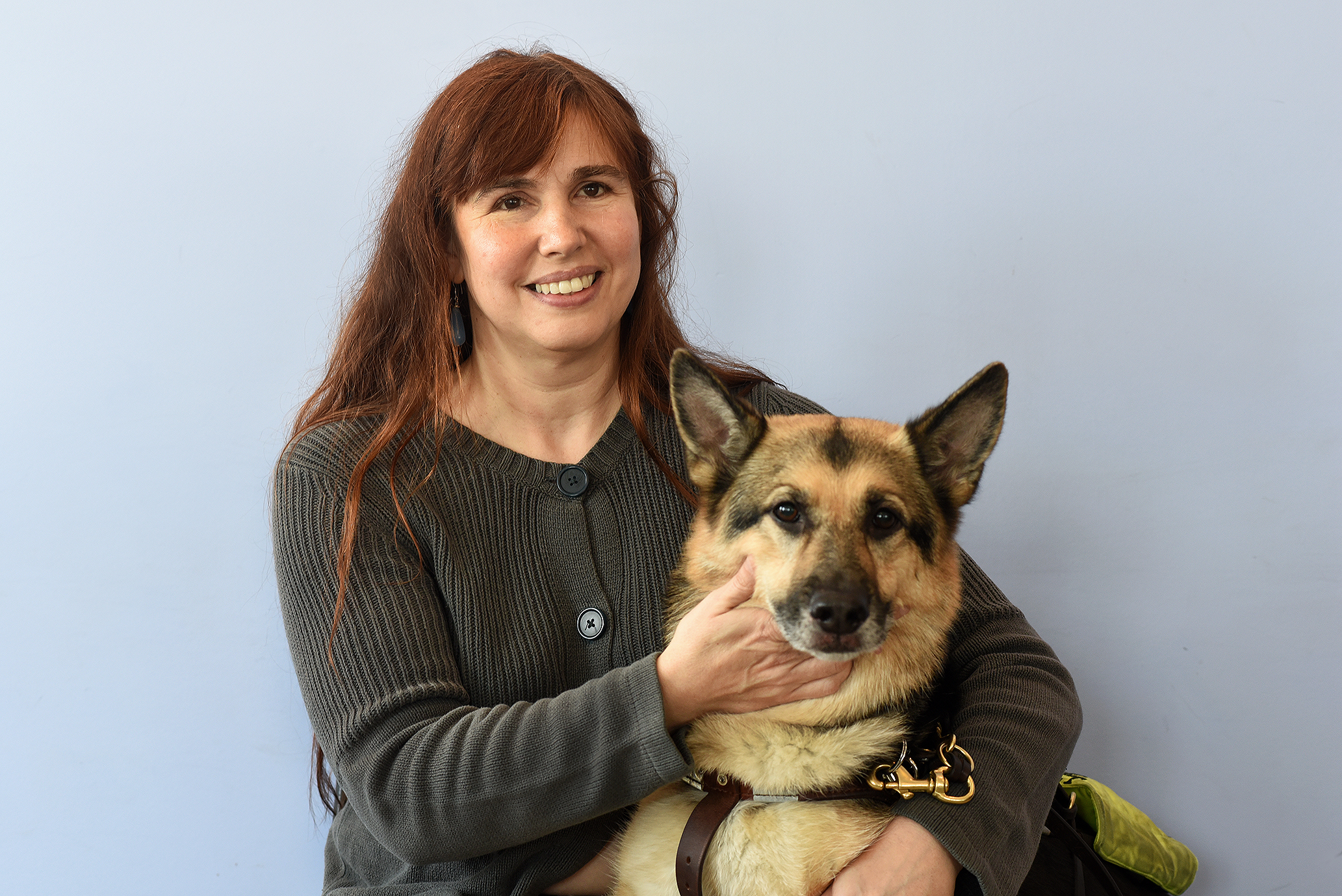
 This week, Sam and Charlene talk with Kelly Fritsch and Anne McGuire about their book Broken Worlds, Disabled Kin Strategies for Collective Survival. To get on our email list, receive weekly show updates, or offer feedback/guest suggestions, email [email protected]