[00:00:00] Speaker A: KPI.org.
It.
[00:01:01] Speaker B: This is Disability in Progress where we bring you insights into ideas about and discussions on disability topics.
I'm Sam Jasmin. I'm Charlene Dahl.
This week we speak with Claire Stanley. Claire is Director of Advocacy and Governmental affairs for the acb, or American Council of the Blind.
Claire, it's good to be with you.
[00:01:28] Speaker A: Hi, how are you doing? Good.
[00:01:30] Speaker B: Thanks so much for giving us your time tonight.
[00:01:33] Speaker A: Of course.
[00:01:34] Speaker B: I have a plethora of things to discuss with you.
[00:01:39] Speaker A: Wonderful.
[00:01:40] Speaker B: It sounds like in the last 20, 25, 26 year, you've been kind of busy. So we're going to talk about, we're going to speak to you about politics, changes and how it may be affecting people with disabilities. So I'm so happy to have you on.
[00:01:58] Speaker A: Well, thank you for having me.
[00:02:00] Speaker B: First of all, can you give us just a little brief history for those of you who haven't heard you on before about you and how you got to this point?
[00:02:11] Speaker A: Sure. So like was said, I'm the Director of Advocacy and Governmental affairs for the American Council of the Blind.
I think I just hit in January, the two year mark, which is amazing. Time flies when you're having fun.
And I've been in the advocacy space for quite some time. I actually worked for ACB prior to this position starting eight years ago and was in a different position, but still in the advocacy department, so to speak, and had left and did similar policy advocacy work for the cross disability community.
And then when this director position opened up, everybody said, well, you're going to apply. And so I applied and came back to acb. And so it's been great. I've been doing advocacy work basically since I finished, well, even before. But I finished law school almost 11 years ago now and have been in this space pretty much the whole time. So.
[00:03:07] Speaker B: And for those who don't know who is acb, American Council of the Blind.
[00:03:14] Speaker A: Yeah. So ace ACB is a membership organization of people who are blind or who have low vision from across the country. We're made up of over 60 some affiliates, a good chunk of which are geographically based. So state affiliates. We're just shy of all 50. I think we have like 46 right now. And then we also have what we call our special interest affiliates. So it's just a way that people get together based on a topic. For instance, we have blind attorneys, we have students, and just so many other cool ways of getting together.
And the affiliates are just communities of people who are blind or have low vision who support each other, advocate with each other, live lives together.
And ACB has been around since 1961. So we're about to celebrate our 65th anniversary. Congratulations.
Yeah, thank you. And it's just a great community of people who come together to live our lives.
[00:04:10] Speaker B: And so people who may be familiar with as many things happen, there are different groups, so they may be familiar with, you know, the acronyms ACB and nfb. How are you different from nfb?
[00:04:26] Speaker A: Yeah, NFB is similar and a membership organization of people who are blind as well. NFB was actually the first organization, an ACB kind of branched off back in 1961, so many years ago.
Overall, I'd say we have very similar mission statements.
You know, at the end of the day, we're doing the same thing. We just have slightly different governing structures, the way our organizations govern ourselves, and have different boards and things like that, and just slightly different approaches to things. But I like to think, and I like to hope that at the end of the day, we're all fighting for access for people who are blind.
[00:05:02] Speaker B: I certainly hope so.
Can you tell us a little bit about being in the Director of Advocacy and Governmental Affairs? What does that exactly mean? Like, what would your role be and what do you do?
[00:05:17] Speaker A: Yeah, great question.
So, as you can tell, advocacy and Governmental affairs, it's a big swath, a big spectrum, and so it can include a lot of things. I like to tell people that we do advocacy from the individual basis. So anybody who can just pick up the phone or shoot us an email, who's dealing with an individual access need, all the way up to something that spans the whole community across the country. And in doing that, we can do direct advocacy work. Sometimes it goes to litigation. You know, in the legal system. We do a lot of work lobbying on Capitol Hill for those rights. You know, we're based in the D.C. area for a reason.
We like to coordinate with corporations and try to work collaboratively with the big businesses to make their products accessible. So you name it, Whether it's for one person or for the whole community, whether it's through all three branches of the government or separately just working with the corporate world. We're trying to advocate in every way, shape and form.
[00:06:22] Speaker B: So my goal tonight will be to kind of go through a couple different things that I know that you've made reports on in 2025 going through that year and find out where we are now.
So I want to start out by the Department of Aviation Consumer Protection.
They launched their Aviation Complaint and Enforcement and reporting system.
Can you tell us a Little bit about that and exactly how that works.
[00:06:55] Speaker A: Yeah. So I won't get into too much detail because I will admit I don't know a ton of the details, so I don't want to speak out of.
But I know they had been doing some, I'll call it rejiggering for quite some time to try to change how any person can go on their website and report any situations of potential discrimination. And so they had been reaching out to the disability community for quite some time, and specifically the blind and low vision community, quite some time to make sure that the process was accessible or as accessible as hopefully they can make it.
And then hopefully seeing that the outcome of the ability to report those situations of discrimination will yield helpful data that can hopefully lead to some, you know, positive changes overall. So acb, our main part of participation has been just kind of playing with the website, playing with the portal, and giving our two cents on how accessible it is.
We actually have a new.
Yeah, it's still pretty new. Department of acb, which is the Advocacy Consultation. Excuse me, not advocacy, the accessibility Consulting Department, led by Colby Garrison.
And she does a lot of website assessments to see if they're accessible. So, long story short, when we got involved in this process, Colby Garrison has done a lot of the testing of the web portal.
[00:08:18] Speaker B: Ah.
And where do. I'm just curious because I know in the last, I don't know, handful of years, it's kind of the whole. When we had to deal with the service animal problem issues, the attestation forms, is that anywhere on there.
Is there anything that you know about that, how that's changing, or is there still. Because my memory is that each airline had kind of a different way of doing things. Are we any closer to kind of having everyone be on the same page?
[00:08:55] Speaker A: I wish I could say we are further along, but I don't think we are. The only real changes I know that they made to the attest, the dreaded attestation form that we all know, they revamped it a little bit in 2025, and they revamped it to what they said was to make it a smoother process.
But I say this with the smile on my face. I don't think the changes made. The changes they made had any real significant effect on making it smoother, quicker, easier. It was really just the rejiggering of a few questions. So I. I made my thoughts known that I'm glad that they were making attempts to make it smoother, easier. But the changes they made, in my opinion, at least were pretty minimal and didn't make the process as you're, you know, clearly, you know, denoting, which is totally legitimate, that it's, you know, silly and frustrating and time consuming. I don't think the changes did much to make it better, unfortunately.
[00:09:54] Speaker B: Well, that's a shame.
[00:09:56] Speaker A: Yeah.
[00:09:57] Speaker B: One of the other pieces was that I wanted to talk about is the Older Americans Reauthorization Act.
[00:10:08] Speaker A: Yeah.
[00:10:08] Speaker B: Talk a little bit about that.
[00:10:11] Speaker A: Yeah. So the Older Americans act, the OAA for short, has been around since the 60s, I believe it is, and every so many years it has to be reauthorized, which is the case with a lot of laws.
And so the OA was supposed to be reauthorized. She's. Well over a year ago, I think it was. I'm already forgetting the years because it's getting so fuzzy. But it was supposed to be reauthorized in the last congressional session, the 118th.
[00:10:40] Speaker B: Right.
[00:10:40] Speaker A: It was never successful. Congress never got their act together to do it all. And so we've been pushing for it now through the 119th congressional session, which is what we're in.
And to my knowledge, there has still been no significant movement to get across the. Across the board.
We, we meaning acb, and I think the greater disability and blind community have been trying to use that delay to get language in there that would accommodate our community more. So because it's kind of an interesting thing where when you think of older Americans, we know statistically if you age, you're more likely to develop a disability.
And so we wanted language in there that would really provide services in our circumstances, obviously for the blind and low vision community, but they just haven't put as much detail in language and resources that we think would accommodate the blind and low vision community. They haven't done it quite to the extent that we think would really make the program successful to accommodate those who are losing their vision as it relates to age. So we keep pushing for it, but there hasn't been much included, unfortunately.
[00:11:54] Speaker B: And what stops it?
[00:12:00] Speaker A: What stops making that?
[00:12:02] Speaker B: What stops them from addressing the.
They're not addressing it, it seems.
[00:12:07] Speaker A: Right.
I think it's a few things. One, I think it's a pure misunderstanding.
One thing, we have some really great advocates in ACB who know that older Americans community. We have an affiliate called AA vl. It's for aging and vision loss. And they really know these services well. And they have astutely pointed out that a lot of the services that older Americans receive are through what we call the AAA systems The area agencies on aging. So aaa, and they're great systems, don't get me wrong. We definitely support the AAA's, but they don't have a lot of services that are uniquely for helping people who are losing their vision as a result of age to teach them even the most basic things like how to use a white cane, how to clean in, you know, doing your independent daily living skills as you lose your vision.
[00:13:06] Speaker B: Right.
[00:13:07] Speaker A: And so because the AAA's just don't have that, you know, even like O and M training, you know, to really give people the proper skills.
Just a disappointment that, you know, the AAA's keep getting their funding, which again, I'm not saying they shouldn't, but they need to get money and they need to get training to do these more blindness specific related skills. And they're just not. So I think part of it is just a misunderstanding of what people who are aging and losing their vision need.
And then I think the other thing is it's kind of a horse trade.
In the 118th Congress, when they were talking about language for the reauthorization, we had spoken out to a couple congressional offices about including more blindness related language. And they told us like, oh, well, we were trying to negotiate and we heard you guys, but we just couldn't get it in. So it was very much so that like classic congressional horse trading where you try to get in the language you want, but then somebody says, no, we can't get it in because of abc.
So we have definitely, I like to think, trumpeted our argument loud. But trying to get people to actually insert it is a whole other, whole other game.
[00:14:21] Speaker B: It's an interesting choice of words that when you said misunderstanding, I'm like, I'm not sure that's true.
Half of our Congress is pretty old.
I can't believe that they aren't experiencing some vision loss. Certainly they, they've seen their parents slash siblings, whoever in their family. You know, everyone's got a family member of some type of disability.
So I don't, I feel like. Go ahead.
[00:14:54] Speaker A: I think when I say misunderstanding, it's not a misunderstanding of losing vision. It's a misunderstanding of what services would best accommodate people. You know, I think there's this, this idea that, oh, grandma's getting older and she's losing her vision, so she just needs Meals on Wheels and someone to go and help her, which, yeah, like, great. And the AAA's provide that. But those of us in the blind and low vision community are saying, yeah, but teach grandma how to use a White cane so that she can go out to the grocery store herself. So I think it's just this stigma and misunderstanding of how to best equip people to be independent and not just give them the bare necessities.
[00:15:35] Speaker B: Yeah, I like that.
Truly, I feel the word is stigma because I think that that's that big thing.
Claire, I want to talk about something that somebody brought to my attention, and I really don't know if I understood the whole intent of it, but if I did, it's a little bit mortifying to me.
Apparently, there's the Safeguard Americans Voter Eligibility Act. I think they call that save.
Are you familiar with this?
[00:16:14] Speaker A: I'm somewhat familiar. I don't want to speak out of turn because I don't know it very well. So I don't want to imply what I do or don't know, but I've heard bits and pieces of it.
[00:16:23] Speaker B: Yes, it passed the House, but did not pass the Senate, and it was in regards to proof of citizenship for voting.
But there's more to it than that. My understanding is that, you know, people think, well, of course, you should know if you're a citizen, you shouldn't be, you know, voting if you're not, blah, blah, blah. But it also, the things that it require, you need to prove you're a citizen, prove you're who you are.
And this could be made difficult, like if you got married or if you had a name change or if you, you know, so many different things.
And I'm wondering.
I'm wondering what ACB stances on that.
[00:17:12] Speaker A: Yeah, like I said, I don't want to speak too much out of turn because we haven't looked at it too much.
But I think the thing that always we would go back to is looking at the ID laws that would impact people with disabilities as it relates to voting.
And this is, I don't want to say this is nothing new because unfortunately there have been iterations of this type of legislation for many, many years, and every time it rears its ugly head, we have to go, oh, we got to deal with this again.
But this idea of ID requirements for voting, I think can be really detrimental to all people with disabilities because even just having ID can be hard. Right. Depending on the situation you're living in. Did you have access to get your id, your economic, socioeconomic background, which people with disabilities are disproportionately more likely to be in that lower economic community?
So, yeah, anything that requires that kind of thing can be really, really cumbersome and I think really dangerous. For our community.
I know the argument I've always heard is they want to prevent fraud. Right. They don't want people voting erroneously and that kind of thing. But I have never heard anybody rightfully provide statistics or proof or things like that that voting fraud is truly a real problem.
So because of that, I feel like it's making a problem that isn't there.
So all that to say in the greater cross disability community, I think there's been some great advocacy to try to push back. Again, this is the most current iteration of this kind of.
But again, it, it pops up every so many years.
One resource I would encourage people to check out is the National Coalition for Accessible Voting, or ncav. ACB is a member and many great notable disability advocacy groups are part of it. And NCAV has been doing a lot of work to push back against this current bill and similar iterations of it over the years.
Excellent.
[00:19:25] Speaker B: Well, yeah, this.
There's just a lot going on. And so I encourage people to really stay close to knowing what's happening in the House and Senate because I feel like, you know, I think the average day everyday person thinks, well, probably won't affect me, but most of us know somebody is going to affect.
So I jumped to the whole Medicaid issues that have been popping up and in regards to are they going to have cuts, are they going to require work hours?
Do you know where it is now and what ACB stance is on that?
[00:20:10] Speaker A: Yeah. So when the first. Oh goodness, what was that title? The one big beautiful bill.
[00:20:17] Speaker B: Yeah, they want to know my name for it.
[00:20:20] Speaker A: Okay, yeah, you're right. Yeah, yeah, yeah.
We paid really close attention to it when it was being pushed through specifically for the different requirements that were going to be tied on to Medicaid.
And so there are a couple of things they said in the language that if somebody truly has a disability, and according to their definition, I think blindness would qualify under it, they say, and I'm doing air quotes, they say that those work requirements and those kinds of things should not impact our community, that we should fit the definition to not have to do that. However, I am always the skeptical kind of person. So it's one of those, like, only time will tell. So according to the way they say it's supposed to be defined, the blind community shouldn't be impacted by it. But I think it's, again, I think it's just a time will tell kind of thing. I know I've heard in the cross disability community that they're starting to say we're kind of getting to that time now where those requirements are going to start going into effect, because there was kind of a pause period between when the law went into effect and when it was all going to actually be. Or when the law was passed, I should say, and then when it was going to go into effect and we're starting to get there. So I was just seeing something the other day on social media about, okay, we're going to start seeing these policies go into play. So again, they say definitionally we shouldn't be impacted directly, but I'm always a skeptic, so I'm, you know, keeping my fingers crossed that our community should not be so directly hit. But I think as the piece, the puzzle pieces all fall together, we'll see if that is accurate, you know, because
[00:22:08] Speaker B: I kind of worry, like, let's say somebody who has a visual impairment or is totally blind is working, but they just can't work full time or. And they're not working the 32 hours a month or whatever that was. You know, will they be penalized because they are working already? Well, can't you do more?
So I wonder, you know, how that's gonna roll out and smooth out with things.
[00:22:33] Speaker A: No, I think that's a really good observation. Yeah. So I'm really trying to, as, you know, it all starts to, like you said, roll out to start to kind of gather some data on how it is happening. And that's so frustrating that we literally have to wait to see how it unfolds in order to know. You know, I wish we could, like, preemptively know so that we could stop it at the gate.
But because it's so new and because it's.
I'll call it sneaky, for lack of a better term, I think we're not really going to know until we saw. See how it unfolds, which again, people are going to then undoubtedly be negatively impacted in the process. And it's hard to know how to stop that at the gate because it's so unknown.
[00:23:16] Speaker B: So you, as a person who is involved with, obviously, lobbying and, you know, the advocacy part, do you get to sit in when they're talking about these things and, you know, people are maybe coming to the floor giving their discussion on these.
[00:23:37] Speaker A: We do. We. I mean, we try to go to congressional hearings and listen in while they're making, you know, their arguments?
The nice thing is you can listen to them online now, or because we're in D.C. we'll go in person a lot. We've had some wonderful interns who will go for us as well and take notes. So we do try to be in the room as much as we can or on our computer watching as much as we can.
You know, we. It's not always easy for you to get your own voice put in there. You do have the ability to submit a comment on the record if you can get it through a congressional office.
That takes a little bit more work. But at least either physically being in the room or the quote, unquote, virtual room, we definitely try to observe and listen and be able to respond in kind in any way we can.
[00:24:25] Speaker B: So I want to push more on how you do that.
So how something comes up that you really feel strongly about the organization, acb, what do you do?
What power do you have to actually get time to speak with them besides individually?
[00:24:47] Speaker A: Yeah, so that's the kind of like an it depends answer. The infamous it depends. Right. But if it's something that's actually going to have a hearing, then that's the awesome thing about our, you know, our legislative body. Right. We actually have the right to go and sit in the room. So if there's a hearing, we like to go. And then you can have a hearing that's like subject based. Right. If they're talking about an issue, for instance, the Senate just had one on, on autonomous vehicles at the beginning of February that we sat in on. So we definitely try to go to those hearings or you can have a markup hearing that we'll go to.
Sometimes it's not as glamorous, right, because they're just talking through things. But it's still very important to listen in on what the discussion is.
And so again, we either try to do those in person or they, ironically, they do congressional hearings on YouTube. Who would have thunk it?
So we like to listen into those. And that's the great thing. Any American can listen. So if you just Google hearings, Congress, you can find them. And even if you live all the way on the west coast, far away from D.C. anybody can listen to them. So I'd encourage people to do that.
There is a schedule that goes out weekly. If you go to congress.gov there's a signup page for the congressional hearing agenda and you can get a list of all the hearings for the whole week, every Monday.
So some of them, you know, you're like, that doesn't sound very exciting to me. But some are so on top and topic and important. So I encourage people that's, you know, one of our rights as an open democratic government that we can listen in so anybody can do that but us at acb, we really try to keep our ear to the ground on what is being discussed that'll impact our community. So at least on the committee level, that's how we try to call the committee.
And how.
[00:26:44] Speaker B: Who decides or how do you decide what kind of thing and how strongly you're going to take a stance on it?
[00:26:53] Speaker A: Ooh, that is a great question.
You know, I wish I could tell you there's a magic formula. There's not, but I think a lot of it is just by observing what's important to our community one and what's going to impact our community. And again, there's no magic formula. But as you, you know, as I've worked in D.C. for a while, you can kind of start to observe what kind of policies are going to impact us. And I always tell people we follow a policy that both positively impacts our community and negatively impacts our community, because both are just as important, they impact us in different ways. And so just by, you know, following what's going on and observing what might be impactful, we also are very fortunate to be part of a much bigger coalition of disability organizations. For instance, we're part of the Consortium of Constituents with Disabilities.
It's a consortium over 100 different disability advocacy organizations that work on federal policy. And so that's been really helpful too, because if something slips through the cracks for us, we have another similarly minded advocacy organization like Paralyzed Veterans of America or Deaf Equality. And if something you know, from slips through our fingers, I'll undoubtedly get an email from another policy director saying, did you hear about this bill? We've got to do something. And so that idea of coalition building I'm a huge proponent of because it really does help us keep our ear to the ground on everything that's going on.
Yes.
[00:28:29] Speaker B: And there is a lot.
[00:28:31] Speaker A: Yeah.
[00:28:33] Speaker B: And do we have any thing on the Transformation to Competitive Integrated Employment Act?
[00:28:42] Speaker A: Yeah, the tciea. If I got all the letters in there, I must admit I have not heard. Well, I know I have not heard of any of it recently, but I think it was reintroduced early on in the 119th Congress, but it has been very quiet since.
So I unfortunately don't have any updates because I think it has stalled a bit in Congress.
[00:29:07] Speaker B: And just so people understand, it's the.
So it would be the elimination of sub minimum wage, right?
[00:29:19] Speaker A: That's right. So there's a provision under the Fair Labor Standards act that was created back in the 30s, so almost 100 years ago. Old now. And under the Fair Labor Standards act we have something called 14C certificates and it basically says that entities can procure a 14C certificate and if they have that they can pay people with disabilities below minimum wage. And the idea at the time, and I still disagree with it at the time, but at the time the idea was that if people with disabilities can't quite perform up to parents with non disabled people, they could get job experience. And the ideal was that they would get paid below minimum wage for a season and then they would gain the experience they need and then work up to being able to get full time work.
One I disagreed with it from the beginning, but even if you totally agree with that idea, it just never worked. It just never quite played out. People with disabilities kind of stayed in the same working situations and they weren't getting paid, let's say like, what's the word I'm looking for? The fraction never was on par. So it wasn't like okay, if they could perform to half the capacity, they would get paid half of minimum wage. No. We've heard horrible stories of people making pennies on the dollar for minimum wage. So it's just in all always shapes and forms has just been very detrimental.
Several states, states have ruled it out on the state level. I want to say maybe like three states it might have gone up since the last time I heard. So state by state it's being voted out. But we of course would prefer a federal policy that completely wiped it out altogether.
[00:31:03] Speaker B: And if somebody says like, well at least they have something and somewhere to go and they probably wouldn't get any job if that were the case, what would you say to that?
[00:31:16] Speaker A: I've heard that many times. I think that's just such a, Well, one short sighted and one just very pessimistic way of looking at it. Why can't we try to work on other programs that are going to enable people to find gainful employment that makes them feel worthwhile, like they're doing something that they love and that they want to do and they can contribute to society. So I've heard that, but I think it's just so short sighted and it's not letting us stretch our creativity to find other opportunities.
[00:31:52] Speaker B: And did you say there are just not very many, just a handful of states that have it left or is there more than that?
[00:32:01] Speaker A: There's definitely more than that. Yeah.
I'd have to research the number but last I heard there were only a handful of states who had outlawed it. So there's still many more to go. But but it is, you know, it was picking up steam for a while.
I want to say Alaska, for some reason is coming to mind as one of the first states that had outlawed it. I live in Maryland. I think Maryland has. Was working toward it. So there's definitely some.
Some ruling progress there. But again, if we can just completely wipe it off across the board, that would be important. Important because the Fair Labor Standards act is a federal law, so we just want to overturn it altogether.
[00:32:40] Speaker B: And so then what would be the idea that, let's say you have somebody who awesome personality, great character, wants to do something, but they just can't work up to what you need them to do.
What would be the ideal thing?
[00:32:57] Speaker A: Yeah, I think, again, it goes into that creativity of finding opportunities for everybody.
There is a few different cases that came out of the Department of Justice many years ago where they were rolling back these sheltered workshops. And a lot of times you hear about 14 C certificates in conjunction with sheltered workshops. And those are situations where people are basically just kept in a very isolated, segregated workplace to, again, in theory, get work experience. But most of the time it's not that case. Anyway, long story short, there were a few different lawsuits that went through the Department of Justice and settled, and they worked with those states to try to come up with alternative opportunities for people in those kinds of situations. I want to say Rhode island was one of the states, and then Oregon, I believe those are the two that are jumping out at me. And those states were getting really creative to find programs for people as they aged out, quote, unquote, over the age of 18, and trying to find possibilities. And it doesn't happen overnight, but, you know, coming up with ideas to get people into opportunities where they feel proud, where they feel integrated. And, you know, their. Their work might not be what we think of as work in all the same ways, but it's, you know, giving them opportunities.
[00:34:23] Speaker B: So before we go to break, I want to just mention something real quick that I had saw a blip on the Bureau of Engraving and Printing, and it made me laugh, some idea about it that it presumably was, you know, submitted, that it's required, of course, the status of the report that the court had said, hey, we should be making accessible money. I think we've been. They've been talking about this since 2008, maybe even longer. For all I know, I may have the date wrong. And presumably I've never seen an accessible bill. I've seen one from other countries, by the way, but. So they were supposed to print.
Was it 10 different accessible bills. Do you know where this is?
[00:35:21] Speaker A: Yeah. So you're right. 2008 was the date and that's because they were sued. So it was not the Treasury Department, out of the goodness of their heart in 2008 saying they were going to do it.
Nope. It was because they lost a lawsuit that actually was brought by ACB and the. We won the lawsuit and it says they have to make currency accessible. The reason why it's now, what, 18 years later and it still hasn't happened is because they have all these excuses of security and how do they do it, right, and blah, blah, blah.
But long story short, we meet with them on a regular basis. And the most recent status was that this year in 2026, the first bill is going to roll out that's accessible and it will be the $10 bill.
That's the one frustrating thing. It's not going to be all in one fell swoop. It'll be one bill this year, and then a couple years it'll be another bill and so on and so forth. So it's going to take many years. And again, they've used the excuse about, I use the excuse. They probably wouldn't like that I use that word.
But they use the excuse about things like security and how long it takes that they can't just do it all at the same time, just thinking it's garbage, but okay.
[00:36:35] Speaker B: And by the time they get to the entire thing, they'll say, oh, we don't need to use bills anymore, we
[00:36:41] Speaker A: don't need to do it anymore. Yeah, we're all using plastic credit cards.
[00:36:45] Speaker B: Such frustration.
Okay, well, I will look forward to seeing my little $10 bill that will be different than all the rest.
[00:36:55] Speaker A: I can hardly, I can tell you, I, I went there a year or two ago and they let us check out the, the sample ten dollar bill. And I was very impressed. The tactile markings were very notable. So what does it look like?
So it was interesting. It, it's not like it doesn't say a 10 in braille or in print or anything. It was literally just some kind of like shapes, like tactile. I want to say it was almost like circles, I'm trying to recall, but it wasn't anything like, I didn't say like, oh, I see a 10 in print raised or something. It was just its own tactile function. And the one fun fact they told us was they didn't want to just emboss it because they thought embossing it, like braille would break down. Too quickly, you know, it gets smushed. So instead of embossing it, it's layers and layers and layers of ink built on top of each other to make the raised features. So that was kind of a fun factoid to find out.
[00:37:51] Speaker B: And could you tell that it was different?
[00:37:55] Speaker A: Yes. Oh, absolutely. Yes.
[00:37:57] Speaker B: Cool.
[00:37:57] Speaker A: Yeah.
[00:37:58] Speaker B: Claire, I wonder on my mind has been the accessible transportation a lot, but I'd like to just flash back to the whole Uber thing because Uber has been consistently in the news from everything to denying service animals to not providing wheelchair accessible rides, to even. And this does not necessarily stay with just the people with disabilities, but sexual harassment and safety.
What advocacy is there to I as a consumer, not sure that we'll ever get to the point that they are ever held responsible unless there's a whole lot of things changed in regards to laws pertaining to them. But I am convinced that the Waymo situation could make things a whole lot safer for people with disabilities and provide us with a lot of freedom.
So talk about that a little bit.
[00:39:19] Speaker A: Yeah. Well, first I'll comment very quickly on the Uber situation. And I agree with you. I'm. I'm hesitant that it'll pessimistic, I guess I should say that it'll ever be completely fixed. But I do just want to note if people don't know. A lawsuit was brought by the U.S. department of justice against Uber in the Northern District of California. It was filed back in the fall and Uber was supposed to respond I to say by December with their next steps. So a few months ago now. And so I'm not sure what the current status is. We've been telling everybody to be patient and you know, be, be patient with their expectations because as we know, litigation is a drawn out process.
But I do just like to bring that up because it was brought up, the suit was brought and it's not just about service dogs. It's all disability discrimination kind of as you were referring to. So they had, I want to say 19 or 20 named complainants with all the different stories and it was things like service animal discrimination or denying somebody with the wheelchair or so the whole cross cross experience.
[00:40:30] Speaker B: But this isn't the first lawsuit.
[00:40:33] Speaker A: This is not the first lawsuit, but this is the first one brought by the Department of Justice. The other ones have all been private plaintiffs. So I don't know if it'll make a difference, but it's a different, different approach, a different angle. So we will see. Yeah.
[00:40:50] Speaker B: And so where are we with laws regarding Waymo? Because it feels like different states have different laws. Some of them are not cemented in yet. Some of them need to be changed so that those laws can be brought through, so that the Waymos can drive successfully in the state, my state being one of them.
So what, what do you see where you are advocating for? What, what are the things that you're advocating for in regards to Waymo?
[00:41:31] Speaker A: Yeah, so you're absolutely right. It's a patchwork of policy. Some very pro, some very anti, just depending on the state that you live in.
And so some states, for instance, in California, through the California Public Utilities Commission, that's when they allowed them to be on the streets. And they've made such great progress out there.
We've been seeing quite a few successes of rollout specifically with Waymo in many states now. Atlanta, Texas, Tennessee, New York. So it's getting pretty exciting. They're popping up more and more.
We ACB works very closely with Waymo and their policy team, and we're constantly trying to do things like promote state policies and speak out where we can to help promote them. And it's kind of, what's the word I'm looking for? It's tough because we have to play it both ways, right? Like, of course we're going to advocate at the state level because that's where things are happening faster. And so of course we're going to advocate at the state level because we want it there, we don't want to wait. But at the same time, our ultimate goal is federal policy because then we want it everywhere and we want the policies to be uniform because again, some states have very, you know, anti autonomous vehicle policy. And so we definitely, you know, being in dc, are pushing for federal policy. But again, whenever our state affiliates can get involved at the state level, if they're positive policies going on, we do that too.
And the. We are in close collaboration with something called avia. Avia, and they're a trade group of all the autonomous vehicle companies.
The.
I think his title is President, the head of avia, his name is Jeff Farah. He spoke at the Senate hearing on autonomous vehicles back in early February.
So it's been great to have that allyship with a lot of the, you know, the leaders in this kind of policy. And so we're going to keep pushing for it because our community is so extremely pro av, for obvious reasons. Like you said, you can go with your dog and you're not going to be denied a ride. Such independence. I know the first time I took one all by myself in Phoenix, Arizona, about a year ago, I felt like a little kid bouncing up and down in my seat because I'd never been in a car with nobody else before.
[00:44:01] Speaker B: It's kind of like having your whole first hotel room by yourself and not having a roommate go jump on the bed. Right?
[00:44:07] Speaker A: Yeah, totally.
[00:44:09] Speaker B: Totally. I've done that. Just saying, what are the hottest topics? If you could name three really hot topics for 2026 that people that are blind or visually impaired should be looking for, what would they be?
[00:44:28] Speaker A: I definitely think voting is one that's going to keep coming around and the voting is done. When I say hot topics for voting, this would be at the state level because the way we run our voting systems in the United States is governed on a state by state basis.
But we're seeing a lot of policies again on extending things like electronic ballot return, because a lot of states now you can quote, unquote, fill out your ballot independently, but then you gotta print it out or have somebody help you sign the envelope. And so suddenly you're like, that wasn't so private after all.
So we're definitely seeing a lot of policy.
I actually just helped write a letter for Washington state and New York State for both states to promote similar legislation in that respect. So definitely a lot going on with voting bells returning to autonomous vehicles. I think that is extremely hot. Again, I feel like every other week Waymo is contacting me and saying, can we talk to your members in insert state here? We're, you know, opening up more routes in this, you know, X state. So it's just, it's going everywhere and which I'm extremely excited about. So I think that's a big one.
What else is big? And I think just, you know, everything related to technology.
We are, we ACB picks three, what we call imperatives every year, which are basically just pieces of legislation at the federal level that we're promoting. And not coincidentally, all three of our bills this year all touch on technology in some way, shape or form. And that's not a coincidence because it's 2026. Right. And so. But there's a. It's a make it or break it with technology where if you make it accessible for us, sky's the limit. And if you don't make it accessible, we can't use it at all. So I think everything just connected to whether it's websites, apps, or just any other type of technology.
[00:46:31] Speaker B: What about Social Security for people with disability?
[00:46:35] Speaker A: Yeah, I haven't heard too many changes.
There are, you know, as I kind of said earlier, with some bills, there's always kind of reiterations of different bills popping up. And there's been a few in this session, the 1 19th and the 1 18th and many before. There's always different variable or different varieties, I should say, of bills for things like raising the asset limit for SSI recipients from $2,000 to. There's one bill that wants to raise it to 10,000 which is if you adjust for inflation is what it should be. Which boggles the mind when you think the asset limit is still only $2,000.
So there's bills like that. There's one to eliminate the marriage penalty for SSI recipients.
All kinds of different iterations of all different Social Security. We are actually supporting one. It was supposed to be introduced. I think it was introduced last week. I'll to double check on the date, but it has to. It's called we can't wait and it's about. Yes. So for SSDI recipients who don't have to wait the over six month period to start getting their SSDI benefits. So a lot of variations on similar bills that have been brought out there and there's a reason we keep bringing them out there is because they're so greatly needed. So yeah, a lot of SSI and SSDI reform bills that we'll keep pushing for because they're just so greatly needed.
[00:48:08] Speaker B: You know, I feel like this year has been so different that it's been very contentious in regards to should we support this? Should we support that? There's a lot of legal stuff going on with people if they live here, if they don't live here. And I'm wondering if you can comment about, you know, there are some thoughts that members sometimes feel like their needs weren't being strongly supported by acb. And I'm wondering where ACB stands on some of the contentious things like that.
[00:48:43] Speaker A: Yeah, I mean we are there for the blind and low vision community and we recognize that blindness touches everything, whether it be education, employment, healthcare, transportation. And so we're very cognizant of that. And we're always trying to do what we can to keep our hands in every bucket. I guess I could say so. You know, we're not perfect. We definitely recognize that. And we can miss the mark sometimes, but I just hope people know that. We absolutely promise. We are always trying to keep our ear to the ground for everything and we recognize that blindness does touch everything. So we're trying very hard.
And we also like to tell people that a lot of times things are being done in the background that people don't know about. And it's not that we're trying to keep it from people. It's just that oftentimes things, things aren't shared because there's nothing timely to share. But there's a lot going on in the background. It's kind of like, what's the analogy of, like, you see a duck sitting on the water and you think it looks smooth, but underneath they're paddling, paddling, paddling. I promise, a lot of times under the surface, we're paddling, paddling, paddling. But you don't see that because it's not on the surface. And we don't always have something to share, but we really do have our, our hands and all those buckets.
[00:50:02] Speaker B: So if I'm a member and I maybe have some issues that I don't feel are being as strongly supported or maybe I feel like I'm being separated because of it, what should I do?
[00:50:17] Speaker A: Reach out to us.
I always tell people for advocacy issues, it's really easy to remember. You just email advocacycb.org and we will respond. I'm happy to have conversations with people.
Again, we're not perfect and it takes time and we're trying, you know, always trying to sort out things.
We are a membership organization of people across the country from every background. And so, you know, it's always trying to process through that because we have people from every state and every background, and you name it. But I promise we always have. I always have an ear to listen to people, and I want to hear people's thoughts and perspectives and needs and ideas. So again, advocacycb.org or you can call the national office and ask to speak to me or anybody else in the office.
[00:51:06] Speaker B: And then I've always wondered, does the organization support their members that are having these difficulties? What about the people who are not members, but they're having the difficulties?
[00:51:19] Speaker A: Oh, absolutely.
We have. I literally have a spreadsheet call in intake spreadsheet of people who call in. And this is for individual issues, I should say. And then, of course, once we see patterns, then it could rise to the level of doing something more on a larger scope. But anyway, going back to my spreadsheet example, I keep a spreadsheet of all the people who call in. And it's, you know, hypothetically, you know, Susie Smith calls in and Social Security denied her SSI benefits. How can we help? And we try to provide, provides Susie Smith, some solutions. I always make it very clear to everybody when we respond to those calls. We never ask, are you an acp? Member. Anybody who's blind or has low vision can call us and ask us for help. You don't even have to be blind or low vision. You could be the friend of or the family member of if it impacts people with disabilities. We're never going to check your quote unquote membership card at the door when we're doing advocacy.
[00:52:14] Speaker B: So can you give the website again of how people can find out what is going on in the House and Senate and then how people can contact you?
[00:52:27] Speaker A: Yeah. So if you want to keep a good track of what's going on in the House and senate, check out congress.gov they have all kinds of settings. Like I had said earlier. There's a signage record you can sign up for and get hearing lists every month. There's also a lot of different tracker processes you can use. So through congress.gov say there's a bill you really want to know about. You can even sign up for the tracking system on Congress.gov and it'll send you emails as things evolve. So it can be a little cumbersome at times when you first start using Congress.gov, but if you're interested and you have the time, play with the website. Overall, I find it much more accessible than other websites, so it's pretty good in that respect as well. And then again, if you have any issues, please reach out to
[email protected] what
[00:53:20] Speaker B: about if people want to find out what's going on in their particular state?
Same thing.
[00:53:26] Speaker A: Yeah, that one at the state level. That one I don't know specifically for legislation. I would be confident in betting that there's a comparable website for your state. I just unfortunately can't list all 50, so I would just do like a Google search for, you know, let's say Wisconsin state legislature and see what you can find.
[00:53:48] Speaker B: Gotcha.
[00:53:49] Speaker A: Yeah.
[00:53:51] Speaker B: Well, Claire, this has been great.
[00:53:54] Speaker A: Well, thank you so much. I really appreciate it.
[00:53:56] Speaker B: Is there any very information.
[00:54:00] Speaker A: A lot of stuff we need to know.
[00:54:03] Speaker B: Is there anything you want us to also know before you go?
[00:54:09] Speaker A: No, please just check out our website. We on our own website we keep a link list with all kinds of, you know, notable news that's going on in, in the government and advocacy we're doing. We also have a webpage on our website that lists all the different letters we've signed on to. We have bills that you can support and links to write to your Congress member. So all that to say go to acb.org and go to the advocacy page and there's just a ton of information you can peruse there.
[00:54:41] Speaker B: Thank you.
[00:54:42] Speaker A: Take care.
Thank you so much. Have a good one.
[00:54:46] Speaker B: Well, thank you for joining us. And I want to encourage you that if you want to hear us, we are here every Thursday from 6 to 7. We are archives. We are archived for two weeks. You can download the app on your smartphone or you can ask your big brother speaker to just play Disability and Progress.
And we have an archive. We have a podcast, so you may listen to the podcast too.
This has been Disability in Progress. The views expressed on this show are not necessarily those of KPI or its board of directors. I'm Sam Jasmin. I've been the host of this show. Charlene Dahl is my research PR person.
Erin is my podcaster. Thank you, Erin.
Tonight or this week, we spoke with Claire Stanley. Claire was the director and still is of advocacy and governmental affairs for the ACB American Council of the Blind.
And we talked about changes that are coming up and still happening for people with disabilities.
So take a listen to all of our podcasts and come up shows. Thanks for listening.
Take care.
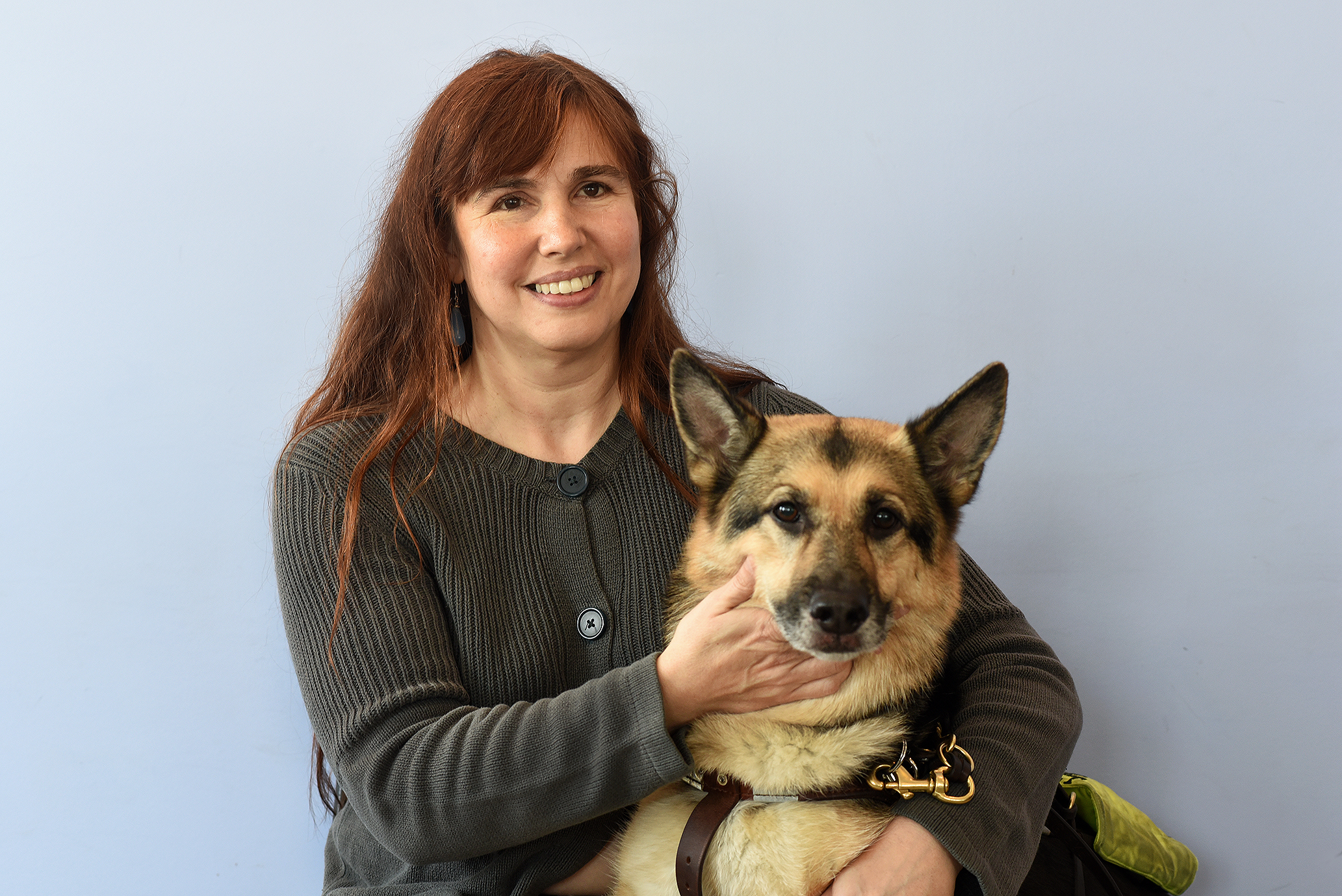
 This week, Claire Stanley, from the American Council of the Blind,will speak with Sam and Charlene about political changes and how it could affect you. To get on our email list, receive weekly show updates, or offer feedback/guest suggestions, email [email protected]!