Episode Transcript
[00:00:00] Speaker A: API.
[00:00:58] Speaker B: Greetings and thank you for joining Disability and Progress, where we bring you insights into ideas about and discussions on disability topics. I'm Sam Jasmin.
[00:01:07] Speaker A: I'm Charlene Dahl.
[00:01:09] Speaker B: Ooh, Charlene.
[00:01:11] Speaker A: Yes. Okay.
[00:01:12] Speaker B: I don't know what happened there. I can't hear you.
[00:01:17] Speaker A: Did you hear me?
[00:01:18] Speaker B: I cannot, but I presume that you are still there.
Charlene is my PR research person. Tonight we have violinist, songwriter, singer, author, disability activist, Galen Lee. Hi, Galen,
[00:01:39] Speaker A: for having me.
[00:01:40] Speaker B: Thank you so much for being on. I really appreciate that we have had you on several times, and it's always lots of fun for me.
So thank you so much for.
I know you have an extremely busy schedule, so we'll start out. I want to start out by just having people have just a brief, you know, intro by you on who you are, and you have a disability yourself.
So go ahead and just give us, like, a short bio.
[00:02:15] Speaker A: The short bio. A short bio.
I am. My name is Galen. I am a musician also now, kind of by default, an activist because of accessibility in the music industry.
I was raised in Duluth, Minnesota, and I still call that town home.
I really love it up here, and I guess, you know, I'm passionate about creating things. So whether it's a book or an album or watercolor paintings, like, I just really like making stuff. And so that is what really motivates me. And I want to see disability included in.
In the culture when we think about creatives, you know, and so that's kind of a little summary. I hope that is good enough.
[00:03:01] Speaker B: Yes, it is.
So I want to start out because when I first was introduced to you, it was through your music. So I'd like to start out by talking about that.
And you.
You are a violinist, but you have a very unique way of playing the violin. But I. I want to ask you, why the violin?
What drew you to that particular piece of that particular instrument?
[00:03:33] Speaker A: Well, I think what drew me in was just more the sound of the strings. So I saw an orchestra in fourth grade. They came and played to kind of advertise orchestra, I think, to the elementary school. And when I heard the full sound of the orchestra, I was just pretty much transfixed instantly. And I just loved it. And I actually wanted to play the cello. So that was the instrument that drew me in. The big, low, rich sounds of the cello. But later, which was the following year, when I did try.
Try it out, it was just too big, and I couldn't actually put my arm where it needed to go to operate the bow. And so I Ended up switching gears to play my violin up and down like a tiny cello.
Now, I'm kind of glad because violins, especially first violins, you get all the cool melody lines and everything. So it was a good instrument choice, But I just love that there's really no ceiling. Like, it's a hard instrument. And you, it's like, it's a voice almost like you. You really have to be present to make it sound good. And it's just a fun, fun tool for expression. I'm glad I, yeah, I picked it.
[00:04:43] Speaker B: Yeah, it's so funny. I, I, I play violin too, but I would never play in front of you because I'm such an amateur.
But it was so funny because when I was introduced, really, like, I always knew about the violin, but my firstborn, we were at a garage sale, and he drags me over and he thought everything was a cello at that point. He says, look, mom, it's a jello. And so everything, I'm like, I think it's called a cello, but that's a violin, honey. So he too played violin. But it's such a wonderful instrument. It really, really can speak to you and has such a great sound.
I'm wondering if you can describe since in your book you talk about how there was some adaptation that's made for you to be able to play the violin. And, um, I'm wondering if you can describe to people who've never seen you play, like, how you hold it and what, what you do.
[00:05:48] Speaker A: Yeah, that's a good, good point. Um, so I am very small. Like, my bones went before I was born. A lot of them broke, especially in my arms and my legs. And so my arms and legs are kind of at like 90 degree angles. It's like a, like I'm doing a lotus position, I guess, and like, meditating all the time or something. So that's the position of my limbs. And so I'm very small. And so in order to make the violin work, I actually put it in my wheelchair with me. So I use an electric wheelchair. It's sitting out in front of me, and I have a string that's attached from the bottom of the violin, and it kind of comes out from there. And I hold that with my toes so that it doesn't slip out. It doesn't, like, fall out of my wheelchair when I'm playing. And then I hold my bow like an upright bass player. So it's. You wouldn't. If you don't play a stringed instrument, that would mean nothing to you. But I hold It a little bit differently than a cello player or a violin player would.
And then the other thing is, you know, I have. So then I play it up and down kind of like a mini cello or a mini upright bass. And then I have a smaller bow. And that was a big adaptation. That's probably the biggest one is that I had really short arms and so I had all this extra bow that I couldn't really use. And it was kind of pulling. Gravity was pulling it down. And so my teacher was really smart to suggest getting a smaller bow. And I was very lucky that an 8th grade bow maker actually made me a custom one to look like a tiny little base bow. And so I have been using that since eighth grade. And I'll probably use it till it like breaks into a million pieces, basically.
[00:07:27] Speaker B: What an awesome story.
When you play, you. You have such an interesting play, but you started out mostly by, you know, obviously you were in your orchestra and you have played in several different groups. You talk about kind of a camp that you kind of went to where you kind of learned to start improvising, but you didn't write your first song for quite a while. Can you talk a little bit about how that came to fruition?
[00:08:03] Speaker A: Yeah, that was a really big surprise for me because I never pictured being a songwriter. But in 2011, I got connected with a person in Duluth that people in the cities probably know. His name is Alan Sparhawk of the band Low, and now he does a lot of solo stuff because unfortunately, his wife and bandmate passed away a few years ago. But he is a huge part of the music scene in Duluth, and he wanted to do an improvisational instrumental project with me. And he introduced me to the looping pedal, which is the recording device I use to layer up my violin. And I only say all that in light of songwriting because I think when I started messing around with the looping pedal and kind of exploring music in a new way, that is what kind of opened up this part of my brain that I think had been kind of dormant before. I don't know how else to explain it, because a few weeks after our first show, I know before our first show is right before our very first show as a band, we had done a music, like a live score right in Duluth for a movie. And then after that, I suddenly, on my way to work, like, started writing a song in my head. And it really caught me off guard. And it was just really. It was a really weird experience. And I remember being like taking.
It took a couple years to call myself a Songwriter, really? Because it felt so kind of out of the blue or outside of myself, it kind of like, downloaded into my brain and that's how a lot of my songs do come. So, yeah, it started. I really do believe it's because the way that I was playing with Alan, by improvising and layering and harmonizing and all and like, just so many different things all at once that I think it kind of just growth spurted my creative brain or something. I don't know how else to explain it.
[00:10:02] Speaker B: Do you feel like writing music has changed throughout your career?
Like, has it changed in how you do it and what you do?
[00:10:13] Speaker A: I think.
I do not know, actually. I feel like a lot of times it starts the same where there'll be, like, a line that pops into my head almost always in the shower and. And I sing it into my phone and then it sticks with me and I build it out a little bit by a little bit. I think maybe I've gotten a little more comfortable with lyrics. I could say that probably, but.
Yeah, but I don't know. I mean, honestly, it's always just kind of this weird process that comes out of nowhere, and then eventually you have to finish it. I would like to do more with songwriting as an older adult. Like, I'm 42 now, and I. I haven't written that many songs for somebody who is a songwriter. Right. Because I really, again, I still feel kind of like a violinist in my heart. And so I would like to experiment more with songwriting and, like, you know, try to maybe write on a theme or something. But so far, everything I've written just kind of comes out of the blue, to be honest.
[00:11:14] Speaker B: You made the decision kind of early to tour, which I thought was a very bold decision. And you talk about the process of how you, like, actually sold your house.
Well, she really bet the house on that one.
[00:11:30] Speaker A: Yeah, I did, actually.
[00:11:31] Speaker B: Yes.
So talk a little bit about how that changed your life.
[00:11:37] Speaker A: Well, oh, my goodness. In so many ways. You know, the Tiny Desk contest, which is kind of what was the catalyst for all of that, that was not something I ever imagined would actually happen. Like, I entered the contest because a couple friends and a couple fiddle students told me about it, and I felt like I should just try. Why not? You know? But I really wasn't expecting to win. And so when I won the big boon, besides filming that Tiny Desk, the concert in D.C. was that all of a sudden I had this national press and people were asking me to play all over the country, which was, like, completely not my Normal life. And I remember thinking if I was gonna try to tour, like, if I ever wanted to try, it'd be silly not to try right now. And so we just kind of went for it. And I guess, you know, my parents are entrepreneurial. They like started a dinner theater when I was a little kid. And I guess there's this idea of like, what's the worst that could happen? We would stop and we'd come home and we'd go do our jobs again, you know, so we try.
Yeah, and we'd have to. Yeah, we'd have to sort out the house. We got an apartment. We didn't. We weren't homeless after that, so we had our little apartment and I don't know, we just kind of felt like, let's just try it. And what happened after that is it was just so cool to be able to travel that much. I mean, and meet people and play shows and get better at playing shows. Like, I mean, you get better if you play all the time. Like, who knew, right? But you practice all the time and you get better and, and just enjoying it more. And then the favorite part for me is you realize that people all over the world, there are cool people everywhere, you know, like every single show is. I met so many nice people and it made the world feel a lot cozier and like kinder. I mean, because music people are generally pretty cool, right? So like, like friendly and open minded and like compassionate. And I just got to meet a lot of really amazing people. And I think that might be one of my favorite parts. And then also we got to see stuff I never thought that I'd get to see. You know, we. I grew up pretty lower income and we did not travel like we just didn't do that growing up. I mean we did like car trips to. I think our farthest away was like the Black Hills. We drove our van with like poles holding up roof or whatever. And so like it wasn't part of my, my like 10 year plan to travel all over the world. And I was just so grateful, especially when the pandemic happens. I remember feeling like, you know what if I don't get to travel for a while? I got to do a lot of really cool stuff and I feel really grateful for that and it gave me a lot of like peace knowing that I had like really done like really gone out there and tried new things. And I felt it was a really comforting realization actually.
[00:14:32] Speaker B: So what. I'm sure there were some least favorite parts of touring. What were some of the more Difficult parts.
[00:14:41] Speaker A: I mean, definitely, definitely inaccessibility was the hardest part of that whole thing.
As much as I loved it, and I do love it, there were.
When I wasn't demanding for myself that I would play only at accessible places, I was constantly running into barriers and venues that clearly didn't really care about whether or not they were accessible. Like, one time in New York, they, like, didn't have an accessible green room, so they put me in the mop closet with like a bleachy mop and it. And it was like, I don't know, just stuff like that where you're like, I don't think most other musicians are dealing with this stuff. And not that I need luxury, but I'm talking about basic dignity. You know, they would like lift me. I had to be lifted onto the stage. Or sometimes the only place I could get ready for the show was like, in a bathroom stall. And like, they're like. Accessibility was really lacking. And so in 2018, I decided to only play at accessible places. And that was better, obviously, for like, myself and the disabled people who came to the shows. But it is a lot of extra work because I have to do all the follow up to make sure that they're legit. And so eventually. One of the points of writing this book is that I really want artists who don't have disabilities or who don't identify publicly to start thinking about accessibility. So the whole burden isn't put on disabled artists themselves, because it is a lot of extra work and it's important to me, but it's not really fair how much extra work it is.
[00:16:14] Speaker B: And for all those who don't know what a green room is.
[00:16:17] Speaker A: Oh, yeah, good point. A green room is where the artist kind of gets ready before the show. You put your bags, you put on your makeup, you eat something, you wait till the opening act is done or whatever. And those spaces are almost never wheelchair accessible.
And, you know, it would be one thing if the Americans with Disabilities act was new, but it's. It was signed in 1990. And so, you know, it's just not. They're not. There's not a lot of progress happening in a lot of the venues around the country now. I will say it's getting better. And places. I think there are places that do care and really do make the changes they need to. But for the first two years, I really wasn't playing at any of those places. I was playing it really, really inaccessible spaces, unfortunately.
[00:17:10] Speaker B: Well, and I'm sure that's what you kind of had to do to get yourself going anyway. Right. So when you're starting out, it's not like you can say to take the cream of the crop. You have to kind of do what you got to do, you know, to.
[00:17:23] Speaker A: Well, it's like, I feel. Yes and no. Like, I'll push it back a little bit because I.
Yes. Like, I was just taking opportunities. I had a booking agent that didn't really take accessibility that seriously, so I wasn't getting. Nobody was advocating for it. You know what I mean? But I will say, like, I took over my own booking in 2018 and decided.
But I was just going to play accessible spaces. I wasn't playing any better venues. I was still playing really small spaces. What it meant is that I just couldn't play everywhere. And what it also meant is that a lot of times, if I couldn't find an accessible venue, I had to go the extra mile and find a space that would work. Such as.
One time, I did a tour that I called the Unitarian Church tour because I found a bunch of Unitarian churches across the east coast that would host me. And so you kind of have to take matters into your own hands. But I actually think on some level, people underestimate themselves for what they can accomplish, even as a small artist. I mean, really, really, truly, some of my shows are still really small. Like, people think, oh, you had this big boost. Which is true. I have. I'm not going to pretend that that wasn't a humongous, like, advantage to have the tiny desk. But some of my shows were still, like, kind of laughably small, like 10, 15, 20 people. So I wasn't playing, like, stadiums. And that's not why I decided to go accessible. I decided to go accessible because it was pretty clear the music industry wasn't gonna change. It needed to change. Yes, I did. Yeah.
[00:18:58] Speaker B: And that's how all things start. Right? Somebody has to do it, or it will stay as is.
[00:19:05] Speaker A: Exactly.
[00:19:06] Speaker B: You have traveled to a lot of different countries, and I'm wondering, because you always think about.
I guess I always thought that, you know, I know better now, but that we always should have the best of the best and that we. You'd think that we would be a little bit smarter, a little bit ahead of the game. We have so much money, and there's so much.
There's so much privilege here.
But, yep, that's not necessarily the case as far as what we have that benefits everyone. And I'm wondering, were there any other countries that absolutely stood out with accessibility that you went to and Thought this is how everyone should do it.
[00:19:57] Speaker A: Not really.
I mean, I will say that the UK for the fact, like, okay, so the US just for some historical context, which I know that you know, but maybe not the listeners, is like the US was kind of the, like, vanguard. Like, they kind of started the disability rights movement worldwide even. You know, they were like an example for like getting disability, you know, civil rights, like, like making that happen. But then we kind of stalled out. Like, we don't fund any of the modifications, for example, that businesses need. Like, the government doesn't help you with that, they'll give you a tax break, but they won't actually pay to like, install an elevator. And so places that aren't willing to invest their own money aren't doing it. And then the problem is, is that there's not a lot of recourse because if somebody's going to sue to make a venue comply, that's all on the person, the customer. So, like, I would have to spend my life suing music venues, which I'm not going to do. You know what I mean? So. So the US like had a good thing going and then we kind of just stalled out. And the uk, I will say, I think of all the places I visited is probably the most accessible, like even a little more than the US and which is ironic because they don't have a national law the same way that we do, the Americans with Disabilities Act. But they do have the will of like, somebody in there cares because, like, their whole train system is really, really getting better and better. Every time I go there, it's like, easier to get the train all over the country. And like, venues that do make it accessible, which again, isn't every venue, but the ones that do, they do a good job of like, really thinking it through. And then their art scene, in terms of promoting disability in the arts, I think they do a better job than the US does.
Other countries that we visited, like, I mean, Switzerland, the transportation was cool, but a lot of the buildings were really inaccessible. Same thing with the, with, with Prague. And then probably the worst, ironically, was Reykjavik, Iceland. Almost nothing was accessible when I was there. But that was a while ago, 2018, and, and one good thing I've noticed is that places that we've gone to more than once, I am seeing Progress. And the U.S.
i don't know, like, we're not really putting it well now, especially with this administration, unfortunately. It's just like we're going back in time really fast.
But like, you know, the U.S. i don't feel like we could be doing better. I agree with you that we could be, like, really leading the way. And we kind of decided that we didn't want to for some reason, which is very frustrating.
[00:22:37] Speaker B: Very sad.
[00:22:37] Speaker A: Yeah.
[00:22:42] Speaker B: So your book, it wasn't meant to be perfect.
Talk about that.
Talk about how you got that title. What made you decide on that one?
[00:22:56] Speaker A: That title is a lyric from one of my more recent songs, Perfect, which was the Lady Macbeth theme song, but I wrote it before Macbeth, so just about looking back on your life and recognizing that maybe you kind of missed. You missed the. The point. The memo that. That you can grow from difficulties. And so it's a line in the song. And then also it's a nod to my disability, which is osteogenesis imperfecta, which means, you know, essentially not perfect bone formation.
And then the last thing is that idea, too, that, like, I think I do believe that a lot of our growth and creativity and insights do come out of hardship. And while I don't think we need to seek out hardship or make life harder than it has to be, I do think it helps to kind of embrace the good and the bad in your life because you really never know what's going to come out of it. The song that I won the tiny desk contest for, that was written about a really scary hospital, say, right before my wedding. And it was a really scary time, and yet this song came out of it that totally changed my life in a positive way. And I feel like you just never really know what is quote unquote good and what is quote unquote bad until after the fact. Right. And so that's what I mean by it wasn't meant to be perfect. I think life is a lot more messy than we wish that it was.
[00:24:28] Speaker B: Yes, indeed.
[00:24:28] Speaker A: But it's okay.
[00:24:30] Speaker B: Would you have a part or something you could read from that?
From the book? Yeah.
[00:24:36] Speaker A: Yeah. Do you need to take a break first or are we good?
I think we're good.
[00:24:39] Speaker B: I'll take the break after you read.
[00:24:41] Speaker A: Okay, perfect. So this is the prologue of the book, the beginning of the book.
Musical alchemy on tour. Life speeds up. Moments of brilliance and joy are linked together by the blur of unglamorous monotony. During a typical afternoon, my husband Paul drives while I sit in the back of the van answering emails and perhaps writing one of my monthly news letters. The satellite radio serenades us with big band tunes unbroken by radio static. We stop for gas at another love's virtually identical to all the others, except that there's a different lady behind the counter. We use the bathroom, and on my way out I buy my guilty pleasure, an overpriced can of Starbucks Double Shot. We return to the van. Only a couple more hours to go. I get back to my newsletter. I must have eaten a granola bar while I was typing because there's a wrapper in my right hand. At some point Paul says, look up, and I tear my gaze away from the computer. My eyes are met with a gorgeous vista of hills. The autumn painted leaves are a dazzling patchwork quilt of orange, yellow, green, and brown against a clear blue sky.
Or maybe this time it's a winding mountain pass with a crystalline lake below, or the stark desert sand with saguaro cacti scattered along the horizon like scarecrows standing guard. Whatever the view, we have the same conversation we've had a thousand times. How beautiful it is and how much we love driving through America's varied landscapes.
In no time at all, we're pulling up to the venue. We bicker about parking again because I can never keep my mouth shut, no matter how much I try.
As usual, I'm in a hurry to get inside. While Paul is intent on lining up the van perfectly straight in the parking spot, we finally extricate ourselves from the vehicle. Paul unloads my amp, mic stand, looping pedals and merch. As we approach the door of the venue, my violin case strapped to the side of my electric wheelchair, I feel my energy shift, a little nervous, a little excited.
Soon I will get to weave my web of sound. The driving days can feel dull and repetitive, but I don't mind, because I know what comes next.
When I'm on stage, time stands still. The blur of the day is replaced by an acute sense of clarity.
On one particular evening in January 2020, I'm playing at a funky art school space in New Orleans. I'm on a black wooden stage with a homemade wheelchair ramp that the venue owner built that very afternoon.
When we arrived a few hours earlier, we made the frustrating discovery that the ramp was only half completed, but the owner managed to get it done just before the doors opened. The audience, of course, is none the wiser. I make my way up the ramp, and Paul helps me get situated in front of the microphone.
I hold my violin upright in the seat of my wheelchair. It rests comfortably in front of me like an extension of my body. I smile when I locate a few friends in the crowd. Then the lights are dimmed just bright enough to make out the audience.
While I sing. I notice every Vintage light fixture, every upcycled chair, every tin sign on the walls of this cavernous space.
My gaze glides above the faces in the room, not resting long enough to trip myself up. But still I can see the joy in their eyes as they listen attentively.
We rein it in and there is better understanding.
Nobody wins if there is flight without the landing.
In the middle of the verse about coming out of the other side of a conflict with a close friend, I sense a familiar flutter of energy in my belly. The flutters condense and the energy swirls up from my stomach and moves into my rib cage. A warming sensation fills my chest. I focus on the lyrics so that I can really feel their meaning, allowing the song's melancholy to wash over me.
And we learn to keep our hearts in time. Try not to burn the careful ties that bind us together.
Just then, a second column of energy flows down through the top of my head. Goosebumps form on the base of my neck. It feels almost as if I'd sprouted wings. I push the bittersweet swirl of energy straight out of my chest and into the room to be absorbed by the audience.
If I let myself wallow in these emotions for too long, I might start to cry. But I'm already on to the chorus.
Beauty and sadness blend together when you perform for a live audience. It's such an electric exchange of energy, but you can't force it or hold onto it. These fleeting, alchemical moments are what musicians live for on the road. They make all the unpredictability of pursuing a music career, the twists and turns, the long days, the hopes and disappointments worth it. Of course, you never know when these magical moments will occur. Could be any verse, any show.
[00:30:20] Speaker B: Thank you so much, Galen. Galen. I'm wondering, by the way, thank you so much for allowing me to preview the book.
And you read the book.
I felt like you were right there with me.
What made you decide to do that?
[00:30:39] Speaker A: Well, that was the idea of the publishing company. They just asked, would you be interested in reading your own memoir? And I said, sure. I don't really know what I'm doing. But they had a really nice director.
She was living in Australia. I'm a night owl, so it was 10 in the morning the next day. Her time, whenever we started at like seven my time or whatever. So she was really cool. And you just kind of read. And when you mess up, you read it again and you just kind of keep going in this one giant long file. And they edit it together. And my favorite part, which was Also not my idea, I can't take credit for it, is that they thought of putting a lot of my music in there. So there's a lot of music in this audiobook, which is pretty fun.
[00:31:25] Speaker B: So I am going to ask your least and. And most difficult or your favorite, most favorite and most difficult parts of when you are reading the book or. And. And writing it. I presume they kind of go hand in hand.
[00:31:39] Speaker A: Yeah, I think the most difficult part of writing was there's a saga with some pretty intense medical trauma. In the middle of the book, I have a respiratory failure nearly. I mean, I don't die, obviously, because here I am. But it was very scary. And that was really hard to write about because in order to make it believable, you have to.
You have to. In order to make it believable, you have to be in the moment. You have to really be kind of relive there. Yeah, yeah. And I didn't. I mean, everybody says that, but you don't really realize because there's one time I remember I was doing co working online with a guy like, you know, an online site where you sign in and you co work and I'm writing and writing and then by the end I'm like crying and I'm like, this poor stranger probably doesn't understand what is going on over here. But it is hard to write about.
And then in terms of reading, the hardest part to read were the acknowledgments. Not because they were sad, but I got very emotional because it's just so many. You realize you have a lot of people to be grateful for in your life when you start thinking about the life as a whole.
My favorite thing to write about was probably there were two things. One, one was the. I went to play at in Bern, Switzerland, with an integrated orchestra.
[00:33:09] Speaker B: That's right.
[00:33:09] Speaker A: And that was a super, super fun thing to revisit and relive Talk at the very beginning of touring and how up and down that was. And like talking to Alan Sparhawk about traveling and he was nervous for us. And that was fun to write about and relive and childhood memories were fun. That was fun to write about. And then I guess, yeah, reliving Macbeth. I mean, all the fun times were actually pretty fun to write about just because you're right there, you know, you're reliving them.
[00:33:38] Speaker B: By the way, I will suggest of anybody who is going to read this book that I actually had fun with trying to get my big brother speaker to play music from some of the people you Mentioned because I always think it's fun to find new music. So I like to try to do that.
How can people get the book?
[00:34:02] Speaker A: Well, on Tuesday when it comes out, it will be everywhere. It'll be at Barnes and Noble, it'll be at your local bookshops. You can buy it online.
I do have a website, of course, violinscratches.com and there's a link to, to the book there.
And then also I'll be in Minneapolis on the 30th of April at OpenEye Theater and we'll have a book release there. And you'll be able to buy copies of the book there. You can pre order them now through the link if you want to, or you can just come to the show.
[00:34:38] Speaker B: I'm sadly going to be gone that night, but I'm so glad I'm sending somebody in my, in my, in my image though, sort of.
He doesn't really look like me, but he has promised to go, so.
[00:34:52] Speaker A: Okay, good. Well, he better say hi because I was hoping you'd be there. Okay, well, it'll be fun.
[00:34:57] Speaker B: Anyways, I'm going to at least say my. I had two favorite parts in your book.
[00:35:03] Speaker A: Oh yeah? I want to know.
[00:35:03] Speaker B: And one was you had an interesting toe to toe with somebody in regards to insurance shortly after you got married. And I would never ever want you to read that scene on here. But that I found it so fun because it really showed the breadth of that. You, you know, sometimes I feel like you come back off rather.
It's not like you don't get emotional or get, you know, upset with things, but you, you kind of come back off sometimes because you've had to be pretty flexible, I feel like. And so you kind of flex with things and that really showed. I felt like that particular chapter kind of showed how I am going. You are going to fix this.
This is not okay. So it was really fun to hear. And the other thing I feel like was fun was the very last chapter about the ripple. Trust your ripple.
And I really, I admired your writing in that chapter because I feel like it speaks to so much of. It's so easy to get angry about things that are going on and so easy to, you know, react instead of being proactive. Sometimes it's. I am, I am kind of a little bit reactive or emotional and I really have to take myself out of the moment sometimes to really think about how to deal with something or someone. And that really takes a lot more work.
And the idea that your words and your actions will go on long after you've done whatever you've done or said, whatever you said really hit me. So, anyway, great job. I really.
I really like how you wrote that, and I am hoping to get my signed copy.
So everyone who's going to. Now, is this the tour that you're going to do? Are you touring everywhere? Like, are you. Minneapolis's the. Whatever stop of your tour, or is this just.
[00:37:28] Speaker A: Yeah, I think it's number seven of eight Minneapolises. It's towards the end. I have one in Duluth on Tuesday, the 14th at Teatro Zoukon downtown. And that'll be fun, too. Yeah. This is kind of like the big first launch, like the publishers helping plan it, and there's eight shows total around the country. We're going to fly. Paul and I are flying to a few different cities for this and then renting some vans and driving around. So it should be really fun. But I'm really hoping because of stuff like that Medicare Medicaid issue that you talked about and medical trauma and stuff, I would really like to speak at colleges with this book because I feel like there's just a lot of stuff that we know as people with disabilities, but that a lot of other younger
[00:38:14] Speaker B: people don't think that's right.
[00:38:16] Speaker A: Yep, exactly. Yeah.
[00:38:17] Speaker B: Don't think about. Or they don't know. Or they don't know what to do.
[00:38:22] Speaker A: Yeah, yeah. Or they don't learn it in school. That's a big one. I really, as I, like, got older, I realized how little I learned about disability in school. And it kind of made me mad, you know, like, we should be learning this stuff in our education.
[00:38:35] Speaker B: Well, and really, I. I kind of was a little bit jealous of you reading the book because you grew up in. I feel like such a.
Protective is the wrong word. Maybe, but. But supportive. Incredibly supportive lifestyle. You were so lucky in school. And your parents just make me feel like I want to go. I want them to be my parents.
They were so amazing with how they did things. And not at all is that everyone's disability experience who has a disability. So I do feel like you were very lucky, but you also, I feel like, are very giving to do, you know, to want to advocate for disabilities. And you do realize that you are lucky enough to be in the position that you were in.
I just want.
I wonder.
I don't even know how to phrase it, really. Like, I feel like right now we're in. There's so much turmoil and so much people act how their leaders act. You know, like, if your leaders give you permission to Be obnoxious and a jerk. You will do so if the time presents itself and I feel like, what are we going to do?
So can. Are there any words of wisdom that you have just thought of that you can give for comfort right now or something?
[00:40:12] Speaker A: Yeah, actually, I have thought a lot about this. That's kind of why I ended the book on that note, actually, was because I was talking to somebody once and saying, you know, I'm just feeling really sad because if the world that we want as disabled advocates is, like, kinder and gentler and also like, more supportive, because I know I. I was raised in a ridiculously supportive environment, and I am well aware of that, like, very lucky. And so. And like. But if that's the kind of world we want for every kid, not just disabled kids, if that's what we want, then us talking only about what we hate or what makes us different or like, how bad other people are is like, not. It just isn't gonna get us there. It just isn't. Like, I wish that it would, but it's. It's not going to. Like, like unfortunately or fortunately, I guess love really is the only path that will take us to that place that we want to go to. And so that being said, not like accepting all things and not standing up for ourselves. That's not what I'm talking about. But our conduct of if we want respect, if we want to say that disabled people, no matter what their disability, deserve respect, and yet we don't give other people respect, like, that is not the formula, unfortunately. I know that it's hard because I do it too. I get really upset and think really negative things sometimes. And then I'm like, but that is not actually going to get me to where I want to go. And so one person, a friend of mine said, you know, it's a lot easier to tear things down than it is to build things up again. And so I think what we need to focus on as advocates is not. Not saying, like, permit everything and don't care. That is not what I'm saying. But I am saying, like, what do you want to see and go build that? You know what I mean? Like, what do you want the world to. To be like, and just do something that contributes to that vision rather than focusing only on the stuff that you hate and get mad at. Because I think we each have our gifts. Like, I can handle a fair amount of ableism before I get really mad, you know, Like, I can, like, I can, like, understand that people lack education, and I can try to be flexible. But there's some things that trigger me right away. Like, I don't know, there's just things that do. Like, everybody's got their gifts.
[00:42:37] Speaker B: Everyone's got their thing.
[00:42:38] Speaker A: Yeah, yeah. Work with your gifts and don't go down the rabbit hole of like, whatever it is that triggers you and makes you mad. That's probably not where you're gonna serve the world the best. You know, you're gonna serve the world the best in the area that you do well shining in. And, like, focus on that and leave it to the other people, like the disability lawyers who can actually handle. Handle this stuff without, like, exploding. Like, those are the people that do that. We each have our little jobs in the world and.
And we should never ignore others suffering. But we should not be adding more fuel to the fire, I think.
[00:43:14] Speaker B: Galen, thank you. Thank you for coming on.
[00:43:18] Speaker A: Thank you for having me. I always love talking to you.
[00:43:20] Speaker B: I always love when you're on. It's my big day. I'm like, I'm interviewing Galen Lee. So thank you. And everyone who wants to see you should show up, get tickets at the Open eye Theater.
[00:43:34] Speaker A: Yep. April 30th. And if you have any questions on other shows in your area, Duluth as Well, it'll be April 14th at Tantra Zucon. But I have a website, violinscratches.com and you should be able to get all the details there.
[00:43:51] Speaker B: Thank you so much, Galen.
[00:43:53] Speaker A: Thanks. Have a wonderful night.
[00:43:55] Speaker B: Good luck with the tour.
[00:43:57] Speaker A: Thanks. I'm excited. Yes. Coming up soon. Okay, cool. Well, thank you.
[00:44:02] Speaker B: Well, this has been a lot of fun, so thank everybody for joining in. Charlene, that was a good interview, so. Yes, it was. So I've really enjoyed hearing Galen. So Galen's as awesome person to interview and I have seen her shows and I forgot to ask her if she was going to do both speaking or and playing, but I imagine she might do a combination of both.
So I encourage everyone to look up Openeye Theatre who would like to attend. Unfortunately, this is a Minnesota based show. So all of you people who are listening globally, hopefully you can at some point tune in and listen to Galen Lee. She really is a pretty amazing artist.
Tune in. Next week we're going to be talking
[00:44:58] Speaker A: about
[00:45:01] Speaker B: rectal colorectal cancer and something everyone should know about and everyone, I guess, should get tested who is of that right age. But it talks a lot about what to expect.
And so with that, thank you so much for listening.
This has been disability and progress. The views expressed on the show are not necessarily those of KFAI or its Board of directors. My name is Sam. I'm the host of this show. Thank you so much for tuning in. Charlene Dahl is my PR research person. Aaron is my podcaster. Thank you to Miguel who gives various assistance at various times.
Tonight we were speaking with Galen Lee. Galen is an author, performer, musician, activist, many things.
Also, if you want to hear us, you can ask your Big Brother speaker to listen to Disability and Progress or download the KFAI app or listen live or we're in the archives for two weeks after this airing.
And if you want to be a part of the email list, you can email me at disabilityandprogressamjasmin.com thanks. Watching for for listening. Take care.
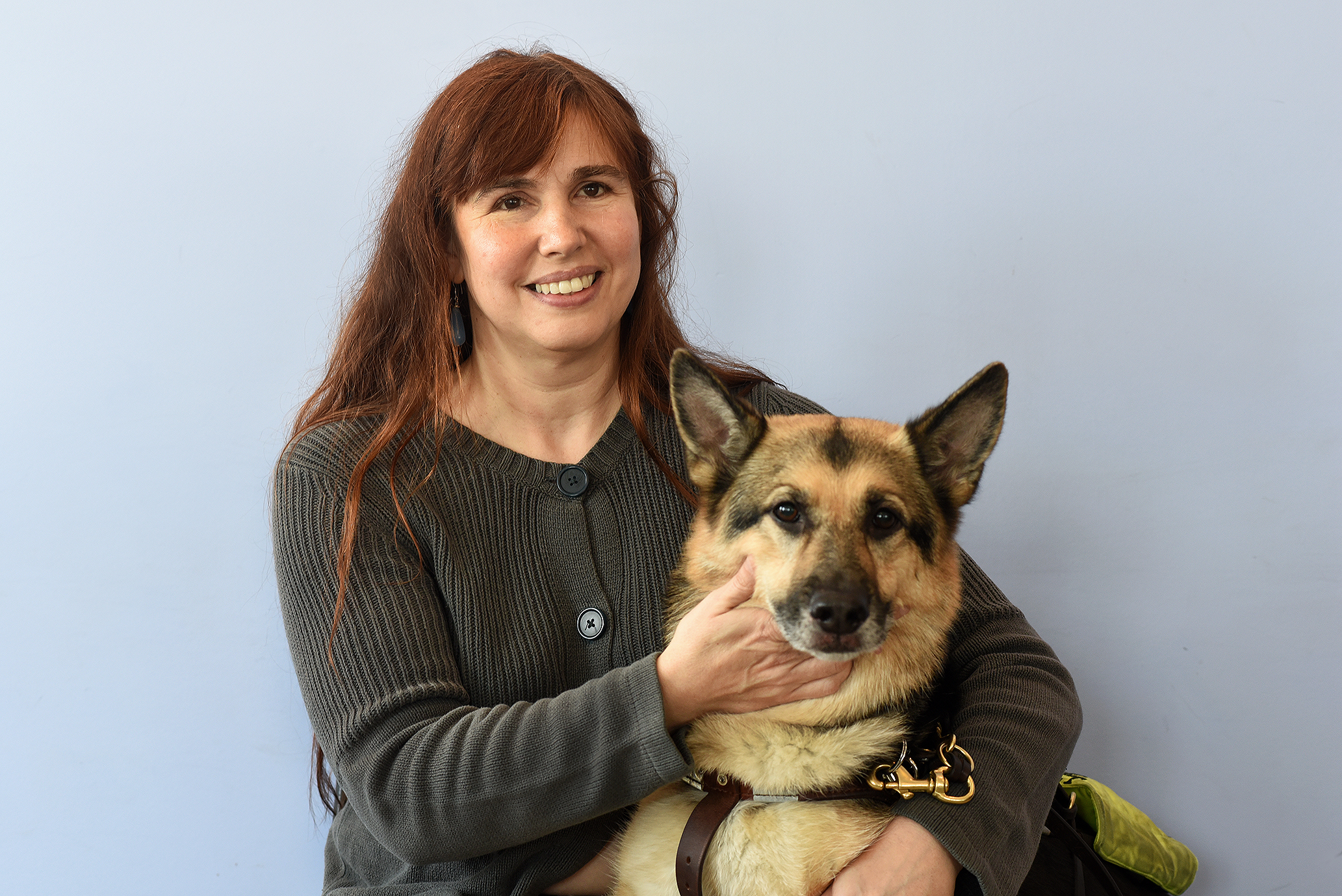
 This week, Sam and Charlene welcome back of their favorite guests, Gaelynn Lea! Gaelynn is an author, songwriter, musician, and Disability Rights activist. She talks about her struggles playing non accessiblevenues ,but is only playing accessible ones niow! She also talks about her new book,"It Wasn't Meant to Be Perfect: A Memoir." To get on our email list, receive weekly show updates, or offer feedback/guest suggestions, email [email protected]!