[00:00:00] Speaker A: KPI.org.
Greetings and thank you for joining Disability and Progress where we bring you insights into ideas about and discussions on disability topics. I'm Sam Jasmin.
I'm Charlene Dahl.
Tonight we are in the studio with Dr. Ajay Prakash.
Dr. Prakash, hi. Hi. Thank you so much for joining us. Dr. Prakash is going to tell us all about even things we maybe don't want to know about colorectal cancer and what it is, who gets it maybe, and why everyone should be paying attention to getting tested. So thank you again for coming on. We really appreciate it.
[00:01:41] Speaker B: Thanks for having me.
[00:01:43] Speaker A: So I want to start out by, can you give us a little bit of a history about you?
[00:01:48] Speaker B: Yeah, of course.
I'm a researcher at the University of Minnesota Masonic Cancer Center. I'm also a gastrointestinal oncologist. My focus is, is on translational research, which is clinical trials exploring cutting edge medications for colorectal cancer and other gut cancers.
[00:02:10] Speaker A: How long did it take for you to get through all of to be where you are now?
[00:02:16] Speaker B: It was a winding path.
You know, after undergraduate we had medical school and then I did a PhD on gut development at the University of Michigan. And then after I did residency and fellowship in New York, I moved back to the Midwest, which is home, and really have loved Minneapolis ever since being here for the past five years.
[00:02:43] Speaker A: Excellent.
Yeah, it's just not quite, you know, Minneapolis is just not a lot of places like here.
[00:02:50] Speaker B: Yes.
[00:02:52] Speaker A: So let's talk about colorectal cancer. I want to have you tell us what is the difference with that and how does it differ with colon, you know, versus colon or rectal cancer?
[00:03:08] Speaker B: Great question, Sam. This is one that often trips people up.
So colorectal cancer is really the name that we give to a group of diseases.
I'm going to sort of describe that group. Feel free to interrupt me at any time.
[00:03:23] Speaker A: Okay.
[00:03:24] Speaker B: So the large intestine is made up of two sections, the colon and the rectum. The colon is the larger of those two sections and the rectum is the one near the exit or the anus. And so any cancer that forms from a specific subset of tissue in those areas, we generally term colorectal cancer. But these are very, very different diseases. They can be different stages occur in different sides of the colon in different sites. And all of these are treated differently. So when we say colon cancer, these are not in that typical rectal area and are often treated with surgery, with sometimes chemotherapy if necessary. With rectal cancer, those occur again in that specific section defined by some surgical landmarks. And these are now treated almost exclusively with chemotherapy and radiation, requiring surgery less and less, although different trials have shown slightly different outcomes.
[00:04:30] Speaker A: What if somebody cannot have radiation or if their risk of having radiation is higher than, quote, average?
[00:04:39] Speaker B: That's a fantastic question. It comes up a reasonable amount, as there can be different genetic conditions which raise the risks associated with radiation. Under those circumstances, we still have options. There are rectal cancer protocols that include chemotherapy and surgery alone.
[00:04:59] Speaker A: So if I'm hearing you correctly, you would do surgery more often, maybe with somebody who couldn't do the radiation.
[00:05:10] Speaker B: So there are some caveats. Our goal is always to maximize the remission rate or cure rate of the cancer, depending on how one wants to view it. Within those caveats, we can estimate the risks that radiation can potentially pose to someone. But, yes, overall, if someone cannot get any radiation, which is generally a relatively rare case. Yeah. Surgery occurs more often in those cases.
[00:05:41] Speaker A: All right, let's talk polyps. Everyone's favorite word, I'm sure.
When you go in for your colonoscopy, presumably that's kind of what you're looking at, right? You're looking to see if there's any polyps, and if they are, if they're cancers or not. Am I going down the correct path?
[00:06:02] Speaker B: That's exactly right. The colonoscopy is. The benefit of a colonoscopy. Excuse me. Is that it is not just a diagnostic test, but it's also the treatment itself. You can go in, remove any polyps that are seen, and then evaluate what those polyps may be. In many cases, these are just natural overgrowths of the colon, what we call benign polyps. But in rare cases, they can be premalignant. So adenomatous polyps or cancer itself.
[00:06:35] Speaker A: So how.
What causes these polyps?
[00:06:42] Speaker B: Wow, that's a really insightful question.
We, outside of a few very specific genetic disorders, we don't know for sure. We know what the risks for colon cancer in general are, and these risks are ones that you're listening listeners likely are familiar with already.
This includes things like physical inactivity, excessive bmi, and changes in diet. So a diet which is inadequate in certain nutritious elements like fiber or overrepresented with other elements such as red meats.
[00:07:25] Speaker A: How are you feeling about the new standard about our food pyramid where you're encouraged to eat more red meat?
[00:07:33] Speaker B: Yeah.
The science on nutrition is challenging to parse simply because it is challenging to view it holistically. People will often view something in specific silos. For example, there was a great deal of Publicity around wine in particular, about a decade or two ago, when looking at the risk of heart disease or heart attack. A recent meta analysis, published I think about a year ago, or perhaps a year and a half at this point, showed that any alcohol intake raises all cause mortality because it increases other risks that were not accounted for in those studies from 20 years ago.
So it is challenging to provide holistic recommendations for diet. But in general, a few truths have stood the test of time.
Whole foods tend to be better, fiber tends to be good, and plant based alternatives have been generally less inflammatory than their animal based counterparts.
[00:08:41] Speaker A: So you look at these polyps when they're taken out to see if they're cancerous or not.
What makes a polyp become cancerous? Is it a guarantee that if they stay there they'll become cancerous? Or is it, I mean, is there a frame of time or how does that work?
[00:09:00] Speaker B: Yeah, the general science demonstrates that typically time is the only element that we need. So in those benign polyps that do not represent a cancerous risk, we believe that there isn't that progressive potential, that we took these out because we were worried they may be a precancerous polyp, but found that they weren't. When we find an adenomatous polyp, a precancerous polyp, the understanding so far is that if these were left alone, that they would become cancer. So the goal in polyp removal is to attack the adenomatous polyps, but we will collect some of these benign polyps along the way as a precaution.
[00:09:48] Speaker A: What makes a polyp precancerous?
[00:09:51] Speaker B: It is the nature of the cells. So the cells change their fundamental shape in some subtle ways that our pathologists are able to identify. We know this happens because of some early mutations in the genes in your colon.
And again, the names of those genes are well known to the medical community. Things like apc, et cetera. Medical students across the world are required to memorize these names. But all that matter that our expert pathologists across the world can identify them.
[00:10:27] Speaker A: So let's go back, if you will, to risk factors. You talk about diet and bmi, obesity.
How about risk factors like maybe family history or.
There are, in my understanding, certain diseases that make you a higher risk.
[00:10:50] Speaker B: Yes. So the current guidelines say that recommend screening at the age of 45 for all people of average risk.
[00:11:00] Speaker A: And this changed, right? This, it used to be higher.
[00:11:04] Speaker B: It used to be 50 and was rolled back to 45 for all people of average risk.
[00:11:09] Speaker A: Okay.
[00:11:10] Speaker B: This is based on a number of factors. Not least of which being the significant rise in early onset colon cancer, which is colon cancer in patients under the age of 55.
So that is sort of the general guidelines you asked specifically about. What if you have a history? So when someone has a family history, we may not understand what exactly drives that family history. For many cases of familial colon cancer, we have not yet identified the specific causative mutation or gene that is the risk factor for that person.
Therefore, we offer a more generic recommendation for those folks. You should generally get screened 10 years before the earliest diagnosis in a first degree family member.
[00:12:01] Speaker A: Oh, wow.
[00:12:02] Speaker B: And that really protects your relatives for those who have had the diagnosis in a way that allows us to at least ensure that we are not missing anyone. Could we potentially get away with less conservative recommendations? Potentially. But again, we want to err on the side of safety.
[00:12:21] Speaker A: Okay, so let's pick this apart. You have somebody who has a family history.
You're having them come and get tested 10 minutes before whatever that point is that their relative was diagnosed.
Is that because you figured it took that long for that relative's cancer to grow?
[00:12:43] Speaker B: Yeah, that's a great question. So it's more about safety.
It is challenging to estimate the rate of growth of every cancer simply because they're all unique. And rate of growth depends on what you mean. If you mean from the pre cancerous phase to cancer, then that likely takes a few years. If you mean from a small cancer to a larger cancer that is detectable, that likely takes a few months.
And so the goal in the 10 year recommendation is really so that we just don't miss anything, because we are likely, hopefully we are screening before there is any chance that the familial risk that we are afraid that this person may carry may strike in the form of precancerous polyps.
[00:13:31] Speaker A: All right, so they've come in to get tested 10 years before.
Then how often should they keep repeating that test?
[00:13:39] Speaker B: Another fantastic question. It depends on the outcome of the colonoscopy. There are very clear guidelines that our gastroenterologists follow. These guidelines are data based and have been modified based on our understanding.
And they're a little too technical to get into here, but I will encourage the listeners to just follow up with their gastroenterologist recommendations. Often those recommendations can come back in one year if we are very concerned, but more often they say come back in five or ten years.
[00:14:13] Speaker A: Ah, okay.
And so I presume this is similar to the, quote, average person that comes in at 45.
[00:14:23] Speaker B: Then for the average person if nothing of significance is found, we typically tell you to come back in 10 years,
[00:14:32] Speaker A: because whatever's going on, nothing can be Too terribly bad 10 years from then or, I mean, couldn't something pop up and be a naughty thing?
[00:14:45] Speaker B: You are absolutely correct. The reason those recommendations are framed in that way is that it is sufficient for the vast majority of the population that we would not be helping folks in finding new cancers often enough if we screened more often that we recommend that. But these are all estimates. You know, would eight years work better than 10?
[00:15:10] Speaker A: I was even thinking five.
[00:15:12] Speaker B: So five years is a specific recommendation that we'll typically outline for certain risk factors.
So for example, after a diagnosis of colon cancer, if you remain cured and your colonoscopies, subsequent colonoscopies are clean, eventually you will be placed on a five year follow up protocol because of your slightly elevated risk over baseline.
[00:15:40] Speaker A: Okay, Dr. Prakash, let's get into the symptoms.
I want to know if you can tell us some of the symptoms and why they're so often missed.
[00:15:52] Speaker B: One of the challenges is for these very early stage colon cancers, the most common symptom is none. Remember that the reason we ask for screening colonoscopies is that you may not notice anything is going on in your body.
Often symptoms accompany a cancer which is slightly further along in its development, and that's not when we would ideally like to catch it. However, we shouldn't ignore symptoms either. And so your question is a very relevant one.
The most common symptom that we see patients come in with is either a change in their bowel habits in some way, shape or form, often associated with an increase in fatigue. The fatigue comes from two different factors. The first is that cancer, to put it colloquially, sort of steals energy from your body.
It's slightly more technical than that, but it's sufficient to summarize it that way. And so it can be fatiguing simply to have cancer. But beyond that, the cancer itself can cause bleeding into the gut, which can manifest itself in a couple of different ways. You can notice blood in your stool or changes in the stool color which make it very dark if the blood has been processed by your gut. And those are also signs that we may need to get checked out. But that's what may lead to the fatigue, which is often what people notice the most.
[00:17:24] Speaker A: Wow, so already when you've noticed that it's probably bad.
[00:17:30] Speaker B: Yes, it's challenging for me to qualify it simply because any cancer diagnosis is.
[00:17:40] Speaker A: Well, yes, this is true. Okay, it's all relative. Right.
I was gonna say Poo is generally dark anyway. Would you really notice blood in your stool?
[00:17:52] Speaker B: Yeah. So one should not normally have a significant amount of blood either when wiping or in the bowl.
If you do, then there should be a reasonable explanation. If you've undergone a colonoscopy and your doctor says, look, we've saw the hemorrhoids, they're there, don't worry about it, then you have an explanation and you have a reason for why these symptoms are occurring. But if they're occurring and you don't, then definitely they need to be checked out.
[00:18:23] Speaker A: All right, so can we talk about.
I mean, is it true that this cancer is, like, totally one of the highest cancers that's totally preventable?
[00:18:40] Speaker B: Yes.
My gastroenterology colleagues would describe this as an entirely preventable cancer. There's some challenges in universal screening, but there's good evidence that with better screening, the rates go down. And we know that to be true because we are screening folks in the appropriate age group appropriately. We've seen screening go up in, especially in folks over the age of 60, over the course of the past couple of decades, and we've seen the cancer rates in that group come down.
[00:19:12] Speaker A: How common is this type of cancer?
[00:19:18] Speaker B: Colon cancer is reasonably common. The rates in patients over the age of 65 is about a few hundred. Every hundred thousand folks under the age with early onset, it's much, much rarer, typically just a handful of diagnoses for every 100,000 individuals.
[00:19:43] Speaker A: So let's talk about stages.
What would you expect in the early stages?
What happens when somebody when it's found in stage one or two?
[00:19:54] Speaker B: So we can tie this back to one of your earlier questions. So with stage one disease, these are the kinds of diseases that are often discovered on colonoscopy because patients aren't having symptoms. And so a gastroenterologist will go in and they will either find something that looks pretty gnarly, an early stage colon cancer, or they will take out a polyp and find a very early stage colon cancer within that. In rare cases, that's enough. They've caught it so early, cut it out correctly, that no further intervention is needed. But in cases where there's more of a disease, those gastroenterologists will appropriately refer you to a colorectal surgeon who is often the first line of defense in colorectal cancer.
Now, you highlighted something very important at the top of the show, which is that colon and rectal cancers are different from here. I'll summarize what happens with the typical colon cancer diagnosis.
[00:20:57] Speaker A: Okay.
[00:20:58] Speaker B: With the Colorectal surgeons. Their goal will be to meet, typically with someone like me and just make sure that everyone agrees with the diagnosis and the nature of management. This meeting amongst a group of expert peers is called a tumor board, where basically, basically every patient who has a new diagnosis is discussed.
After that discussion, they'll undergo standard of care treatment, which, depending on the stage, for very early stage, stage 1 and some stage 2s, a surgery is enough. Your risk of the cancer coming back is low, and we can monitor that risk using colonoscopies for certain stage 2s and stage 3 cancers.
After the surgery, you may require some chemotherapy.
Now, I haven't introduced a whole series of nuances within that, which include some of the more recent publications and discoveries. This includes something called immunotherapy, which we've noticed has been impactful in the management of many different types of colon and rectal cancer With. With cancers that may be responsive to immunotherapy. An increasing number of cancer centers are doing that treatment before surgery and sometimes not opting to take patients to surgery, depending on the specific circumstance.
Again, those are rare cases, amounting to less than about 15%, sometimes 5 to 10% of the overall population. But they are an increasing number of the patients that we see.
[00:22:37] Speaker A: So can immunotherapy be swapped out for chemotherapy? I mean, the other way around. Sorry? Can chemotherapy be swapped out for immunotherapy?
[00:22:48] Speaker B: In the patients for whom immunotherapy is appropriate? It is now the standard of care across the board. We typically do not use chemotherapy when immunotherapy is indicated.
[00:23:00] Speaker A: Ah, because there's fewer side effects for immunotherapy, Correct?
[00:23:07] Speaker B: The short answer to that question is yes.
There is a longer, more complicated answer in that immunotherapy, like all of our treatments, is not benign. But you are absolutely correct in that the most common side effect that we see with immunotherapy is none.
[00:23:23] Speaker A: Okay, so talk about stage four, because, you know, it happens.
[00:23:32] Speaker B: Stage four cancers are what typically comes into my clinic most often because I'm a medical oncologist. And so my purview is both in the treatment of folks with this diagnosis and in their potential monitoring and placement, as I mentioned at the top of the show on clinical trials.
So stage four cancer is actually even more complicated than what we've gone through so far, because some stage four cancers we've discovered over the course of the past 30 years are indeed curable.
So, for example, if your cancer has moved from the colon only to the liver, we know based On a large body of data that these cancers can be treated aggressively and cured.
[00:24:19] Speaker A: Right.
Because the liver can. You can take some part of the liver out and it will grow back.
[00:24:27] Speaker B: That's absolutely correct. That the liver will enlarge to replace some of its prior function. But the more clinically significant reason for us is that those cancers don't tend to move other places. For patients where the colon cancer has moved only to the liver, and we can cure that cancer fully. A third of those patients will never have that cancer come back. Which for a stage four cancer, that's amazing is really miraculous.
Now, the interesting part is that we've seen similar.
Similar responses and cures with immunotherapy responsive cancers, Even without the surgery or ablation aspect, because of the impact of immunotherapy. So I have cases in my clinic where I have stage 4 colon cancer that is immunotherapy responsive. We gave immunotherapy and the cancer disappeared. We just couldn't find it anymore.
[00:25:33] Speaker A: I'm curious when somebody, first of all, how common. What are the statistics of people, like, how common is it for somebody to come in with stage four?
And then when they do, I'm curious to why.
Why, like, why did they wait? Why was it a matter of did they not think they would get it? Did they just decide that they didn't need to have a colonoscopy, or did something turn into that?
[00:26:08] Speaker B: It's a challenging question. So one of the first pieces of counseling that I'll provide my patients when they come into clinic Is that there's no action that they took at this time or any previous time that caused the cancer.
A significant plurality of smokers will never get lung or pancreas cancer, Even though those cancers are driven primarily by smoking. And so it's really a combination of factors, Many of which that are outside my patients control that can bring them in. But you asked an important one, which is are there important question, which is, are there things that your listeners may be looking for or can do to either keep this from happening or sort of, what should they be sort of looking out for? One of the big issues is that stage four cancers we will find in places where people do not expect.
So we did not expect to be screening in the first place.
This is where the danger of early onset colorectal cancer really manifests. We don't expect to be screening people in their 30s and 40s.
A significant proportion of my new stage four diagnoses over the course of the past year have been people in that Age range, which I frankly hope never to see. But that's unfortunately what's happening because these are folks that we don't have the data necessarily to show how we should be screening them, what's going on, things like that. There's also some preliminary data from certain studies which demonstrate that the cancers in some of these younger folks may be more aggressive by its general virtue. And again, research is ongoing in terms of determining that, but there's a whole host of patients that I haven't yet even addressed. So a lot of stage four isn't stage four.
Indeed, it's stage one through three that has come back. So recurrent or metastatic cancer doesn't get restaged, it doesn't get called stage four, but it's treated in a very similar vein where folks will get chemotherapy in order to control the cancer instead of utilizing the tools that I mentioned before.
[00:28:31] Speaker A: So this is the talk that you're basically saying you're seeing this in younger and younger patients now.
And is this because diet, environment, all of the above?
[00:28:47] Speaker B: Sam, I wish we knew.
There's incredible amounts of ongoing research looking into that.
There have been some interesting hypotheses, none of which I'm a particular expert on, but I think we need to continue looking. One of the places that people have been looking for the past few years is the potential prevalence of microplastics and their impact on gut inflammation.
The other thing is diet is in and of itself something that changed. For example, over the course of the late 20th century, Americans and the west in general began eating more red meat. As wealth increased, the prevalence of that diet increased. And so could that play a role potentially.
One of the other things that was brought up in a recent paper was the potential possibility of the association of antibiotic treated meats, which were more prevalent also in the second, in the 20th century, and the potential change in the gut microbiome associated with that.
So could any of these play a role potentially?
Is any of these sort of the silver bullet unclear? Can we modify risk factors? Can we identify who may be at risk? That's the urgent task in front of us, to try and see how we can help people. Right.
[00:30:11] Speaker A: Dr. Prakash, let's talk about screening.
So there are different types of screening you can do or colonoscopies, type things.
Talk to me about the different things, differences in them.
[00:30:28] Speaker B: Yeah. So one of the brief mentions I made before is colonoscopy has a unique advantage in that in addition to being a screening test or a diagnostic test, it is also a therapeutic test.
So that A polyp can be treated as soon as it is found during the course of a colonoscopy. That's why to this day, it remains our gold standard and the primary recommendation associated from all of the relevant expert associations.
However, as you outlined, there are plenty of screening options for folks who may be otherwise squeamish about colonoscopies or challenged by the prep.
And so those options are fantastic. There are a couple of fecal associated tests, so you just use a card and get an answer that way.
These are really great. Have been out for over a decade now and have shown consistent results demonstrating that they're very good at finding early stage cancer.
The challenge with some of these tests is that they don't test as well for precancerous polyps.
[00:31:46] Speaker A: They have cancer already then?
[00:31:48] Speaker B: Well, kind of, they're sort of on that path.
You're finding it a little bit less early, but that also means that you're finding it at the right time. You're still catching it early.
It's better than certainly doing no screening.
[00:32:04] Speaker A: And what's the percentage of that?
Oh, the, the statistic percent that they'll catch that?
[00:32:11] Speaker B: Unfortunately, I don't have those numbers available to me, but I can tell you that again, the sensitivity of these screenings, the chances that they will, that they will find something are very good and that they will be falsely negative, is low when we're worried about cancer in particular. However, the recent years have revealed a whole bunch of additional tests.
So in addition to the stool associated tests that I already mentioned that are largely standard in every doctor's office, you also have a blood based test. This carries with it, again, the specific limitation of the inability to diagnose and, or treat the polyps, you know, early precancerous polyps, but again, is reasonably good at detecting cancer itself.
And then the last version of this is something called CT colonography, which is an imaging based modality, which is also quite good.
Of these modalities, the colonoscopy, sigmoidoscopy, a slight subvariant of the colonoscopy, and the fecal occult blood test all have long, statistically well proven histories.
[00:33:31] Speaker A: Okay, and what if somebody's worried? Well, first of all, how do they talk about the prep?
[00:33:40] Speaker B: Yeah, the prep can be quite a challenge.
My gastroenterologist colleagues will be better positioned to sort of tell you exactly what they do. But as someone who's undergone a colonoscopy, I can provide certainly the patient's perspective.
The prep is typically multi agent, so they will utilize something that has been classically called go lightly, which is available over the counter as Miralax.
And it's a fantastic medication because. Because it will get you to go no matter what they will use.
[00:34:17] Speaker A: Charlene has fond memories of that. Yeah,
[00:34:23] Speaker B: they will use adjuncts in addition to help out because they don't want you to dose very heavily on the go lightly because then you'll be going heavily.
And so they will sometimes use other agents like Senna, which is a gut motility agent, and also potentially a magnesium substance, something similar to Maalox, for example, that can be very helpful.
[00:35:00] Speaker A: I've heard some people say they're worried about their good bacteria being wiped out by prep like this.
[00:35:09] Speaker B: Yeah. Wow, that's a really insightful and educated perspective. So, yeah, your bacteria does change when you do prep. The good news is it doesn't change for long. It's hard to change the forest of your gut because you don't. Unless you change your diet significantly or things like that, you're going to go back to eating the things you ate before and the gut will restore itself fairly rapidly at that.
[00:35:38] Speaker A: So how valuable is doing pre probiotics after something like this?
Does it matter?
[00:35:49] Speaker B: So the answer so far appears to be not much because the again, the large volume of action controlling the composition of your gut is your daily activities.
So what kind of person are you?
And this isn't intended as a criticism of any particular activity at all, but are you a runner? Are you not a runner? Are you somebody who drinks coffee in the morning, or not a coffee drinker? So all of these small things add up to the sum total of the gut bacteria. In the face of that overwhelming influence, the probiotics and prebiotics can be great under very, very specific circumstances. They actually do help, and we can sort of discuss those circumstances. But in general, these agents are somewhat rather like putting some food coloring in the Great Lakes. It's probably not going to make a big difference.
[00:36:56] Speaker A: So if somebody I know now, they're saying, you know, talking, kind of stepping back, talking about the causes that can cause colorectal cancer, obviously alcohol, maybe smoking.
Does coffee play a factor?
[00:37:16] Speaker B: Not as far as I'm aware.
I have not been made aware of research that demonstrates that caffeine may have an impact.
The reason some of those, I can't tell you exactly what the causal relationship is because a lot of the studies that have established that have been correlational. So we know, for example, that increased red meat intake has a significant negative impact, that it predisposes to colon cancer. But we also know that fiber intake protects against colon cancer. Could there be an inverse correlation between someone's red meat intake and their fiber intake? Could it be that if they take in more fiber, that the intake of the red meat is then not as clinically significant?
So from that perspective, the agents that have been most protective are things that keep your food from interacting with the walls of your gut. The reason fiber is so great is it wraps up everything in a nice blanket and keeps it away from your gut. So that inflammation that food can cause, that everything that we take in through our mouths can cause, doesn't touch that gut wall as much. And so if you're looking for a common factor in terms of, of the dietary recommendations, that tends to be it.
Use fiber to help stuff go through and not mess with your body.
[00:38:43] Speaker A: So I'd like to talk about statistics as far as are females more prone? Are males more prone? And is there a culture like black, Hispanic, or US in the Western world, as opposed to China, Japan, people that tend to get a higher percentage of colorectal cancer?
[00:39:09] Speaker B: Yeah, so you mentioned some of the behaviors that are already associated. So those behaviors, unfortunately, do have gendered biases. And so we know that men are more likely to drink and drink heavily. We know that they're more likely to smoke. And so these are primarily the predisposing factors that can account for any specific gender differences. The interesting thing is a lot of our gendered understanding of colon cancer risk factors comes from a series of incredible studies done over the course of 50 years, looking at nurses and doctors as cohorts, because these are the folks that are willing to sort of follow up on the studies over the course of that time. There are benefits and drawbacks to that being our primary source of data. The benefit is we have that data. The drawback being that could people be different from the doctors that we recruited and the nurses that recruited between the 1950s and 1980s? Yeah, probably.
So you highlighted some interesting statistics that, you know, we have noted that incidence and mortality is higher in certain populations. The challenge is that even under those definitions, it can be hard to pin down the statistics.
So I certainly can pause there because we've gone pretty far. But I think it's interesting to sort of break down how we talk about sort of demographics and sort of what race means in these stats.
[00:40:53] Speaker A: So I want to dive in a little bit to the statistics of when you catch somebody in the early stages of colorectal cancer.
It's almost always treatable, right? It's treatable. And they Generally have very few worries about going down the line.
[00:41:14] Speaker B: Yes. The earlier we catch it, the better our treatments and the less likely the cancer is to come back.
That being said, can the cancer come back? Absolutely. The risk isn't zero, but it's much lower with stage one cancer than with stage two or stage three.
[00:41:35] Speaker A: And we talked about, I did mention before the show because I was curious about sometimes you'll see somebody who has a bag and, and how that tends to happen and how that's dealt with. Can you give me a little insight? Our listeners, a little insight on that? Somebody out there has one.
[00:41:58] Speaker B: Yeah, I'm sure a number of the listeners do.
So these bags, which we term after the surgery that we use for them, we typically call ostomies.
And someone can either have an ostomy from their colon, a colostomy, or an ostomy from the end of their small bowel, an ileostomy. And so the location, the nature, all of that is driven by the location of the cancer and the guidance of the expert surgeons that manage these cancers.
So you are more likely to need a colostomy bag if your colon cancer is in a location where surgery cannot be done in such a way that we can adequately reconnect or save all of the necessary pieces of your colon. These vital structures include the sphincter that controls your rectum and anus.
Excuse me.
And so that tends to be a challenge. There are other circumstances, though, where patients get bags that are called in palliative or diverting ostomies, where the act of having a bowel movement can be extraordinarily painful or challenging or otherwise significantly diminish the quality of life of the patient. And in those cases, the surgeons can often significantly improve quality of life by adding that ostomy in place, allowing the patient greater control and or less pain. Many, many different factors.
[00:43:35] Speaker A: And in general, that would happen if either the cancer was later stage, or as you point out, maybe it's in a place where that is more difficult to.
If you have to do surgery, do a good surgery without that result happen.
[00:44:00] Speaker B: Yeah. The reasons can be extraordinarily complex, but you're right that as the cancer grows, the nature of the complications can increase as well. So certainly the bag becomes an ostomy, becomes an increased risk with cancer stage in certain ways. It is not really a one to one translation, but certainly something we think about.
[00:44:24] Speaker A: So probably somebody now that's listening is saying, oh, I know I need to get in for my colonoscopy. I know I should have gotten in I just, I don't, you know, for whatever reason, maybe they're in between their doctor visits or they hasn't been brought up, do they need to have a referral to do it? Or can they just call and say, I need, I know I need one, I've never had one, blah, blah, blah.
[00:44:58] Speaker B: Whatever the case may be, the challenges of the American design of healthcare is that one answer does not necessarily fit all patients.
It is required for standard screening to be covered under health insurance programs, but the nature of that coverage can vary. So in some cases, your plan may require you to have a referral from your primary care provider. But knowing many primary care providers, I know that they're more than eager to provide that referral when asked and don't necessarily need you to always come all the way into the clinic to do so.
But in certain healthcare plans, it's explicitly stated that expert referrals require or expert services or consultations don't require a referral. And in those plans, then you can just schedule it yourself.
[00:45:53] Speaker A: How do you know if your plan requires one or not?
[00:45:56] Speaker B: That's the tough part. You'll have to either read the plan itself or call a plan agent and ask.
[00:46:03] Speaker A: So you deal with studies.
[00:46:06] Speaker B: That's right.
[00:46:07] Speaker A: And what do your studies do? Like, what do they look at?
[00:46:10] Speaker B: So we are invested in finding the cure for colon cancer, which is obviously what everybody wants.
The way we do that is by looking in places that people haven't looked before.
And so the type of trials that we do is cutting edge therapies, new approaches to the treatment of colon and rectal cancer.
So I can, you know, provide some examples, certainly, if that might.
[00:46:40] Speaker A: Yeah, real quick.
[00:46:41] Speaker B: Yeah. So, for example, there are a series of genes that are mutated in colon cancer. And so we have a company that has found a new way to target these genes using an oral inhibitor. And it's very, very cool. That study is called BDTX and is open in colon, pancreas, lung cancer, all targeting a gene called RAs or RAF.
[00:47:14] Speaker A: And so would this mean that one would get their genes sequenced or just check to see if they have that particular gene or how does that work?
[00:47:24] Speaker B: Great question. It is now standard of care for all stage 4 cancers to have their genes sequenced.
So your cancer doctor will do that under the circumstance that you carry those diagnoses.
[00:47:37] Speaker A: Gotcha.
All right, well, is there anything more you'd like to tell us?
[00:47:43] Speaker B: Well, I like to talk about the really exciting treatments that are on the horizon.
[00:47:50] Speaker A: Let's do it.
[00:47:51] Speaker B: So we talked a Little bit about ras, but the immunotherapy angle really has opened the world in a very different way.
Cancer develops because your immune system couldn't control it. Why don't we have a cancer A or cancer B at this time? It's because the cells that could form that cancer have been destroyed by our immune system. The ones that stay are the ones that slip by. And so showing the immune system how to target these cancers is really the golden ticket, the holy grail that we've been looking.
And so we are testing, among many other things, new immunotherapies at the university.
And we have whole divisions dedicated to development of things called cellular therapies, where we develop new versions of T cells of immune cells that can attack cancer. So this is really the promise. The new novel immunotherapies are something that we're very excited about, the university, that I'm personally very excited about, and that I could spend another hour talking to
[00:48:53] Speaker A: you about Sam, if only we had it.
And so is the goal in general with the oncology profession that they would try to get immunotherapy to be the go to instead of chemo?
Because a lot of times you may have immunotherapy. I mean, there's. There's some cancers you could use it totally for, but there's a lot of others where you might use it, but it is not alone. You'd have to do some chemo and then you do immunotherapy.
[00:49:26] Speaker B: Yeah.
To be honest, speaking for myself, really, I want whatever tool helps to get rid of the cancer. And so do I want it to necessarily be immuno or chemotherapy, Whatever works. And the reason I talk about immunotherapy is that it has some promise about a little bit of a hands off feel. If I can get the immune system to get started against the cancer, then maybe one day you don't have to see me ever again. And that's always my goal, is to make myself irrelevant.
[00:50:01] Speaker A: And theoretically, if it has fewer side effects, that's nicer for us.
[00:50:07] Speaker B: Yes. The challenge is that it's not always the case that it does. Some of these newer immunotherapies that I'm describing are not easy to take.
They require things like aggressive chemotherapies to use the immunotherapy for a whole host of reasons that we don't necessarily have the time to go into. But that's why I don't know that they're always more gentler or gentler than chemotherapy alone. But certainly it has the potential for long term impact.
[00:50:38] Speaker A: Charlene, did you have anything else you wanted to ask?
I am just blessed that I did all the right things and if people don't understand how important that is, I can tell you you have to do everything.
Dr. Prakash, it's been fun.
[00:51:01] Speaker B: Thank you so much for having me.
[00:51:02] Speaker A: Thank you so much. And we appreciate your time that you've donated. So thank you very much.
Hope to see you again in another couple years when you've successfully wiped this out.
[00:51:15] Speaker B: Happy to be back anytime.
[00:51:16] Speaker A: Okay.
And you've been listening to Disability and Progress. The visa sports expressed on the show are not necessarily those of KFAI or its board of directors. My name is Sam. I'm the host of the show. Thanks so much for tuning in. Charlene Dahl is my research PR person. Erin is my podcaster. Tonight we were speaking with Dr. Prakash who talked about colorectal cancer. If you'd like to be on my email list or would like to suggest a topic for this show, you can email me at. Disability and Progress, all written
[email protected] that's disability and
[email protected]. this is KFAI 90.3 fmmneapolis and kfai.org don't forget about our podcasts and our archives. Thanks so much for listening. Take care.
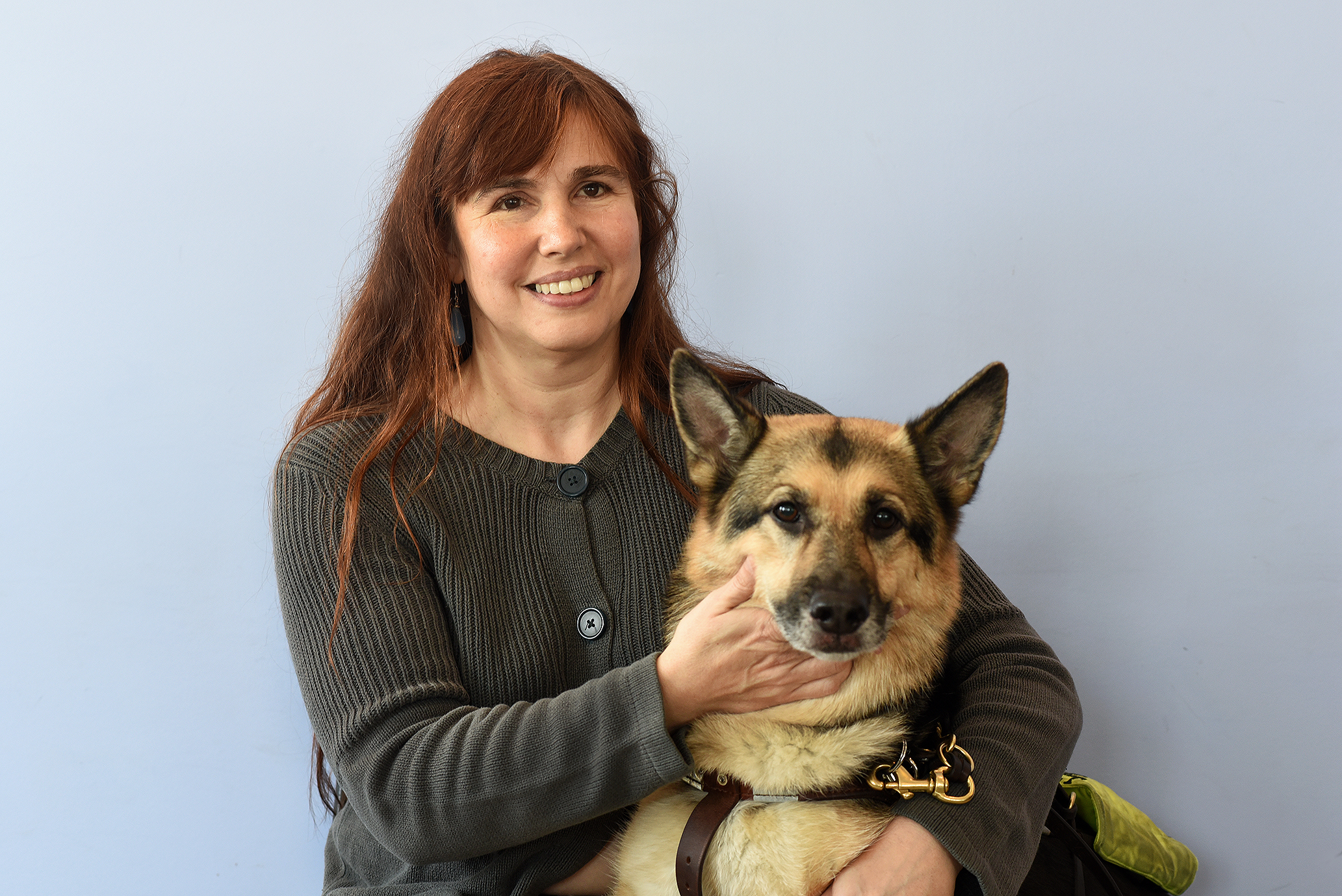
 This week, Sam and Charlene are joined by Dr.Ajay Prakash. Dr.Prakash gives us good information about on Colorectal Cancer. To get on our email list,receive weekly show updates, or offer feedback/guest suggestions, email [email protected]!