[00:00:00] Speaker A: KPI.org.
[00:00:58] Speaker B: And you are listening to KFEI 90.3 FM, Minneapolis and kfei.org this is disability and Progress, where we bring you insights into ideas about and discussions on disability topics. My name is Sam Jasmin. I'm Charlene Dahl. Thanks so much for tuning in. I just want to let you know that tonight's topic is a little bit of a contentious topic and could be sensitive to young ears. It is on medically assisted death. If you have not, if you have young children who have not been experienced with this or haven't been talked to about this, you might want to take a moment and listen to us as we will be on our archives for two weeks after this and also in the podcasts, of course.
Tonight we are speaking with Teresa Evans about her book, Choosing to Die. Hi, Theresa.
[00:01:52] Speaker A: Hi, Sam.
[00:01:54] Speaker B: Thank you so much for joining me. I really appreciate that.
[00:01:59] Speaker A: Yes, thank you for having me on the show.
[00:02:02] Speaker B: I want to start out by asking, I really would like our listeners to get to know your mom.
So can you start out by talking a little bit about how she grew up and what kind of mom she was and the person she was?
[00:02:18] Speaker A: My mom had a challenging childhood, to say the least. Her parents were immigrants from Ireland and came over to Ontario. I'm Canadian. I live in the States now. But she was surrendered to the Children's Aid Society at a really young age just because they couldn't afford to keep all the kids.
And she never really settled into one home. She had, she was moved from home to home to home. So essentially to get out of the foster care system. She met my father when they were 16 and they got married and she started a family right away.
My father's parents were immigrants from Italy, so.
[00:03:02] Speaker B: Wow.
[00:03:03] Speaker A: Yeah. Yeah. And Catholic, so proceeded to have six children in a row.
[00:03:09] Speaker B: Oh, my goodness.
[00:03:10] Speaker A: Yes. So as I say in the book, I actually think it's amazing that my mother was able to do any mothering whatsoever because she certainly had no role models. But growing up, sometimes it was confusing as to which one of us was the mother and which one was the daughter.
But she, despite her hard childhood, she had a lot of joy and she was very creative.
She loved watercoloring and she was a master gardener. And yes, she did a wonderful job of, of raising us and teaching us. So.
Yeah.
[00:03:56] Speaker B: When did she.
Well, first of all, when you went through this whole deal with medically assisted death is that it was in Canada, right?
[00:04:10] Speaker A: Yes, this is in Canada.
[00:04:11] Speaker B: And so talk to me a little bit, if you would, about their Policies like how do they determine who it's for and how easy is it for a person to be on that list?
[00:04:26] Speaker A: Okay, so mom died in 2020, November 15, 2020, on her 80th birthday.
And so it's changed a bit since then. But at that time you had to have two doctors independently assess you and deem that you were in a state of irreversible suffering and it was only going to get it worse, it wasn't going to get better.
You had to be of sound mind because you have to give consent and you have to give consent at the moment that you either receive, that you receive the medication.
So that's very important. I think, you know, people are concerned and it's actually not easy. A lot of people don't get accepted into the maid program.
You had to be a Canadian citizen and you had to have a health card from Ontario. This is considered a medical intervention.
And I believe when mom did this, there was a two week waiting period. She set all this up about four months before she actually died. So.
[00:05:48] Speaker B: And, but is, is this, can you. Is this throughout Canada or is it just certain provinces or whatever have this law?
[00:05:57] Speaker A: All of Canada, unlike the United States, where there's now 14 states that have legalized medical assistance and dying in Canada, it was a federal.
Quebec was the first province in 2015.
And then 2016 law went into place at the federal level. So all of Canada was included.
[00:06:25] Speaker B: And I'm wondering what triggered your mom to actually look into this and be interested in this.
Obviously she knew about it for a while, but what actually was the big trigger, do you think she was suffering?
[00:06:42] Speaker A: She had end stage heart failure and copd. She had had many years of chronic pain.
I was a critical care nurse for 15 years.
I have two sisters. The three of us had been supporting her. We knew that she had had every possible medical intervention that there was and she just had absolutely no quality of life. And I was traveling for work at the time and I just remember I was calling her quite a bit internationally. I was overseas. And she just, it was almost a year. It felt like there was no light in her voice anymore, no joy. She was really struggling just to get through a day. And I said to her, I said, you know what, Mom?
I said, you, I don't want, I am not trying to off. You don't think that at all. But I said, you live in a country where you have a choice and you don't have to suffer like this indefinitely.
And that started the conversation. I just let her know, I said, Whatever you would choose to do, I. I need you to know that I will support you.
[00:07:58] Speaker B: So this was at, I feel like kind of the. Almost the height of the pandemic.
[00:08:05] Speaker A: Yeah. Yes. I had to quarantine.
[00:08:07] Speaker B: Right. So there was probably a lot of stuff going on. And I'm wondering when your mom make this decision, like, what was your family, your family's response and what was her friend's response?
[00:08:21] Speaker A: Well, mom didn't tell a lot of people. Not because she didn't. Not because she didn't want to, because she felt like she needed to hide it. But she literally did not have the energy to have to explain it to everybody because of course, that's what you have to do with something like this. But there was me and my two sisters and we were very supportive. I moved, I. I came over from the. From my home in Wisconsin and I quarantined for two weeks and then moved in with mom and spent three and a half months with her before she died. And of course, it wasn't easy. It's very strange to know the exact date and time that your mother is going to die. But we made a commitment as a family to support her decision and to not lay our grief on top of her leaving. We wanted it to be as joyful and as peaceful as it could be for her.
[00:09:25] Speaker B: Do you.
Obviously being a nurse was extremely helpful, I imagine, for her and your family.
Did the pandemic have anything to do with it, do you think?
[00:09:41] Speaker A: No, no, no.
[00:09:44] Speaker B: It was just being in pain.
[00:09:46] Speaker A: Yeah. It was just not being able to breathe and being in chronic pain. And, you know, this was.
I mean, we're still reeling from the opioid epidemic and it was getting.
She was actually afraid to go to, to the doctor because there was always this fear that her pain medication would be taken away or reduced.
[00:10:13] Speaker B: Yeah.
[00:10:13] Speaker A: And you know, there was just. It just became.
It just became insufferable for her.
[00:10:22] Speaker B: Teresa, I'm wondering, is this your first book? And if so, what a topic to dive into?
[00:10:30] Speaker A: Yes, it is my first book. It just launched on March 3rd.
And I've always loved writing.
I had never really thought I would write a book, but I took a one year writing internship where it was for women, 12 women we met once a month and we had two mentors and the whole thing came from.
We were asked to draw a word out of a hat and I drew the word water and to write about water for 15. Whatever came to my mind concerning water. And I just had two things. One was this sound of my mom's breathing through the liquid in her lungs and a tear on her bottom eyelid. I just had this picture of her, and that's. That started. The pref. Just poured out of me, and I. I just started from there. I thought, you know, I think there's a story to tell here, and it's a hard story. And that is why I purposely wrote it through the lens of botany. So in case your listeners don't know, my mom was a master gardener, and she asked me to put her garden to rest for the last three months that I was there for the season.
And so I spent a lot of time in her beautiful flower garden. And as I was working in the garden, I just realized how everything that I was witnessing in nature was a metaphor for what we were living with, our experience with mom.
[00:12:10] Speaker B: Right. In fact, your chapters are named after flowers.
[00:12:15] Speaker A: Yes. Yes.
[00:12:17] Speaker B: That's the significance, right?
[00:12:19] Speaker A: Yes. Each chapter focuses on a perennial that was in mom's garden.
[00:12:26] Speaker B: What challenges did you face while writing such a sensitive book? And did your views change at all during the writing?
[00:12:37] Speaker A: Well, I'm not the same person as I was before I wrote this book. I feel that way for sure.
I had no idea what writing a book entailed.
I would say the first three chapters just poured out of me, and then the rest of it is where I actually learned how to be a writer and to sit with.
Just to sit with, not knowing exactly what's going to come next. Sometimes I would write through the lens of picking up a botany book, and that would trigger something, an experience that we had had. Other times there was clear experiences that I wanted to share.
I just feel so close to my mom right now.
She's. She's on this journey with me. I just feel like she has been such a part of this, and I know she would be proud of this book and.
And the message. And really the message. The message isn't that everybody should choose medical assistance and dying. The message is that everybody. The message is that we are all going to die. And how do we show up for somebody that is leaving?
How do we start these conversations so that we're not doing it at the last minute when somebody's already in the throes of a crisis and the emotions are running high?
[00:14:06] Speaker B: And I'm wondering about.
Did you have misconceptions that you hope to challenge with this book?
[00:14:15] Speaker A: I. I say that I do not believe everybody should choose maid, but I do believe that everybody should have the choice, and I plan on advocating strongly for that choice here in the United States.
[00:14:36] Speaker B: And so now you're in Wisconsin. I'm guessing Wisconsin does not have medical assisted.
You are guessing right, as Minnesota does not either, but.
[00:14:47] Speaker A: Right. It was first introduced in Wisconsin in 2015, and it's just been nudging its way closer each year.
Looked like it was going to be brought to the floor this year, but it. It wasn't. So it'll be 2027 before Wisconsin has another opportunity to legalize this. Illinois just legalized it. And it will start in Illinois. September 17, 2026 will be the opportunity there.
[00:15:20] Speaker B: This is a pretty contentious topic for a lot of people or certainly for certain cultures or groups. And I'm wondering how, in your feelings of choice, how do you define, you know, that choice in the context of dying?
[00:15:41] Speaker A: Like,
[00:15:43] Speaker B: do you.
[00:15:44] Speaker A: Well, I just think, you know, if mom had said, I want to do every possible medical intervention that is out there and live as long as I can despite quality of life, we would have supported that. But that's not what she chose.
And I think that what.
What we need is more conversation around the topic, around the topic of death, period. Not just made, but on. On the topic of death and to do away with the fear. I mean, the reality is we are all going to die and nobody knows what it feels like to be you. I don't know what it feels like to be you. You don't know what it feels like to be me.
So there's a theme that carries through the book where I say there is that which we can see and that which we cannot see.
And the biggest, broadest sense of that has to do with this reality that only you know what it feels like to be you.
And as a person that's in your circle, my choice is how do I show up for you based on any decision that you would make.
[00:17:12] Speaker B: And, you know, it's interesting because I feel like death is so hard. I myself, I could understand. I mean, I think there are people who just deal with it so gracefully and know what they want.
And I admire that. I don't know that I would.
I think I would not deal with it so gracefully.
To me, and the unknown, you know, death is an unknown. And the unknown is scary. Like, right. Everyone's scared of the unknown because they don't know or they. They're unsure at speaking at the very least. And so I feel like that's where this fear comes in. And when you talk about assisted, you know, medical, assisted dying, I think people have all kinds of visions and thoughts and fear on who makes the laws and what Holes. Do the laws have. And can someone work around those laws or do those laws maybe not include an exception that should be had that then you're locked out? Or there's just all sorts of things I feel like people could wonder.
[00:18:24] Speaker A: Yes, no, you're right, Sam, because I mean, I, I am not an A maid expert by any means. I'm a person who went through this, you know, amazing, amazing and huge experience with my mom that decided to write about it. But I do know, and actually when I saw the name of your show, I was like, is this a setup? Are you bringing me on to, you know, am I going to get like, oh, no. Because the disability community, there's a lot of fear in the disability community around medical assistance and dying that somehow this is going to be a way to, you know, cut costs and get rid of perceived problems. Right. But I don't, I have not found that to be the case. As I said, I am not an expert. I have read so much, I have listened to so much. I just, I took a two hour webinar this morning through Compassion and Choices, learning how to talk about this.
The argument could be made that it would be actually an injustice to not have this option for somebody with a disability should they choose it. Why should we? Again, I mean, who am I to determine what is your quality of life and, and whether that's viable for you or not.
So I knew Canada is more liberal than the United States, for sure. Right. And they're thinking on this, for instance, mom received the medication intravenously and in, in the United States, you need to be able to self administer.
[00:20:12] Speaker B: Yes.
[00:20:13] Speaker A: And that's a huge distinction.
[00:20:15] Speaker B: That is.
Yes. And yet I do have some understanding of, you know, there are certainly both sides of the disability community that both support and do not support. And the fear of it wasn't very long ago where people who had a disability were forcefully sterilized or locked in institutions.
So it certainly was a little while ago, but really not that long when you consider that there are people alive today who probably were locked in some of those institutions.
And so I understand that whole slippery slope thing, and I think they get worried about that, especially that, you know, but I don't think you ever have a grip on everything anyway, fully like you, you, you won't control how you die necessarily. You could die in a car accident, you could die. I mean, the people wish, most people wish, oh, I hope I died my sleep then. I. But that's not how a lot of people go. Right. It's generally not and so then what happens when you get to the point where it's really difficult? Do you.
Do you get a chance to say, this isn't really what I signed up for. This isn't how. I don't want to suffer for months and months.
I guess it's, you know, I don't think I would know unless I was facing it, and that's where I am. But I'm wondering.
This book was just released not too long ago again, right?
[00:21:54] Speaker A: Yeah, March 3rd.
[00:21:55] Speaker B: So there really hasn't been. I mean, have you gotten feedback on readers and especially, I'm curious of any disability groups regarding this.
[00:22:08] Speaker A: I have not heard. I've gotten a lot of feedback on readers. The reviews have been very positive. Everyone I know who's read it, it's just basically, they're touched by. I mean, it's a.
It's a beautiful, you know, it's a beautiful story. And so it's filled with love.
And I think that it touches people's hearts as well as educates because there's science in there. There's talking about Mum's specific medical conditions and how they advanced. But I think what you said, as far as nobody really knows, you don't know. People ask me all the time now, they're like, oh, would you do maid? And I said, I don't know.
[00:23:01] Speaker B: I don't.
[00:23:02] Speaker A: I don't think anyone can answer that until you're in a position where that would come up for you.
[00:23:10] Speaker B: Yeah.
[00:23:11] Speaker A: You know, I used to work transplant. I worked heart and lung transplant. And people. People say, would you have a transplant? And I said, I don't know.
[00:23:20] Speaker B: Right.
[00:23:20] Speaker A: I really don't know.
[00:23:22] Speaker B: Right. Sometimes the most difficult things, you know, the really tough choices, maybe should be answered by the people that are in the midst of having to make those decisions.
[00:23:35] Speaker A: Yes.
[00:23:36] Speaker B: I'm guessing you don't have a disability, but if you did and you.
I mean, do you feel like if you had a disability, knowing now all the things that I've kind of. And you've read about this, you know, what the slippery slope is and what they are afraid of, would you. Do you think that you would think differently?
[00:24:03] Speaker A: I don't know. Because I don't know what. I don't know what it feels like to be somebody living with a disability. Right.
I think we need to think about it from the perspective of are we dispensing everything equally?
Is everybody having the same opportunity?
So to say yes or to say no, it's aberrant. What has happened, what has gone on in the past, and I'm sure still goes on for people with disabilities.
And that's, again, you know, why these conversations are so important and why you.
In both countries, I think every country you. Where any sort of assisted death is legal, you. The person who is receiving the protocol must be able to give consent on your own.
[00:25:13] Speaker B: Teresa, I think we touched on something that I want to talk a little bit about, and that's choice. Right. So for you, like, how do you. And does the book talk about distinguishing between true choice and external pressure? How would you distinguish that?
[00:25:36] Speaker A: Well, it's a huge concern.
I mean, one, you could argue that even me bringing this up to my mother when I did was. Could be perceived as, was I trying to coerce her into this because I'm tired of taking care of her as her daughter? This isn't the case at all. But I'm saying that, you know, to the extreme we have to be.
There's, there's.
There's every detail of this protocol needs to be continuously examined, and the people who are part of it and the people who are concerned about it, meaning the disability community, the, the, the. The. The religious, the Catholic. This, of course, is not condoned by the Catholic Church. And mom was Catholic.
Mom was very Catholic.
But as she said, she said, man's interventions are keeping me alive, and man's interventions will end this cycle of suffering. My relationship with God is clear.
I have prayed on this and prayed on this for minutes and days and weeks. And I am clear with this decision to the point where she actually had a conversation with a nun. Was a. When I had just gotten there, she had said, I have a. I have a conversation scheduled with Sister Mary somebody. And I said, why? Why would you do that, Mom? I mean, my God, what.
She said, if somebody, if she can talk me out of this, I should not be going through with it.
[00:27:24] Speaker B: Interesting.
[00:27:25] Speaker A: And I was really. I thought, wow, that is a powerful statement. I.
I stand in your power with you.
And so I think that based on. And again, for you and for your listeners, I am not a disabled person. I have worked with a lot of disabled people as a nurse, but I don't know first person what that feels like to be living with a disability. But. But I think every human being should have the choice.
And I think that the way that you keep yourself in place to have that choice is to have these conversations, to stay educated, to be aware.
And there is a lot of crap out there about maid that is completely not true. And some of it comes right out of the disability Community. A lot of it comes out of the religious community. I mean, people have all different reasons for what they do, but this is a world we live in right now. It's like, where did. Who made that up? You know, where did that come from? It's absolutely not true. And I mean, I just. It saddens me because I think for some people, this is the right choice. And it really muddies the conversation when you have to sort through a lot of disinformation.
[00:29:11] Speaker B: So I want to touch on two things. You talked to us about the conversation your mother had with a nun. Can you talk a little bit about that conversation?
[00:29:22] Speaker A: What was that like?
I can't, because I wasn't there. I mean, I wasn't in the room when she had it. She just told me that. She said. I said, what did she say? And she said, well, of course, you know, she tried to tell me it was a sin, and that talked me out of it. And, you know, she just was very steadfast. From the minute she made the decision until the minute she received the medication, she did not waver.
[00:29:50] Speaker B: But she had said if the nun could talk her out of it. Did she mean if the nun could give her.
What did she mean by that?
[00:29:58] Speaker A: I think she meant that if somebody could talk her out of it, could persuade her not to do it, then her conviction, she shouldn't be doing it. But she felt like, this is the right choice for me and I will. I.
There's no room for me to be swayed.
But I think with my mother, I mean, as somebody who had such a very difficult childhood, I mean, if you read the book, her history is in the book. And she grasped the Catholic Church like it was.
It was the first stable thing she had ever known in her life. And so, I mean, we were.
You couldn't get more Catholic than we were. I mean, we said the rosary every night on our knees. Growing up as kids, we, you know, never missed church. My parents, they were very involved in. In the Catholic Church. And I always struggled with it because to me it looked like a hierarchy of men who were interested in money more than anything. And I mean, I probably. I'm going to get ha. Mail now.
[00:31:16] Speaker B: Opportunity show. Okay.
[00:31:20] Speaker A: You know, so I stepped away from the church. I actually, as I say in the book, you know, the first 13 years of my life growing up in the Catholic Church lit a fire under me to look for a more compassionate and more peaceful way to think about heaven and hell, if there is such a thing. And I think all of that, we live in the moment actually.
But none of us know, as you said, we're here. And even people that have had a near death experience are still alive.
We don't know what happens until we die.
[00:31:59] Speaker B: I wonder, you obviously have some experience or knowledge with the differences between the Canadian right to die, assisted death and the US And I think even some in the States. I don't know how if they're all the same.
[00:32:20] Speaker A: They're not.
[00:32:21] Speaker B: And I feel like that's the problem. I feel like it can be very difficult if you have all these differences.
Are there some differences in Canada that you feel like the US could learn for, from or vice versa?
[00:32:38] Speaker A: Well, I absolutely don't understand this ability to self administrate because think about it, if you like, a very. One of the top reasons that people would choose this is a debilitating and ongoing neurological issue like als, right?
So if you have als, eventually you lose the ability to muscle, ability to swallow, to even bring a, to use your muscles of your arms to bring something to your mouth. Now in the United States it can be administered, you can drink it, you can put it through a feeding tube, or you can have it rectally.
But again, and this, I just don't understand it. I mean I, I'm thinking, I'm so grateful. I was so grateful at the moment where we laid down with mom and we prepared for this ceremony really that we weren't in the kitchen crushing 100 barbiturates and then, you know, hoping that it was enough.
Now there are stories of people who haven't died in the United States. Now I know that they have improved the protocols since a lot of these books that I've read, there's a lot of information out there if you're interested in it. But some people, just some people don't die. Some people throw it up, it tastes horrible.
And again, if you know that you have a degenerative disease like als, you might die sooner than you really want to. You might still be completely in your, in your right consciousness and want and have more weeks or months with your family. But knowing that you have to have this window of opportunity where you can self ingest it, you make the decision to leave sooner.
[00:34:43] Speaker B: I suppose on the other side of the coin they're thinking, what about the person that changes their mind in the last minute?
[00:34:50] Speaker A: And that happens, that does happen. And I, because I said that to the doctor when he said the very last thing, right before your mother receives a medication, I will ask her, we will ask Charlene, do you still wish to receive this medication that will end your life. And I was like, really? Are you kidding me? That is the last thing my mother has to hear. I mean, you know, I'm thinking, I said I don't oppose the question. It's just the timing of the question. But the reality is not very many. But I think I quote in the book that of 2500 people that, that did not. And most of the time if, most times if maid is not carried out, it's often because the person dies before, before the scheduled date. But there were 46 people in this statistic that I quoted in the book who changed their mind at the moment of administration.
[00:35:50] Speaker B: And so my guess, my, my answer to that would, or my responsibility to that would be that's 46 that you know of.
But also that's 46. And so those are those people that decided that was not how they wanted to do things.
[00:36:07] Speaker A: But yes.
[00:36:08] Speaker B: I wonder, do you feel like how that health care, the healthcare systems influence these decisions on assisted dying?
[00:36:19] Speaker A: No, I don't. I think in the United States, if anything, the, the bias is against it.
People in Canada would argue that those who are, do not support maid would argue that the bias is to it, that it's too easy, that too many people are choosing mate. 5%, I think is the percent right now.
I don't know. Is there a rule that says we have to suffer at the end of our life?
[00:36:56] Speaker B: I'm wondering if you feel that the health care system may be, you know, there's always care before you feel like this, I've had enough. You know, there's care that leads up to that.
[00:37:10] Speaker A: Yeah.
[00:37:11] Speaker B: And it feels like there's differences in insurances and what they cover and what they don't and who can pay and who cannot. And depending on if you can pay, you may have different options than if you cannot.
[00:37:31] Speaker A: Yeah.
[00:37:32] Speaker B: And I wonder if you feel that that could play into any decisions.
[00:37:37] Speaker A: Well, I'm, I think it, I don't know how it couldn't, especially in the United States. I mean, in Canada everybody has access to care.
It may not be the high standard of care that we have come to expect here in the United States, but I mean, honestly, I don't, I hope this book is, I hope, I hope millions of copies of this book sell so that I can start a, A, a fund that helps people pay for the medication which is not covered in the United States and can be anywhere from 500 to a thousand dollars. I mean, I, I have big plans if, if, if a lump of money ends up in my lap because of this. And there's hospitals where it's, it's not permitted. There's all kinds of. Reese, I feel like there's more restrictions in place and there are ways to make it easy. But I hear what you're saying, and it is the reality. It's going on every minute of every day. And people are, people are killing themselves because that's, that's how desperate they feel.
And I don't know.
Well, I can. We don't want to start a political conversation now, do we?
But let's take some of this money
[00:39:04] Speaker B: that we're there is that, you know,
[00:39:07] Speaker A: and use it on improving health care and improving health care access.
I don't think anybody ever wants to die, but I think there reaches points. I mean, if you're having a good life, you don't want to die, right? But when you reach a point where it's untenable, where the suffering is so great that it's just.
You just can't. You just feel like you can't live with it anymore, then this is, this is an option that we have. And I think that it's very complex, more complex than I can speak to. But I do believe that if you look at the medical model that we've created, we are so trained in extending life intervention after intervention after intervention. But there is not the same amount of skill and training into helping somebody have a peaceful ending.
[00:40:16] Speaker B: What were some of the hardest dilemmas that. Or the hardest things that you had to go through and when you were doing all this research and going through these last 80 some days with your mom?
[00:40:34] Speaker A: Well, I think just the amount of anticipatory grief that you carry in this situation, you know, so the, the grief that we carry knowing that somebody that we love is going to die and the finality of that.
And all I can say is I'm GLAD I was 60 when this happened because I had lived for 60 years, so I had some capacity to be present for mom without, as well as my sisters, without spilling my grief all over her. I, you know, there were, there were mornings where I was just like, what are we doing? You just feel like. I mean, honestly, I'm like, okay, is my heart going to crack in two?
But I never express that that way to Mom.
Of course she knew that we loved her and that and that we were sad, but we just, I guess we just kept it a bigger vision of what was going on. And as I say in the book, we chose to look at death not as an ending but as a transformation.
And, I mean, we did mushrooms. We did psilocybin mushrooms with Mom.
You know, she was like. We studied out. We studied a lot of philosophy together. We talked about it. We. We just brought all these things into the open that normally don't get talked about.
And so there were moments like that that were really light and bright. And then there were the moments, like I said, where we just wear a few things, where if I thought about it too much, what was actually going on, I mean, if mom had a good. A good afternoon, so to speak, or a good day, then I'd be like, oh, my God.
Yeah, we shouldn't be doing this. Why are we doing this? Are you sure? And again, I don't want to give away. You know, I don't want to give the book away, but I kept hoping she would.
I was actually hoping she would just die in her garden. Just walk out to the garden one day and topple over and die.
Be out in your garden, in a place you love, doing something you love so we don't have to do. Do this, because there's no. There's no handbook for maid. I mean, you're just in it, right?
[00:43:17] Speaker B: I presume there, as you said, you had sisters and two sisters.
How I presume all of you didn't respond exactly the same way. What were some of the difficulties within your three, you know, sisterhood?
[00:43:37] Speaker A: Well, I think one of the things that mom really wanted to do was to get sort of all her ducks in a row. So she had us. She owned her house, a little house, and she had us re.
Repaint the entire house. She had a realtor come in. She had a stage it for sale. She wanted us. We were. I mean, you know, she. We sold almost everything except what we were using and what she needed. And one of my sisters, I think, really. I know. I don't think she really struggled with that, because I think for her, it felt like we were killing mom sooner than she.
You know, sooner than the day she had chosen. Like we were getting rid of her stuff, was somehow getting rid of her faster than. Than the date. And I just remember, you know, I just. I just.
We. We tried to be.
To not react emotionally to that. And I just said, mom, you know, you need to talk to. You need to talk to her, to my sister, and let her know that this is what you want. And if this is not what you want, then tell us and we'll stop. I mean, we were just doing what we thought, what she asked us to do, and then. And Then, you know, we all took terms sleeping with Mom.
And I remember on the last night, it wasn't my turn, and I was like, ah.
But I did have a remarkable amount of time with her at the end of her life that I'm so grateful for after living a thousand miles away from her my whole adult life.
[00:45:26] Speaker B: Teresa, I'm wondering, you know, for all these people who might be in a position of living in a state where there is assisted medical death and also in Canada, what safeguards do you feel should be in place for especially vulnerable adults?
[00:45:52] Speaker A: I think the two independent physician screenings, I think the ability to give consent, so the mental capacity to understand the decision that you're making and then.
And then to give consent, be able to give consent on your own.
There's.
In the States, there's different waiting periods.
You need witnesses. You need to put it in writing.
Anybody who has any could benefit from your leaving, for instance, any one of your heirs or whatever. They are not. They cannot be witnesses.
So.
I'm trying to.
[00:46:47] Speaker B: So you can't have, like, your son or daughter be a witness?
[00:46:52] Speaker A: No.
No.
[00:46:53] Speaker B: Interesting.
[00:46:55] Speaker A: Yeah. No, no.
So, because, I mean, we do live in a world where bad things happen, right?
So they've really tried to think in advance of how to prevent any of those situations.
I think that being sure that we have, we're doing our best with palliative care and hospice care and health care in general, that those systems are robust and that people are receiving the care that they need. I would hope that if somebody would show up requesting maid, and it's abundantly clear that their decision is based on not receiving the care. Not. Which is different than receiving the care, but it's not effective.
Right. That was the case with Mom, But.
But not receiving the care because of accessibility, I. I mean, I'm eternally optimistic, but I would.
I would hope that.
That that would be addressed and that those.
That all of that would be explored before the decision to die with maid. And, you know, I know in the United States, too, that if there's any doubt about a person. Excuse me, I'm sorry, A person's capacity that they also, as well as the two physicians, have to be assessed by a psychiatrist. They have to have a psychiatric assessment.
[00:48:44] Speaker B: What would you like the reader to get from this story?
[00:48:49] Speaker A: I think more than anything, I just want people to remember to start talking about death as a reality, that if we were born, one day we will die.
And let's have these conversations again. As I said at the beginning of the hour before we're in the throes of a crisis, which as a critical care nurse, I can tell you I witnessed this over and over and over again. And that's when families fall apart and emotions are running high. And honestly, often the patient, the person who's dying is the very last person that's being considered in these situations.
And so it's important that you, that you plan, that you have advanced directives, that you, that you have it in writing, that you've had conversations with your people and that if it's clear that your people are not able to carry out your wishes because they're maybe too emotionally attached or involved, that you, you have somebody else that can do that for you. And, and then I also, again, I really feel like MAID is a good option for some people and I want that possibility to be for anybody that would want to make that choice.
[00:50:21] Speaker B: Do you have some quick thoughts on how families can approach these discussions?
[00:50:31] Speaker A: You know, compassion and Choices is the.
It's a 40 year old organization, the leading organization that's advocating for not just maid, but clarity at the end of life. And if you go on their website, you can actually download a man a book or you can order it, it's free, they'll send it out to you. That is a wonderful guide that can start you with these conversations, that can guide you through what is a living will, what is a durable power of attorney for health care, you know, what, what does, what is voluntary stopping of eating and drinking? What is maid? What are the, the laws governing that right now?
So, and to be quite honest, if you spend any time at all on social media right now, you can see that this is a big topic right now.
[00:51:30] Speaker B: Yes, it is.
[00:51:32] Speaker A: Yeah. Death doulas are rising up and you know, and there's more and more resources out there. There's a lot of great books that are being published.
And even my own daughter, you know, even my own daughter, when I sat her down and said, listen, I want to go through all this with you, dad, and I saw a lawyer. This is our dpoa. This is this. She's like, oh, mom, we don't need to talk about this yet, do we? And I said, yes, we do. Because as you said, Sam, I could leave. I could pull out of my driveway tomorrow and get and, you know, be squished by a truck.
Anyone over the age of 18 should be having this conversation for themselves and with, and with their people.
[00:52:16] Speaker B: Where can people get your book?
[00:52:19] Speaker A: You can get my book at all the usual haunts like Amazon, Barnes and Noble, Tertullia you can find these links right on my website. Teresa eevans.com you can purchase the E version, the Kindle version of the book right on the website. I also did a beautiful audio recording of the book, which I'm really proud of.
[00:52:44] Speaker B: Yep.
[00:52:45] Speaker A: So, and I listened to, you know, when I, the first time I listened to it all the way through, I'm like, what a beautiful story.
[00:52:56] Speaker B: Well, I commend you for having the ability to stay, as you say, show up for your mother. And I feel like out of all of this, people sorely underestimate what it means to be by somebody, to be there for somebody when they're going through this. And a phone call isn't enough.
An email isn't enough. A text isn't enough.
It's. There's just something about being there in that space with that person. So, yeah, that's something you guys can be proud of.
Thank you, Teresa. Thank you.
Thank you for sharing your story and good luck with everything else.
[00:53:49] Speaker A: Wonderful. Thank you, Sam. Thank you.
[00:53:52] Speaker B: Take care.
Well, Charlene, well, this has been an interesting show, so thank you all the listeners.
We really appreciate you listening. This has been Disability in Progress. The views expressed on this show are not necessarily those of KFAI or its board of directors.
This has been KFAI 90.3 and still is, and kfai.org this is disability and Progress. You can email me at
[email protected] if you'd like to be on the email.
And if you have concepts or discussions on tonight's show and want to send me a hate mail, try to make it a professional hate email. Okay? DisabilityandProgressamjasmin.com is where you can go. And thank you so much for listening. We always appreciate our listeners.
Take care.
[00:55:02] Speaker A: KPI dot dot org.
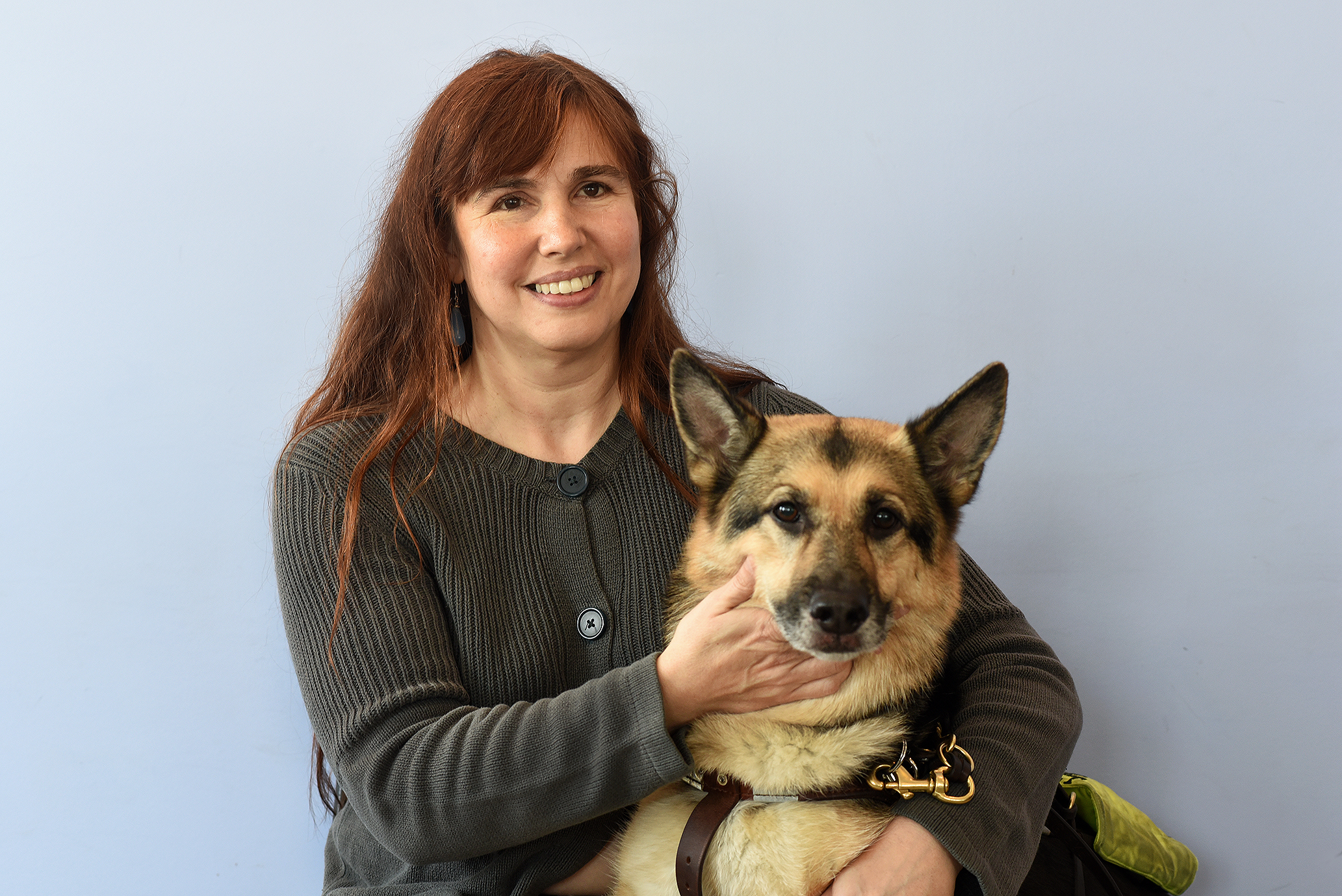
 Author Theresa Evans speaks to Sam and Charlene about her new book Choosing to Die: A Daughter’s Story Of Supporting Her Mother’s End Of Life Through Assisted Death. To get on our email list,receive weekly show updates, or offer feedback/guest suggestions, email [email protected]!