Episode Transcript
[00:00:00] Speaker A: KPI.org.
[00:00:59] Speaker B: Greetings and thank you for joining Disability in Progress where we bring you insights into ideas about and discussions on disability culture and topics. I'm Sam Jasmin, the host of the show.
And I'm Charlene Dahl. Thanks so much for joining us. And tonight we are hearing from the Off Kilter crew who is going to be talking about the up and coming 2026 off kilter cabaret performance.
We have Rachel Orloff. Hello, Rachel.
[00:01:30] Speaker C: Hi, I'm Rachel Borusoff and I'm really glad to be here.
[00:01:33] Speaker B: Sorry. No problem.
And Paul Herwig, the president.
Hi Sam, the acting president. The real one sitting at home. Right.
[00:01:42] Speaker A: I'm the co artistic director of off leash area and I don't want to be president.
[00:01:48] Speaker B: Aw.
[00:01:49] Speaker A: Well, we have one too many of those right now.
[00:01:51] Speaker B: You got that right.
And Gabriel Rodrigue. Gabriel, hi.
[00:01:57] Speaker D: Can you hear me?
[00:01:58] Speaker B: I can hear you.
Great. Thank you for joining us. Poor Gabriel's at home sick, but he's a champ and he's joining us via Zoom and we're gonna make the best of it. So we're gonna talk about the 2026 Off Kilter Cabaret and I want to start out by first of all, I want to remind people if you want to listen to this show again if you just can't get enough, we are archived so you can hear us on the archives for two weeks after this. You can also ask your big brother speaker to play the latest version of Disability in progress or you can download that magical app that is on KFAI website that will let your smartphone own play us. So and if you're joining us live, thank you.
Let's start out by having Rachel and Paul and Gabriel at least give a little bit of history of how you got to the arts before.
Paul for you is before off kilter, but everyone else like just before a little history about you.
Rachel, you want to start?
[00:03:13] Speaker C: Well, I been an artist in my first life.
I was a New York City jazz singer and auditioner.
I even got lots got in the door for lots of Broadway auditions but never got a call back. But I never gave up.
Fifteen years ago, I suffered a very serious injury, resulted in eight months of in and out of coma and what they now scientifically referred to as severe traumatic brain injury.
It has changed everything about my life.
And recently in the last couple of years, I re found myself as an artist. And I may not communicate the same way as I did then, but I still can sing and I still can perform and I still can write. And so the opportunity to work with off leash is giving me back the power to be a disabled person, be authentically who I am, and then also still be an artist.
[00:04:16] Speaker B: Gabe, would you go next?
[00:04:18] Speaker A: Right on, Rachel. Yeah.
[00:04:22] Speaker D: Yeah. I've been. I've also been an artist for a long time.
I'm 33 now. I started, the first thing I ever did was play piano.
Played piano before my spinal cord injury for about 12 years.
And when I was 16, had a diving accident, broke my C5 vertebrae. And now I use a wheelchair and lost the use of my hands and legs and other parts of my body.
And I ended up picking up singing and I kept writing music. I started a band and I've been playing music around the cities for the last 13 years.
And then in 2018, I.
[00:05:13] Speaker C: Took it.
[00:05:13] Speaker D: Upon myself to try dance and created a live music, live dance production called A Cripples Dance.
Performed it in 2018, 2019.
And that led me a few years later to Young Dance, where I've been teaching and making work for the last five years.
[00:05:34] Speaker B: We'll get more into that later. Thank you. Paul.
[00:05:38] Speaker A: Yes, my name is Paul Herwig and I have been working as a professional artist for 43 years.
I grew up in a small town in southern Minnesota and upon high school I left to go to the U of M, where I only stayed a year.
And my major, if there is such a thing when you're a freshman, was visual arts. And I actually quit because I always, I never really wanted to go to the U. I wanted to study art like at a conservatory or some situation like that because I didn't think I needed an academic degree and I wasn't very strong academically. I was good at the things I was enjoyed and not good at the things that I didn't enjoy, as are.
[00:06:26] Speaker B: A lot of us.
[00:06:27] Speaker A: And yeah, and then I was accepted at a private international theater school in Paris. And so of course, let's go to Paris.
[00:06:38] Speaker B: Of course.
[00:06:38] Speaker A: So I ate spaghetti for about a year and a half to save money and worked a bunch of part time jobs and anyhow toured with theater companies in Europe and Canada here in the States. Came back to Minneapolis in 1998, met my artistic and life partner, Jennifer Isles. We started Off Leash Area, a dance and theater company in 1999 and we started the Off Kilter Cabaret program for highlighting and supporting artists with disabilities about four years ago.
[00:07:14] Speaker B: So thank you, by the way.
[00:07:15] Speaker A: Yeah.
[00:07:16] Speaker B: So talk about the off leash. How has off leash connected with the disability community?
[00:07:24] Speaker A: Off Leash Area.
Well, let's go back a little bit earlier to give a context for how we came to have a program that we devised with the hopes of serving people in the disability community. Yes, we are a company. We're a dance and theater company. So some of our shows are more theater, some are more dance because there is such a thing as dance theater, and that's a very specific kind of dance.
There is movement theater, which is a very specific kind of theater.
But we call ourselves a dance and theater company because I'm primarily a theater artist. Jennifer, who I mentioned, is my co artistic director of Off Leash Area, she is a dance artist. And so depending on which one of us generates the idea for production, it's either more dance or more theater or some strange mix in between.
But what's interesting about that is, if you'll be patient with me, Sam, it relates to our name, Off Leash Area. So we're dog lovers. We have dogs, we go to the dog park all the time. And when we were looking for a name for the company, we thought about how cool is it at an off leash area where you have all different kinds of breeds and ages of dog and they all romp and play together.
Most of the time it's very positive. Sometimes it's a little dangerous, a little bit wild, but all these different breeds figure it out and play together. And we thought, well, that's what we are. We are a performing arts company where people from all different backgrounds and all different disciplines can work together to create a show.
And then about seven years ago, we purchased a small commercial building and built it out into a totally flexible theater space.
And we wanted that performing arts space to serve the community. We rented it for cheap and we designed it so that it could be fully accessible, physically accessible to anybody.
And I have low vision. I've had low vision since birth, had my first pair of glasses when I was 11 months old.
Have had a number of eye surgeries over the years.
I'm not blind.
I can't claim that badge, Sam. But I do have low vision. And it's been a really.
It's really affected and been a big part of my life. Jennifer, her. Jennifer does not have a disability. But Jennifer's older brother, who died some years ago in his middle age, had severe paranoid schizophrenia. And so Jennifer and her family were really brought into the space where you really learn about and understand about cognitive disabilities and what that means.
That it certainly can be a frightening thing, but it also can be a manageable thing. But it's something that takes the whole family as a team, the community around that person to, like, really find a way to integrate and to have the fullest life possible. So the two of us as artistic directors of this company, we really emphasized developing our own voices, independence, doing our own thing, creating our own work. And we understood from our two different connections to disability, having one, being around people who have one, family members, loved ones. We really, I think, came from an organic place of understanding what it is to be inclusive. What does that really mean? And that we wanted anybody who works with us to get a sense of that passion that we had for having your own voice, being independent. And so when we had this theater space that we built out that I mentioned before, we thought to ourselves, we wanted to do community programs in this building. That was the purpose of having the building. It certainly wasn't to make money or to be famous. And so we thought to ourselves, well, what do we know how to do that we can impart to others?
Right? Because we don't want to, like, shove the Paul and Jennifer show down everybody's throats. We are Paul and Jennifer. That's enough for the Paul and Jennifer Show.
And so we thought, well, we know how to make work. We know how to make original work. We know how to work on and develop voices. And so we came up with a couple of community programs, one of which was the Off Kilter Cabaret. And unfortunately, that building came into existence just before the pandemic.
So when the pandemic hit, we lost the building. Short and terrible story.
But we did not let go of the dream of having a community program that served artists with disabilities. And the purpose of which was to try to lend to artists with disabilities a high profile, as much as we could do with our resources in this community, a high profile situation where they could present their work and they could develop as artists.
And that is the off kilt at Cabaret. And this is the fourth year that we've done it.
[00:13:01] Speaker B: Excellent. I was wondering, Paul, what makes.
I mean, you've had this. This will be your fourth now.
So how has this.
Preparing for this, besides the artists, changing some of them, how will this be different than the other three?
[00:13:23] Speaker C: Sam?
[00:13:24] Speaker A: I think.
I think that I have to correct you. I think that what makes the Off Kilter Cabaret, the Off Kilter Cabaret are the artists who are involved in it.
I think that the. The format of the cabaret, format of a production where there's like an emcee, and in the cabaret there's seven different artists, that that really has been consistent. And I think what's good about that format is that it gives the Planners some stability.
And it gives those in the community who might be interested in participating in the cabaret, it gives them a sense of, oh, this is what this is. If I submit my proposal for a performance piece, I know what I'm getting into. And obviously, once we go through the selection process and choose people, we communicate everything we possibly can so that they really understand what they're getting into, which is a lot of fun. And I think that it's really the artists that make it. There's a leadership team that is part of the Off Kilter program. So Off Leash Area is the company that produces this cabaret.
And we have a program called the Off Kilter program and off playing on the word Off Leash Area.
And so there's the Off Kilter Cabaret, which is what the leadership team of Off Kilter is. Is in charge of. The leadership team is made up of persons who have a disability, who are members of this community, who are active in the disability community and the community at large, and who want to take part in crafting a program that serves who it wants to serve in the best way it possibly can.
And so every year, there are some aspects of the cabaret in terms of the call for proposals, the criteria by which they're chosen.
Once we have the pool of applicants, we talk about, for example, many things, but one thing is certainly diversity, racial diversity, gender diversity, orientation diversity, and artistic diversity.
And our goal isn't to check a bunch of boxes. Our goal is to put those things at the forefront and our artistic quality as the group defines that each year, and to take those criteria and try to choose the best group of artists that are available to us at the time.
But it's really those artists. Like in the past, Sam, we've had cabarets where there's been a lot of dance and a lot of movement. And I would say, to your point, this year, what is different is that there's a lot of spoken word in theater this year.
There's still dance, and there is kind of theater, performance, theater, prose, poetry, prose, spoken word poetry, and just straight up poetry and storytelling.
So that is a different flavor this year.
[00:16:53] Speaker B: Gotcha. And do you feel like the.
How do you feel like the current situation with ice occupancy has affected, if anything, this year as far as the off kilter performances coming up or people trying to get into this cabaret?
[00:17:20] Speaker A: What I can say really is that. Well, I can answer that in two ways, Sam. One is, organizationally, we will not be deterred from carrying out the cultural activities that we set out to do.
So there's that logistically at the theater, at the Jungle Theater, we have staff on hand to monitor the lobby and monitor who comes in and who comes out of the theater.
So fellow residents, neighbors and citizens and creative people are going to feel safe when they come to the show and they're going to feel safe when they leave the show.
I can tell you personally speaking just for Paul Herwig as himself, not Jennifer, not Rachel, not Gabriel, I can tell you for myself, I think like anybody who is a resident of Minneapolis St. Paul, I'm exhausted and hurt, but I'm also filled with righteous fury and I'm very, very proud and full of love for my neighbors and my community members as I. And I think I could probably speak for everybody involved in Awfully Sherry and Off Kilter Cabaret about that. And I would say that there's one thing, that one of the few things, biggest things that describe that identify the Twin Cities community is its participation in and support of and wide range of arts and cultural activities.
And I will be God damned if the insurgents, if the military in our city are going to keep us from continuing our arts and cultural activities.
So I think it's very difficult not only to create in this atmosphere, but I think people feel I could totally understand that people don't want to go out and see things. But I am just telling everybody it's so important to continue doing this kind of gathering, whether it's at a church or in a theater or at the bowling alley, and not let them wear our identity down.
So there you go.
[00:19:45] Speaker B: What are the details of the 2026 Off Kilter Cabaret?
[00:19:50] Speaker A: Okay, we are performing the Cabaret at the Jungle Theater which is at Lynn Lake.
And we have seven artists in the Cabaret. Amy Soloway, who is doing storytelling, Caroline Manheimer, who is doing performance theater. Laura Kanata, storytelling. Rachel Orzhoff. I have you down as poetry and prose.
Does that work for you?
[00:20:19] Speaker C: I think it's bigger than that.
It's not so much poetry as it is storytelling and even a little music.
[00:20:25] Speaker A: Right. Well, there you go. That's good. And Raymond Lussak is doing poetry.
Sam and Tomo are doing multimedia theater piece and Young Dance is doing contemporary dance.
The performances are coming up soon, February 6th and 7th at 7pm February 8th at 2pm That's Friday through Sunday at the Jungle Theater in Minneapolis.
And the Cabaret this year is emceed by Desdemona who is an international award winning artist who's received many music awards, state Arts Board arts awards.
She is also a poet and is involved in music Hip hop and music and local bands. She does an enormous amount of teaching at all kinds of locations, including juvenile detention center, correction centers.
She is a righteous spoken word artist.
[00:21:29] Speaker B: I feel like one of the interesting things about the Off Kilt Ecabaret is that every year you've had a theme.
And this year's theme is Pick youk Paradox.
[00:21:41] Speaker A: That's right.
[00:21:42] Speaker B: So how was that theme chosen?
[00:21:45] Speaker A: Pick youk Paradox was landed upon by the leadership team and myself and Jennifer, the directors of Off Leash Area, after several discussions with the leadership team, throwing out ideas for a theme, coming up with phrases, and then gradually whittling it down to pick your paradox. And when we propose a theme for the Off Kilter Cabaret, the idea is just to jiggle the imagination of the artist, entice the artists when they're making their proposals to come up with something that reflects the theme. It doesn't have to reflect the theme.
It could be a conceptual way, it could be a very literal way.
And I think I would be interested to hear from Gabriel and Rachel about what they think, the idea of paradox, how that relates to them as individuals, as persons with a disability, just as people.
And I think that what's interesting to me about the word paradox is it's sort of like.
It's sort of like, you know, this society isn't really made for people with disabilities. And we're all working hard to make it be made for people with disabilities deeper and deeper all the time. And that's what's beautiful about our country, is that we have all these different kinds of people with all these different lived experiences. And we're trying to make a society that's the best it can be for everybody.
And so Pick youk Paradox was the theme that we landed on for this year.
[00:23:28] Speaker B: Rachel and Gabe, do you guys have any comments on that?
[00:23:32] Speaker C: Well, I very much found myself awakened to the idea of Picking youk Paradox.
My disability, for the most part, is hidden.
And those of us in the hidden disability category have different challenges than those where it's more obvious and we get judged differently and in different stages of our disability. So my piece actually is divided into three acts. Within the 10 minutes, it's three acts, one, which is hiding from my disabilities, hiding behind my disabilities, and living with my hidden disabilities.
So I try to portray three different ways that my disabilities are very actively a part of my life.
And showing you behind the scenes, literally looking inside to the point there's a part of my piece where I turn my body into a game of operation.
And I will show you where the pieces go.
And you'll see all of these things that I'm walking around with that you can't see.
[00:24:57] Speaker B: Gabriel, did you want to comment on the paradox thing?
[00:25:02] Speaker D: Yeah. I think.
I've been struggling.
I feel like I had it so clearly in my head when we started. This year's off kilter, and I'm. I've been finding myself grasping at it more recently and trying to figure out what it is.
But I think it. For me, it comes down to grief and the. The juxtaposition of grief and joy.
And that for me, my. I contracted my disability, right. So I spent almost 16 years of my life with an able body, fully able body.
[00:25:44] Speaker B: Right.
[00:25:44] Speaker D: And then it was.
That body was completely flipped on its head in a moment's notice. And now I've lived almost 18 years in a new body.
And so, so much of the grief and the joy that I experience is so intertwined, and it's hard. Sometimes it feels hard to parse out what I'm feeling, because when I go on stage, I'm mostly a musician, but when I dance, too, I feel this joy.
But if I. I can flip so easily into feeling grief because I wonder what it would have been like with my able body.
[00:26:33] Speaker B: Right. It's like a comparison, right?
[00:26:35] Speaker D: Yeah. It's this comparison that I'm always living with.
And to live in between that comparison and sort of like fluctuating between those two things and comparing all of the things, it feels like this paradox that how do you hold both things? It feels sometimes impossible, but then other times, it feels so easy to hold them both, depending on what you're doing, who you're with.
Yeah. So I think that's. And that's where our. The young dance piece that we created, we're trying to show that juxtaposition.
[00:27:27] Speaker B: And so I'm wondering, like, what Access services.
And I know we hold a high bar. I feel like you guys hold a high bar as well, to what's offered. So what access services, Paul, are provided for theater goers and the people who are performing in the event.
[00:27:56] Speaker A: Thanks for asking, Sam. There are a number of things that we're doing.
I can be super specific by the night, if you wish, Sam.
So, I mean, the first part of the access is that we keep the ticket price, the admission price, quite low. It's a suggested donation of five to $30.
So in a normal circumstance, we would charge $30 for the tickets, but we want anybody who is interested to come, despite their financial situation, to be able to come and to not have to ask at the box office, gee, can I pay less money? That doesn't make anybody feel good. And that's not our intent. And so you can go and reserve online or just come to the door and say, I'm here for one or however many tickets. And they'll say, okay, how much? And then you'll tell them and then that's it. So you can come.
And we also have ASL interpretation.
And that's for all three performances.
Friday, Saturday and Sunday. We have ASL interpretation. We have audio description at all three performances.
[00:29:10] Speaker B: Excellent.
[00:29:11] Speaker A: And we have live captioning on the Sunday performance.
[00:29:15] Speaker B: Ah, okay.
[00:29:16] Speaker A: Yep. And that is all the different things that we're doing. And there.
And yes, that's it.
[00:29:25] Speaker C: You chose to partner with Jungle Theater, which is a very, at least in my experience, has been a very comfortable place to try to be disabled. They have a lot of parking available.
[00:29:35] Speaker A: That's correct.
[00:29:35] Speaker C: It's easy to get into the building. I'm not good with unexpected steps, let alone.
This is one story. But so there's even those unexpected stuff. It's been a really easy place for those of us with mobility issues.
[00:29:49] Speaker A: That's right. There are no steps from the outdoor, outdoor main entrance into the lobby into the theater. It's a smooth ride the whole way.
[00:30:01] Speaker B: So Young Dance has been a partner for all of the cabarets for Off Kilter.
Can you tell me a little bit about how or why that came about? And then I'd like to know a little bit more about Young Dance. And so maybe you and Gabe want to go ahead and.
[00:30:22] Speaker A: Gabe, I'll just say before you start, Gabe, because that's really a question for you. I think you've been a long time teacher and performer with Young Dance.
Young Dance is a wonderful organization in town. And we on the Off Kilter leadership team were looking for ways to partner with organizations.
What does that mean, to partner what kinds of organizations? And we just wanted to find other organizations whose missions crossed over with ours for this program and offleighsherry in general. And Jennifer is a dance artist. As I mentioned.
We work with a lot of dancers in town. We're more known in the dance community than the theater community now. And that's how we came across Young Dance. And just we had incredibly positive interactions with the folks at Young Dance and we asked them if they would like to be an organizational partner with us and support the program with rehearsal space, with marketing, things like that.
And I think, Gabriel, you're the man to talk about Young Dance, the organization yeah, yeah.
[00:31:38] Speaker D: So I started with young dance in 2020, 2021 and started teaching in their all abilities program.
They have had, they center their whole programming around an all abilities methodology.
That dance is inclusive and we do whatever we can to make it inclusive to everyone.
And they, they take that and spread it out through all of their classes. Like you, you can have a disability and take ballet. You can have a disability and take hip hop.
They structure their classes in a way to meet everybody's needs, to create an accessible landscape where people don't feel isolated and it's always a work in progress. You know, I believe nobody will ever truly figure out how to make everything accessible.
[00:32:43] Speaker B: But that is a tall order, isn't it?
[00:32:47] Speaker D: What's that?
[00:32:47] Speaker B: That's a tall order.
[00:32:49] Speaker D: A very tall order. Yes. But we, we try nonetheless.
[00:32:53] Speaker B: Right.
[00:32:54] Speaker D: And that's, that's what's kept me around at Young Dance.
I, when I go there and I teach and I dance, I feel welcomed and I feel like I can move however I want to move. That's something we talk about a lot is move how it feels good in your body.
It doesn't need to look a certain way. It doesn't need to please somebody else's eyes. Just move how it feels good.
And we've had conversations about that in the making of our piece.
We actually, a couple rehearsals ago, a couple of the kids brought up like this doesn't actually feel very good. And I was like, great, that's a great information. Let's change it up. Let's, let's find a way that this feels good in our bodies because we have a, we have a wide range.
[00:33:47] Speaker A: Of.
[00:33:51] Speaker D: Abilities and disabilities in the class.
So we always operate from that framework.
[00:33:56] Speaker B: Young Dance is going to be having a performance coming up. Correct?
Besides in the show.
[00:34:03] Speaker D: Yes. Yeah, we will. Our spring performances are in May and there's also a performance that I'm actually not a part of. There's a. They bring in a guest artist every year and the guest artist is working with the All Abilities company. And I believe that performance is in April, but I can't remember the dates.
[00:34:29] Speaker B: Is there a website people can go to to find out more about young dance?
[00:34:34] Speaker D: Yes.
[00:34:34] Speaker B: Youngdance.org and is there anything more you'd like to tell us about your class?
[00:34:46] Speaker A: Young Dance will be offering a class during the week of the Off Kilter Cabaret next week.
[00:34:54] Speaker D: Oh yeah, yeah, we have a. We're hosting a class.
I think it's open invitation.
[00:34:59] Speaker A: Yeah.
[00:35:01] Speaker D: At one o' clock on Saturday.
And I believe it's at Young Dance.
Yeah.
[00:35:11] Speaker B: Come on.
[00:35:11] Speaker D: Come on.
[00:35:12] Speaker B: Is there anything you'd like to tell us about the pieces that will be performing that you'll be performing in in the cabaret?
[00:35:20] Speaker D: Yeah.
So the piece, like I said, it was created with this idea of. Of holding both grief and joy.
And I. I think I came up with the title yesterday. It's called I wish you could come with me.
And something that I've been feeling a lot lately. I've actually been feeling pretty isolated at home while so many of my friends and my close people are out in the streets and helping out the neighborhood, protecting our neighbors.
And I'm. I've been stuck inside because I use a wheelchair, and I can't go outside very easily. It's very icy.
And I've realized something that has felt really nice over the last few weeks is when people tell me, I wish you could do this with me, or, I wish we could go do this thing, or.
And it feels. It calms my heart a little bit, even though it is sad.
It's kind of that paradox of, like, this is filled with grief, but it's also, oh, you want to do this with me? That makes me feel joy, and that makes me feel connected.
And it's. It's a good balm for my heart to hear that right now.
[00:36:52] Speaker B: Wondering if each of you would tell me, like, what Disability justice. If you. If you want to share what it means to you.
Anybody want to start?
[00:37:09] Speaker D: Sure. I'll take a stab at it.
[00:37:11] Speaker B: Go for it.
[00:37:14] Speaker D: Yeah, I think. I think disability justice is.
That notion of accessibility is not really a finite goal.
Accessibility and disability justice is a ongoing, forever project, and we are always working on it together.
[00:37:38] Speaker B: Well, and the world's forever changing, right? So society forever changes. Disability changes the views with disability change and technology. That's huge technology for disabilities change.
[00:37:52] Speaker D: Yeah.
[00:37:54] Speaker A: Yeah.
[00:37:54] Speaker D: So I think it's this. Yeah, it's this forever collaboration. And when.
When you feel.
When you feel people, like young dance, that's what happens in our class. I think it is.
It is disability justice.
It is just disability justice.
You go in that room and, you know, everybody in that room, and everybody is trying to work to make this room accessible for everybody.
And it's a really special thing to feel that. And you can feel when people are not working to do that, it's frustrating, and it can be devastating sometimes if people aren't working with you to create that space.
[00:38:49] Speaker B: Go ahead.
[00:38:49] Speaker C: Kind of building off what Gabriel's saying, there's been quite an evolution of how disability is, how the world is it. The world needs to alter to fit us or we need to subjugate to fit in.
[00:39:08] Speaker B: Yes.
[00:39:11] Speaker C: As one who really does speak from the perspective of I don't appear disabled, that's. Interestingly, one of the things I hear from people a lot is, I forgot you were disabled or I didn't think. Think about that, because.
And when they say that, they mean it as a compliment, but it's not a compliment. This is who I am. I own it, I carry it. It's heavy.
It's very heavy.
And I want to be able to get in every door.
And maybe that means that if you're going to have a step there, that there's also a sign there so that you can help raise me up the step without having to lose what you already have. And I think, again, I'm a lot older than you, Gabriel. We'll meet in person soon. I'm looking forward to that. But I remember being where it was about, how are you gonna. How are we gonna make you fit? Because we put this accommodation and that's the best we can do. I still remember a disabled bathroom in a building that I used to frequent that had a ledge to get into the door.
And they have the big handicap sign on the bathroom, like they've met their request requirement.
There's, though, in the. In the imagery world, there's also a wonderful image out from long ago, I guess, that shows the difference between accessibility and equality and shows three people of different heights and standing trying to look over a fence at a game happening. And you can see that two of them can't reach over the top, can't see over the top of the fence, and you can lower the fence or you can put things out for them to stand on, or potentially, in Gabriel's case, a way to actually be lifted up and done in a way that doesn't highlight your disability. That's a really hard one. Again, I have a friend who's in a wheelchair, and oftentimes people will say, well, why don't I just lift you out of it? And it's like, are you kidding? You're gonna put your hands on my body and tell me that I belong in a different position? You know, it's the stuff. It's the parts of disability that people really don't see.
[00:41:20] Speaker B: Right.
[00:41:21] Speaker C: So for us, the progress is educating people on what we're carrying and what we want help with or don't.
[00:41:29] Speaker B: Right.
Paul, do you have anything or would you like to give more?
Relive what. How. And people can get involved in the all the logistics of how to join the cabaret.
[00:41:47] Speaker A: Yeah.
So off kilter cabaret three performances only next weekend, Friday and Saturday at 8pm, 7pm, 7pm, Sunday at 2pm at the Jungle Theater. Additionally on Saturday there's an all abilities movement class being offered by young dance at 5pm at the Jungle Theater. There's a variety of Accessibility Services, ASL, etc. Being offered. Tickets are cheap, 5 to $30.
The Jungle Theater has excellent metro mobility drop off space. They have parking single level to get in and out.
Lynn Lake is. We have to defend the Lynn Lake neighborhood as one of our cultural islands in the Twin Cities. Come out and see the show in community.
Get blown away by these amazing voices of these artists in a cabaret format where there's tons of variety.
The show is an hour and a half long.
Come out and be together.
[00:43:01] Speaker B: You know, I just want to say what I think is two of my favorite things with the cabarets is they're 90 minutes and that really is. I feel like a nice.
It's not too long. It's not, you know, I can enjoy a nice long opera with the best of them. But. But it's nice to think that oh, I'm gonna go there for 90 minutes. I got 90 minutes I can go and see this play and see the different people. And it's a cabaret. There's so many different variety each year you see a different variety of people and they tell a different variety of stories or sing or dance or anything like that.
[00:43:45] Speaker A: Yeah, I'm blown away and every year I think I've never seen anything like that on Twin Cities stages ever.
Oh, and Sam, information and tickets you can find at the off leash area website offleasharea.org look for the off kilter page. It's also on Ticketstripe, that's our ticketing service. So you can search for ticket stripe Off Kilter Cabaret and you'll find your tickets there as well and you can come to the door.
[00:44:11] Speaker B: And I just want to say one of my favorite pieces last year, Gabe was a young dance piece and I believe it was Lexi who was spinning you guys all over and she just looked like she was having the best time of her life.
And it was so fun to. To hear audio described.
[00:44:34] Speaker D: Good. Yeah, that was, that was Piper.
[00:44:37] Speaker B: That's it. Yeah, she really enjoyed that. I. I was thinking she more enjoyed throwing you guys all over the stage, but.
All right, well thank you guys so much for coming on. I really appreciate it.
[00:44:52] Speaker C: Thanks for supporting all we do.
[00:44:53] Speaker A: Thank you, Sam.
[00:44:55] Speaker B: And just to give everyone an idea that yes, I too will be in this performance. So just a small letting people know.
I want to thank people for listening for tonight and hope you will join us at our cabaret and then tune in and we'll have something special for you. We'll have a pre recorded in next week, probably more about Waymo or something of that sort. And then we'll come back with more new shows the week after.
This has been Disability in Progress. The views expressed on this show are not necessarily those of KFAI or its board of directors. My name is Sam. I'm the host of this show. Charlene Dahl is my research PR person.
Erin is my podcaster. Tonight we've been speaking, speaking with performers from the Off Kilter group and we had Gabriel Rodrik and we had Rachel Orzoff and of course, last but certainly not least, Paul Herwig who is the co director, artistic director of Off Kilter. You can hear our shows every week or ask your big brother speaker to hear the latest, latest disability and progress. Thanks so much for listening. Take care everybody.
[00:46:20] Speaker D: KPI.
[00:46:23] Speaker B: Org.
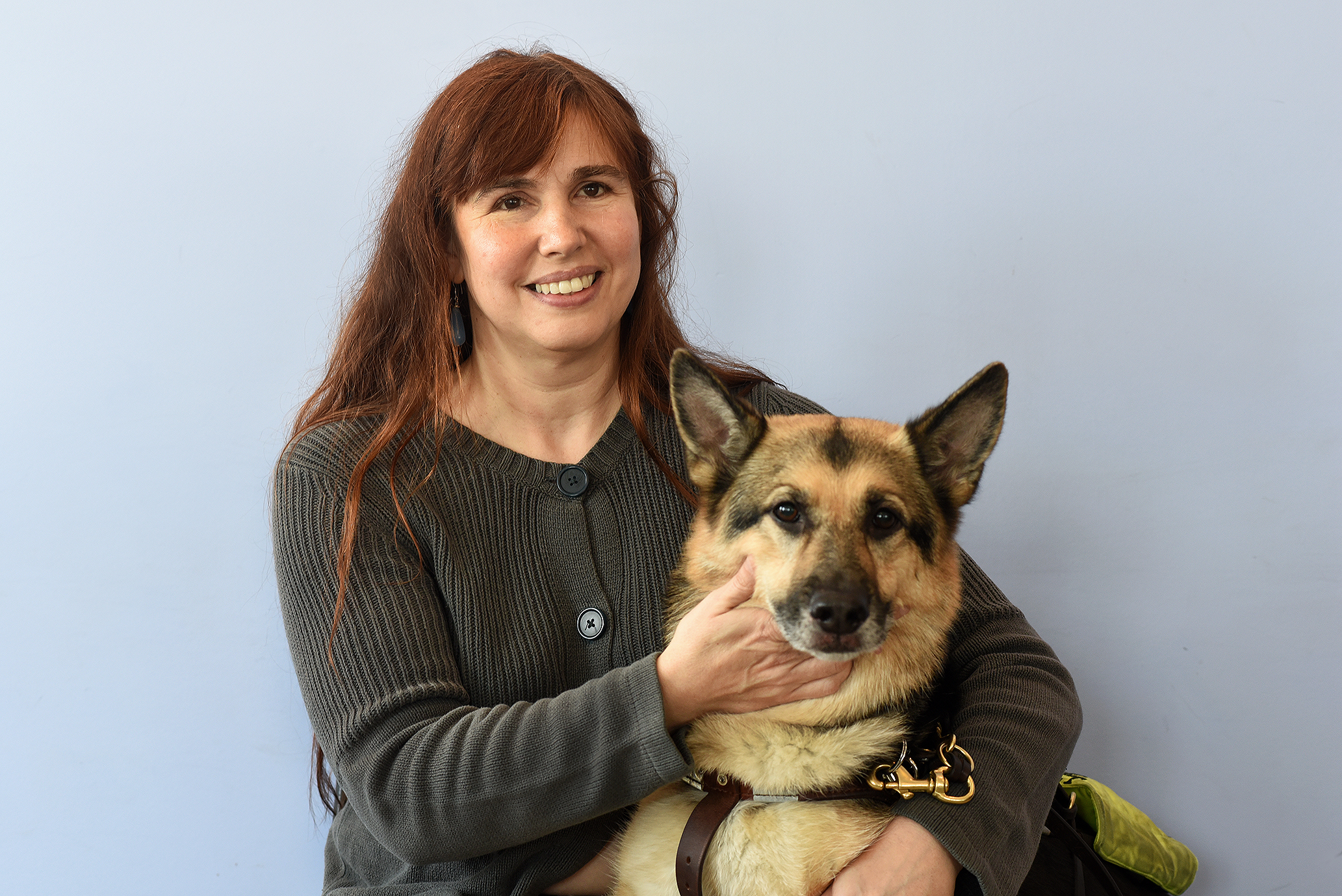
 Join Sajm and Charlene as the talk to a panel from the theater group Off Leash Area about the 2026 Off Leash Cabaret! To get on our email list, receive weekly show updates, or offer feedback/guest suggestions, email [email protected]!