[00:00:00] Speaker A: KPI.org.
It.
[00:01:00] Speaker B: Greetings and thank you for joining Disability in Progress where we bring you insights into ideas about and discussions on disability topics.
I'm Sam Jasmyn. I'm Charlene Dahl. Thanks for joining in.
Want to remind you real quick that we are podcasted as well and will be on archives for two weeks and we have an app. So if you want to hear us on your smartphone, you can go to kfai.org and and download the app or just ask big brother, ie, Alexa or Echo to please play the latest version of Disability and Progress.
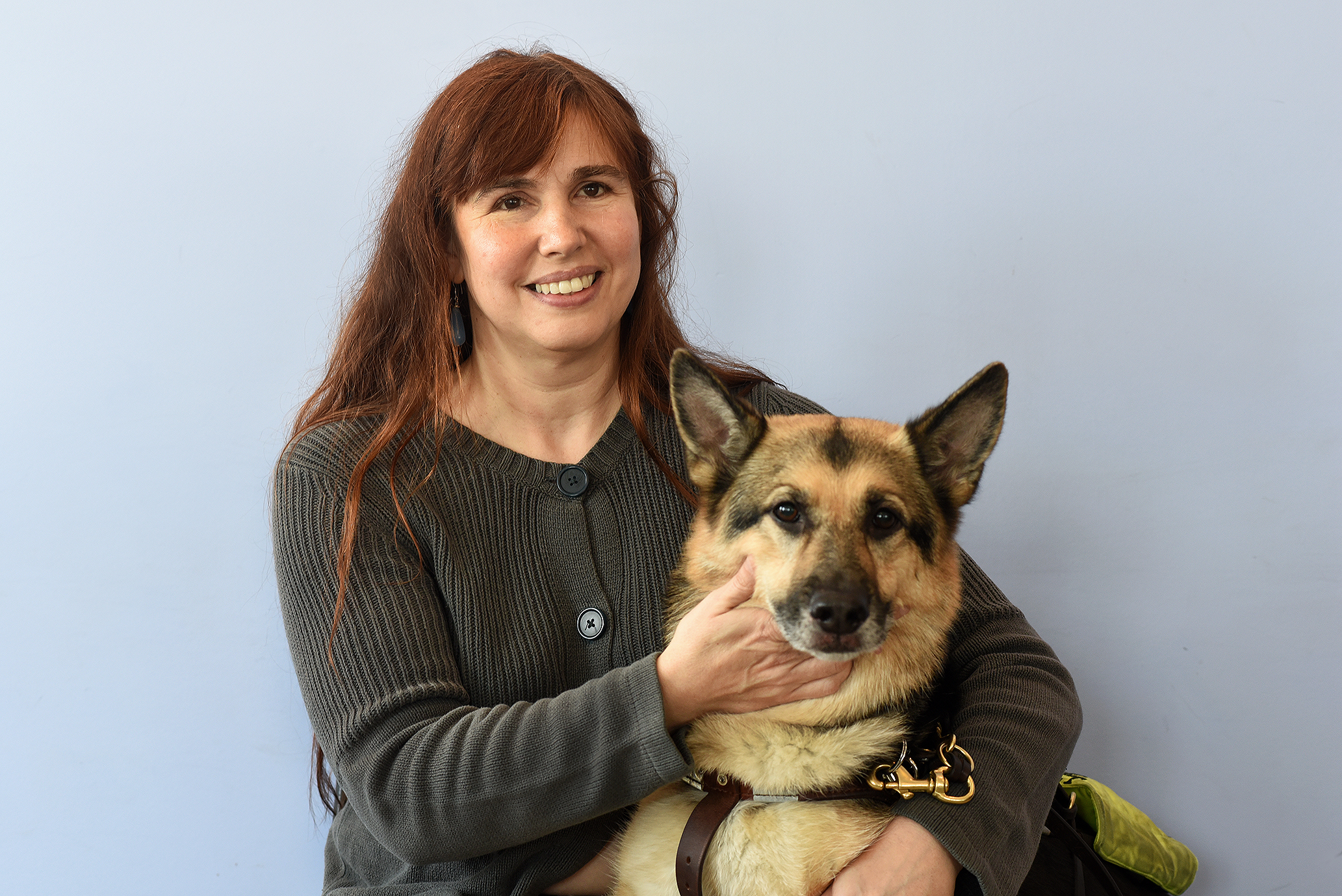
Tonight we are speaking with Amanda Ventura and Angelica Price Rocca. I hope I pronounced that correctly.
Hello, ladies.
[00:01:49] Speaker A: Hello.
So nice to be chatting with you both again.
[00:01:54] Speaker B: Again. I know. Thank you. Thank you so much for coming on.
We're talking about Waymo and it's such an exciting topic before we get really started.
Thanks for your time. By the way, can you give the listeners who maybe didn't hear your first broadcast, give them a little bit of history of who you are and what you do for Waymo, just a quick 30 second blurb.
[00:02:25] Speaker A: Of course. And this is Amanda. I'm on the public affairs team at Waymo.
So my role in particular at the company is working with road safety advocacy groups, disability advocacy groups, and really helping bring education and awareness around mobility needs in our communities.
And so a big part of that is working with people who have disabilities and hearing their stories, bringing them to Waymo and vice versa, introducing the community to Waymo and then bringing them internally to us too, to provide feedback and insights into their lived experience. It's really important to us that we're building a service that is going to actually be useful for the people that we want to serve. So for those who actually don't know what Waymo is, Waymo is a fully autonomous ride hailing technology company and service. And so what we do is very similar to other ride hailing services. There's an app on your phone where you can hail a completely empty vehicle to come and take you where you want to go within our service areas 247 and there's no one in the car.
And so, you know, there's obviously a ton of really wonderful implications here for road safety, which we can get into in a little bit, as well as the accessibility space and our riders with additional needs. And I'm. That's what I'm so excited to get into. That is.
[00:03:55] Speaker B: Yeah, we will get there. I, I have several questions here on the docket here.
[00:04:00] Speaker A: Love it.
[00:04:02] Speaker B: And will Angelica be speaking with us today.
[00:04:08] Speaker A: I think she's going to be a fly on the wall today.
[00:04:10] Speaker B: Okay, good enough. I'm just here to listen to you.
[00:04:14] Speaker A: Brilliant ladies talk about this exciting topic.
[00:04:16] Speaker B: Excellent. Well, thank you for attending in your time. So we'll get to the Minnesota part, but I want to start at least just briefly by. I know you are expanding into Minnesota and that is hugely exciting for me because obviously I live here.
But how does Waymo decide what state you're going to expand into and how many are you in now? I know before it was X amount. So how many of you added and how do you decide you going to go next?
[00:04:50] Speaker A: So much has happened since we last talked and I think that was just last summer.
[00:04:53] Speaker B: I know.
[00:04:56] Speaker A: So Waymo is publicly available in five US Cities.
So that's Los Angeles and San Francisco, Phoenix, Austin and Atlanta. But we have since announced that we're going to be driving and eventually serving several more US Cities. We even announced that we're driving around London and Tokyo.
And so there's so much on the horizon. So when we are thinking about where we're going to go next, I mean, it's almost like where aren't we headed at this point?
There's so many, like, cities in the United States that we want to serve.
Some of the ones that we've already announced include Miami, D.C.
like you mentioned, we're going to be thinking more about the Midwest, so Minnesota, Missouri, and thinking more about even Michigan, which for those of you who have listened to other interviews, you know that we also had a presence in Michigan for a little bit. And so I'm really excited to, to see so much growth. And I think it's just going to, just going to increase when we're thinking about where we're going to go next, you know, it's, it's really about like, what can, what can we learn from these new areas where we're going to be driving? So the first, you know, five cities that we've launched in have been kind of in, you know, sunnier places.
[00:06:26] Speaker B: Right.
[00:06:27] Speaker A: Of course, I'm sure we're going to talk a lot about snow and weather.
[00:06:30] Speaker B: We are going to, and you know.
[00:06:33] Speaker A: That'S one of the interesting things is that now that we have our sixth generation driver and we have thousands of miles of experience on various inclement weather roads, we're feeling more confident in driving in these areas that get a lot of snow and have near freezing temperatures and all of the really fun things that you Minnesotans love.
[00:07:00] Speaker B: Tolerate, all the things that we tolerate when you're young, I think you love the snow when you're like eight or something. Something.
When you get in your 30s or later, I think. You think, oh, I don't know.
Unless you're a ski bunny.
[00:07:21] Speaker A: You're welcome to relocate to Phoenix anytime and we can be friends.
[00:07:26] Speaker B: Yeah. I'm kind of happy that we don't have so many poisonous things here. That's just. You know, I'm a gardener and I kind of don't. I like to know mostly of what I'd stick my hand down on now.
[00:07:40] Speaker A: Fair enough.
[00:07:40] Speaker B: Let's start out. I wonder if you could tell me, what do you see autonomous vehicles changing the transportation for people with and without disabilities. Like, how do you see transportation changing for them?
[00:07:58] Speaker A: Sure. I mean, some of the benefits of autonomous vehicles are that they are driven by a driver, which is what we call our technology, the Waymo driver. So the Waymo driver doesn't get drunk, distracted, drowsy, didn't just break up with its girlfriend, you know, isn't getting angry on the road. You know, 90 plus percent of crashes on our roadways are caused by some element of human choice or error. And, you know, the technology that doesn't have those same fallibilities has this huge benefit to make roads safer. Right now we're losing about 40,000 lives on US roads every year in road crashes.
And those safety benefits aren't just for people who are going to be using Waymo as their transportation mode, but also for people outside of the vehicle, pedestrians, cyclists, and motorcyclists. And we're already seeing in our driving that we are 10 times safer than a human driver across the board.
That's in 127 million miles on public roads.
So from that perspective, the safety benefits alone are massive.
And then as we think about the accessibility side, you know, I don't think I really have to. I don't want to preach the choir at all, but I'll share some of the things that partners have shared with me, which is, you know, when you are getting into a ride hailing vehicle, a vehicle that you can't drive or that you don't drive, and it's a stranger's car, there's a lot of different elements that are kind of unknown that you have to navigate every time, and sometimes that can cause stress. I talk to a lot of people who use guide dogs, and they tell me that it's like a negotiation every time they have to get into a stranger's vehicle. And sometimes the vehicle doesn't even stop to Negotiate either. And so there's accessibility benefits that we think are quite plentiful. I mean, you and I can get into this quite deeply. I think it's about providing just another opportunity for people to make connections in the community, to get to work, to get to doctor's appointments, to just go at will 24, 7 in a vehicle where you control the temperature, you control the music.
And I heard the Bob Marley earlier, before we started the interview.
You can jam the whole ride.
And that's kind of, that's something that doesn't really exist in, in this way for a lot of people who cannot drive or choose not to due to disability.
[00:10:38] Speaker B: So I'd like to talk just briefly about convenience and innovation. So they don't always line up with accessibility.
I'm wondering how Waymo makes sure that they do. And do you have any people with disabilities on the team of Waymo?
[00:10:56] Speaker A: We do have a disability and neurodivergence alliance for employee resource Group.
That's relatively new, but yeah, in addition to employees who perhaps bring their own lived experience to the Waymo product and the service, we have the Waymo Accessibility Network, which is a quarterly forum that we convene at Waymo with accessibility leaders. So these are people from National Federation of the Blind, American Council of the Blind, the Epilepsy Foundation, United Spinal Association, Deaf Equality, and so leaders from these organizations are coming to these meetings and they are engaging with our product team, our policy team, our software team to learn about the latest accessibility updates that we're pursuing or new features that we're developing before they're launched to the public. So that we do have kind of an active feedback loop with our partners who represent that lived experience and that expertise outside of Waymo. Additionally, we have UXR or user experience researchers who are constantly, you know, working and diligently working to ensure that we have diverse range of perspectives. Whenever we're working on like very in depth research, it's going to inform future product features and launches. So lots of opportunities for people with disabilities and those unique perspectives to help inform what we're building.
[00:12:32] Speaker B: I'm wondering what kind of disability related barriers I, I do hear the idea of, oh my gosh, I can finally not worry about taking my service dog with me, you know, to events or places and have to worry about being left or told that I, you know, didn't appear for my ride. And what other barriers do you see the Waymo eliminating?
[00:13:05] Speaker A: Sure, I think that there's, I mean, I'll speak as a, as a woman too. I Think sometimes there's kind of a, like a presence of mind of your personal like, and psychological safety that can sometimes come into play when you're in the car with a stranger.
And so for me, I think, and especially for, you know, women with disabilities that I've talk to, you know, the idea of like not having to answer a thousand questions about your physical disability potentially, you know, how blind are you and what hinges on how I answer that question, you know, I think there's, there's kind of components of that where even if the person really, the intention was well meant, it's always kind of in the back of your mind.
[00:13:52] Speaker B: Why do you want to know something like that? Exactly.
[00:13:55] Speaker A: Yeah, exactly. Exactly. And so I think, you know, even for myself, it's kind of in the back of my mind of like a little bit of relief. I'm alone in the back seat of this car. I don't even need to worry about driving or like, you know, worry about who else is in the vehicle with me. And so that's, that's another component. There's, it's, it's a psychological, you know, kind of guard that you can let down.
And then I think too that, you know, I've talked to some people. We have an in car accessibility feature called Audio Cues. And what that does is when you toggle that on within our app menu, the vehicle gives you occasional cues as to what's going on outside of the vehicle. So if we stop at an intersection and we're kind of inching forward or, you know, there's like a little bit of a behavior and you're like, what's going on? You know, thinking to yourself, the PA system inside the car will stay waiting for the intersection to clear or, you know, which is nice.
So nice proceeding along Main street just to give especially people who are blind or low vision, additional cues about what's happening outside of the vehicle. We also have these in car screens, but it's nice to have that additional prompt of, okay, the car's got this. And I've talked to a lot of people too, where they've said when they're in cars with other people, they kind of want to know where they are, but they always feel a little bit awkward asking, even like, you know, where are we?
Yes, Are we there yet?
[00:15:25] Speaker B: Are we there yet? Exactly. It was just going there.
Yeah.
[00:15:30] Speaker A: I think that there's, there's a lot of things where it's like, the more that you speak to people who, who can't drive or don't drive and Kind of what they're taking away from the Waymo experience. The more that I'm like, hadn't really thought of that before. And I really love that that's something that you appreciate about it.
[00:15:50] Speaker B: I do want to point out to the whole woman thing.
There was. I know with the.
There are some ride services that are very prevalent in cities and the sexual harassment etc with women are as. Actually the numbers are quite high.
And so it is nice.
That is not just a psychological. You know what I mean? It's not just a pretend fear. It's real. So I like that idea that would be up there for me, the idea that I could get a cab at 11:30 at night or 12 at night by myself if I wanted and not have to worry about Jesus. Has my driver been vetted? Are they safe?
Have they done a criminal background check on them?
So many things. Amanda, I want to talk a little bit more about the whole idea about accessibility.
I feel like how are we ensuring that disability accessibility is built into the design from the beginning? Somebody told me once that they, they take Waymo's, they've taken them in San Francisco that there's some buttons up on top of the like up over their head, but they never knew what they were for. Is are things like labeled in braille or are all the buttons that are in Waymo accessible on your app?
[00:17:26] Speaker A: That is such a throwback for me because I think the person might be speaking about our Chrysler Pacifica minivans.
Those used to have buttons that were kind of in like the ceiling of the vehicle and those did have braille on them as well to indicate what they were for.
Those buttons now in our electric Jaguar I paces are now accessible via the app. So most of the features that you're going to experience as a rider are going to be within the app as well as on in car screens. So there's a lot of parity there.
In the app, you're able to navigate to your vehicle after you hail it and once it's arrived at its pickup location and that is voiceover and screen reader accessible. And you can press a button within the app that says find my car. And it'll give you step by step directions. It'll say like 300ft to the left and have haptic cues as well to kind of keep guiding you to the vehicle until you reach it. There's also kind of a chime button that you can press and that'll play a musical tone or honk the horn when you actually get to the vehicle. You don't need necessarily those buttons anymore that the person was talking about in our older vehicle models because it's in the app. So the pullover function, the rider support function, you can select those via buttons in the app. Additionally, you can control the temperature, you can control the music, which can be paired with Spotify now.
[00:18:54] Speaker B: Excellent.
[00:18:55] Speaker A: I think that might be new since you and I last spoke.
And you can also even control. And I love this feature actually as a accessibility feature. You can control the amount of space that the. If you're sitting in the back seat that the front passenger seat is pushed up, which is great for people with guide dogs. It gives you additional space in the footwell for your guide dogs.
[00:19:17] Speaker B: I want to just take a step back a minute. So first of all, can you start by telling how many different vehicles choices would you have? Presumably you might have a van type choice that would take more than two people or how many does a car fit comfortably? Give me some ideas on the vehicle choices there.
[00:19:38] Speaker A: Of course.
So the flagship vehicle, the vehicle that's available to hail in all five of our public cities are the electric Jaguar I Paces. It's kind of like a sedan. It can fit four people. So that's three people in the back seat, one in the front passenger seat.
And then we also have. Which is not available to the public yet, but we also have talked about the Ohi, which is a vehicle that we're building in partnership with a company called Zeekr and that is slightly more boxy looking, but it's going to fit about, I think four or five people has captain chairs. So those who kind of remember our early day vehicle, the, the Pacifica, it'll have like a captain chair and then kind of like bench seating, very similar to the back seat of a car.
And that vehicle is currently driving around on public streets. You might even catch one in one of these markets that we haven't yet launched in and that's currently doing road testing. But right now the only vehicle that you can hail through the app is going to be the Jaguar IPs. We also have, I don't want to forget our Hyundai Ioniq. So we do have another vehicle that we're working to bring into the fleet, but again, you might see it driving around, but it's not available to hail just yet.
[00:21:02] Speaker B: Gotcha. So I want to step to the app.
Is the app usable on how many different phones Are they both Android and iPhone or just iPhone? How does that work?
[00:21:17] Speaker A: Yes, it's available on both Android and iOS.
It's so interesting. I get this question a lot, but yeah, it's accessible on both.
[00:21:28] Speaker B: How about the blind shell? Do you know about that phone?
[00:21:31] Speaker A: Which one?
[00:21:32] Speaker B: The blind shell.
[00:21:34] Speaker A: Blind shell. I don't, but I will look into that and I'll send you an email with a follow up.
[00:21:38] Speaker B: Cool, thank you. That'd be awesome.
Also, can you call in your ride if you wanted to? Does it have to be over the app or can you actually call customer service and say, I'd like a car here to go here?
[00:21:55] Speaker A: Yeah. So you hail the vehicle through the app.
So you would put in all your trip details. It'll say like, where are you headed? Where's your pickup?
So that's all handled via the phone interface.
[00:22:08] Speaker B: I see. So you can't just literally call someone and do that. It has to be through the app. Okay. And then presumably you would know the cost right away of what your ride will be.
[00:22:24] Speaker A: Exactly. So what you would do is when you open your app, you're going to put in your trip details. Here's where I want to go. You can pre program up to five stops and you can even press a button that makes it a round trip super easily for you.
And then once you have all those details in, you're going to get an estimate for how much the trip is going to cost, and you're also going to get an estimate for how long until the vehicle will arrive. So it might say, like Your wait times four minutes and your trip is $18.
You confirm, you press, you know, hail.
[00:22:54] Speaker B: Yes, I want that ride. Yes.
[00:22:56] Speaker A: Okay, come to me.
[00:22:58] Speaker B: Yes.
[00:22:59] Speaker A: And then.
And then the car will give you updates. So you'll get kind of like a countdown. You'll. The numbers will go down. And then when it's about a minute out, your phone will vibrate so that you have an alert of like, okay, the car's turning the corner.
[00:23:14] Speaker B: So you can basically kind of track your vehicle.
[00:23:17] Speaker A: Exactly. Yeah. It might say dropping off another rider, in which case you probably won't see kind of their journey. But as soon as the car starts heading to you and is empty, you'll be able to track the vehicle.
[00:23:31] Speaker B: All right, so I go in the app and I schedule a ride, and I want to go from my house to kfai. We'll say when the car gets there, you said there are audio cues. You can have. You can have. You said step by step kind of instructions on how to get your car. Haptic feedback, an audio ping, so to speak. That's what I call it.
But how, how is there a distance that your car could Be from wherever you're picking it up. So what's the furthest distance from wherever you are that your car could wait for you?
[00:24:17] Speaker A: Yeah, that's a really good question.
Sometimes vehicle, you might have a set pickup point and sometimes you'll get an alert in the phone that says, like, hey, this might not actually be the best pickup spot. We're going to pick you up a little bit farther away. Now when the vehicle actually stops and is ready for you to board it, you'll still have the same directions where you'll get that real time navigation, where as you're proceeding toward the vehicle, it'll say 300ft to the right, 300ft to the left. And keep giving you real time information and feedback so that you know kind of how you're navigating toward the vehicle.
But occasionally that does happen where the vehicle decides like this pickup spot is not probably the safest. And the vehicle's always going to prioritize the safety of the riders and people around it.
And so it's thinking about like, maybe I'm going to go to a calmer spot, you know, with fewer pedestrians who are kind of crowding this space.
So it could change.
And I don't really know if there's a specific distance, but we try to keep it within or not.
[00:25:20] Speaker B: So could I be correct if I, if I asked, like, might you have to cross a street to get to the safe spot?
[00:25:29] Speaker A: It could potentially involve crossing the street.
And if that's the case, it will, it will let you know there's usually like a kind of an update where it'll say like, you know, it's going to be a one minute walk potentially to your pickup location.
And that's usually what the one minute phone buzz will do too, to give you the alert of like, maybe check to see where the drop off point is and make sure you're standing near it.
[00:26:02] Speaker B: So then how long does the vehicle stay there? Let's say a rider I knew said he took it in San Francisco and he said there are some places where it's really hard for the vehicle to figure out the proper place to stop.
And so it may be a block or so away.
I presume you have some kind of wait time on the vehicle that it sits there and waits for X amount of time and then it leaves.
[00:26:30] Speaker A: Yeah, absolutely. So depends on how busy the space is. Right. Waymo also doesn't want to make the rider uncomfortable too if like, you know, a car sitting there and it's getting honked at so it can wait in kind of busy areas. And it'll give you this alert so it's not a surprise.
So once it arrives, the countdown timer will begin. And that could be anywhere from two minutes, which is quite rare, to usually up to six minutes.
And it'll have that countdown timer. So you have a good idea of how much time you have to get to the vehicle.
I think that.
I think that's still pretty standard, but I'm sorry to hear that, that the vehicle was about a block away from the person.
[00:27:15] Speaker B: Well, that's according to what. What he said. And so then it brings me to here.
And as the testing will go, which I hope to get into in a little bit, there can be snow banks. Sometimes the city can pile snow pretty high up to the curb where you have to figure out the cross places.
[00:27:38] Speaker A: And.
[00:27:38] Speaker B: And I've had to cross to climb snowbanks to get over and then go across the street.
So not huge, but little mounds, you know.
So I'm wondering, is there a way to cue the vehicle? Hey, I'm not there yet, but I'm on my way. Can you wait longer? Is there a way to do that?
[00:28:00] Speaker A: Not that I'm aware of, but I just applaud you for hurling snowbanks to.
[00:28:08] Speaker B: Oh, yeah, it's.
It can be. I mean, depending on. Most winters are okay here, but if you get a rough one, you know, like some of them get quite a bit of snow. We haven't had that for a while, but. And at the first, you know, bit of the time, it could take the city a bit to shovel properly and get the curb cuts, you know, shoveled. So there, hence, is where you might have the bank climbing person.
So anyway, that's something to think about. And I'm sure you'll discover as Waymo moves on in some of these snowier, icier places.
So you talk about the vehicle.
It's waiting there. You get to it.
I presume the vehicle remains locked until you get there so that nobody else climbs into the vehicle.
[00:29:06] Speaker A: You presume correct. Yeah. So the vehicle, the Jaguar, has these door handles that can basically go into the door so that it's kind of flush with the sides of the vehicle.
[00:29:20] Speaker B: Okay.
[00:29:21] Speaker A: And once again, there's a button for that in the app where when the vehicle has reached the pickup point, you, as the rider have the opportunity within your app to click unlock doors or open trunk, which will also potentially unlock the doors as well. So you have control over that. And you can do that as soon as you. As soon as the vehicle is ready to be boarded. But I always recommend doing it when you're closer to the vehicle because, once again, that personal safety component is so important. So.
Yeah. And then when you're in the vehicle, the door does, you know, lock as well for your safety. And when you reach your final destination, we have something that's, I believe, called a double reach. And what that means is that you have to pull the door handle from the interior one time to unlock and a second time to open.
[00:30:15] Speaker B: Ah, okay.
[00:30:18] Speaker A: So you're not locked in. If you, if. If you grab it once, it would.
[00:30:21] Speaker B: Be a first of a bit of a shock, like, oh, my God, it's not opening.
[00:30:26] Speaker A: Okay.
[00:30:28] Speaker B: And then, so then the thought brings me to, you know, it's going to be asked. So I know Venmo has a pretty good record. If they didn't, you wouldn't be expanding. But, you know, things happen.
So if there is any kind of collision or accident or whatever, and you need to get out of the car, does it automatically unlock? Is it still the double pull thing? Again, how do emergency people get into the car if they need to?
[00:31:03] Speaker A: Oh, sure, that's a great question.
So if the vehicle does pull over or your trip needs to end early, for example, rider support will come on.
They'll receive an alert that, hey, you know, maybe this ride is being terminated early. Or, you know, there's been, like, a contact point or the police are, you know, present, and so we're there to communicate with the rider. And then you also have control over, you know, unlocking the vehicle as well. And rider support, what can also guide you through that or work with you through that. And what rider support will probably do is then ask if you need another ride, or just make sure that, you know, if you're not at your final destination, that they've communicated with you about, you know, what's the next part of your journey? And, you know, does Waymo need to assist you to get to your final destination?
[00:31:54] Speaker B: Gotcha. Amanda, I wonder, if you're in the vehicle and you want to give any instructions, can you do it via voice or do you have to go through your app?
[00:32:08] Speaker A: Yeah, good question.
So you can contact rider support. That would require, you know, pressing a button to indicate that you would like to speak with them. But if you do have concerns where you're. You want to, you know, do a specific action inside the vehicle and you're.
You need additional support, you can always contact them to see if it's something that they can assist with.
But I would say that there's no like voice control, so to speak. So you can't say like, hey Waymo, turn down the temperature.
Although I would love that feature because I would love an opportunity to chat it up with Waymo.
[00:32:49] Speaker B: Oh, then you get people asking, hey Waymo, are you good looking and goofy? Things like that.
[00:32:56] Speaker A: I think she is.
[00:33:00] Speaker B: I wonder as well about writer trust and everything, what does it look like with support when you're talking to somebody who's, you know, if you need other assistance via Waymo, what kind of training does that person get with customer support and are they available any time of the day?
[00:33:33] Speaker A: Yeah. So I think there might be an implied question there too, which is that writer support is also available via chat.
So if someone, for example, doesn't actually is deaf or hard of hearing, they can also opt in chat with a writer support agent.
Writer support is 24, 7 with a real human being and that's always accessible. And sometimes I'll just randomly press it when I'm doing a ride, like you said, one in the morning or 11 at night just to kind of, you know, is there anybody there?
Yeah, I don't try to waste my time, but sometimes it's, you know, just myself comforting and. Yeah, how long is it going to take for someone to answer? I guess. And so, yeah, the training for our writer support team, we have really robust training. We've had even some of our accessibility partners, the Epilepsy foundation, for example, also has, you know, done calls with our rider support team. And it's really important to us that we're, you know, constantly, especially as we drive in new cities and new markets, that we're, you know, we're keeping up with the training and needs.
[00:34:52] Speaker B: What accommodations does Waymo offer for riders with mobility disabilities such as walkers, wheelchairs, things like that?
[00:35:03] Speaker A: So there are some people that actually Enzo, who's the CEO of United Spinal, he uses a manual chair and I believe that, you know, he's able to transfer into a Waymo.
So some people with manual chairs, I believe do sometimes transfer into a Waymo. And we do have trunk space. So if someone wants to store their wheelchair in the trunk or pull it in to the cabin, you know, those are sometimes an option. But for people who use a power chair and are unable to use the Jaguar I pace, in markets where we're publicly launched, we do have manually driven wheelchair accessible vehicles that are available within our fleet. And so in California, for example, if you have the app open and you're in our accessibility menu, you can toggle on a feature that says wheelchair accessible vehicle. And what that means is that every time you hail a Waymo, you'll be paired with a manually driven wave for, I think it's a five dollar fee.
And you go where you need to go within our service area still.
And so that's how a lot of our riders who have wheelchairs or use wheelchairs get around via our app.
And then, you know, I think for other mobility devices, it really is dependent on the person and, you know, if they're comfortable getting into the vehicle and are able to store their mobility device.
Yeah.
[00:36:43] Speaker B: So let's get to it. Let's talk about Minnesota.
You are. Now, I know you guys are testing here. What does that mean exactly? How many cars do you have?
What does testing look like and what do you look for?
[00:37:00] Speaker A: Yeah, so, I mean, now I'm looking for snow banks, but that's just me personally.
So our vehicles are currently being driven manually, meaning there's a trained specialist who's sitting in the front seat of these vehicles that are manually driving the cars.
And that's for what we call early data collection.
That means that all of our sensors are running and we're creating really detailed 3D maps of the world around us. So that's curb heights, lane markers, where are the stop signs and the stoplights, where are the crosswalks. We're getting like just a good 3D view of the world that we're going to hopefully drive in without the specialist in the front seat.
So all of that is needed before we operate autonomously.
[00:37:51] Speaker B: That's a lot of area to cover.
[00:37:54] Speaker A: Yeah, yeah, exactly.
And so then we'll transition to operating autonomously with, you know, the specialist still sitting in the front seat, and then eventually transition to just the Waymo driver and no one in the front seat.
[00:38:09] Speaker B: So are you, are you actually only doing like, test if there's testers that want rides? Are you just going street to street and it's X amount of hours a day?
What does that look like?
[00:38:24] Speaker A: Yeah, I mean, our driving is usually 24 7, so we want to get that good field of view of, you know, the world that we're going to be operating in at different hours of the day, different traffic patterns, all of those things.
And so that's typically what's involved in road testing and also, of course, getting some of that weather testing as well under our belt and experiencing the roads in those kinds of different modalities too.
[00:38:52] Speaker B: Are riders yet able to test it? And when you do roll out, how many cars will be rolled out when you finally really do that?
[00:39:04] Speaker A: Yeah. And I know the question, too, is, will we call you so that you can ride?
[00:39:09] Speaker B: Yes, it is.
[00:39:13] Speaker A: So when we come to a new city, we usually have a slightly smaller fleet because we start in a slightly smaller footprint.
[00:39:19] Speaker B: Right.
[00:39:19] Speaker A: And then we expand from there. And so actually, today we just announced that in Miami, which is our newest city, that we are doing limited access to our service. And so that's. Usually we kind of start small. We start welcoming people who've expressed interest in riding with us, and before we, like, publicly launch fully to everyone.
And the way that people can sign up to learn more about that is through our website, which is waymo.com updates. And you can indicate where you're located so that when we're in your area, you can get a notification. You can also download the Waymo app and just be, like, super ready to go and also indicate that you're interested in writing.
And that's the best way to find out. In addition to listening to this fine.
[00:40:08] Speaker B: Podcast, do you have a date that you're thinking you might be ready to roll out here?
[00:40:16] Speaker A: No date to share at the moment, but I'm sure I'll be back when. When we're ready.
[00:40:21] Speaker B: I'm sure you will.
And I presume it's going to start out just being like, the immediate Minneapolis area or Minneapolis St. Paul area.
[00:40:31] Speaker A: Yeah. So we're really initially focused and driving in the downtown Minneapolis core, as well as a small portion of St. Paul.
[00:40:39] Speaker B: Okay.
All right.
So is this true that, like, I know some places you've paired with Uber or Lyft or whoever to, you know, with some of your rides, but my understanding here is that we still have the law that there must be a driver in an autonomous vehicle car. Is that really true? And if so, what has to change then for you guys to be totally autonomous?
[00:41:14] Speaker A: Yeah. So right now, like I shared. Right. We do have a specialist behind the wheel for these early data collection, validation missions, and we are looking forward to working with state and city officials as we define a path toward offering our fully autonomous ride hailing service in Minneapolis.
[00:41:32] Speaker B: So we're going to have to have some kind of law changes in order to have a truly driverless car.
[00:41:39] Speaker A: Yep. Correct. So the state doesn't have legislation in place around autonomous vehicles at this time, but we. We are so lucky to be working closely with city and state officials on.
On, you know, paving the way.
[00:41:53] Speaker B: Excellent.
So, on the driver, I mean, how many other cities have drivers in their cars? Is it all new? The new cities do, or does it vary state by State.
[00:42:11] Speaker A: Yeah, right now, it does vary a little bit by state. So the longer that we've been kind of manually driving in certain cities and then moving to that space where there's a specialist behind the wheel, but where the Waymo driver is doing all of the driving there is depending on our safety framework and how, if we feel that we're ready to take the human specialist out from behind the wheel. So, for example, in places like San Antonio and Houston and Dallas, we aren't publicly launched yet, but we have completely empty vehicles that are driving around and getting ready.
[00:42:53] Speaker B: What about your drivers?
Are they allowed to interact with the passengers?
[00:43:00] Speaker A: So typically, by the time that we start welcoming public riders, we don't actually have anyone sitting behind the wheel.
So, you know, it's the full Waymo experience in that regard. Although you're not mistaken that in the early days when we launched in Chandler, Arizona, like way back in the day in 2017, as you. We did have specialists behind the wheel.
Some of our early, early writers might remember that.
[00:43:29] Speaker B: Ah, okay.
So no, if you're, when you're getting into a Waymo, most likely you're. You're not going to have a driver in the car. You're just going to have the fully autonomous.
[00:43:43] Speaker A: That's right. Just you and your Spotify mix.
[00:43:48] Speaker B: So it's no secret that there are other companies that are fighting for this cab autonomous cabin experience.
And you guys are the ones that I see the most information about and how you're doing and cities you're covering.
I'm wondering what your plan is to stay on top, because I kind of consider that you guys are on top. Like, what do you feel is the magic of being able to kind of stay ahead of the game?
[00:44:21] Speaker A: I mean, thank you for saying that. That's so, so kind.
I think that's going to make a lot of engineers feel really good.
Even though I'm not an engineer. Same. I think that, I mean, there's, there's a reason that you hear so much from us, and it's because we've been doing this since 2009 and because we have so many public markets that already have, you know, a fully autonomous ride hailing service available to people 24 7.
And so when you are doing more than 250,000 rides a week in five US cities, you know, that's gonna, that's gonna mean that a lot of people are posting their stories and telling their Waymo Ride stories. And so that could be maybe why, you know, you're hearing so much about that experience.
[00:45:06] Speaker B: So There in that having that many stories, there's always, you know, an unexpected thing that may or may not, you know, that may happen on a ride. How does Waymo handle that? What happens in an unexpected situation where you need to have somebody come on and talk you through what to do?
[00:45:25] Speaker A: Sure. I think one thing I'll add too quickly to your prior question as well is that we take safety really seriously. And I think that our willingness to be super transparent about what the Waymo experience is like and our safety data and, you know, I think that we, we take this like, responsibility that we have. As, you know, the company that's been doing this longest has such a broad footprint and public service. We really take that seriously. And so I think that transparency is something that really does, you know, help us continue to earn trust in that perception of us, you know, being a leader and like wanting to do this the right way. We want to do it right.
And so when it comes to, you know, people having unexpected experiences, we do have a process for reviewing that and making sure that, you know, everyone feels that the experience is able to be handled well, should it happen again or. And make sure that everyone is safe in the process and feels safe.
[00:46:38] Speaker B: So talk about what the process is, if somebody wants to give feedback and then what happens with that.
[00:46:46] Speaker A: Yeah.
So if you want to get feedback live in the app or through writer support, you are more than welcome to call writer support and say, this just happened. I wanted to let you know, you know, this is something that should be considered after your ride though too. You also have an opportunity to leave us feedback just as you would a human driver in another ride hailing experience. And so, you know, we take five stars. We don't need tips, but we will take those five stars.
And there's also various categories that you can leave us feedback in so you can quickly tag like driving behavior or something else that like, you really enjoyed, like the ride was pleasant or, you know, something else just to give us feedback on your particular ride. There's also open ended feedback. So if you really want to leave us a novel of feedback just specific to your ride, you can also do that.
[00:47:41] Speaker B: And that goes to the.
[00:47:45] Speaker A: Yeah, so we have a team that, you know, is reviewing feedback so that we can continue to improve and make our experience for riders delightful.
[00:47:56] Speaker B: How will Waymo make sure that there's not a huge inequity thing? I think I'm guessing your prices will vary depending on the time of day, but is there any thought to working with other companies so that people who Maybe can't afford Lyft and Uber all the time can take Waymo.
[00:48:21] Speaker A: Yeah.
So we're always thinking about, you know, ways that we can be useful in cities where we're operating. So in some places we have done pilot programs with other, you know, partners or even with the public transit authorities to incentivize or encourage people to use public transit and other modes of mobility in the cities that we're serving. So on the affordability side, one thing that we're doing in Chandler, Arizona, which is a suburb of Metro Phoenix, is we're partnering with a company called Via on their FlexRide program and that's offering steeply discounted rides, usually for low income or people who, you know, don't have other modes of transportation. And so, you know, those are the kinds of things that we're starting to think about, you know, as we grow and expand.
There's also we've done pilots with transit authorities in Northern California and Southern California where when people use Waymo to get to public transportation hubs or train stations, they get $3 back on their account to encourage them to use Waymo as more of a first, last mile solution versus their entire journey. And so we have a really great team at Waymo that's thinking about all of these things.
How do we integrate into the existence transportation system?
[00:49:52] Speaker B: I did not think I would get through most of my questions, but can you. Is there anything you think I've missed that you'd like to leave us with?
Oh, Charlene, my, my PR person has a question. Go ahead, Charlene.
[00:50:05] Speaker A: What happens if you're, you're in the car and it has a wreck?
What is, what does the police do?
Yeah, so we have luckily a great safety record that's
[email protected] safety and as I shared, you know, we're 10 times safer than a human driver. But if there is an instance where law enforcement, for example, does come and need to engage with a Waymo, we have a QR code actually on the exterior of the vehicle that police officers are trained in how to engage with so that they can then contact our law enforcement support team and handle what they need to handle for the rider themselves. They're not the ones driving. Right. You don't need a driver's license to be inside a Waymo. And so rider support might come on and, you know, engage with the rider and let them know kind of what, or suggest and kind of speak with them about the situation.
But law enforcement is trained.
I think we've trained over like tens and tens of thousands of law enforcement officers across the country and even internationally in how to engage with us. And that's something where we're constantly working to educate them. We just published some law enforcement engagement content with the Governor's Highway Safety association as well, and that's available online, too, for people to access.
Thank you.
[00:51:39] Speaker B: I've heard interesting instances of people falling asleep in a Waymo and then having to try to wake them.
[00:51:50] Speaker A: I mean, me, too. I've fallen asleep in a Waymo, I think, at least twice.
Yeah. So if you do fall asleep in the backseat of a Waymo, kind of similar to, you know, you have a set time period that you can get into the vehicle. If you also don't get out of the vehicle in kind of. I think it's about five minutes, rider support might come on and ask you just to make sure you're okay. Like, are you having trouble getting out of the vehicle? Sometimes they might need to wake you.
But that's, you know, that's something that just happens. And I actually take it as just people trust us so much that they're.
[00:52:26] Speaker B: Yeah. A good sign. Right. Otherwise, they've had a lot of fun that night.
[00:52:33] Speaker A: One or the other. They've been hopping too many snowbanks or.
[00:52:36] Speaker B: Yeah, yeah, that's it.
So where do people go to find out more about Waymo again?
[00:52:44] Speaker A: Yeah. So waymo.com is our website. The Waymo app is just Waymo. You can also check us out on social media channels, Waymo or Waymo Community, and follow along on the journey. We'd love for you to join us when we're in your city.
[00:53:02] Speaker B: Amanda. It's been a lot of fun.
[00:53:05] Speaker A: Oh, my gosh, it has.
[00:53:06] Speaker B: Thank you so much for coming back on. And I am so looking forward to when I get to actually ride and I can actually record what one would sound like so that I can come on and play it.
So that will be exciting for me. And of course, to get to my destination, too.
[00:53:28] Speaker A: It's all about the journey and the destination.
But you and Charlene, I can't wait to have you guys ride with us.
[00:53:35] Speaker B: Thank you so very much. It's been fun.
[00:53:39] Speaker A: Thank you.
[00:53:39] Speaker B: Well, Charlene, this show has been a lot of fun.
[00:53:43] Speaker A: Yeah, it's kind of exciting.
[00:53:44] Speaker B: All our shows are fun, but this has been particularly exciting for us.
And I want to encourage people that if they have questions, I'm sure we could forward them or ask the people at Waymo. So you can email us always. Feel free to email us at. Disabilityandprogressamjasmin.com you can find out what's coming up in the future, or you can comment or suggest other topics.
It's a great way to talk to us.
Charlene thanks. It's been fun.
Disability and Progress the views expressed on the show are not necessarily those of KFAI or its Board of Directors. My name is Sam. I've been the host of this show. Charlene Dahl is my PR research person. Erin is my podcaster. Thank you Erin.
Tonight we were speaking with Amanda Ventura, who is from Waymo about all things Waymo and Waymo coming to Minnesota. If you want to be on our email list, you can always email us at disabilityandprogressamjasmin.com we love hearing from you. Thanks for listening. Take care.
[00:55:16] Speaker A: KPI.
 Sam and Charlene talks Waymo!!! It will be coming to us here in Minneapolis. Find out more about all things Waymo and how to ride with Amanda Ventura from the public affairs department of Waymo! To get on our email list, receive weekly show updates, or offer feedback/guest suggestions, email [email protected]!