Episode Transcript
[00:00:00] Speaker A: KPI.
[00:00:59] Speaker B: Greetings and you are tuned to KFAI 90.3 FM, Minneapolis.
And you're listening to Disability and Progress, where we bring you insights into ideas about and discussions on disability topics. My name is Sam, I'm the host of this show. Charlene is out for the day.
This evening or today we are speaking with Amos Miller. Amos is the CEO of Glydence, which is his company. And we'll be talking about the soon hope to be released product Glide. Amos, hi.
[00:01:39] Speaker A: Hi Sam.
[00:01:40] Speaker B: It's been a long minute. How are you?
[00:01:44] Speaker A: Oh my goodness, it's great to be here. I'm well.
[00:01:48] Speaker B: Thank you so much for coming back on. You know, I remember, I don't think it was the very beginning, but we had you on early on, early on in this start and we were so excited to hear about Glide and I'm hoping to get an update. So first of all though, for all those people who didn't get to hear it and don't maybe know you, can you tell us a little bit about your background and what made you decide to work on a technology for people with visual disabilities?
[00:02:26] Speaker A: Well, Sam, first of all, thank you so much for having me on the show and for having me back. I can't remember exactly when we spoke, but we've definitely been and continue to be on an exciting journey which I'm excited to share with you and the listeners. And you know, we're effectively building here, in my opinion of starting a new era of independence for people who are blind and low vision, using AI and robotics, but doing it in the right way, I hope and I'm excited to talk about it and also hear your questions and what people have in mind, as you said. I'm Amos Miller. I'm the founder CEO of Glidance.
I am blind myself.
I have retinitis pigmentosa. I lost most of my sight in my early 20s.
I've been using a guide dog for the majority, I mean my pretty much ever since I lost my sight. I'm on my sixth guide dog today.
[00:03:33] Speaker B: Excellent.
[00:03:35] Speaker A: Yeah, you can do the calculation.
[00:03:40] Speaker B: Why are you so young?
[00:03:42] Speaker A: Well, not all my dogs were full, full term dogs.
[00:03:46] Speaker B: Yes, I understand that one.
[00:03:47] Speaker A: Yeah, I had a couple of dogs that didn't make it all the way through. But yeah, I mean I'm in my early 50s right now and. But I've also always been a huge fan of technology. I did a computer science degree back in, in my early 20s and have worked in the technology space throughout my career. I spent many years actually at Microsoft, some of your listeners might be familiar with my work on Soundscape, which is one of the navigation technologies. Yeah.
Which in many ways, Soundscape was my first significant foray, if you like, into trying to understand how we can use the incredible technologies that we have at our fingertips to improve mobility and independence and get, you know, just increasing our confidence and agency when we. When we're out and about as blind people.
And one of the things that I took away from the Soundscape experience is that we do have incredible technology. But the question I always ask is, are we actually getting more blind people out and about with this technology? Are we actually reducing the barriers to mobility for people, especially people who lose their sight later in life or people who may not feel as confident with the cane training or maybe some. Sometimes it's just getting training that is challenging for people.
Yeah. And wherever. Where I've arrived at and what Glidance.
What we started to do at Glidance is that I believe that what we need is a new kind of mobility aid that is much quicker to learn, easier to use, affordable, and something that can ultimately reduce that. That barrier to entry and enable people to move around more confidently and independently. It's a device that is physically connected to the ground. And I think that's one of the breakthroughs that we can talk about in a little bit more detail. But, yeah, that's my background. I live in Seattle. The company is based in Seattle. And yeah, that's my background.
[00:06:14] Speaker B: Excellent. Thank you. And so I'm wondering for you, when you were starting out with this product, Glide, what was, would you say was the biggest.
The most.
The biggest thing you were determined to solve?
Was it more people getting out?
[00:06:40] Speaker A: I was determined from a technology perspective, I could see that we, like, imagine if you have the best AI, you know, the ideal AI in the world that could look around and know everything about everything that's around. A bit like maybe your sighted guide or somebody like that. Right. But how does it communicate with you?
Yeah, like it can communicate with you by telling you things like, you know, there's a supermarket in front of you and you. And the door is at your 2 o'. Clock. Okay.
Or it can communicate with you with sound, which I tried with. With Soundscape for a while, or it can communicate with you with haptics or something that you wear on your body.
But all of these solutions, A, they require me to be already out there and confident using my white cane, Ogr Dry Dog, and B, they're not precise enough. Like, if you need to walk, let's Say, from the Uber to that front door of the supermarket, and there's people and trolleys and maybe planters and all kinds of things in the way, as there often is. Yeah. As always. Right.
How is the AI going to enable somebody to actually weave amongst these things and get to the door confidently? Yeah.
And when I think about somebody who loses their sight later in life, there's a whole layer of other issues that come with that about.
[00:08:24] Speaker B: That's Right.
[00:08:24] Speaker A: Right.
And so really I was trying to figure out how can we bring these worlds together and find a way that that is. That just makes mobility a lot more.
I don't know if to use the word intuitive or.
And, and, you know, the easiest way for us to get around is, you know, holding somebody's elbow.
Right. Like it's.
Yeah. Realistically. Right. I mean, or touching someone's elbow. Right. Is. Is we. We can walk confidently. We don't have to think much.
[00:09:00] Speaker B: Right.
[00:09:00] Speaker A: We can. Right.
It's a very, very special communication through the elbow. Right. And could we do something that gives that level of communication? One of the things. Yeah. And, and that's, that's really.
I. What I, I tried to figure out how can we do. How can we give the technology the ability to. To communicate with us as though it's holding on to someone's elbow?
[00:09:25] Speaker B: So for anybody who hasn't seen this, can you describe kind of in everyday terms of what glide looks like?
[00:09:37] Speaker A: Yeah. So glide.
First of all, it is designed as a primary mobility aid.
Okay. As in, it's not designed to be something that you use while you're using your cane or your guide dog.
It has two wheels. Basically, the way I describe it, it's two. Two wheels on the ground, a long handle, and you hold the handle and you. As you walk, the wheels begin to steer the way. Now, the wheels are about.
Like the base of the unit would be about 2 to 3ft in front of the leg in which you're holding the hand in. So if you're holding the device in your right hand, the handle extends at 45 degrees. The base of the device will be about 2 to 3ft in front of your right foot.
The wheels are not tiny wheels. They are about seven and a half inches in diameter, which means that they.
And the width of the device is also about seven and a half inches. So it's not tiny, but it's not large.
It's light as well. You can easily pick it up. You can easily telescope the handle down and pick it up. So it's a fairly people Often come to the glide thinking it's going to be like a supermarket or something. It's not at all.
Yeah, it's. It's much more compact. It can fit, you know, collapse down. It can fit under the table, or you can slide it under the chair.
[00:11:13] Speaker B: Gotcha.
[00:11:14] Speaker A: And when it's extended, like I said, the wheels are about seven and a half inches in diameter, which means that they roll nicely on most surfaces, even if the surface is not completely flat.
Yeah. And basically, you hold that handle a little bit like the harness of a guide dog, but it's a bit more, I'd say, in front of your. Like at your waist level, a little bit more in front of your leg rather than all the way on the side.
And then you walk. And as you begin to walk, glide autonomously. Guides, which. That's where the magic starts. Right. Because you basically follow where it's going. It has cameras in the handle where it can see everything in front of it, everything on the ground.
Avoiding obstacles, keeping you. Helping you maintain a clear line of travel, maintain that path, that direction, weave amongst obstacles, locate targets that you need to get to that might be a dropped curb or a door, escalators, elevators.
Yeah. And guide you to them. And that's what we call freestyle navigation. And as we evolve the product, and we can talk about it a little bit more later on, but we. We will be looking to add also more directed navigation and the use of maps for places that you might be less familiar with.
[00:12:37] Speaker B: So it guides you.
But.
So does it have any pull at all?
Does it move forward? Does it have any momentum? Or are you pushing it?
[00:12:52] Speaker A: So it's. We've designed it in such a way that it doesn't pull you around.
Okay, that's a great question, Sam.
And it's. It's actually something that when once people feel it, it makes immediate sense. But what we didn't want to have is that you kind of have to press buttons, and if it's going a little bit too fast, you're going, oh, yeah, I need to figure. So basically, it moves as fast as you walk.
You can walk really slowly. You can speed up, you can stop.
So you are pushing it forward, but it's very, very light to push. It's not like pushing a supermarket trolley or something like that. It's very light.
And once it starts moving, you can. You barely feel the.
The push, but you can. You can just, you know, like I said, you want to walk faster, you start to walk faster. You want to slow down, you slow down. You want to stop, you stop.
You can put brakes on if you're walking too fast, and let's say it's getting crowded in front, it will actually indicate to you. There's speakers and haptics in the handle. It can tell you to slow down. It can indicate to you slow down. And if you are not slowing down, it can put some friction in the brakes to slow you down, like if, you know, if it's really tight or. Or it. Yeah, right. And conversely, if it's all clear, it will tell you and indicate to you. Okay, all clear. Walk as fast as you like.
[00:14:23] Speaker B: What are the current like situations or obstacles that Glide is best, especially good at handling or helping with?
[00:14:38] Speaker A: Do you have something in mind with this question or.
[00:14:41] Speaker B: Well, I'm just wondering. Okay, so let's say you come into a hotel lobby. You never really know where things are there. I mean, there's chairs, there's certain things, and somewhere is a hotel desk.
[00:14:57] Speaker A: Yeah.
So in that kind of situations, first of all, you can face. If you have a sense for where that hotel desk is.
Yeah. You can point, Glide in that direction, click the button and start walking. And Glide will basically avoid all the obstacles along the way and guide you there.
Yeah. So it's.
It's looking for a path to take you, and it will avoid the tables and the chairs and the lobby and the people and the things. And it will actually look for good paths, not, you know, really trying to avoid getting you stuck in. In a corner and things of that nature. Right. Which we're all familiar with.
[00:15:38] Speaker B: Oh, yeah.
[00:15:39] Speaker A: Yeah.
And that's.
I would say that's the. Almost the most.
The most foundational capability of Glide, that it deals with all the obstacles, it looks for a path, and it will always maintain your direction of travel unless you decide to turn in a different direction now.
So it will handle those obstacles. Let's say that you're doing this outside, and let's say you're in the park and you're on a pavement, and there's grass on both sides. So Glide will work to keep you on the path. Avoid the grass. If you're outside on a sidewalk, it will keep you from the road, keep you from the building line, and avoid obstacles along the way. So it uses special technology. Some of the special sources in the device is not only are these obstacles physical things that you can bump into or fall off from, but they're also mean different things. So as a pavement and grass, they are both completely flat. But Glide knows that if you're on the pavement, you're not going to go on the grass. If you are on the grass, you can stay on the grass.
Yeah.
[00:16:54] Speaker B: Okay.
[00:16:55] Speaker A: So making those distinctions. So that, that's, those are the things that our team works on to make sure that Glide develops a good understanding. In some ways, Sam, it's a bit like how you train a dog.
Where to stay on the path and where to go on other places.
[00:17:16] Speaker B: Amos, I'm wondering if there is an environment that, because you've been testing a little bit, if there's an environment that maybe Glide is not as good at dealing with yet.
[00:17:31] Speaker A: So first of all, you're absolutely right that we're still developing the product and testing it, testing it in more and more places, with more and more early adopters and beta testers here around our offices in Seattle, inside buildings, in different environments.
I would say that in the first instance, we are really focused on city, sub, suburb, like basically where there is fairly clear paths, sidewalks, road crossings, building entrances, shopping malls, transportation hubs, I call them normal, quote unquote environments.
And as we improve the capabilities of the AI capabilities and the features in the product, we can handle more and more, I guess a little less structured spaces. So like more rural spaces, more rugged surfaces.
Yeah, rough, rough, rougher surfaces.
I'm not saying that it won't work right now, but our focus in our testing right now is on those more, I don't know if we call it predictable or structured environments.
And that's where we are training the device and working on the various capabilities.
Maybe I should clarify one thing there, Sam.
You need to think of Glide as a little bit of a Tesla on a long stick in terms of it's a device that continually gets updated.
Okay. So when you, when you get your device, you'll get it with a certain set of features and capabilities. But over time, as, as more and more devices are out there collect, basically these are learning devices as AI systems that these devices learn. And basically all the learnings that they make is distributed to the entire fleet, to all, all, all the Glides out there.
So if, for example, one of the Glides is trying to encounter a new kind of door that nine of the other kind, Glides has seen before and learned how to guide you, to identify and guide you to that door. Now all the other devices would learn that as well. So over time we will be updating everyone's devices with improved features, but also improved AI to handle ever more sophisticated, complex environments.
[00:20:24] Speaker B: So as with everything a user needs to learn how to use it, I'm wondering what kind of learning curve should a new user expect when first using glide?
[00:20:38] Speaker A: Yeah, so that's a great question. It really depends where their starting point is. We have found that people who have some form of established orientation and mobility skills can pick up the use of glide very quickly.
Because following glide and working with glide is like, when we do, we do. We. We've done a lot of demos and user testing, and within, you know, two or three minutes of sort of getting the hang of the device, people are working with it like, it's very easy to use. Just hold the handle, you nudge it forward.
There's the buttons in the handle that you can press to turn left, turn right. That's pretty much it. Okay. Now, in the future, there'll be a little bit more sophistication. You can talk to the device, ask it to take you to places, but the foundation is very, very simple. So if you have your orientation skills, if there's, let's say, a route that you generally know, it will not take you long to. To. To x. To. To perform that route with glide.
Yeah, it's a very easy device to learn.
Having said that, we do have on our team a new orientation and mobility trainer.
And we're working to really define and. And establish what we call the glide technique in the same way that there's a cane technique and a guide dog technique to give people a head start on what's an effective way to cross a road, an effective way to enter a vehicle, the effective way to enter a bus, effective way to look for a door when you get out of an Uber. Like, all of those things, I think are just experiences that people are going to learn how to use the device.
But it's, but it's very, you know, it's a difference between learning how to work with a dog, is you really do have to build that relationship with the dog and all the hand signals and the body positioning and.
Yeah, and I would say that a lot of that learning curve can significantly be accelerated with glide in. In the way that you can.
But again, I mean, we are still learning that. Sam. I wouldn't say that we've figured it all out.
I do think that it's going to take a few iterations and a few steps and people using the device to really hone that in.
[00:23:21] Speaker B: Could you give some examples of how glide communicates information to users through touch or sound or any other feedback?
[00:23:30] Speaker A: Yeah. So, for example, we're all familiar with shorelining. Let's say that you're walking along a sidewalk and you need to turn left and the building line is on your left. So you'll be tapping along and you'll find the turn and. Or you might not be tapping along, but you'll listen out to the turn.
So one of the things that is really interesting with Glide is that you'll be walking along and you click the left button to turn left.
But Glide doesn't take the turn until it finds the path a safe place to take the turn. Yeah.
So you are actually. What you end up is you're ending up shorelining along the building line. Yeah. You can even angle the device a little bit towards the building line and say, hey, Glyde, I want to get closer, you know? Yeah. And you can start feeling that it's like moving a bit closer and moving a bit further so you know that there's a bit of texture so that building. So you're starting to almost feel the. The building line in that case. Or the environment, just by the way Glide responds to the environment.
Yeah.
And that's something that I.
I find that people find very exciting and very interesting to. To. To use Glide. It's a bit like having a long wand or something. You don't have to touch the wall, but you're. It still responds to the world.
Yeah. And then we also have other mechanisms that Glide can communicate with you. For example, with voice, Glide can tell you what line of type, what targets it can see in the. In the vicinity. So it can say, I can drop the curb crossing.
[00:25:19] Speaker B: Is that currently working now on the Glide?
[00:25:23] Speaker A: It's. It's in development.
[00:25:24] Speaker B: Okay, all right.
[00:25:26] Speaker A: It's in development.
It is detecting objects, and then you can choose one and navigate towards it. But it's fair, Sam, to ask if it's working now because some of these features are still very much in development and will be brought on as they become mature.
And there's also just maybe just to complete the other part. Is having Glide actually safe say things that it's passing by?
[00:25:56] Speaker B: Ah, yes.
[00:25:57] Speaker A: As give you a little bit more information about landmarks that you might want to hear about. Yeah.
[00:26:04] Speaker B: Yeah. I'm wondering because, you know, all of us who have used mobility devices understand that there's a perceptual.
There's a perception that comes from the gp, the general public.
So, for instance, if you're using a cane, in my years of dealing with that, I feel like it's more of a. People are more standoffish or they're a little more, you know, they notice, but they just don't quite interact.
If you're using a dog, you get two different kinds. Basically you get the, oh, the amazement of that dog there and how beautiful and whatever. And then you might get the scared person.
If you're lucky, you get the person who understands, may be amazed from afar, but leaves you alone.
And I'm wondering if with glide, how do you see the perception from the public?
What do you think that will be like? And actually getting them to accept that.
[00:27:19] Speaker A: Yeah, no, I mean, so I test glide a lot in the streets and in places and in airports and places.
I would say.
I mean, the main response is, is wonderment. Like, my goodness, what is this? Is this, is this what I think it is?
And then people would walk over and say, is this what I think it is? My uncle, my mom, my daughter. And the, like, they, it. For some people it, it clicks what's going on here. And they, they, they take such great interest because they know that their family member or someone maybe interested in this, maybe struggling.
[00:28:10] Speaker B: Right.
[00:28:11] Speaker A: And they're seeing something that could be, could be of help and that, and that's, that's always amazing. And it happens a lot.
[00:28:20] Speaker B: Right.
[00:28:21] Speaker A: All right.
I would say that there's quite a few that don't, don't understand what's. What it is and don't really pay attention.
They're not standoffish. They're not like.
Well, it's. Yeah, but like they, they, they may, may not even realize that I'm blind and, and they need to stay out of the way.
But they, but they make way because we added lighting to the device on the, on the base of the device. So it looks like it's a device that's doing something. So they kind of clear out. Yes.
And, and then you have.
Yeah, I mean, we definitely, I think, yeah. I mean this is something that we still have to, to see and learn. It's not a device that people recognize and say, okay, this is a blind person.
[00:29:10] Speaker B: Right. Right.
[00:29:11] Speaker A: Yeah. And that's something that I think awareness is something that we're going to have to, to develop.
I sometimes in some places will hold a symbolic cane in my other hand and in.
If I really want them to understand what's going on.
For crossing roads, for example, where I think it's really important that the drivers understand what's going on. We've added, we've added strobe lights on the sides of the handle that flash so that you are at the very least very visible. Like the drivers can see that there is something that they have to watch out for.
Yeah.
So, yeah, look It's a new, new kind of mobility aid. And I think that's one of the things that we have to navigate, educate.
I, I would hope and believe that it will be a fairly quick, but you know, we'll have to wait and see.
[00:30:08] Speaker B: Yeah. So, you know, safety is a big issue, I feel like. And you know this. And that's one of the things that with any mobility tool, if you don't use it right, you may not be safe. And if you use it well, you still may not. You depend on others to make sure they're being at least abiding or being careful to make sure everyone's safe.
So what did your team do to address some of these issues when they were developing glide?
[00:30:46] Speaker A: Yeah, I mean there's a number of aspects here. One, the first one is that you have confidence and understanding of what the device is, is doing.
Yeah.
It may not solve every problem, right?
It may, yeah. But if you have a clear understanding on how it's responding to the environment and it's reliable and consistent, then that's.
Then you're learning to use it as a tool and you understand the strengths of the tool and how, what you can count on when you use it. Yeah. The same way that with a dog or with a cane, we are also making sure that the device communicates if it has any problems, like if anything stopped working or even if, you know there's a catastrophic failure, we have alarms built into it so that you know that when you're walking and unless you heard that there's a, or unless a device indicated to you there's a problem, you can, you can count on it that it's functioning, that it's looking, it can see and it's guiding you.
Yeah. These are things that we've built into the device.
And then one of the things again from a safety perspective, just you using the device that I'm working very hard with the team and we're working a lot is for example, on drop off detection.
[00:32:14] Speaker B: Right.
[00:32:14] Speaker A: Curbs, I think, I think curbs, stairs going down, platform edges.
These are the, these are the dangerous.
[00:32:24] Speaker B: Those are the big things. Right. And I was thinking about this and you know, curbs now are great. Like the platforms and stairs are really important. Curbs are great. But now there's so many flattening of the curb that you really have to be on guard to. If you're stepping out in the street, especially if it's a quiet street and you're really not hearing cars go, you.
[00:32:49] Speaker A: Know, the, you may not even feel.
[00:32:50] Speaker B: The Curb, you may not even feel the curb. So is there anything in Glide that kind of cues you that you're either X inches or feet from the curb or that you've gone over the curb or anything like that?
[00:33:03] Speaker A: You're entering the street Again, it's not, it's never going to be 100% bulletproof, but we are training Glide.
Glide uses both the physical drop off as well as the visual of the curb to establish that it's a curb edge.
And so even if it's completely flat as you approach the curb, it will treat it as an obstacle or as a target that it needs to put the brakes on. And one of the mechanisms that, for road crossings is that the user that you have to actually actively release the brakes in order to cross the road. In order to come off the curb into the road, you actually have to press and hold the middle button on the device to release the brakes. Otherwise it will not let you walk into the road.
Yeah. And that's whether the curb edge is flat or the curb edge is actually a dropped curve.
[00:34:05] Speaker B: Amos, I'm wondering, AI is changing so fast and upgrading so much, and some of the upgrades are free and some are not.
So how will Glide deal with the whole AI thing? And will people be able to keep getting free upgrades or will it become a.
The basic one is free upgrading and there's some specialty ones you could have if you paid.
[00:34:45] Speaker A: So, so just generally speaking, of course, AI is moving very fast, but I would also say that AI is a big word and there's all kinds of things that are all kinds of aspects to AI that are not just the LLMs that we use in the, in like ChatGPT and Gemini and so on.
I just wanted to clarify that because it's a, it's, it's a broad. There's a broader use of AI here.
This has been around for a while. And for example, we don't use AI that hallucinates for curb detection. Okay.
It's a, it's a very different kind of technology we have. The way that we've developed Glide is so that you can use Glide.
We priced it along the lines of a cell phone where people can purchase the device and they pay a monthly subscription, which is a $30 subscription that pays for all the upgrades, pays for the connectivity, pays for the data usage. The device does actually have a cellular connection as well.
And so as we train the models, train the AI, improve the capabilities and the features, you will receive those updates on an ongoing basis.
And part of the reason, Sam that it's very important for me that people understand here is Glide is.
There's never been anything like it before. Okay. It's a mobility aid that is still, to a large extent, in the discovery phase. We are trying, we're working with the community to understand the breadth and range and capabilities that will enable more and more people to get out and about with this kind of device.
And it's going to take multiple iterations. It's going to take a lot of feedback. It's going to take a lot of innovation in the community. Like, one of the things that we are working with, orientation mobility trainers, for example, is today you learn how to use maybe a piece of technology once you've established yourself with the cane and everything has been established.
But what we are exploring is could you use Glide to enable a person to be mobile on a specific route at the end of the first lesson?
Yeah.
So that you can start it. You can program Glide on a route. You can show Glide. Okay. I want you to guide this person around this block and into this cafe.
And who knows what kind of opportunities that opens up. And the reason I say that is because in many ways, the first year, two, three years of Glide are going to be a process of discovery and really understanding where can we take this kind of mobility aid?
How far can we go with it, what can we do with it that we couldn't do with other kinds of mobility aids, with other kinds of technologies? And that's what I am so excited about. And the early adopters and the pioneers who have been on the journey with us and going to start receiving the device. That's the journey that I am so excited to go with with them over the coming.
This year and next and.
Yeah, in the coming time.
[00:38:21] Speaker B: So the Glide has obviously gone through some transformations and changes.
And you are testing as. As you know, we are talking on this show, you have testers out there that are testing it.
What if some of the. What are. What's some of the feedback that you've gotten that made you.
That have done some improvements or changes with what it does?
[00:38:49] Speaker A: No, this is.
There's big, you know, bigger and more nuanced aspects.
So first of all, on. On the hardware, we've done a lot of work, especially in the last year, turning Light from into a very durable and rugged device so that it can withstand all the challenges of the outdoors.
[00:39:21] Speaker B: Yes.
[00:39:22] Speaker A: Snow, weather and bumps. And like, if you drop the device or if somebody trips over it or if, you know, like, we want to make sure that the device is Strong.
[00:39:33] Speaker B: Right.
[00:39:34] Speaker A: And we've put a lot of work into ensuring that. That it's strong and still light.
[00:39:39] Speaker B: I presume it can get wet.
[00:39:42] Speaker A: Yes, it could get wet. It can be. It can get muddy. You can hose it down.
We've done a lot of work on the interaction with the handle and the placement of the buttons and the placement of the haptics and so on.
You'll be surprised how much goes into that process to make sure that it's. That we get it right and comfortable enough and, and that people can follow it in the right way. So we've done a lot of work there and also in the, in the functionality like the. You. The actual behavior of the device. You know, for example, one of the things that we worked on with a bunch of users here in Seattle recently, all the different ways that you approach a crossing, Right.
Do you want, you know, are you going to walk along and if you want to turn to the left, are you going to swing to the left or do you want to actually get to the edge, to the curb edge and then initiate a turn? A lot like you do with a guide dog.
Yeah. When you line up to a crossing, you know, we actually put quite a bit of work to have Glide help you line up. But interestingly, with some of the people that we work, they said, I don't want, I don't need Glide to line me up. I can line myself stuff up.
Yeah. To cross the road. I'm familiar with this and I want to be able to line Glide up so that it can guide me in the right way that I want to cross the road at.
Which is interesting. Right. I mean, as product designers and engineers, you kind of come in with a certain set of assumptions. And as you put this in the hand of a person, you. Or some of those assumptions just. Okay. And how you think about it, I.
[00:41:32] Speaker B: Would think maybe though it would be different with, you know, prime mobility travelers as opposed to first time or early mobility travelers. Like I think sometimes.
[00:41:47] Speaker A: Yeah.
[00:41:47] Speaker B: I wonder if you'd have a, A choice of the device might line you up if you're not so sure or if you are confident you take the manual part or at least.
[00:42:02] Speaker A: Exactly. I mean, if, if Glide can line you up, but you can change its alignment if you, if you want to.
[00:42:07] Speaker B: Right, right.
[00:42:08] Speaker A: Yeah.
And those kind of nuance that really make a difference to the sense of agency. Right. That's a word we talk a lot about a lot in the company. Like we don't want the user to feel that they're being Forced down a certain path or they lose a sense of control over their experience? The opposite. Right. How can we make sure that you always feel in. In control when you, when, when glide is, is guiding you? When it's making decisions? You understand why it's making those decisions?
Yeah.
[00:42:45] Speaker B: Although coming from a person who, if I'm in a new place and I am at a street crossing that I'm not familiar as much doing a specific type of crossing, just like the human would say, we need to angle this way.
I would hope that there's an option to have it do that to tell.
[00:43:07] Speaker A: You because the default behavior is Glide would look for the nearest up curb on the other side of the road.
[00:43:19] Speaker B: Ah, okay okay.
[00:43:23] Speaker A: And, and, and keep you within the, the bounds of the, of the, of the road crossing. And would look for the nearest up curb on the other side of the road.
If it can figure out the, the, the, the ramp, it will guide you to the ramp. But again, sometimes you don't want that. We often find that ramps are in the wrong place.
[00:43:43] Speaker B: Yes.
[00:43:44] Speaker A: Unfortunately, often engineers.
Yeah, they put the ramp in the corner. Right. And it points in the wrong direction. Yeah.
So there's definitely some figuring out to do there not to let Glide take that ramp and then lead you diagonally across intersection. Which is not what we want to happen.
[00:44:10] Speaker B: I want to talk about pricing again.
You know, you can have a user who's used a cane, probably anywhere from, you know, 30 to $80 or some places offer free cane, you know, stuff programs. And then you also, if you're a guide dog user, you have the schools that they give you the guide dog. And then you, you are your own. That is your dog. You are responsible for all. And then you have the schools that are.
Well, that is your dog, but we'll take care of the vet bills. So this is a situation that you might have to. It's the cost of a cell phone, as you say, and cell phones vary.
But then there's the subscription that is X amount a month. Is there any thought of how you will deal with people on an income level limit?
Will you be able to work with insurance or VOC rehabilitation places? How do you have in mind that that could work?
[00:45:21] Speaker A: Yeah, so absolutely. I mean insurance, vocational rehab, the VA government, like the department of Blind Services at the state level.
All of these sources of funding to support the funding of these kind of devices will be available.
Maybe not on day one, but over time as, as the, as these departments get familiar with Glide and like we are not in sales yet. So yeah, there's, we're only starting sales in the summer, so I fully expect these organizations to come in and support that and we do have extensive conversations with them.
At the same time, we also know that a lot of people like our initial pre orders release and so on, people are excited with a price that again is not affordable necessarily for everyone, but it's also not out of reach for the majority. Like if it's, you know, some, some other devices in this field that cost $5,001,710,000. It's just out of reach for most people.
Yeah. And for me it was very, it's, it's very important that people at least have the option to make a purchase decision directly and if not, then work with the vocational rehab and the Department of Blind Services to obtain support and funding towards the device.
We would look in the future at other pricing models potentially like some people ask if we can do more of a leasing model where.
Yeah, so I, I think that, you know, that's part of Samuel. That's what we need to figure out as a community. I mean these devices on the whole are much more affordable than the training of a guide dog in many ways. I'd expect that if you include the cost of the cane, but also the costs of the training on the whole, I think it will get, it will end up having more access to mobility as a result of these devices rather than less because an orientation mobility trainer can be more effective and reach more people and impact more people and support them remotely and all kinds of ways like that. So on the whole I think we'll be able to stretch resources that come into this field to get more people, get support, support more people.
Whether that will translate immediately to the cost of a device, that will take time for sure.
[00:48:20] Speaker B: Do you have a target date of when you're going to release?
[00:48:26] Speaker A: Yeah, we will start to roll out devices to pioneers this, this side of spring, early summer. It's going to be a gradual rollout so that we can make sure that we can provide the right support to people and make sure that, you know, this is a very new kind of product.
And then I expect that we will begin sales for new people in the summer, late summer, early fall.
I would say that the best way for people who are interested to keep in touch with us to learn more is to really get on our waiting list, on the, on, on our website, you just put first name, last name and email. We promise not to spam.
We do send newsletters. And one of the things that the community has enjoyed very much is we do zoom calls every month where we talk about the developments. We bring people who have used the device in various testing scenarios, who share their experience and in demo days and so on, and really give people an opportunity to learn about what we are working on, provide input, raise concerns and questions. And that's been a very, very exciting community that's built up around, you know, a new, like I said, a new era of independence that I think a lot of people are very excited about.
[00:49:46] Speaker B: If someone's considering that they want to actually see it and possibly try it or see somebody try it. Is there something that's coming up or that you're doing that people can, can know about?
[00:50:02] Speaker A: Yeah. So I would say that the next sort of broad opportunity is csun, the Accessibility Conference in Anaheim.
That's really our next big opportunity to experience the device.
We're not planning any hands on demos between now and CSUN and after csun. We will be providing more and more opportunities for people to come and see the device in different places that we will go to.
And I would urge people again to come onto our website and we will provide the information and opportunity for people to try out the device in the coming month or two.
[00:50:54] Speaker B: And I presume that maybe you'll be at both the ACB and nfb.
[00:50:59] Speaker A: We will be, yes, that's further down. We will be at the ACB and NFB and potentially in other places before that as well.
[00:51:07] Speaker B: How do you plan to support users after the purchase or when they're using Glide for like repairs or customer support? Will you actually have a number that someone can call and speak with someone?
[00:51:23] Speaker A: Yes, for sure. I mean we will have a customer service and support team where people can call, write to us, ask questions.
We are also looking at other mechanisms with local organizations with also in the UK for example, working with one of the local organizations there that can provide first line support, if you like, for people in the area where they live at.
We're also looking at some of our pioneers, actually our pioneers who are the early adopters who themselves can provide support to new gliders, to new people who are coming on board. And so look, we're developing a number of channels both directly through Glybenz, through our pioneers and through organizations and orientation mobility trainers to be able to provide people with support.
We've been talking with the NFB and other organizations about potentially developing more proactive training opportunities for people.
We've heard from a number of people that they'd love to have like a day or three day onboarding experience.
How can we facilitate something like that?
So we're definitely doing a lot of work in that space. We just need to figure out exactly how that will play out over the coming year.
[00:53:01] Speaker B: What would you like blind or visually impaired listeners to know and consider if glide would be right for them or not?
[00:53:18] Speaker A: Let me put it that way.
I think that in a few years time it will. That question will be similar to the question of am I going to ride a horse or drive a car?
I think that we are getting in a few years time it's it is inevitable that these kind of intelligent guides are going to be a readily available mobility option for people and.
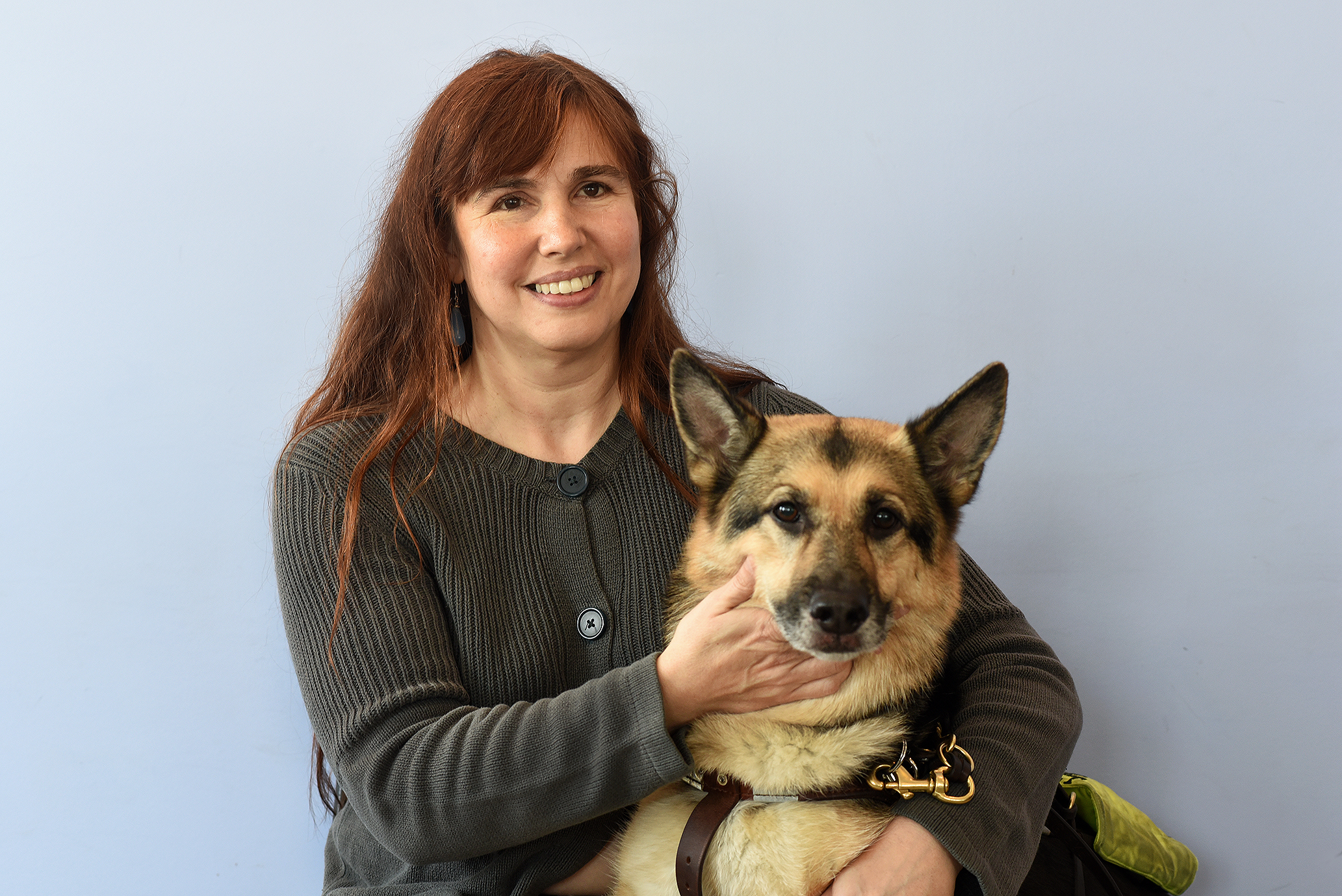
 Join Sam as she speaks with Amos Miller, CEO of Glidance. Miller will talk about his ongoing and soon to be released product GLIDE. To get on our email list, weekly show updates, or to provide feedback or guest suggestions, email us at [email protected]