[00:00:00] Speaker A: KPI.org.
[00:00:32] Speaker B: Sam.
This is KFAI 90.3 FM Minneapolis and KFAI.org this is disability and Progress. We bring you insights into ideas about and discussions on disability topics.
I'm Sam Jasmin.
[00:01:14] Speaker C: I'm Charlene Dahl.
[00:01:16] Speaker B: Thank you so much for tuning in this week. We hope to bring you informative and thoughtful, provoking and compassionate and educational information on dementia and Alzheimer's. Dr. Chi will be with us and talking about that. Thanks Dr. Chi, for joining us.
[00:01:42] Speaker D: Happy to be here.
[00:01:44] Speaker B: Can you start out a little bit by explain to the listeners who may not fully understand these conditions and what the difference is between dementia and how it differs from Alzheimer's?
[00:02:01] Speaker D: Sure.
So dementia is actually umbrella term for a group of symptoms that impair memory, thinking, problem solving or communication.
It's not a specific disease.
Well, Alzheimer's disease is the most common cause of dementia, accounting for about 75% of dementia case.
It is a specific brain disease.
So Alzheimer's is a type of dementia, but not all dementia is
[00:02:38] Speaker B: Alzheimer's. Gotcha.
So what actually happens to the brain when somebody develops Alzheimer's?
[00:02:49] Speaker D: Alzheimer's disease is actually characterized by two major changes in the brain.
The first one is called amyloid plaque.
This is the kind of abnormal changes or deposit of a protein fragment called a beta amyloid.
Then the other one is the neurofibriloid tangles. It's another type of aggregates that car they both build up in the brain and then causing inflammation in the brain and also progressively loss of neurons and the connection or communication between the neurons and then leading to brain shrinking and then symptoms of dementia.
[00:03:41] Speaker B: Okay, so I'm just curious because I feel like Alzheimer's gets used as an overall description for dementia, which if you're saying 75% of the cases are Alzheimer's, that would explain why so many people use it like that.
Wondering if dementia in general is like a normal part of aging or are they just medical conditions that could be avoided or treated?
[00:04:16] Speaker D: Right.
Well, dementia actually is a disorder. It's not normal part of the aging that we need to make sure the aging well is to quite a big risk factor when come to developing dementia. We know there are many people living to their 90s without dementia.
Normal aging sometimes we talked about really just involve maybe occasionally we may forget someone's names or misplaced items. Whereas dementia on the other hand involves a significant decline that in a sense of those impairment we talked about like memory, like language, communication or executive function that could interfere with their daily living and their independent function.
So that's the big difference.
[00:05:13] Speaker B: Can you talk a little bit about how these kind of things can dementia in general can affect daily living or individuals?
[00:05:21] Speaker D: Yeah. So in general, like, you know, you will see that patient may have a lot of changes comes to making their decision making. For example, they fail to managing their medications or paying their bills.
And then a lot of times also another common things we would notice is that they have trouble driving, navigating the directions.
In some cases they may be can be safety hazards concerns like they leave the stove on, forgot to turn them off.
And then other times could be more of comprehension and communication they don't understand.
And then a lot of cases we heard patient maybe get scammed because they easily get, you know, lose their decision making judgment when come to finance.
[00:06:22] Speaker B: So I feel like some of these things, like I've seen people close to me have issues with some of these. But it's not every day. It's not, you know, it's an occasional thing like hey, you left a burner on. You know, when does it become a problem? Like when.
I mean anytime is scary when you do something like that. I suppose. But like I bet a number of people are kind of nodding their heads out there now. Like yeah, I think I've done that.
When should somebody worry? Like when should a family member pay attention to that?
[00:06:57] Speaker D: Yeah. So it's all about, you know, frequency. Right. And then a pattern in the sense of if just once or twice maybe occasional cases, you know. And then a lot of times the memory become just if they say oh, forgot about this but they retract or retrace and they can really figure that out. Or sometimes occasionally memory lapse like I don't remember someone's name, remember we talked about. But they try to rethink about it, they can get those.
So I think those may be part of more of the normal aging side.
But dementia, we're talking about this more persistent pattern in a sense of we see the family members sometimes will report forgetfulness more persistent. There's a pattern and communication wise they have a lot more trouble expressing what they want to say then decision making. As we talked about really all that, it comes to how much impairment to one's daily function.
That's basically the distinction between normal versus dementia.
[00:08:12] Speaker B: I'm wondering at what point should the family member start seeking medical attention? How do you know when it comes to goes off the edge of being just a, you know, occasional forgetfulness and like what should cue them?
[00:08:30] Speaker D: Yeah, in general, I think if, if there are concerns I would just Suggest to seek for medical attention as soon as possible. Even you don't necessarily know whether this is more on the spectrum of normal aging or there are some warning signs or possibly something to be worried about. I would say don't wait.
Start to look for evaluations, see your primary care doctors or ask for referrals to see a specialist.
Really the early evaluation can identify treatable causes in a sense of. And also we know that nowadays with Alzheimer's disease, particular early diagnosis at early stage stage of the disease, there are much better treatment options. And then the outcomes from those treatment are much better than we intervene later.
[00:09:30] Speaker B: So let's talk about that early signs. So when you go to your doctor and say, hey, I'm having memory issues, I'm concerned, maybe they refer you to specialists of some sort of what kind of tests do they run? Like what do they. How do they determine what may be happening?
[00:09:54] Speaker D: Right. So it's actually pretty comprehensive evaluation. When come to dementia evaluation, we usually start with taking medical history and doing a physical exam. And we also collect, you know, collateral information from their family members.
It is actually very important. A lot of times we notice that the input from family members are way more accurate than one's own perception about their own impairment. Then followed by that we also do we call a cognitive and neuropsychological testing. This particular comprehensive testing will assess the memory, the reasoning and other cognitive function domains to really see whether this complaints about memory about their language are indeed more than just normal aging is beyond the normal aging into the impairment spectrum. And then there is additionally we do blood test.
We usually start with basic blood test because there are some reversible courses. For example, like thyroid function. We have hypothyroidism so tend to be mimicking some of the dementia symptoms. And then like a certain type of vitamin deficiency could also mimicking some of the dementia symptoms. So we want to look for if there are reversible causes that could explain one's memory problems.
[00:11:29] Speaker B: I see.
[00:11:30] Speaker D: And after that we also can do brain imaging. So the brain imaging studies such as like MRI or a CAT scan of the brain we can look for if there are evidence suggesting stroke could be because of vascular dementia other than Alzheimer's is another possible dementia.
Then we also look for changes in the brain in the sense of the pattern of the brain atrophy, which part of the brain get involved could help us differentiate specific type of dementia.
Nowadays there are so many advancement when come to diagnosis.
We also have quite a bit of tool sets. When come to differentiating different type of dementia.
For example, we have blood based biomarkers for Alzheimer's disease nowadays.
Recently, just about a year ago, we have several tests being approved by FDA for detecting Alzheimer's disease changes in the brain through a blood test.
Then we also have a very specialized PET scan which is a kind of CAT scan that can detect either glucose metabolisms deficiency or a specific deposit like amyloid and tau deposit in the brain. So there are many things we can do to help us differentiate and diagnose specific type of dementia.
[00:13:07] Speaker B: So I just want to step back a minute. It sounds like that blood tests come before the mri. What is it in the blood that that will show them what's going on?
It doesn't show, you know, plaques and stuff. Right,
[00:13:21] Speaker D: right. So there are two type of blood tests I mentioned. One would be the basic blood tests we talked about, like the screening of the thyroid function. Right, right. The vitamin deficiency. And then there is a specialized blood test which could be blood based biomarker testing.
So the blood based biomarker testing, as I mentioned earlier, this particular One called P Tau 2, this test was FDA approved recently, can pretty accurately predict how much changes we call the Alzheimer's disease like changes like the amyloid, the toxin buildup in the Alzheimer's disease patient that we can see how high the likelihood would be. Again, I want to emphasize that this, this test itself is not a definitive diagnosis.
It's not necessarily say okay, I have a positive test result, I for sure have Alzheimer's. It's actually more of we call the predicting one's risk how likely you might have some changes that we see in Alzheimer's disease patient put you on a higher risk profile of developing Alzheimer's disease. When coming to diagnosis of Alzheimer's disease, it really requires as I mentioned all the before all those tests, including the physical evaluation, the cognitive testing and the brain MRI imaging and other tests together really help us to define a definitive diagnosis.
[00:15:04] Speaker B: So is there a percentage of prediction or if you see this, then you just move on because you think okay, this is going to be a high likelihood. Let's get images.
[00:15:17] Speaker D: I see. So yeah, so the test itself helps to predict the likelihood, the percentage, you know, so there's a three tiers in the way that will be positive test means that the likelihood of one currently have some Alzheimer's disease like changes in the brain is higher.
But you know, it's very dynamic as I said, because you know, only determine one's risk at this time point. So next day, next year, maybe this will be changed differently. So we do need to dynamically monitor. I
[00:15:57] Speaker B: see. So you might monitor that before you go further.
[00:16:00] Speaker D: Right. And then also if the blood test itself is high likelihood, on top of that there are neuropsychological testing and clinical impression feel like this person has likelihood of having possible Alzheimer's disease with this blood test really increase the confidence of clinical diagnosis. Then in general, we would recommend the patient proceed with further evaluation to see if they're eligible for early intervention like drug treatment in this case.
Then for one that get a blood test that is negative, that means the likelihood of having any possible Alzheimer's disease changes in the brain brain is lower.
And then taking into account of additional clinical evaluation, neuropsych evaluation, we can, you know, help us to decide whether there's additional evaluation like brain imaging or advanced biomarker study like PET imaging. We need to further help us diagnose or determine one is actually more on the normal aging spectrum or in the early stage of the disease that need to be monitored.
[00:17:15] Speaker B: Dr. Cai, I'm wondering sometimes you hear sadly about somebody at a fairly young age that they are experiencing dementia or Alzheimer's symptoms. Can you tell us about the earlier onset of Alzheimer's that sometimes happens?
[00:17:38] Speaker D: Yeah. So in general, by definition, early onset Alzheimer's tend to be referring the symptoms that appearing before age 65.
In some cases, we may hurt patients even as early, like their 40s or 50s.
It's rare.
While most of the cases are not necessarily directly inherited, but they are small percentage of those early onset decases are caused by specific genetic mutations.
In this case, there are genes that are involved in generating the amyloid. As I talked about the toxin buildup in the Alzheimer's disease patient's brain.
[00:18:27] Speaker B: Okay. And how much has to do with.
You said the risk of it being genetic is low.
[00:18:39] Speaker D: It's, you know, in early, it's a little bit higher than late onset.
[00:18:43] Speaker B: I see.
[00:18:44] Speaker D: Yeah. So when we talk about late onset, means the symptoms could be a little bit like 65 or older. Right.
And those can be caused by more of a combination of genetic and lifestyle and the environmental factors over time.
While early onset, it's much more when come to the inherited specific we call familial or on the other hand autosomal dominant genetic mutations that intend to be running in the family.
However, not necessarily all the cases we could identify very specific genetic mutations. I think still a lot we don't know when come to the whole genetic architecture causing the early onset Alzheimer's disease, but about a portion of them we know those I was referring to a smaller percentage we know for sure with a very specific genetic mutations we have identified.
[00:19:54] Speaker B: In regards to, let's just say that you tend to see a more pronounced amount of people in a specific family that are getting either Alzheimer's or some type of dementia.
How is that determined? I mean, how is it that some get it and others don't? Does it have anything to do with just those markers or is it actual lifestyle or combination?
[00:20:22] Speaker D: Yeah, so as I talked, there are different scenarios. So very small portion of patient, they carry specific genes.
With those we call the autosomal dominant mutation genes.
When they have that, the likelihood of developing Alzheimer's is very high.
With that genetic risk, they pretty much determine will develop Alzheimer's disease at one point.
Those are smaller percentage, like I said, probably 5 to 10%.
[00:20:58] Speaker B: Okay. Very small,
[00:20:59] Speaker D: very small. However, majority of the patient are not all coming from genetic risk. So as you talked about, they may carry some risk genes. They are risk genes we know nowadays. For example, one of the major risk genes we have been telling our patients called is APOE4. This is one of the strongest known risk genes. But that the carrier APOE4 doesn't necessarily mean you will have Alzheimer's disease. As you talked about already, there are many of our in our community, like even friends or family members will come to me and say hey Dr. Cai, I have a copy of APOE 4. What should I do?
Am I going to get Alzheimer's? My answer to them is no. Not necessarily. Having a risk gene doesn't mean for sure you get Alzheimer's. It really is a combination which we talk about. There's also lifestyles and environmental factors and there are certainly many modifiable factors playing to role for one's risk, developing dementia or particularly Alzheimer's in this case.
[00:22:08] Speaker B: Could you talk about some of the environmental factors that could raise one's risk?
[00:22:15] Speaker D: Yeah. So environmental factors for example like exposure, toxin exposures.
We have also have studies showing that there are air pollutions, water contents and then other well known environmental factor. For example the exposure of head trauma, traumatic brain injuries and other risk factors.
[00:22:38] Speaker B: Sports.
[00:22:39] Speaker D: Sports, Correct. Exactly. And then when come to lifestyle, there's a lot more also play a role into contributing one's risk of developing dementia. There is quite robust study showing that over one's lifespan there are up to 45% of the risk that are modifiable. When come to slowing or reducing one's risk of developing dementia, such as depression, smoking, hearing loss or lack of physical activity, lack of social engagement, then sleep is Another also diet. It plays a big role.
Then there's also cardiovascular risk like diabetes, high blood pressure, high cholesterol that are not well controlled can all contribute to one's risk of developing dementia.
[00:23:45] Speaker B: I'd like to focus a little bit on diet and sleep. Sleep seems to be a, a big topic of conversation that is happening now. Is this something I mean they've always suspected, right? You need to get more sleep so you're more, you know, aware and cognitive is more is just better.
I'm wondering is there stuff that they've just discovered where that emphasizes all this stuff they're talking about on how much sleep one needs?
[00:24:19] Speaker D: Well, it's not necessarily just discovered. This has been a long going study when come to the sleep linked to dementia.
So for you know, when come to talk about Alzheimer's disease particular there have been a lot of study because what we have found is that when we sleep that's where our brain is actively cleaning out all the brain, the waste waste in our body, in our brain. And so if you don't get enough sleep, you don't have enough time to clear out the, the waste, the toxin buildup in the brain. So there are a lot of established evidence from science, you know, scientific field showing that if we can improve one's. One's sleep particularly we call the REM sleep deep sleep, that kind of sleep where your brain is actively clear out all the toxins out of the brain that can slow down one's risk or reduce the risk of having dementia.
Then now there are several studies ongoing trying to see if either treating those patients with sleep problems in a sense of like insomnia either with fragmented sleep or not enough the REM sleep as we talked about, improve the quality of the sleep to see if they can impact or reduce the risk of having developing dementia.
And then two would be could even can reduce or slow down the progression of the patient that already been diagnosed with Alzheimer's or dementia.
[00:26:15] Speaker B: So it sounds like we covered that heart disease can certainly increase it.
I'm guessing that blood pressure, you know, like high blood pressure and diabetes, does that increase your risk too?
[00:26:29] Speaker D: Yes, strongly.
So they actually we now know that conditions like you know, diabetes, high blood pressure that damage the blood vessels in the heart, they also can damage the blood vessels in the brain.
And there are a lot of study demonstrate that there is a very high association between all this vascular disease with Alzheimer's disease and other type of dementia would be vascular dementia.
So managing those conditions make sure your blood pressure is well controlled, make sure Your blood sugar is well controlled and then reduce cholesterol. Those are key components of reducing the dementia risk.
[00:27:25] Speaker B: Dr. Cai, I'm wondering, so it sounds like we've covered sleep. I'm guessing like seven to eight hours a night? They're suggesting yes,
[00:27:36] Speaker D: yes.
[00:27:37] Speaker B: And also the risk factors in regards to controlling your blood pressure.
Diet.
Let's talk about exercise. What is an exercise acceptable amount that one should be doing?
[00:27:56] Speaker D: Yeah. So in general the Alzheimer's association recommend for physical exercise Is to average 20 minutes per day of moderate intensity of exercise.
That would be protective.
Physical exercise could help for one that having promoting the cardiovascular health.
And you know those kind of exercise can also improve the blood perfusion in the brain. And then there's many other series also suggesting that with exercise there are changes in in the brain, energy metabolisms. So all that are really beneficial when come to brain health.
[00:28:55] Speaker B: So can say we're just doing as much as we possibly can to avoid some type of dementia.
Can that really reduce our risk?
[00:29:12] Speaker D: Yeah, there are actually quite a bit of recent several large studies, clinical studies that really support the measurable benefit with a combination of lifestyle changes including healthy diet, managing cardiovascular risk, sleep, exercise and also cognitively active. They are using this, we call it multimodal lifestyle intervention.
And they found that they can reduce the risk of developing dementia compared to those that do not do it at all.
So the risk can be significantly reduced by even 20 to 25%.
The most recent study by Alzheimer's association called US Pointer Trial that was released the information from last year, they have found that also a structured lifestyle intervention in the sense of you have nutrition consultation, you have coaches that monitor you see how your physical and cognitive exercise has been done.
Really those kind of we call structured lifestyle intervention seems to be even more effective than we call the self guided lifestyle intervention.
So overall it is important as you're talking about to have a kind of combination of actively involving lifestyle changes that showing a very consistent reduction when come to reducing their dementia risk.
[00:31:11] Speaker B: I'm wondering, you see various signs of how what happens to people when they go through dementia or Alzheimer's such as communication issues which would be how they communicate with their loved ones or just the everyday person.
Also I think their frustration level but I noticed that it really changes depending on one person to another.
How do you know? Like are there specific types of dementia that are known for this is the types of behaviors you see and others that aren't or is it just depending on how that person reacts to what they have?
[00:31:58] Speaker D: Yeah, so you know different Type of dementia certainly have different type of presentation.
Not necessarily always the case. Like I said, you know, while we keep thinking that dementia affects one's memory mostly, however, we also know that there are dementia conditions that could affect one's communication, you know, like language particular. Right. And then some dementia may also affect their visual perception.
They can't see things very well or perceive the depths very well. And then other type of dementias could present with just behavior changes in the sense of they are more moody, they are more irritable, lack of sympathy, they are more empathic when come to emotion.
And then also they are dementias could be more effects.
They have visual hallucinations, they have seen things or hearing things that are not. There are many kind of manifestation clinically and doesn't necessarily all come to start with memory.
[00:33:22] Speaker B: Can you talk about some possible misconceptions or stereotypes about living with dementia or Alzheimer's that people would have.
[00:33:33] Speaker D: Yeah, so I. I think, you know, I talked a little bit about that already. Like say is there most common misconception would be it's just a memory loss. Right. So other than memory loss, there could be other things as we talked about, like it could be affecting thinking, behavior, personalities.
And another misconception we talked about is that dementia is just a normal part of the aging. Not today we highlighted that is not the case. Dementia is not just normal aging, it's actually a disease.
Is brain having disorders.
Another misconception would be people with dementia can't understand or feel anything. I want to make sure that actually patient with dementia, they actually can return emotion and there is a desire for connection. And they also always want to maintain their independence or dignity even after their memory fades. So I think it's important to be mindful about that.
And then another misconception would be it's a mental illness.
Dementia is actually neurological disease is their brain is having problems, they are slowed down or injured because of the toxin buildup in the brain.
So it's not a psychiatric condition. It's actually a neurological condition.
[00:35:20] Speaker B: So when it comes to family support, how.
What is a good thing that you tell families? Like how they can best support somebody that's starting to see symptoms that. Because I do believe that people start seeing things themselves and then maybe later they don't realize because, you know, they have that a more.
It seems like they have more trouble realizing what's going on. But.
But who knows, right? So how can families best support somebody who's going through dementia and going down that path?
[00:36:00] Speaker D: Yeah, that is important. Right. First I Think the most important thing is make sure, provide support.
Because I do think that at the beginning it depends on different situations. A lot of times our patient may not see the impairment.
Sometimes it could be that some of that cases may be involved with self denial. Right. They don't want to admit they have some input impairment. Other times could be a lack of insight as a part of their disease. Right. They can't make that decision. They really don't necessarily see that.
So how can family member help their loved ones to really navigate through, you know, and then recognize their issues.
So I think at least, you know, start with conversation and talk about seeking for medical advice.
You know, at least if the loved one is willing to even come in to see the doctor, have the conversation, get the evaluation started, there'll be a big step forward. Right. And then, you know, and I think a lot of times our loved ones tend to their major focus is really wanting to make sure they can maintain their independence as long as possible. Right. So that's usually what's their goal. So I think at the earliest stage that is possible. Right. We talked about, you know, we could, they can still, you know, while they have some struggles, maybe remembering things, need some help managing their medications or finance.
We could have make sure the family members or caregivers that provide support system around to allowing them managing through those kind of we call daily life, daily living tasks to make sure they can still stay at home, you know, maintain their independence while getting well structured support and supervision in that.
However, you know, a lot of times when will be a good time to even introduce the discussions about whether it's time for them to consider, you know, staying home is not safe anymore or they need a little bit more supervised environment to be safer, then that's another discussion. Right. Kind of need to kind of determine and decide.
Another I think a key component when come to family members is a patient or loved ones start to develop those kind of personality changes, behavior changes. Right.
Or that's where the things become more challenging. How can we navigate through that? I think the family members and the caregivers need to kind of get educated and trained on a lot of the hard times, really learn how to navigate through this kind of situations.
[00:39:34] Speaker B: So I wonder what support is for, you know, when family members hear this, I don't think that they're always aware of what's going to be asked of them or what kind of strength they're going to need.
It really is, I feel like a long haul. Usually, you know, when people get diagnosed, I understand some People live as long as others. But some. Some can go for a long time.
And so what are. What should family members look for for support for them so they can stay strong?
[00:40:17] Speaker D: Yeah, so there are several support systems around available, you know, locally. You know, in general we there's Alzheimer's association local chapter.
They tend to have a local support group for dementia patient or patient even at the early stage. We call living in with mild cognitive impairment stage that is pre dementia stage.
So they have those local support group. There's also 247 helpline that are available from Alzheimer's association nowadays. They also developing a phone app that can you know when your family members had a questions they can wander answer quickly that they can reach out and get those information or answers hopefully soon.
And then another support would be like there are your primary care doctors or your specialists often have social workers in place.
They can help the families and the patient navigate through kind of early planning looking for and connect them with either adult daycare programs, local support groups and also you know kind of managing through. So there are many resources available additionally like for example in the University of Minnesota there are several caregiver support group program running by public health School of Public Health. And also like in neurology per se like my center Grossman center, we also have a very strong support group providing to patients living with dementia and Alzheimer's. So those are all available resources that if any questions they can reach out be happy to help the patient and the family going through this.
[00:42:28] Speaker B: You talked about treatments or therapies and I feel like it was discussed that they may be different on early onset as opposed to later. Can you talk about the differences and what they might be?
[00:42:45] Speaker D: Yeah, so probably I want to say that currently in general there's no cure for Alzheimer's or other type of dementias.
However, when come to Alzheimer's disease there's a little bit more treatment available.
And the treatment we particularly refer to are recently FDA approved medications that available for earlier disease stage.
So early in the sense of either diagnosis in the stage of mild cognitive impairment due to Alzheimer's or mild dementia, mild Alzheimer's disease dementia stage. So when patient in those stage.
The drug treatment I was referring to are called antiamyloid, which is the toxin. We talked about monoclonal antibody. So it's an antibody, it's an infusion therapy and that has been shown to slow down the progression of Alzheimer's disease at early stage.
[00:44:00] Speaker B: Sorry, I just want to stop you just a minute. What do you consider early stage?
[00:44:05] Speaker D: Early stage in a Sense of while they have so mild cognitive impairment stage is a diagnosis we call pre dementia. In the sense of they can have some impairment in a sense of memory or executive function or language problems, but not severe enough to affect their daily living. In the sense of they can still live at home, they can still managing their function, but they have this impairment we call mild cognitive impairment Stage mild dementia in general is that there are some impairment either they can't drive anymore safely or they need help with management of their medications, management of their finance by others.
So there are some impairment when come to their daily living. However, they still can manage their own self care in the sense of, you know, they can take care of themselves in a sense of dressing up, bathing them, you know, doing those basic function. But still at an early stage we still consider as mild dementia stage.
So those two stages are good criteria. We also have a very specific clinical decision to make whether they are eligible.
That being said, this line of medications can slow down the progression of the Alzheimer's disease by clearing the particular toxin in the brain called amyloid. As we talked about earlier,
[00:45:45] Speaker B: it actually clears it.
And so are there big risks with these medications now?
[00:45:53] Speaker D: Well, in general there are risk.
The major risk being reported through the clinical trial associated with this line of medications are brain swelling or brain bleeding. Sounds serious.
However, you know, there are certain particular risk factors associated with developing those side effect.
And the particular risk factors such as, you know, when you had a prior stroke before, or you using, you know, blood thinners like.
[00:46:36] Speaker B: Yeah.
[00:46:36] Speaker D: Or warfarins, those kind of medications tend to put them on a higher risk of having those side effects.
And another risk factor would be the genetic risk. As I mentioned Apoe 4 earlier, this particular risk genes tend to be associated with a higher risk of developing side effect.
So before we start any of this kind of line of medication, those tests to make sure to evaluate one's risk versus their benefit and then we have a pretty comprehensive discussion with the patient and family to let them know that what are the benefit, what are the risk if the benefit outweighs the risk? And then we think this is a good candidate to move forward. We talk to them and they want to go forward for the treatment.
We closely monitoring them, doing the treatment to make sure they're not developing any of those side effects. If they do, we'll stop the infusion and then provide treatment as needed and then monitoring them more. Most of the times those kind of side effects tend to be reversible and then not necessarily having a lot of persisting side effect.
Afterwards.
That being said, I want to say that there are limiting factors with this line of medication. They are not cure again. They're really just slowing down the disease progression. And the slowing down, we're really talking about maybe 20 to 30% of slowing down.
So still a lot needed when come to treatment of Alzheimer's disease. And certainly we need a lot more treatment for other type of dementia which we don't have right now.
And then back to the early question. Different stages of the dementia does have different type of treatment. As we talked about the early times, there are more effective treatment that can slow down Alzheimer's disease progression by 20 to 30% while you know, other type of treatment for either mostly focusing on symptomatic improvement.
Those kind of medications are more oral medication.
The oral medication, you know, we used some of our patient may heard about it called, you know, either Dalampazel, Rivastigma or Mementine. Those kind of oral medications can kind of temporarily stabilize or improve their cognitive symptoms.
But usually they are not long lasting, tend to be worn off after a period of time when they are on this line of medications.
However, there are maybe one or two large study showing that over the period of five years or longer even they are on this kind of symptomatic treatment. They may be a very tiny bit of slowing or reducing their motility or mortality. In that reason I actually keep those patients on if they can tolerate without any side effect.
[00:49:55] Speaker B: That's kind of cool. Do you see that we'll be able to at some point slow this significantly or what do you think is coming down the pipeline?
[00:50:07] Speaker D: Yeah, yes, I do think there are hope there. I want everyone that listening to this program to know that being diagnosed with Alzheimer's disease or other type of dementia doesn't mean the end of the world.
There are a lot of hopes, there are a lot of breakthroughs that are coming through nowadays.
When come to as we talked about 20 years ago, five years ago, we don't have any treatment disease to even, you know, the infusion therapy was not available only until 2023.
You know, it's only three years ago we started to offer in this line of medication. However, down the line there are many new drugs has been currently being developed in the pipeline. Many of them are improving in the sense of trying to get the infusion therapy better to have a less side effect so we don't have to worry about the brain swelling, brain bleeding. Another approach is making a better kind of infusion therapy target at amyloid. But remember, amyloid is only one part of the story.
Alzheimer's disease or other type of dementia can be quite complex. So there are many other type of treatment currently being developed such as targeting on Taurus, targeting on neuroinflammation or restore the neurons function and then make them more healthier.
And you know, there are many of that treatment are currently in the pipeline. Our hope is that in the next five years or so we maybe have a more effective. We call combination therapy. Right. So not just one drug could be combination of therapies that are available for our patients patient that you know and also not only just for Alzheimer's disease patient who could also have a combination therapy for other type of dementia become available.
[00:52:07] Speaker B: So, Dr. Cai, I presume that you're. There are studies that people can get into. Yes,
[00:52:13] Speaker D: yes, there are several clinical trials ongoing and you know, many of that. You can either reach out to us if you are interested to sign up up for any of those studies and then even just to know what's out there to get just information about it. You don't have to sign up if you don't want to, at least to get information available. There are newsletters we send out every quarter or so to our patient and their families to get informed about what's going on.
[00:52:50] Speaker B: Is there a website people can go to?
[00:52:53] Speaker D: Yes, they are. I can send that to you. You can share with our readers later on.
[00:52:56] Speaker B: I will. That would be great. And then if people want to find out more about Alzheimer's or dementia as well.
[00:53:06] Speaker D: Yes.
[00:53:07] Speaker B: Is there any final message you'd like to leave with our listeners?
[00:53:13] Speaker D: I think, you know, I want everyone to be aware that we are entering this new era of dementia care.
There are much more we can offer nowadays.
So being diagnosed with dementia doesn't mean this is the end of the world. We now have early diagnosis and early prevention and early treatment that can help slow this down. So there are many more to come.
[00:53:42] Speaker B: Dr. Cai, thank you so much for your time.
[00:53:45] Speaker D: Bye bye.
[00:53:46] Speaker B: This is KFEI 90.3 FM Minneapolis. And KFEI, this has been Disability in Progress. The views expressed on the show are not necessarily those of KFAI or its board of directors. My name is Sam. I'm the host of the show. Charlene Dahl is my PR research person. Erin is my podcaster. Tonight we were speaking with Dr. Kai on dementia and Alzheimer's. Thank you so much for joining us and we would love to hear from you. You can email us at Disability and
[email protected] that's disability and progress. @samjasmond.com Good night, Charlene.
[00:54:24] Speaker C: Good night,
[00:54:41] Speaker A: KPI.org.
 What is the difference between Alzheimer's disease and dementia? What are the early warning signs, and how do these conditions affect individuals and their families?
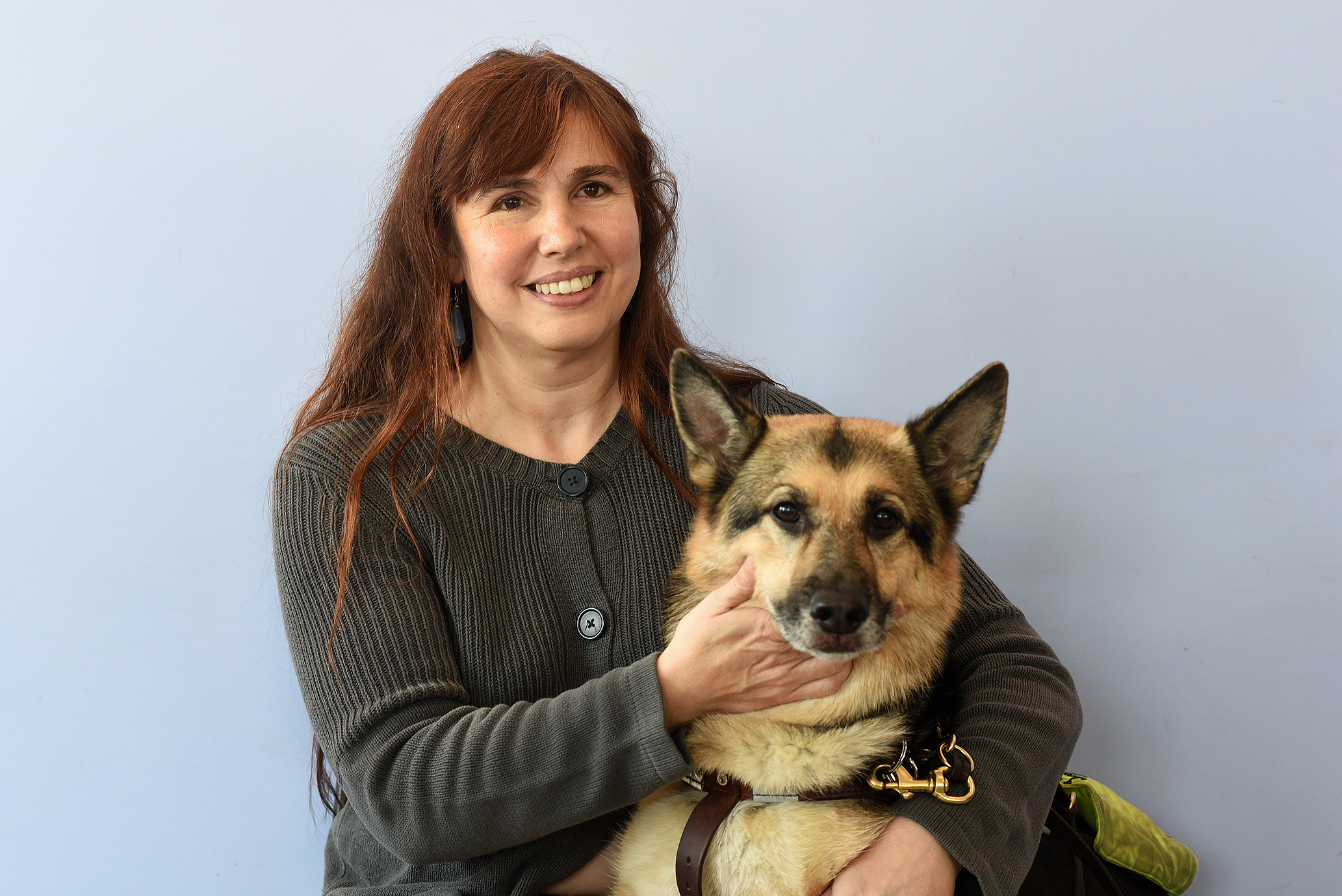
This week on Disability and Progress, Dr. Dongming Cai joins us to discuss Alzheimer's disease and other forms of dementia.
What causes these conditions? How are they diagnosed and treated? What advances are being made in research, and what resources are available to help individuals living with dementia and those who care for them?
Join us as we explore these questions and more in an informative conversation about Alzheimer's disease, dementia, and the importance of understanding these conditions.
To get on our email list, receive weekly show updates, or offer feedback/guest suggestions, email [email protected]!