Episode Transcript
[00:00:00] Speaker A: KPI.dotorg.
[00:00:32] Speaker B: Sam,
[00:01:01] Speaker A: You're tuned to KFAI 90.3 FM, Minneapolis and KFAI.org this is disability on Progress where we bring you insights into ideas about and discussions on disability topics. I'm Sam Jasmin.
[00:01:15] Speaker B: I'm Charlene Dahl.
[00:01:17] Speaker A: Tonight we're in the studio with Dr. Hatham Hussain. I hope I got that right.
He is with us talking about strokes.
And Dr. Hussain, thank you you so much for joining us.
So can you give us a little bit of history on you? Like exactly what do you do pertaining to strokes and your role with the U.
[00:01:45] Speaker B: Hello everyone.
Thank you for having me.
My name is Haytham Hussein. My first name is difficult to pronounce. So I admit if you think of your thumb, your finger, your thumb, you say hi. Thumb is a kind of approximate way to pronounce my first name.
I'm from Egypt. Originally. I went to medical school in Egypt, Cairo, Egypt.
And I did my residency training there as well. It was a combined neurology and psychiatry training program.
And then after that I came to the United States in 2005 and I was a research fellow for a few years and then did another residency in neurology and a fellow up and a fellowship in stroke.
And then I started my practice in 2012.
I started in an academic institution, Baylor College of Medicine first and then I came to the Twin Cities and I was the stroke medical director of Regions Hospital Comprehensive Stroke center for six years.
Then I moved to the University of Minnesota about six years ago.
This is where I practice. Now I'm a professor in the Department of Neurology.
I am a stroke specialist.
I see patients in the hospitals, m Health Fairview hospitals, either in person or via telemedicine and I have a clinic where I also see patients.
I am a stroke specialist, so I see all stroke related conditions.
I teach medical students and residents and stroke fellowship trainees.
That's what I do. I am also part of the American Stroke Association National Advisory Board.
And so I get to observe, you know, initiatives done that are at a national level. So that's kind of a privilege.
[00:04:10] Speaker A: Thank you. Well, you get kind of the best of all worlds.
So what if you can give explanation of what a stroke is and what happens in the brain when one occurs?
[00:04:27] Speaker B: Stroke, yes, is a brain condition and it has to do with the blood supply of the brain.
The brain, like any organ in the body, needs the blood to provide the oxygen and the nutrients for the cells.
So if there is a disruption in the blood supply going to a part of the Brain, Then the damage that happens is what we call stroke.
That disruption can be from loss of blood supply because of a blockage of an artery.
So the part of the brain that is getting blood supply from that particular artery then loses the blood supply and then dies.
Or that an R3 ruptures, bursts, causing bleeding.
And that also causes a type of damage in the brain that is a stroke.
So there are two types of stroke. Ischemic stroke, that is the type that happens when there is a blockage of an artery.
And hemorrhagic stroke, that's the type that happens when there is a rupture of an artery inside the head.
[00:05:43] Speaker A: Ah, okay.
So there are different types of strokes. Then how do they differ besides how they happen?
[00:05:58] Speaker B: This is a very important question, Sam, because the two types of stroke, ischemic stroke and hemorrhagic stroke, can appear very similar.
And there is no way that we can tell which type.
[00:06:16] Speaker A: Oh, wow.
[00:06:17] Speaker B: By just looking at the person. We have to get a CT scan or an MRI or some sort of imaging picture of the brain to be sure about the type of stroke people have.
This is so important because the treatment is different for the different types.
You know, sometimes people, when they feel they are having a heart attack, they take an aspirin.
We discourage taking any aspirin when someone is worried about stroke.
Aspirin, yes. May help if there is a blockage, but may make bleeding inside the head worse.
[00:06:58] Speaker A: Oh, I see. So depending on which kind of.
[00:07:02] Speaker B: Yeah, so we don't want anyone to take an aspirin. If they think they're having a stroke, they just call 911 and come to the hospital.
[00:07:08] Speaker A: So who's most at risk in the United States? How common are strokes, and who is most at risk?
[00:07:16] Speaker B: Yeah, so, you know, stroke is a condition that has risk factors.
Some of the risk factors are in our hands, modifiable, that we can control, we can change.
And other risk factors are not modifiable. For example, age. Age is a risk factor for stroke. The older we get, the higher the chances of stroke.
Pollution.
These are things that we cannot control.
Stroke is the fifth cause of death in the United States.
[00:08:00] Speaker A: Oh, wow. Okay.
[00:08:02] Speaker B: Yeah. One in six deaths from. From cardiovascular disease are due to stroke.
There is a stroke that happens every 40 seconds in the United States.
The total number of strokes in a year is. In the United States is kind of around 800,000 strokes to a lot.
And we talked about the different kinds. Ischemic. There is a blockage and hemorrhagic. The majority of the strokes, about 85% is the ischemic type, where there is an occlusion of a blood vessel, and then the 15% is the rupture or the bleeding inside the brain.
In the United States, the distribution of stroke and how dangerous a stroke is, the mortality, the death caused by stroke is different in different regions of the United States.
So there is this part of America which we call the stroke belt, where the risk of death from stroke is highest.
And these are the states in the south and the Southeast.
[00:09:35] Speaker A: And is that.
Is that diet related or what would that be related to? Why the highest there?
[00:09:45] Speaker B: Well, there are a number of conditions.
You know, the.
There is what we call the social determinants of health.
These are conditions that are not medical conditions. They are not.
You know, having high blood pressure, for example, is a risk factor for stroke, but that's a medical condition that predisposes people to stroke. And there are also social conditions that predispose people to stroke.
[00:10:16] Speaker A: Such as.
[00:10:18] Speaker B: Such as poverty.
[00:10:20] Speaker A: Okay. Yeah.
[00:10:22] Speaker B: Such as race, education, employment, food insecurity, health insurance, neighborhood safety.
And so you can see how this mix of medical conditions and social conditions might be concentrated in some parts of the United States that end up leading to this phenomenon of stroke belt.
[00:10:59] Speaker A: Yes.
High blood pressure you talked about. Also, I presume smoking has a play in there.
[00:11:09] Speaker B: Of course. Yes.
You know, of course, high blood pressure is probably the most important risk factor for stroke and other, what we call cardiovascular conditions, you know, heart disease and all of that.
And the trick with high blood pressure is that it is silent.
It does not give symptoms. Most of the time, people have elevated blood pressure and they are unaware until something happens, until a stroke happens or a heart attack or, you know, a blood vessel in the eye ruptures, or a person has sudden blindness or something like that, and then they realize that they've had high blood pressure for some.
And that's a very important idea that people have to know without measuring, without checking blood pressure. It is very unlikely that anyone would know that they have high blood pressure. And it's a very common condition. It's almost half, like 45% or something like that of the United States. Adults have high blood pressure.
[00:12:34] Speaker A: So when you talk about high blood pressure, are you talking about slight high blood pressure or.
You know what I mean? Because there's a.
It can be up and down the scale here. So I know some people really high blood pressure, and some people just moderately or just a little bit higher than normal.
[00:12:55] Speaker B: Yeah, that is just a perfect question.
So the medical community's understanding of what constitutes high blood pressure. The definition of high blood pressure has changed over time.
We used to allow a little bit of high blood pressure and we used to call it pre hypertension. It's a little high, but not that high.
[00:13:24] Speaker A: Gotcha.
[00:13:25] Speaker B: And then once it hits like 140 over 90, you know, blood pressure comes in two numbers, a top number and a bottom number. Systolic and diastolic.
So 140 systolic or 90 diastolic, that was the definition.
But we learned over the years that even the slight increase in blood pressure between 130 and 140systolic, between 80 and 90diastolic, that was the range that we used to call pre hypertension.
We discovered that it causes a lot of problems.
There are like community based or population based stroke studies that showed that half the people in the community that had strokes actually had a little bit of elevated blood pressure. So in 2017, the American College of Cardiology and the American Heart association changed the definition of hypertension of high blood pressure and brought it down. So now 1:30 systolic or 80 diastolic has become the definition of high blood pressure.
[00:14:42] Speaker A: Ah, I see. Okay.
[00:14:45] Speaker B: Now if you check your blood pressure once, you might get one high number. Yeah, yeah, because you were just, you just climbed a flight of stairs or you just had an argument with a kid or something.
But that is not enough to make the diff the diagnosis of high blood pressure.
So that's why we want people to take ownership of their blood pressure, to have blood pressure machines at home to check the blood pressure regularly, some regularity of blood pressure. Must have a primary care doctor and you must go to regular checkups.
But the more we check, the more we have like an understanding of where a person's blood pressure lives most of the time.
[00:15:32] Speaker A: Dr. Hussain, I'm wondering about the role of diabetes. Does that play a role at all? And if so, how?
[00:15:41] Speaker B: Yeah, so diabetes is of course an important risk factor for stroke and it causes stroke through different mechanisms.
So high blood pressure of high blood sugar and diabetes over a long time causes damage to the small arteries in the body.
So the arteries of the eye, the arteries of the kidney, and also the arteries of the brain.
And this causes what we call small vessel disease of the brain. These are usually small strokes from blockages of the small arteries that perforate the deep tissue of the brain to give blood supply to the deep tissue of the brain.
And the other way, you know, high sugar can and diabetes can cause stroke is that it is an Important risk factor for plaque buildup in the large arteries.
So the big arteries that come off the heart, the aorta, the big arteries that go in the neck to supply the brain with blood, like the carotid arteries.
These big arteries, over time they develop blockage in them. Plaque buildup and high sugar and diabetes contribute significantly to the buildup of plaque and blockages within the arteries.
And of course, then there is the effect of diabetes and high sugar on the heart itself.
Because heart disease also leads to stroke if someone has a weak heart or if someone has abnormal heart beating rhythm like atrial fibrillation.
These are conditions that would cause blood clot formation within the heart. And then the little pieces of the clot would break off with the pumping of the heart, go the blood flow and, and give people stroke.
And, you know, there is diabetes and there is also pre diabetes.
This is kind of the people who are on their way that they don't have normal blood sugar, but it's not high enough to call diabetes.
There is a blood test that we do called A1C, right. To check for that.
There is a recommendation for adults to, you know, of course, everyone, everyone, Sam and, and Charlene, every person has to have a primary care doctor from birth to old age, because this is where prevention happens, right? You go to your primary, you check your blood pressure and your sug cholesterol. So the recommendation is every three years, people who, who are not diabetic may have a little bit risk factor, overweight or something, that they should get their A1C checked to find out if they are developing diabetes or pre diabetes.
[00:19:19] Speaker A: Gotcha.
[00:19:20] Speaker B: And of course, it's related to the obesity epidemic that we have in the United States.
[00:19:26] Speaker A: What kind of lifestyle changes can people make to significantly reduce their stroke risk?
[00:19:35] Speaker B: Yeah.
So in the American Heart association and the American Stroke association, we have this campaign we call the life essential 8.
So the 8 things that people would do, lifestyle related to protect their heart and their brain from heart attack and stroke.
Of course, we talk about healthy diet, regular exercise, good sleep, avoiding smoking and drug use, having a good blood pressure, blood sugar and cholesterol, and having, you know, like, taking care of your body weight.
So if we start with the first thing that comes to mind and always we get questions about diet.
Healthy diet is, you know, it's a big thing, you know, because it's not easy to really change diet for a doctor. I can just tell a patient, yeah, go eat healthy diet or Mediterranean, Ukrainian diet or stuff like that, and then goodbye. Yeah, people are just completely lost because they're, they grew up eating certain foods, certain ways, cooking in certain ways. You smell what your mother cooked, you know, from your early childhood, and you get emotionally attached to certain things. And you, your brain is programmed when you go to the supermarket, which aisles you go to and which products you look at. It's a very complicated thing. It's not an easy thing to change a diet.
But there are certain concepts, I guess they might help, you know, salt or sodium.
Sodium increases the blood pressure and so we don't want people to eat too much sodium.
And sodium is in the salt.
[00:21:55] Speaker A: So people who have high blood pressure, everything nowadays.
[00:21:59] Speaker B: Yeah. And sodium is not just in salt, it's also in all the preserved food.
[00:22:04] Speaker A: Yes.
[00:22:05] Speaker B: And fast food and all of that. So we want people to eat fresh vegetables and fruits, you know, like half or more than half of what you eat should be fresh vegetables and fruits.
That's what we call the Mediterranean diet. When you use salt, especially if you have high blood pressure or at risk of having high blood pressure, we like people to use the salt substitute.
So there are these salts, the same salt aisle in any supermarket, probably you'll find, you know, low sodium salt substitute or sodium free salt substitute.
And these are good because they won't increase the blood pressure as much.
We talk about, you know, the type of animal protein that people eat, beef or red meat increases blood pressure and increase, increases cholesterol. So we want to be able to eat a lot less of that.
Fish is the best kind of animal protein, and I love it is the basis of the Mediterranean diet, which is in the guidelines now for stroke prevention. We talk about the Mediterranean diet. But the Mediterranean diet is a fish based diet.
[00:23:33] Speaker A: Yeah.
[00:23:34] Speaker B: And, and it's very interesting actually that, you know, omega 3, you know, this fish oil, omega 3, you can find them in capsules or pills.
And studies showed that they actually don't prevent stroke or heart disease, unlike eating fish.
[00:23:56] Speaker A: Fish.
[00:23:57] Speaker B: Yeah. So when you try to pick one component of the, you know, naturally existing fish and put it in a pill and take it, it doesn't work.
But when you eat more of the fish, that works.
[00:24:10] Speaker A: And do they have an idea why that is?
[00:24:15] Speaker B: Yes, because when you eat the naturally existing fish, you're eating like a nutritious, a complete nutritious diet.
You know, we think that, you know, one component has the best benefit, but in reality, it's the whole thing.
[00:24:40] Speaker A: Yeah.
[00:24:41] Speaker B: That provides the benefit, not when you pick one component of it.
And it also is a reflection probably of the lifestyle and the choices that people make, you know, so fish. And we also talk about trying to use less butter and more olive oil.
There is, you know, also the avocado oil that has low, like the unsaturated fat percentage is high.
And that is kind of similar to olive oil. So it, it has probably the same preventative benefit.
But the Mediterranean oil is, Mediterranean diet is based on olive oil as well.
[00:25:38] Speaker A: Let's talk about stroke signs. What are some of the most important warning signs if somebody is wondering if somebody's having a stroke?
[00:25:49] Speaker B: Well, the stroke symptoms depends on where the stroke happened.
So as you know, the right brain controls the left body, the left brain controls the right body.
The language center is in the left side of the brain, the map to understand where your arm is and where the ceiling from the floor and all that in your mind, it's on the right side of the brain and so on. So, but generally speaking, stroke tends to be a sudden condition, not a gradual build up of symptoms kind of condition. Most of the time people will remember having a moment when something changed.
Weakness of one of the arms compared to the other. One of the legs compared to the other. One half of the body compared to the other half.
Droopiness of the face, like you smile and you look at yourself or you ask someone to smile and you look at them. You notice one side of the face moves and the other side does not move as well.
Loss of sensation or numbness of one side of the body.
Difficulty speaking either when you talk and you feel like your tongue is heavy and your lips are heavy and you sound like you're drunk and you're not drunk. So slurring or not slurring, but difficulty finding the word, difficulty articulating what you're thinking, you know you want to say something and you're unable to speak, or the other issue is you're able to hear but you cannot decipher what people say.
So this is language related, you know, symptoms, loss of balance, all of a sudden a person is unable to walk or walk very unsteadily.
Eye related symptoms.
So painless, sudden loss of vision in one eye, one eye goes blind, or both eyes unable to see. One half of the visual field can see the right side of the visual field, but not the left side. That can also be a stroke warning sign, or you're seeing double all of a sudden.
So eye related symptoms can also be a stroke warning sign.
And these apply to ischemic stroke when there is a blockage of an artery, or hemorrhagic stroke. So either one, when there is A rupture of an artery. That's why it is super important to come to the hospital as soon as you can, because we need to take a picture of the brain to tell which one.
With brain hemorrhages, there can also be pain, sudden, severe, you know, headache or pain in the head. Sometimes also goes to the neck. That can be a sign of a serious, you know, brain bleed.
[00:29:13] Speaker A: So is it better to call 911 or rush them to the hospital?
[00:29:18] Speaker B: Call 911 because of course, that they are fast, they come quickly and they do an assessment. And their assessment includes checking your blood pressure and doing, you know, important things for you.
But the other important thing about not calling 911 is that the ambulance crew call the hospital on their way.
And so the stroke doctors and the stroke teams rush down to the front or the area in the hospital where people come, patients come and rush them to a CT scanner, skipping the emergency room, because time is brain.
We need to make the diagnosis as fast as we can and we need to give the treatment as fast as we can. And this is another important message, Sam and Charlene, that time is brain. And we have treatments and we are always very hopeful that we can help people.
And the faster we give the treatment, the better the outcome. Some treatments have time window. We cannot give it beyond a certain period of time.
And even when we give it within the time window, if we do it, the earlier we do it, the more benefit people get from it.
[00:30:51] Speaker A: Are there symptoms people often overlook when they're seeing strokes? Things happen that they might attribute to something else.
[00:31:04] Speaker B: Yes, of course, when the stroke symptoms are quite severe, people tend to come to the hospital quicker.
[00:31:14] Speaker A: Yeah.
[00:31:14] Speaker B: When the stroke symptoms are mild, people may wait, may hope that it would go away.
So the severity of the symptoms is important.
Sometimes it's also the duration of the symptom.
So you have weakness and your leg is heavy and you're limping, but you're still able to walk. And then the next day it feels better. And then in three, four days, you feel like you're back to your normal self and you just let it go. Oh, and you didn't come to the hospital, you actually did have a small stroke, or symptoms are, you know, for a couple hours and then they go away. That's a condition that can be stroke related, called transient ischemic attack.
TIA.
And the important thing about TIAs is that they are a warning sign before a stroke happens.
So having a TIA we consider as a high risk condition and a top priority.
Even when symptoms go away. We bring the people, admit them to the hospital, and we do a stroke evaluation as if they had a stroke. And we have to have a stroke prevention plan for people who had a tia.
Now, the trick is that there are TIA mimics and there are stroke mimics.
These are conditions that present like stroke or tia, weakness, numbness, loss of speech, lack of sensitivity, sensation, all these. But the cause is not related to a blockage of an artery or a rupture of an artery in the brain. They can be some other causes, but there is no way to tell without having the evaluation and without seeing a neurologist. And it's very important to make the differentiation between a TIA and a TIA mimic because the implications are different and the treatment is different and all of that.
But again, why would someone ignore stroke symptoms if they are mild, if they are brief, if they come within a context of something else, like say someone has a severe cold or flu or something and then they among all the symptoms they have, like a bad headache and they're limping or something, they might attribute that to the flu they had or if someone has migraine.
Migraine is a type of headache that comes with neurological symptoms, not just the pain part. That's what we call a migraine. You have to have the pain plus something else. Pain plus nausea and vomiting, pain plus tingling and numbness, pain plus confusion and difficulty talking. Pain plus change in vision. That's what we call migraine. And so because migraine usually comes with neurological symptoms that can also be confusing and confounding, people might miss the diagnosis. And what we tell our patients, patients is that suspicion is good enough.
You don't have to, you don't have to be sure that you're having a stroke. If you suspect that you have a stroke, that is all you need. Call 911 and come to the hospital and let us figure it out.
[00:35:03] Speaker A: Yes, Dr. Hussain, I'm wondering, you know, you talk about the strokes and the signs and, and we did touch a little bit on treatment and how important it is for treatment to be effective.
So tell us a little bit about what treatments are available and how timely they need to be in order to work.
[00:35:35] Speaker B: Thank you for the question.
We have treatments for stroke.
This is the important message that we need to get out there.
And the treatment is time sensitive.
So anyone who's listening, if you think you're having a stroke or you see someone that you suspect that they might be having a stroke, make sure that you call 911 and come to the hospital because we need to act as fast as we can. The treatment for stroke depends on the type of stroke. So if someone has blockage in the arteries, the treatment is different from when there is a rupture in the arteries.
When there is a blockage in arteries, we try to open up these arteries. There are clot busters, these injection medications that go into the bloodstream. When you find a blood clot and try to dissolve it to open up the blood vessel and restore the blood supply to the brain.
There are procedures called thrombectomies, in which we go within wires and tubes inside the arteries until we get to the area of blockage. And then with all different types of devices, we remove the clot, mechanically, physically remove the clot, and then open up the artery again.
And these procedures are also time dependent. The quicker we do them, the more beneficial they are, and the less complications we have. The more we wait, the more delay.
The benefit is, is less and the risk of complications increase over time.
For people who have rupture of an artery, the treatment usually the most important thing is if someone is taking blood thinners, we have to reverse them.
So medications like warfarin or apixaban or rivaroxaban or Pradaxa, these are blood thinners. People who have atrial fibrillation or who had blood clots in the lungs or the legs or some other indication might be on them.
And these blood thinners will make the bleeding worse.
And so we want to reverse the thinning effect. There are certain medications that we can give to make the blood return to its normal degree of thinning and not be too thin, because that will make the bleeding get worse and worse.
The other important thing is to control the blood pressure, because the higher the blood pressure, the larger the bleeding will get and bleeding can grow. We call that an expansion of the bleeding or hematoma expansion.
And lowering the blood pressure to a certain range has been been shown to limit that growth of the bleeding.
Also, if the person has an aneurysm or an abnormal blood vessel that ruptured, then we have treatments to fix that issue.
So there is a treatment to close off an aneurysm and prevent it from bleeding again or causing bleeding again.
Or if someone has arteriovenous malformation, avm, just abnormal born with abnormal blood vessels or something that are liable to rupture and bleeding. We have treatments for that as well.
And of course, when someone comes with stroke, they get to be admitted to the hospital if they qualify for these treatments that I talked about.
Most of the time they will end up in an ICU for close monitoring and observation and frequent checks of their blood pressure and their heart rate and all of that until after a day or two and we feel that there is medical stability. Then they would move out to a regular bed in the hospital.
Those who do not qualify for these treatments, most of the time they will go to the floor, the stroke unit in the hospital.
Unless the stroke is quite severe, they might still need to go to the icu.
And then we do tests, various tests for the heart and the arteries of the neck and the arteries of the head and blood sugar and cholesterol and, you know, blood pressure, all of that, to understand the stroke mechanism. So that's the job of a stroke neurologist.
Why did the stroke happen?
Did it come from the heart?
Did it come from the artery in the neck? Did it come from the tiny arteries or the big arteries in the head?
Because for each type, for each cause, there is a little bit different stroke prevention plan.
That's what we need. We need to have a stroke prevention plan so that the person does not get another stroke. And that prevention plan changes depending on the stroke neurologist interpretation of why the stroke happened or how the stroke happened.
And of course, there's also the rehabilitation.
Everyone with a stroke has to see physical therapy, occupational therapy, and speech therapy and see how much impairment or damage the stroke caused and see how we can help them return, recover, improve, so that they can return to their normal life.
And so that rehabilitation evaluation also happened in the hospital.
[00:42:00] Speaker A: Of the two types of strokes, is there one that has a higher survival rate or recovery rate?
[00:42:08] Speaker B: The hemorrhagic strokes tend to be more severe.
And, you know, we have.
We found that there is also a difference by race.
So individuals of racial minority tend to have less preventative care before stroke, tend to come to the hospital late than Caucasians or white patients.
And then because of the delay, they are given the treatment less often than various treatments, and then the next day or after a week, the improvement in the racial minorities is not as good as.
As in Caucasians or white patients.
And that's an important issue that I spent a lot of time studying over the years, especially here in the Twin Cities. I've focused my work on the Hmong Americans in the Twin Cities, and they are on average 11 years younger than white when they have their stroke. They have a lot more hemorrhage, bleeding type, twice as much as whites.
They are late coming to the emergency room, on average four hours late.
And of course, the chances of Us giving the cloth buster medication and doing all these treatments is less. So then the next day when we check on them, they don't improve as much as white.
[00:44:11] Speaker A: Is there a gender bias as well?
[00:44:13] Speaker B: Yes, there is, There is, absolutely. So it is important to know that stroke in women can cause symptoms that are a little bit different than in men.
Women tend to get more headaches and fatigue and dizziness and symptoms that are not very clearly like one arm is paralyzed or one leg is paralyzed or something like that.
So unfortunately, they might get dismissed because the symptoms are not slam dunk stroke symptom.
And, and there is a lot of literature that shows that the treatment frequencies are less and the recovery is less. The impact of stroke on women is more than it is on, on men. The morbidity, you know, of it.
And since we're talking about women, Sam and Charlene, we want to emphasize that there are stroke risk factors that are specific for women.
[00:45:33] Speaker A: And they are
[00:45:37] Speaker B: so something like condition endometriosis.
Endometriosis is a, is a condition in which the tissue of the uterus are present outside the uterus in the belly and that causes inflammation and a lot of pain and all of that. And endometriosis is an independent risk factor for stroke and heart disease, and that's unique to women.
Pregnancy and delivery.
Pregnancy increases this risk of stroke, especially in women who have a high blood pressure during pregnancy or having gestational diabetes or high sugar during pregnancy, or if they are an older age when they get pregnant and their chances of stroke is like three times as high.
[00:46:38] Speaker A: Wow, that is amazing.
[00:46:39] Speaker B: And yeah, and then you combine then the racial disparity with the sex disparity and then you find out why black women have so much risk of stroke compared to white men, for example, because of this double whammy situation. They have high blood pressure during pregnancy. They don't get as much attention of their blood pressure before pregnancy and during pregnancy and so on.
And the bleeding type stroke, hemorrhagic stroke, is so much higher in relation to pregnancy compared to the average population.
And so these are important risk factors that are related to women.
Another thing that is related to women is menopause and the change of hormones that happens with that and hormone therapy.
And we don't want postmenopausal women to be on estrogen, especially oral and high dose systemic issues. Estrogen that increases the risk of stroke, especially if they are also having other risk factors, having they have high blood pressure or there are smokers and all of that.
[00:48:06] Speaker A: Right.
[00:48:07] Speaker B: Early menopause which is, you know, before the age of 45, or another condition called premature ovarian failure, which is menopause before the age of 40.
These are independent risk factors for stroke and heart disease and they are specific for women.
So the primary doctors, they should inquire about these things. Did you have high blood pressure when you were pregnant? Because if you did, then that makes you at higher risk for stroke later in life.
And then I have to pay more attention to your blood pressure and what is your cholesterol and what's your sugar and all of that.
Did you have menopause early or premature ovarian fer? If you did, then you are a high risk person.
Now let's sit down and look at the other risk factors for your stroke and what do, what do we do for your weight and all of that stuff? Are you on too much hormone therapy, especially estrogen?
And so. And women have to advocate for themselves. You have to know what your risk factors are and you have to talk to your doctor about them.
Migraine is more common in women.
And there is an association between migraine and stroke, especially a type of migraine called migraine with aura.
What is that?
That's when people have symptom before the headache starts, a symptom that is not pain related, this change in vision or taste or smell or something like that.
And then after 15, 20 minutes of these aura symptoms, then the headache starts.
So that's called migraine with aura.
And it is related. There is a strong association between it and the stroke. There is a high risk of stroke in women with migraine with aura.
And so one of the things we do is of course try to prevent migraine, give prophylactic or preventative treatment to decrease the frequency and the severity of migraines.
Why is migraine related to stroke? We don't know exactly why. There are theories about that.
There is a study that showed that women with, and people in general with migraine with aura have this hole in the heart.
It's naturally occurring in about a quarter of humans and usually harmless. But this is some observation that suggested maybe it has to do with the stroke. There is also another observation that people with migraine with aura later in life at high risk, higher risk of developing atrial fibrillation, abnormal rhythm of the heart.
And atrial fibrillation is kind of a tricky condition because first it comes and goes in episodes before it becomes permanent.
And many times it does not give any symptoms.
So the heart beats irregularly. You know, a normal beat is bum, bum, bum, bum, regular and then afib is you can get the same number of beats per minute, but they are not regular, regular anymore. And the irregularity causes the flow of the blood inside the heart to become turbulent flow rather than laminar flow, which is the normal thing. And the turbulence causes little blood clots to form within the heart. And then with the pumping, these little blood clots break off and go downstream and give stroke. So there is a study that showed that people with migraine with aura later in life, if we observe them, they have high chances of having atrial fibrillation. So this is another theory.
And the third theory has to do with the metabolism of the brain when there is a migraine. So the theory, we don't exactly know why, but migraine, especially migraine with aura, is a risk factor for stroke and is more common in women.
So again, women have to advocate for themselves, themselves. And you gotta talk to your primary.
[00:52:44] Speaker A: Dr. Hussain, what advice would you give family members or caregivers even who are supporting a loved one recovering from a stroke?
[00:52:58] Speaker B: Well, I have great respect for the caregivers who spend their time and their energy and, you know, their heart and their emotions caring for their loved ones.
And I want them to take care of themselves too.
You have to have a system of support if you can, so that you are taking care of yourself as well. You have to be in a good shape to be able to take care of your loved one.
Being part of a stroke support group, I think is a good idea.
We have two support groups and our M. Health Fairview Group stroke team, we have one here in the Twin Cities and we have one out of Fairview Lakes in Wyoming, Minnesota.
And in the support groups, patients and their caregivers, they get a chance to get together and support each other and hear the experience of each other and learn and have also the emotional support that I'm not alone and other people are doing the same. And there's more empathy and there's more hope when you see other people doing things like you.
And of course the Minnesota Stroke association, they have a resource facilitation service.
So the Minnesota Stroke association already did the work for the patients and the caregivers. If you think, well, how can I get transportation or how can I find a good therapy or where can I find the good diet regimen, stuff like that, all these questions, they are already, there are already answers for them.
And the Minnesota Stroke association looked at all the different resources in the community and compiled them for stroke survivors and their caregivers.
Your, your doctor can refer you to the Minnesota Stroke association or your nurse.
The resource facilitation. You can go to the website, but these are nice because they address a lot of issues that have to do with disability and how to adapt and how to find resources for your disability.
And of course, you know, the more educated you are, you know, the more confident you will be about the care provided to your loved one.
So the, you know, the knowledge comes, of course, from various sources.
And usually stroke support groups tend to invite experts every meeting to talk about one aspect or another of stroke.
And so that's a good thing. And meeting with your stroke specialist, your stroke nurse, your stroke therapists, these are always good resources for information.
[00:56:59] Speaker A: Dr. Hussain, we have to wrap up, but it's been very knowledgeable. Thank you so, so very much for your time.
[00:57:07] Speaker B: Thank you, Sam. And thank you, Charlene. This has been good and I appreciate you inviting me.
[00:57:15] Speaker A: You've been listening to Disability in Progress. The views expressed on this show are not necessarily those of TFAI or its board of directors. If you'd like to be on my email list, you can email me at disabilityandprogressamjasmond.com and find out what's coming up.
I'm Sam. Jasmine.
Charlene Dahl is my PR research person. We've been speaking with Dr. Haitham Hussain, talking about strokes.
This is KFAI 90.3 FM, Minneapolis and kfai.org thanks for listening. Take care.
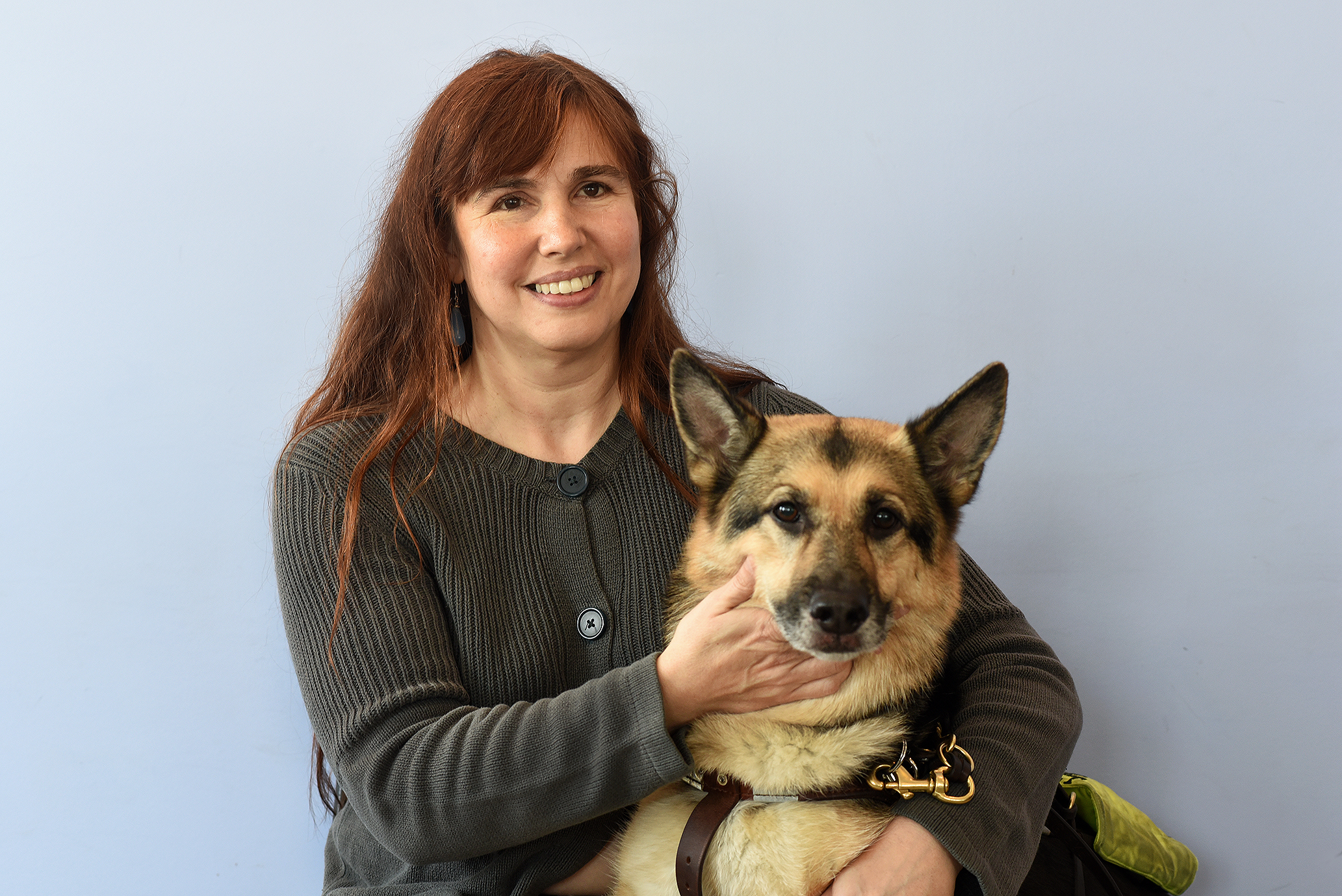
 This week, Sam And Charlene are joined by Dr.Haitham Hussein, who is a stroke specialist. Dr. Hussein talks about his career in studying strokes, and goes in depth about the causes and symptom of a stroke. To get on our email list,receive weekly show updates, or offer feedback/guest suggestions, email [email protected]!