Episode Transcript
[00:00:00] Speaker A: KPI.org.
[00:00:32] Speaker B: Sam.
[00:01:00] Speaker A: This is Disability in Progress, where we bring you insights into ideas about and discussions on disability topics. My name is Sam.
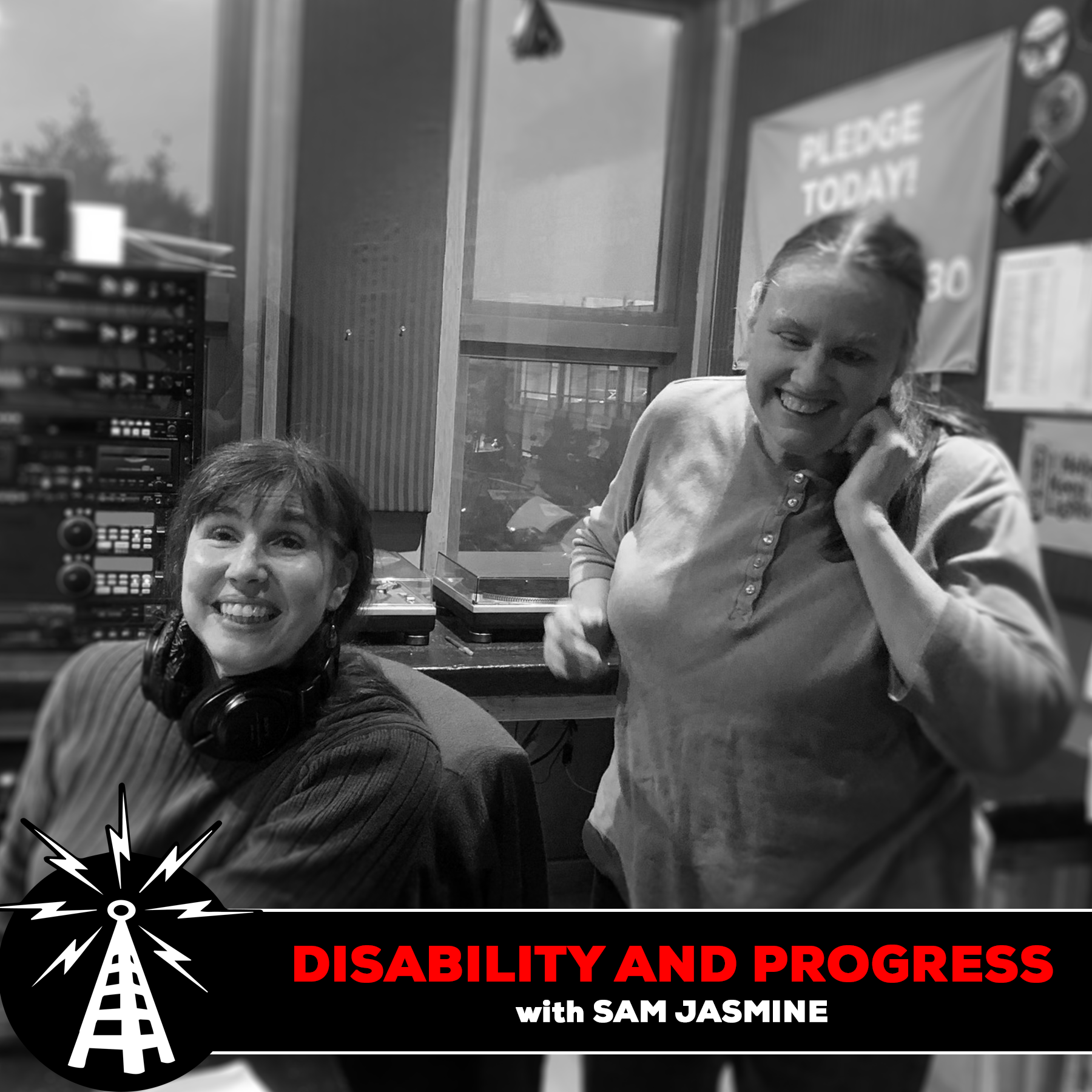
I'm Charlene Dahl. I'm the host of this show. Charlene is my PR research person.
Today we're speaking with Dr. Connellia. Dr. Connellia leads the University of Minnesota Tick and Compulsivity Lab, which was recently designated as the Tourette Syndrome of excellence.
Thank you, Dr. Conolia, for giving us your time.
[00:01:37] Speaker B: Thank you so much for inviting me.
[00:01:40] Speaker A: I'm curious to know, how do you get a lab to be the center of Excellence?
[00:01:50] Speaker B: Great question. We're really honored to have this designation, which is from the Tourette association of America, which is the US Largest patient support organization for people living with Tourette syndrome and tic disorders.
And we were recognized for work. We're doing both in our research. So trying to develop new ways to diagnose and support people with Touret Syndrome. We're teaching clinicians in the next generation to care for folks with these conditions.
And we're also really active in staying engaged with the Tret community to make sure that their voices are heard in research and that we bring our results back to them.
[00:02:38] Speaker A: Excellent.
Can you give us a little bit of history on you and how you got into this field?
[00:02:47] Speaker B: Of course. I went to undergrad in psychology, and I was really interested at that point in learning more about behavioral skills interventions to support young people.
And in graduate school, I was at the University of Wisconsin, Milwaukee, where I was fortunate to be in the lab of someone named Dr. Doug Woods. And he was at the forefront of a group that was testing a new treatment for Tourette Syndrome. And so my job was to be a research coordinator at Talk to folks, get them scheduled, help, get them through the study. And it really sparked a connection for me with this community and a desire to keep doing research to try to improve quality of life and make sure that we were advancing treatment science. And so that was about 20 years ago, and I've stayed in it ever since.
Good for you.
[00:03:53] Speaker A: I'm wondering. I think a lot of people have kind of heard the word Tourette thrown around.
But for somebody who has not heard of Tourette Syndrome, how would you describe it or explain what it is?
[00:04:09] Speaker B: Tourette's is characterized by tics, which are movements or sounds that are involuntary. So they tend to be really sudden movements like eye blinking, jerking, shoulder rolling, or sounds like sniffing, throat clearing.
And someone has a diagnosis of Tourette Syndrome when they've had both movement and sound tics for at Least a year since they've started.
And we also know that tics start in childhood, so before the age of 18, because they're part of a. They're a neurodevelopmental condition that's related to both genetic factors into how motor in the brain are developing and how common
[00:04:59] Speaker A: is Tourette syndrome and who's most likely to develop it.
[00:05:04] Speaker B: We know that about 1 in 160 kids are living with Tourette syndrome. About 1 in 50 have what we call another persistent tic disorder. So tics that are lasting for at least a year, but maybe not both sound and motor, maybe just one.
So we kind of, I like to say, like one in 60 people.
[00:05:28] Speaker A: Is it. Does it have a gender bias?
[00:05:31] Speaker B: It does. So we. Historically, we've. We've seen a bias that it occurs more in males at about a 4 to 1 ratio. But more recently, we're starting to recognize that the symptoms might look a little bit different in girls and women. And so we think that might be closer to something like three or two to one.
[00:05:54] Speaker A: So in regards to females, how do they present differently?
[00:06:00] Speaker B: What we're starting to learn is that by the time that females get to a diagnosis appointment, they seem to have worse symptoms.
And so we think that there might be sort of a higher threshold for them to show up in clinic. We think girls might have a better ability to mask or camouflage their symptoms. This is kind similar to what we think is happening in autism, for example.
Females seem to also be more likely to have a later start of symptoms, so in the teenage years, and they might actually be more likely to have more chronic symptoms and to have their symptoms worsen in adulthood.
We're also starting to see some research suggesting that there might be differences across the menstrual cycle, too.
[00:06:55] Speaker A: So you talked a little about how maybe the genetics plays a role.
[00:07:02] Speaker B: Yeah, there's been a lot of research trying to understand the genetics of tic disorders. And what we know is that there isn't a single gene that puts someone at risk for developing tics. It's probably a combination of different genes, and some have been identified as risk factors. So we know it travels in families and that it's also also more likely to occur in families that have related diagnoses like OCD or obsessive compulsive disorder and autism spectrum disorder. So we think these all have some overlapping genetic risk.
[00:07:41] Speaker A: So we talked a little bit about the age. What did you say, 8 they can start at. Is that the youngest? You've seen it?
[00:07:48] Speaker B: Good question. They can start Earlier, So they have to start before the age of 18 because if they start later in life, it might be due to a different brain reason.
Usually. Yeah. So usually tics are starting in early childhood, like 4 to 6 years old, but they're pretty mild and might not be that noticeable.
And then they can. So they usually start in the face, like eye blinking, nose scrunching, and then can progress to other parts of the body or to these vocal tics or more complex, almost like purposeful looking behaviors, like maybe touching, tapping or saying like whole words or phrases.
And we think they tend to be at their worst in kind of those tween years of like 10 to 12. And then there's some people whose tics get much better as they become adults and their, their brain is maturing.
There's another group of people who, they get a little better, but not a lot. And then there's another group where their tics just remain kind of the same and severe across adulthood. And, and right now we don't have a good way of knowing like who falls into what group ahead of time.
[00:09:01] Speaker A: So I'm curious, can they get better and then get worse again later?
[00:09:06] Speaker B: Great question. We do know that ticks do what we call waxing and waning. So it's really common for them to go up and down in like how frequent they are or how intense or strong they are.
But usually they don't go away entirely. Even when people become adults, what happens is our brains have what we call what I like to call sort of a brain brain. So this ability to put the brake on movements that we don't want to do or need to do, and things that affect our brain break, like being stressed or tired or emotional, can make tics look like they're happening more. And then as that break develops, when someone is an adult, it can also make their tics happen less.
[00:09:55] Speaker A: So with diagnosis, you talk about how you might see the different tics happening for approximately a year.
Can you also do any scans or is there blood work that can diagnose it?
[00:10:10] Speaker B: That's a great question and diagnosis. Unfortunately, right now we don't have any lab test that tells us for sure that someone has a tic disorder. So we do a lot of brain scans in my research, but we're not at the point yet where we can look at one person's brain scan and say like, yes, they have tics. It more can tell us that their movements aren't caused by something else in the brain.
So diagnosis right now really involves meeting with a clinician Usually a neurologist, a psychologist or a pediatrician who's looking at the symptoms, hearing about a history and then deciding if that diagnosis makes sense.
But we know that's leading to a big gap and about 50% of Americans with Tourette's aren't getting a diagnosis.
There's a lot of work we have to do to make, to sort of have these kind of tools like you're talking about and make it more accessible to folks.
[00:11:18] Speaker A: Dr. Connolly, I'm wondering, you've talked a little bit about how there's other disabilities that might pair alongside of Tourette syndrome.
Is that kind of a given or can Tourette syndrome just be on its own?
[00:11:39] Speaker B: It's more the rule that people will have another disability. So about 80% of people with Tourette's have another co occurring neuropsychiatric conditions. So the most common are adhd, ocd, and we think that's because they have a lot of similar brain causes and genetics. And they're also really common for people to have things like anxiety and depression that can come on later, especially if they are living in an environment that's not very supportive of their disability.
So most people are struggling with more than just tics.
[00:12:24] Speaker A: So I would think it might be a little bit tricky for parents to tell the difference between like habit, like nervousness or behavioral or a true tic. Is there differences with that or is it kind of one in the same?
[00:12:39] Speaker B: We do think they're different. So, you know, everyone has little movements or routines that they do when we're nervous. Or we can get like a very specific twitchy muscle if that muscle gets like fatigued or overused. But what makes tics more unique is that they are really caused by this difference in the brain that makes the brain put out movements really frequently. So most people with tics we've measured in our lab have like between 8 to 20 of these movements per minute. So they're very frequent.
People can temporarily suppress or stop them, but they'll always come back. And it's usually only a few minutes that they can stop them.
They usually have a feeling before like an urge, kind of like an urge to sneeze or scratch. They feel in their body that then goes away when they do the tic.
And then we also look for tics tend to look really specific. So about 98 to 99% of people who have Tourette syndrome all have eye related tics. So things like really hard or really fast blinking or eye rolling, that's happening really, really frequently. So that's One that I kind of like to tell parents to look for, think about is, like, if you see a lot of those, like, facial movements happening a lot, all day, no matter the situation, that's more of a sign that it's a tick and not just a habit.
[00:14:12] Speaker A: Okay, So I think those.
One of the common things you hear with the idea is that Tourette's syndrome is, you know, paired with, like, a lot of. Involved with a lot of swearing.
[00:14:29] Speaker B: Yes.
[00:14:29] Speaker A: How accurate is that?
[00:14:32] Speaker B: I am so glad you asked, because unfortunately, this is a really misunderstood part of Tourette syndrome. So it is a myth that everyone with Tourette's shouts obscenities and offensive words.
Newsflash. The media is not always accurate when it comes to portraying disability.
So what we do know is that only about 10, 15% of people with TS experience this. And we call this coprolalia. That means that's like a technical word for involuntary, like, swear words or utterances.
And we know that they're not related to someone's, like, character or their belief or their intelligence. They're very much involuntary and unfortunately, very stigmatized.
[00:15:24] Speaker A: Are there other misconceptions that the public might have about Tourette Syndrome? Syndrome?
[00:15:31] Speaker B: Yeah, I mean, I think that, you know, we know that it is. It is genetic and neurological. People don't catch this from other people or get it from things like their diet or activities they're doing.
Again, it's not really. It's not related to someone's, like, potential or their skills or their intelligence.
Lots of folks are living very successfully, even with tics.
So it's a range of disability.
And the last thing I'll say on that is that what so many people with Tourette's really tell me is that there's a beautiful article, I don't know, in the New York Times at one point where you said, I just wish they made a pill that made other people not notice my Tourette's. And a lot of what this community struggles with is not the tics themselves, but it's how other people react negatively.
So I think that acceptance and understanding is just so important for those of us who don't have tics to try to foster.
[00:16:34] Speaker A: Do you know, it's interesting is that I had a situation once where there was a student and we were in a lesson together, and that student had some kind of tic or something where they were always.
I think it was like an eye blinking all the time or something facial. And she just would kind of harp on him about it. Why are you doing that? Stop doing it. And it, it me with a visual impairment was very clear, like, just ignore it. Just ignore it. And it won't draw attention to it and it probably makes him more nervous about it. So I asked like, why don't you just ignore it? And she just couldn't turn that part off of her. Like she, I don't know. It's interesting, but it makes me ask that if you ignore or don't, don't point out what's going on in regards to facial habits, does that help the person with the ticket not be so concentrated on it and be able to relax more and not, you know, not do it as much? Or am I just thinking wrongly about the whole situation?
[00:17:50] Speaker B: You're very much on the right track here. And so one of the things we work on kids and families a lot when we see them for therapy is what we call this idea of being tick neutral.
So tics are very sensitive, sensitive to how people react to them. The brain is picking up on all of that. And we know that the more attention we pay to them, even like well intentioned things like, oh, you've had a really bad tic day, let me give you like extra snuggles. Those kind of things can inadvertently make tics happen more because the brain is just learning to do them more.
So when we talk about tic neutrality, what, what is really important is we, we focus on like, we don't want to ignore the person, right? We want to pay, right. We want to center the person and decenter the tics.
And some of that, like your example is an important one. I think, you know, if you don't have tics, like getting exposure to what it looks like, practicing being around people, learning how to really focus on them and not the aspects of their disability can be really supportive.
And if you have a relationship with someone who has tics, I think it's nice to try to have a conversation about what do they want as support, because some people, they do find it helpful to occasionally, you know, hey, can you let me know if my tics are really bad? That could be helpful to me. So it's also asking. But yeah, tic neutrality is more what we try to aim for in supporting folks and really focusing on them as a human.
[00:19:31] Speaker A: Do you think that people who have these tics, do they recognize, like, do they notice when they're more apparent?
[00:19:39] Speaker B: It's a good question.
There's a lot of research on this. And the hard thing about tics, like I said earlier, they happen so much, like eight to 2030 times a minute. And most of us, if I ask you like, how many times do you think you breathed or blinked in the last minute? That's pretty hard, right? It's hard for us to notice. So I think an analogy for those of us who don't have tics that I like to use is it's kind of like breathing.
Like we might always be doing it, but there are situations that make us more aware of our breathing. Like if you're about to be on the radio or speak in front of people, you might be more conscious of it or you might be more likely to want to control it and take some deep breaths.
So our attention, just like with breathing, attention to tics can vary depending on like the social situation that a person is in.
Right.
[00:20:36] Speaker A: So how have you.
In the clinic or the lab, what's been the response with kids that might come in that are school aged and in social settings, do you feel like, do they have. Is there mental health things that happen, you know, more mental health instability because of Tourette Syndrome in regards to the social situations?
[00:21:07] Speaker B: Yeah, this, it goes back to the idea that I think how supportive and sort of disability friendly someone's environment are really play a role. So unfortunately, we know that about 70% of kids experience bullying directly related to their Tourette's. People get denied accommodations, they accused of faking it. Even adults, about half of them report things like discrimination, being asked to leave public places.
And so it really is, those are really hard experiences that can make a challenging disorder even more challenging.
And fortunately, when we work with families and we're able to focus on how to create a supportive environment, how to make sure that school understands that there's appropriate legally applicable accommodations in place, that the family understands that kids have connection to us. We have a support group chapter in Minnesota. So getting connection to people in the community, those can all be really helpful in reducing the consequences of having ticks and making kids. Kids more confident more and improving their mental health.
[00:22:28] Speaker A: You know, what, like accommodations, what kinds of accommodations schools might make.
[00:22:35] Speaker B: Yeah. And it's important for, you know, anyone listening to know that this is a legally recognized disability under the Americans with Disabilities Act. So folks, kids with this are entitled to an individual education program, an IEP or a 504 program plan.
And usually the Tourette association of America, I'll give them a plug, has a really nice resource on their website of the kinds of accommodations that can be asked for and helpful for people with Tourette's. A lot of this includes things like if you have to Take a test that's kind of high stakes or shows your knowledge, having the option to take it in a separate space so you're not like, stressing about your tics and the test at the same time. Time can be nice.
A hugely beneficial thing is peer education.
So we know that having kids in a class just be educated about what Tourette's is, makes them a lot more kind and accepting because kids tend to make fun of what they don't understand.
[00:23:36] Speaker A: Right, Fear.
[00:23:37] Speaker B: Yeah, exactly. And we have.
They're called Tourette association youth ambassadors. So there are other kids in Minnesota who are trained to go into kids schools to give a presentation about Tourette's. And those kinds of things can just be really helpful. So those are some examples of accommodations. But working with a clinician to really figure out the right thing for you can be a great idea.
[00:24:05] Speaker A: So when it comes to families, what does good family support look like?
[00:24:12] Speaker B: Ooh, that's a great question.
And families look lots of different ways. And I think great support could come out a lot of different ways. But the first one that comes to my mind is that idea we were talking about of tick neutrality, that being able to really notice your child separately from their tics and foster who they are separately from that. So, you know, supporting them in doing the activities they love and getting the learning they need, even if it means adjusting it a little bit because of the Tourette syndrome, you know, giving your kid unconditional time and attention. So not dependent on whether their ticks are bad or not, advocating for them, getting them connected to the community.
I've also found that because this travels in families, a lot of families have kids, have a family member with. With tics, and having a trusted adult who you could. Who kids can talk to about their experience, it can be really helpful as long as that adult is pretty mindful of, you know, making sure they're being supportive, not like, using the child to process their challenges. But those are the kinds of things that, you know, just being a good, supportive family and, you know, loving your kid for who they are with their ticks too, is another important thing we, we try to encourage for families.
[00:25:43] Speaker A: So when is treatment necessary? And what might, you know, when might it be better to just kind of monitor?
[00:25:52] Speaker B: Great question. And we do have. There are some guidelines that clinicians like me and others follow that the American Academy of Neurology. Neurology published in 2019.
And what those guidelines say is that there are a lot of people who don't need treatment. So that what you're Talking about the watchful waiting, that would be a situation where someone has tics but they don't bother them, they don't hurt, they're not causing any problems.
They have supportive friends in those cases. And that's a lot of kids we see. We say just keep an eye on things.
When someone is having impairment from tics, so pain is a big one, or tics are interrupting sleep, or it's hard to do a task like getting dressed or doing your homework because tics are interrupting you.
That would be a good reason to seek treatment. If you're having sustained social problems or if, if some of these co occurring conditions like adhd, ocd, depression, anxiety, if those are also becoming more impairing, those are the times that we start to think about treatment.
[00:27:05] Speaker A: Dr. Connolly, I'm wondering about behavioral therapies, do they work?
[00:27:11] Speaker B: I love that question because that's a big thing we are studying in my lab. And so the recommended first line treatment for tics is a behavioral treatment called cbit. It stands for Comprehensive Behavioral Intervention for Tics.
And it's not, we don't have a cure for Tourette's at this point. So I think of CBIT as a management strategy. It's a set of skills that help people learn how to manage situations that make their tics worse. And then we also teach them skills that strengthen what I called earlier, your brain break. So practicing skills with your body that help your brain get better at putting the break on movements that you don't want to do, like tics.
What we know from the research is this is helpful for about 50% of patients. So a lot of them do see an improvement.
Yeah, it's not bad. Right? A lot of, we have a lot of treatments in psychiatry that are only about 30% response. So we have a pretty, it's a pretty good treatment. We know that it's, it's just as effective as medications. It doesn't have side effects. And it, there was a study where they followed people for 10 years after they got this and people still showed benefit 10 years later. So it's really a, can be a powerful and helpful experience.
And in my lab, some of the questions we're looking at are things like can we tell who is going to benefit and who isn't? Can we learn more about why it works and why it doesn't? And then can we develop other or new strategies for that 50% of kids that aren't benefiting as much.
[00:28:59] Speaker A: So if you do go the route of medications, what are some of the medications that are commonly used and are the benefits worth the side effects?
[00:29:11] Speaker B: That's such a good and a pretty, I think individual question. I think the risk benefit really depends on how severe are symptoms. Does someone have access to cbit, did they try it, did it not work? What are their comorbidities? So there is no medication that cures ticks, but we can reduce tick severity. So how often, how strong they are.
The only FDA approved medications for tics
[00:29:42] Speaker A: are
[00:29:44] Speaker B: medications that block dopamine and they can be very effective in reducing tics but they can have a lot of side effects on your metabolic system. So things like weight gain and sedation. So we tend to not use those as a first choice.
There are other medications that doctors might prescribe off label that can help reduce tics. Those are helpful for about 30% of people.
And then in my clinic I'm a psychologist so I'm often kind of helping parents decide is it time to talk to someone about medications?
We often think a lot about medications for those co occurring conditions like adhd, anxiety, ocd, because there are really helpful medications for those that can give people relief so they're not dealing with more than, more than like multiple things at once. So again it can take time to really find the right medication, fine tune it, minimize side effects. So I encourage anyone thinking about that to make sure you're talking to a neurologist or a child psychiatrist if you're a kid or a psychiatrist who, because they're really good at knowing how to think about like the right dose and the right, right combo of these things for folks.
[00:31:00] Speaker A: So what advice would you give parent, A parent who comes to you, or maybe somebody who hadn't had their Tourette syndrome diagnosed when they were earlier, what advice would you give them a recent diagnosis?
[00:31:18] Speaker B: Oh, that's a great question. And yeah, one of the main things that we do is we just try to provide good education about what we know about Tourette's.
So we talk to them about why it is they have it, what is happening in their brain that's causing the symptoms, how their activities can impact their symptoms and then providing them education about their choices to treat, to not treat.
We actually find in our research that just getting some good science backed, accurate information about ticks reduces people's distress a lot. And so I think my main encouragement is you don't have to treat them, that's a conversation, but just having a chance to learn about them, to ask questions. There's a lot of misinformation about tics, especially online.
So being Able to talk that out can be really empowering.
[00:32:21] Speaker A: So what is a reliable place can you give a URL that would be reliable to go find out about Tourette Syndrome and yeah, yeah, yeah.
[00:32:32] Speaker B: My go to is the Tourette association of America.
My disclosure there is, I'm, I'm on their science advisory board. But what that partly means is that there is a group of scientists across the country that help them vet the information that goes on there to make sure that it's accurate. And their URL is tourette.org tourette.org and
[00:32:56] Speaker A: I'm curious, slightly political here.
Are they real scientists or are they assigned just anybody on the board?
[00:33:06] Speaker B: No, these are your real traditional, evidence based, rigorous skeptical scientists that are. It is a pace. This is a patient support organization. It was founded in the 70s, it's a nonprofit.
All of us science advisors are in academic research positions and I think it's a really thought full group and, and again we're, we're probably more likely to be overly skeptical than anything else. But as you know, thinking about my own experiences as a patient, I appreciate knowing that there's a group of people who have really thought critically and, and about the information that I'm getting. So I, I appreciate your question in this day and age, unfortunately, and this, this is, you know, the other, you know, people are also welcome. We have on my own lab website, which is ticklab umn.edu we post science snippets we call them. So they're summaries of research papers that are sort of to help people understand what the studies are saying and, and why we're concluding what we're concluding.
So those are a couple resources.
[00:34:28] Speaker A: And what would you like people to take away from today's discussion on Tourette syndrome?
[00:34:35] Speaker B: I'm so thrilled you did this because I think awareness, this is Tourette Awareness month, so awareness of Tourette syndrome is huge. So many people are undiagnosed with this condition, are living feeling misunderstood or unsupported.
So number one, I hope people take away from this, that, you know, this is a medical condition and that these are, you know, wonderful people who can face real stigma and isolation and you know, thinking of ways that you can be an ally is wonderful.
I hope that families and people living with Tourette's take away from this that they're.
There is hope, there are available resources, treatments, support groups, advocacy efforts, and that groups like ours are really dedicated to continuing to do rigorous scientific research to try to make diagnosis, treatment, quality of life better for folks with Tourette's. In the future.
[00:35:42] Speaker A: Are there current treatments and things that are coming up that you know of?
[00:35:50] Speaker B: Yeah, so our own lab, we will be publishing soon. We are doing a two phase clinical trial testing that behavioral therapy, CBIT in combination with a medical device called transcranial Magnetic stimulation or tms. It's a non invasive treatment that involves, it's kind of like a hand sized magnet that we can hold against the head that helps activate brain cells. And we use it clinically now for folks who have depression, ocd, smoking cessation. So we're testing that out.
So we have some promising results and are hoping that'll be a treatment in the future. But it's not FDA approved right now. We're not quite there yet, but hopefully in the future.
There are also some new technologies coming out mostly in the UK looking at wrist stimulation. So kind of like a watch. And can that, can we stimulate nerves in the outer body to help synchronize activity happening in the brain. And there's also some efforts to develop new medications.
So some hope that there might be another FDA approved medication option in the next couple, couple of years. So there are new things on the horizon that we're hopeful about.
[00:37:13] Speaker A: And do you guys run studies for that people can get involved with?
[00:37:18] Speaker B: We do and I would love and appreciate anyone who has interest in getting involved to check out our website, ticklab. Umn Edu. We have a online registry where folks can sign up, you can opt in to get our newsletter.
We have opportunities to participate online from home for some folks in Minnesota who might be eligible. We have treatment studies and what we're really trying to do is go all the way from can we improve access to diagnosis and tools for diagnosis to can we have new and better treatments. So we really rely on the TREK community to be our partners in that process and we'd be excited to hear from anyone who's interested.
[00:38:07] Speaker A: Good morning. Are you connected with other TICK labs across the us?
[00:38:13] Speaker B: Yeah, our closest collaborators are at the University of San Diego. We're doing a study with them and another group at Brown University.
We also collaborate a lot with people at ucla, UCLA and gosh, where else? San Jose State. So we also have international collaborations. I'm working with folks all the way at the University of Nottingham and University of Southampton in the uk.
The Tourette research community is not large, but we are very connected, collaborative and supportive. And so I think folks can at least rest assured that there is a really dedicated collaborative group of scientists that's trying to figure out how to, how to move the Needle forward. And we're excited to be a part of all those collaborations.
[00:39:01] Speaker A: Do you feel like, you know, sometimes there's treatments that happen in other countries that don't happen in the US or vice versa? I'm wondering if you guys are sort of blanketed, that you are all connected nationally and internationally and that the same treatments kind of go all over the world.
[00:39:25] Speaker B: Yeah, it's a great question. In general, some treatments, the wristwatch stimulator I described, that one has so far been tested in the UK we're hoping to test in the US in the future.
Some of those things just depend on, like getting the FDA to say okay and all the.
There are some treatments I haven't mentioned yet, but deep brain stimulation, it's a surgical treatment that is available to folks who really don't benefit from anything else and have really severe symptoms. And there is more of a network for that, of clinics. It's not as common to offer, but we try to do that. But I think there is pretty good consensus, at least across the U.S. canada, Europe, Asia, on. On what kind of treatments we do. As first line, I'm wondering what the
[00:40:21] Speaker A: percentage of people have that do have this might have just. It's very difficult for them to operate in public. Is there.
Is there a percentage that that happens to.
[00:40:39] Speaker B: That's a really good question. And I would say I don't know that I have like a number I can quickly draw on.
But the folks who are. And again, again, this goes back to like, someone's disability is not always just about their symptoms. It's about their environment and how accommodating and supportive it is. Right, Right.
So I think that's really where the difference is. Like, I see some folks who maybe don't have as severe symptoms, but there's not accommodation, support, understanding, and they're having more public sort of challenges versus those who do. But I think the more socially conspicuous people's symptoms are, the more they struggle. So there are a lot of folks who avoid things like going to a movie theater or, you know, a public event because they're worried that they're going to shout or do something that people look at them, that they'll get kicked out or they're afraid to ride the bus.
So that part is very real. And although I can't put a percentage on it, it is. Most everyone I talk, I talk to a lot of people with Tourette's. Most everyone can identify at least one situation that they just don't feel comfortable in in public. Unfortunately.
[00:42:01] Speaker A: I have a question what is the lifespan?
[00:42:07] Speaker B: There is no. Right now, we don't think that having Tourette's affects your lifespan, although there is some research to show that people with Tourette's might be more likely to have conditions that are associated with a shorter lifespan, like metabolic disorders or cardiovascular. We don't know if that's related to, like, the old treatments that were used. Yeah, metabolic. That's hard to know. Yeah. Yeah. It's sort of like a signal in the literature, but we're not sure.
[00:42:41] Speaker C: Well, Charlene, Dr. Connollia, it's been fun.
[00:42:45] Speaker A: I guess I'll wrap this up.
[00:42:46] Speaker C: Thank you so very much for being on our show. Really appreciated you coming on and speaking to us about Tourette Syndrome.
You've been listening to Disability in Progress. The views expressed on this show are not necessarily those of KFEI or the board of directors. She's Charlene Dahl.
She's my PR research person. I'm Sam Jasmine. I'm the host of this show. Erin is my podcaster. Thank you, Erin.
We've been speaking with Dr. Connollia. Dr. Connollia leads the University of Minnesota Tick and Compulsory Lab, which again, was recently recognized for their Tourette Syndrome center of Excellence.
This is KFEI 90.3 FM, Minneapolis, and KFEI.org if you want to listen to our podcasts, we do have many.
Please do that.
Also, if you want to be on our email list, you can email me at Disability and Progress at samjasmin.
[00:43:47] Speaker B: Com.
[00:43:47] Speaker C: Thanks for listening.
[00:43:49] Speaker A: Take care, KPI.org.
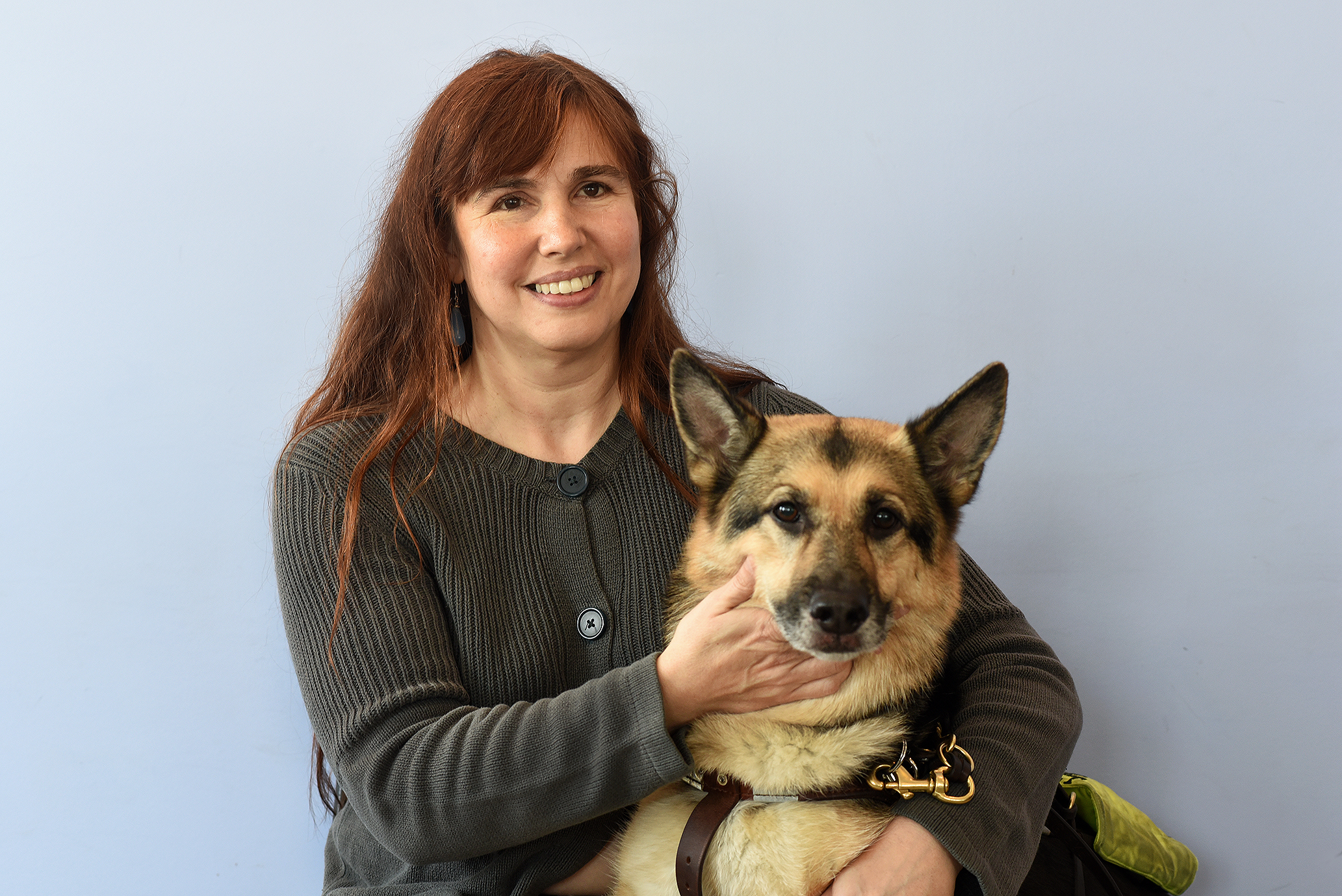
 This week, Sam and Charlene are joined by Dr. Christine Conelea, head of the University of Minnesota Tic and Compulsivity Lab. Dr.Conelea talks about he career and Compulsivity Disorders. To get on our email list,receive weekly show updates, or offer feedback/guest suggestions, email [email protected]!